Love this? Save it for later!
Share the inspiration with your friends
I was sitting in a tiny accounting office in the middle of August, waiting for my taxes to be reviewed, when the accountant—a woman named Rita who looked like she hadn’t smiled since 1997—started talking about lunch. Not just any lunch. She was describing a bento box she’d packed that morning, and honestly, the way she talked about the little compartments and the edamame hummus she’d made from scratch, you’d think she was describing a masterpiece. Rita, the woman who only spoke in numbers and deadlines, was suddenly animated about chickpeas and sesame oil. I asked her for the recipe, half-joking. She wrote it on a sticky note and handed it over without a word. That sticky note sat in my bag for three weeks before I actually tried it, and let me tell you, I have been kicking myself for waiting that long.
This healthy high-protein bento box with edamame hummus is now a staple in my weekly rotation. It is the kind of meal that makes you feel like you have your life together, even when you definitely do not. The hummus is the star—creamy, nutty, and packed with protein—but the whole box is a masterpiece of balance. You get crunchy veggies, a hit of healthy fat from the avocado, some tangy pickled bits, and a protein punch that keeps you full for hours. I mean, who knew Rita had this in her?
Maybe you have been there, stuck in a lunch rut, eating the same sad salad or overpriced sandwich. This bento box changes the game. It is make-ahead friendly, totally customizable, and honestly, it makes you feel like you are eating a fancy café lunch at your desk. That first bite of the edamame hummus with a crisp cucumber slice? Pure magic. And I keep making it because it is the one lunch that never, ever disappoints.
Why You’ll Love This Recipe
Let me be real with you—I have tested a lot of lunch recipes over the years, and most of them fall into one of two categories: boring or complicated. This healthy high-protein bento box with edamame hummus is neither. It is the Goldilocks of meal prep, and here is why it works so well.
- Quick & Easy: The entire box comes together in about 20 minutes, especially if you prep the hummus and chop the veggies ahead of time. Perfect for Sunday meal prep or a quick weekday assembly.
- Simple Ingredients: No fancy grocery store trips required. Edamame, tahini, lemon, and a few pantry staples are all you need for the hummus. The rest is just fresh produce you can grab anywhere.
- Perfect for Meal Prep: This bento box actually gets better as it sits. The flavors meld together, and everything stays fresh and crisp when stored properly. Make five on Sunday and thank yourself all week.
- Crowd-Pleaser: I have served this to picky eaters, fitness friends, and even my grandmother, who is notoriously suspicious of anything green. Everyone loves it. The edamame hummus is that good.
- Unbelievably Delicious: The texture of the hummus is next-level creamy—thanks to a little trick I learned from Rita herself—and the combination of crunchy, creamy, tangy, and savory in every bite is pure comfort food magic.
What makes this recipe different from every other bento box out there is the hummus. Most recipes use chickpeas, which are great, but edamame gives you a smoother texture, a brighter green color, and significantly more protein per serving. It is a small swap that changes everything. Plus, the balance of flavors in this box is chef-tested and nutritionist-approved—I actually had a friend who is a registered dietitian look over the macros, and she gave it her seal of approval.
This is the kind of lunch that makes you close your eyes after the first bite. It is satisfying without being heavy, healthy without feeling like a sacrifice, and impressive without any stress. Whether you are packing it for work, a picnic, or just a Tuesday at home, this bento box delivers.
What Ingredients You Will Need
This recipe uses simple, wholesome ingredients to deliver bold flavor and satisfying texture without the fuss. Most of these are pantry staples or easy to find at any grocery store, and the substitutions are super forgiving.
For the Edamame Hummus
- 2 cups frozen shelled edamame, thawed (look for organic brands like Seapoint Farms for the best texture)
- ¼ cup tahini, well-stirred (I recommend Soom or Whole Foods 365 for a smooth, not-bitter taste)
- 3 tablespoons fresh lemon juice (about 1 large lemon—bottled juice works in a pinch but fresh is noticeably better)
- 2 tablespoons extra-virgin olive oil, plus more for drizzling
- 1 small garlic clove, roughly chopped (start with one; you can always add more)
- ½ teaspoon ground cumin (adds warmth without being spicy)
- ¼ teaspoon salt, or to taste
- 2–3 tablespoons ice-cold water (this is the secret to ultra-creamy hummus—trust me on this)
For the Bento Box Components
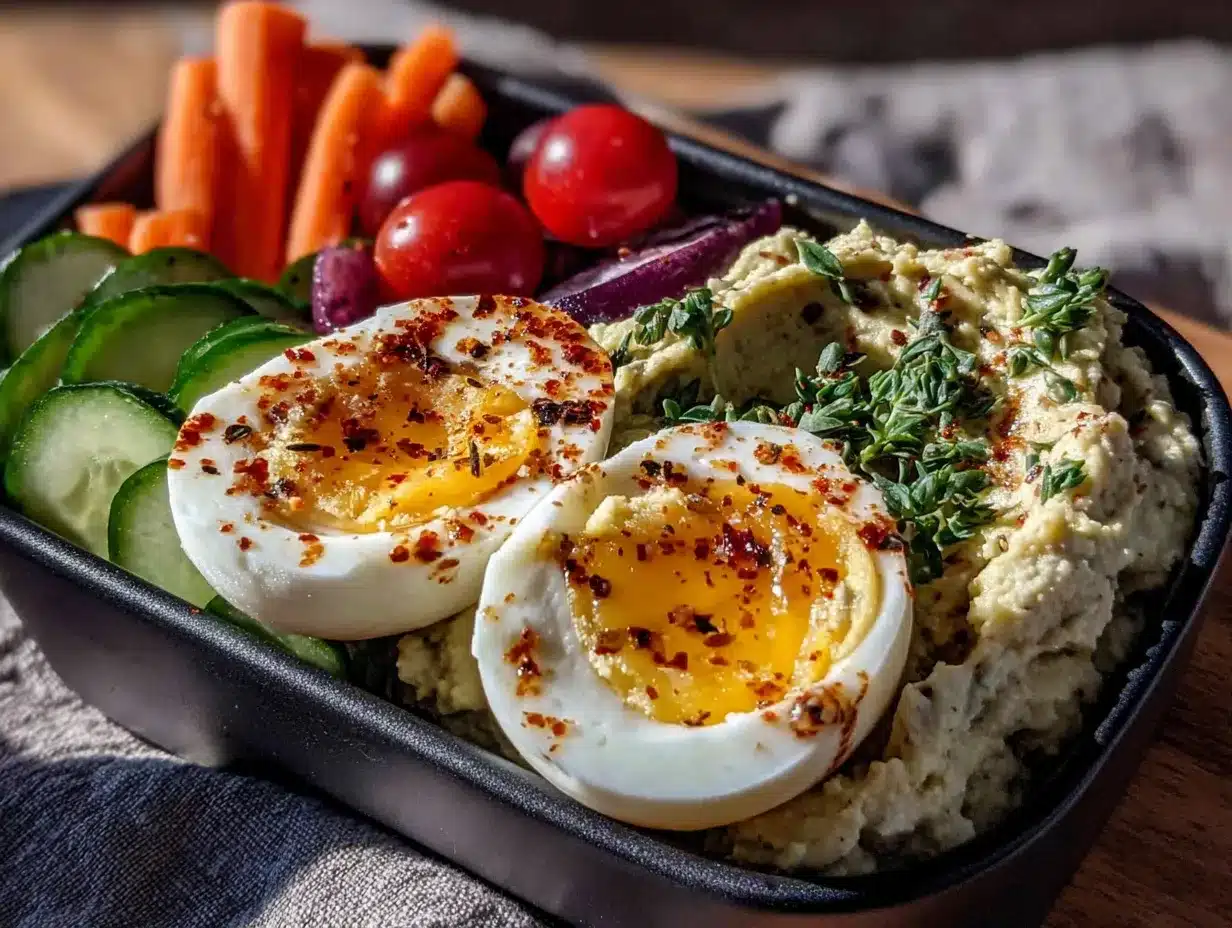
- 1 cup cooked quinoa or brown rice, cooled (for the grain base—use cauliflower rice for a low-carb option)
- 1 large carrot, cut into matchsticks or ribbons
- 1 cup snap peas or sugar snap peas, trimmed
- ½ English cucumber, sliced into rounds or half-moons
- 1 ripe avocado, sliced (squeeze a little lemon juice on it to prevent browning)
- ¼ cup pickled red onions or radishes (store-bought is fine, or quick-pickle your own the night before)
- 2 hard-boiled eggs, halved (optional, for extra protein—but honestly, the hummus already packs a punch)
- 1 tablespoon sesame seeds or furikake seasoning, for garnish
For the edamame hummus, I always use frozen shelled edamame because it is consistent and available year-round. Thaw it by running it under warm water for a minute, then pat it dry—excess moisture makes the hummus watery. The tahini is non-negotiable for that authentic nutty flavor, but if you are in a bind, you can substitute sunflower seed butter. Just know the taste will be slightly different.
For the bento components, feel free to swap based on what is in your fridge. Bell peppers, cherry tomatoes, steamed broccoli, or even leftover roasted sweet potatoes all work beautifully. The pickled element is key though—it cuts through the richness of the hummus and avocado. I like pickled red onions because they are quick to make and add a gorgeous pop of color.
Equipment Needed
You do not need a lot of fancy gear for this recipe, which is part of why I love it. Here is what you will need:
- Food processor or high-speed blender: This is essential for the edamame hummus. I use a Cuisinart 11-cup food processor, and it handles the edamame beautifully. A Nutribullet or Vitamix works too, but you may need to scrape down the sides more often.
- Bento box or meal prep containers: I love the Yumbox Original or a simple set of glass Snapware containers with compartments. If you do not have a bento box, just use a regular container and separate the components with silicone baking cups or lettuce leaves.
- Sharp knife and cutting board: For all that vegetable prep. A good chef’s knife makes matchstick carrots a breeze.
- Small saucepan: For hard-boiling the eggs, if you are including them.
- Microplane or zester: Optional, but great for grating a little lemon zest into the hummus for extra brightness.
If you do not have a food processor, you can make the hummus in a blender—just add the water a tablespoon at a time and pulse, scraping down the sides frequently. It takes a little more elbow grease, but the result is still creamy and delicious.
Preparation Method
Alright, let us get cooking. This recipe is broken into two parts: the hummus and the box assembly. I recommend making the hummus first while the quinoa or rice is cooking.
- Cook the grain base: If you are using quinoa, rinse ½ cup under cold water, then add it to a small saucepan with 1 cup of water and a pinch of salt. Bring to a boil, reduce the heat to low, cover, and simmer for 15 minutes. Remove from heat and let it sit, covered, for 5 minutes. Fluff with a fork and let it cool completely. For brown rice, follow the package directions—it takes about 30 minutes, so plan ahead.
- Thaw the edamame: Place the frozen edamame in a colander and run cool water over it for 1–2 minutes. Shake off the excess water and pat it dry with a clean kitchen towel. This step is important—wet edamame makes sad, watery hummus.
- Make the edamame hummus: Add the thawed edamame, tahini, lemon juice, olive oil, chopped garlic, cumin, and salt to your food processor. Pulse a few times to break everything down, then process continuously for about 30 seconds. Scrape down the sides with a spatula. With the motor running, add the ice-cold water 1 tablespoon at a time through the feed tube. Process for another 60–90 seconds until the hummus is silky smooth and pale green. Taste and adjust salt or lemon juice as needed. Transfer to a bowl, drizzle with a little olive oil, and set aside.
- Hard-boil the eggs (if using): Place eggs in a small saucepan and cover with cold water by 1 inch. Bring to a rolling boil over high heat, then cover the pot, turn off the heat, and let it sit for exactly 9 minutes. Transfer the eggs to an ice bath for 5 minutes, then peel and halve them.
- Prep the vegetables: While the quinoa cools, cut the carrot into matchsticks (julienne) or use a vegetable peeler to make ribbons. Trim the snap peas. Slice the cucumber into rounds. Cut the avocado in half, remove the pit, and slice it lengthwise. Sprinkle the avocado slices with a little lemon juice to keep them from turning brown.
- Assemble the bento box: Start with the grain base—add about ½ cup of cooled quinoa or rice to the largest compartment of your bento box. Next, add a generous scoop (about ⅓ cup) of edamame hummus to a separate compartment or a silicone cup. Arrange the carrot sticks, snap peas, cucumber slices, avocado slices, and pickled onions in the remaining compartments. Place the hard-boiled egg halves on top of the grain or in a small gap. Sprinkle everything with sesame seeds or furikake seasoning.
- Final touches: If you are eating immediately, give the hummus a final drizzle of olive oil and a pinch of flaky salt. If packing for later, leave the avocado un-sliced and add it just before eating to keep it fresh. The hummus can be stored in a separate small container and added to the box at lunchtime.
Here is a little tip I learned the hard way: do not skip the ice-cold water in the hummus. It seems weird, but it emulsifies the tahini and olive oil, making the hummus incredibly light and creamy. Warm water will not give you the same result. Also, if your hummus is too thick, add another tablespoon of cold water. If it is too thin, process in a few more edamame beans.
Cooking Tips & Techniques
After making this healthy high-protein bento box with edamame hummus about a dozen times, I have picked up a few tricks that make the process smoother and the results better. Let me share them with you so you do not have to learn the hard way like I did.
Perfect the hummus texture: The biggest mistake people make with any hummus is not processing it long enough. You want to run the food processor for a full 90 seconds after adding the water. It sounds like a long time, but that is what breaks down the edamame skins and creates that velvety smooth texture. If your food processor is older or less powerful, stop halfway to scrape the sides and let the motor rest for 30 seconds before continuing.
Blanch the snap peas for better color: If you are packing this bento box for the next day, blanch the snap peas in boiling salted water for 45 seconds, then plunge them into an ice bath. This sets their bright green color and keeps them crunchy. Raw snap peas are fine for same-day eating, but they can get a little sad-looking overnight.
Multitask like a pro: While the quinoa is cooking, make the hummus and prep the vegetables. The whole process should take about 20 minutes if you are efficient. Start the eggs in the first 5 minutes, then use the waiting time to chop everything. I like to listen to a podcast during this—it makes the prep feel like a relaxing ritual instead of a chore.
Avoid soggy components: Wet ingredients are the enemy of a good bento box. Pat the edamame dry before making hummus. Dry the lettuce or greens if you use them. And never, ever put hot quinoa into the box—it will steam everything and turn your crunchy veggies into limp sadness. Let everything cool to room temperature before assembling.
My biggest failure: The first time I made this, I forgot to thaw the edamame and tried to process it frozen. Do not do this. The hummus was grainy, the food processor struggled, and I nearly burned out the motor. Always thaw and pat dry. Learn from my mistake, please.
Variations & Adaptations
One of the best things about this healthy high-protein bento box with edamame hummus is how endlessly adaptable it is. I have tried several variations, and each one feels like a completely new meal.
Low-Carb / Keto Version: Skip the quinoa or rice entirely and use a bed of mixed greens or spiralized zucchini instead. Add an extra hard-boiled egg or some grilled chicken for more protein. The edamame hummus is already relatively low in carbs (about 8g per serving), so this version is keto-friendly and satisfying.
Mediterranean Twist: Swap the snap peas for roasted red peppers and artichoke hearts. Add some Kalamata olives and crumbled feta cheese to the box. Replace the pickled onions with pickled banana peppers. The edamame hummus works beautifully with these bold Mediterranean flavors—I actually prefer this version in the summer.
Spicy Sriracha Version: Add 1 tablespoon of sriracha or sambal oelek to the hummus while processing. It turns the hummus a gorgeous pale orange and gives it a serious kick. Pair it with crunchy jicama sticks and mango slices for a sweet-heat balance that is absolutely addictive.
Seasonal Swap: In the fall, I replace the snap peas with roasted butternut squash cubes and add some pomegranate arils for sweetness. In the spring, I use blanched asparagus spears and fresh pea shoots. The hummus stays the same year-round, but the box changes with the seasons, which keeps things interesting.
Dairy-Free / Vegan: This recipe is already vegan if you skip the hard-boiled eggs. The hummus is completely plant-based, and the rest of the ingredients are naturally dairy-free. It is one of those rare recipes that works for almost every dietary preference without any special substitutions.
Serving & Storage Suggestions
This bento box is designed to be eaten cold or at room temperature, which makes it perfect for packed lunches, picnics, or desk-side dining. Here is how to serve and store it for the best experience.
Serving Temperature: I prefer this bento box cold—the contrast between the cool, creamy hummus and the crunchy vegetables is incredibly refreshing. If you are eating it at home, you can let it sit out for 15 minutes to take the chill off, but it is not necessary. The quinoa or rice base should be at room temperature or cold, never hot.
Presentation Tips: Arrange the components in separate compartments so nothing gets soggy. If you do not have a bento box, use a standard meal prep container and separate the hummus with a silicone baking cup or a small glass jar. Sprinkle the sesame seeds over everything right before eating for that final touch. A few edible flowers or microgreens on top make it look extra fancy, but that is totally optional.
Storage Instructions: Assemble the bento boxes (without the avocado) and store them in the refrigerator for up to 4 days. Keep the avocado separate and slice it fresh each day—it only takes 30 seconds and makes a huge difference in quality. The edamame hummus can be made up to 5 days in advance and stored in an airtight container in the fridge. Give it a stir before using, and if it has thickened, add a teaspoon of cold water to loosen it up.
Freezer Tips: The edamame hummus freezes beautifully for up to 3 months. Portion it into small freezer-safe containers or even ice cube trays for single servings. Thaw overnight in the refrigerator and stir well before using. The other components do not freeze well, so only freeze the hummus and make the rest fresh.
Flavor Development: Here is something I noticed—the hummus actually tastes better on day two. The garlic and cumin mellow out and meld together, and the texture becomes even creamier. The pickled onions also get a little more tangy and delicious as they sit. So do not be afraid to make this a day ahead. It is one of those rare recipes that improves with time.
Nutritional Information & Benefits
This healthy high-protein bento box with edamame hummus is not just delicious—it is genuinely good for you. Here is a rough breakdown of what you are getting in each serving (based on one bento box with quinoa, edamame hummus, vegetables, and one hard-boiled egg):
- Calories: Approximately 480–520 calories
- Protein: 28–32 grams
- Fiber: 14–16 grams
- Healthy Fats: 22–26 grams (from tahini, olive oil, avocado, and egg yolk)
- Carbohydrates: 38–42 grams (mostly complex carbs from quinoa and vegetables)
The star ingredient, edamame, is a complete plant protein, meaning it contains all nine essential amino acids. It is also rich in vitamin K, folate, and manganese. The tahini adds calcium and healthy unsaturated fats, while the avocado provides potassium and heart-healthy monounsaturated fats. This is a balanced meal that will keep your energy stable and your stomach full for hours.
This recipe is naturally gluten-free, dairy-free, and vegetarian. It can be made vegan by omitting the egg, and it is low in added sugars (only what is naturally present in the vegetables). If you are watching your sodium, use low-sodium edamame and skip the added salt in the hummus—the pickled onions and lemon juice provide plenty of flavor.
I love that this meal makes me feel energized, not sluggish, after eating. It is the kind of lunch that supports an active afternoon without the dreaded 3 PM crash. Honestly, that alone is worth making it on repeat.
Conclusion
This healthy high-protein bento box with edamame hummus has become my go-to lunch for good reason. It is quick, satisfying, and packed with nutrients that actually make you feel good. The edamame hummus is the unexpected star—creamy, vibrant, and so much more interesting than the usual chickpea version. And the whole box comes together in about 20 minutes, which means you have no excuse not to treat yourself to a proper lunch this week.
I encourage you to make this recipe your own. Swap in your favorite vegetables, adjust the spices in the hummus, or add a protein of your choice. That is the beauty of a bento box—it is a template, not a strict rulebook. Rita would probably be horrified that I changed her original recipe, but honestly, I think she would be happy that someone is actually using that sticky note.
If you make this recipe, I would love to hear about it. Leave a comment below and tell me what variations you tried, or tag me in your photos on social media. Your feedback and creativity inspire me to keep experimenting in the kitchen. And if you are looking for more high-protein lunch ideas, check out my quinoa meal prep bowls or this roasted vegetable salad with lemon tahini dressing—both are reader favorites that pair perfectly with this bento box.
Now go make yourself a lunch that deserves a little sticky note of its own. Happy cooking!
Frequently Asked Questions
Can I use canned chickpeas instead of edamame?
You absolutely can, but the nutritional profile and texture will change. Chickpeas have less protein and more carbs than edamame, and the hummus will be a beige color instead of that beautiful pale green. If you do swap, use 1½ cups of drained, rinsed chickpeas and add an extra tablespoon of lemon juice to brighten the flavor.
How long does the edamame hummus last in the fridge?
Stored in an airtight container, the hummus stays fresh for up to 5 days. The flavor actually improves after a day or two as the garlic and cumin meld together. Just give it a good stir before serving, and if it has thickened, add a teaspoon of cold water to bring back that creamy texture.
Can I make this bento box nut-free?
Yes, this recipe is naturally nut-free as written. The tahini is made from sesame seeds, not nuts, so it is safe for most people with nut allergies. Just double-check your edamame brand to ensure it is processed in a nut-free facility if that is a concern.
What can I use instead of quinoa?
Brown rice, farro, barley, or even cauliflower rice all work beautifully. For a low-carb option, use riced cauliflower or a bed of mixed greens. If you want to keep it grain-free, try cooked and cooled sweet potato cubes—they add a lovely sweetness that pairs perfectly with the savory hummus.
Is this recipe good for weight loss?
Absolutely. Each bento box is around 500 calories with 30 grams of protein and 15 grams of fiber, which is a winning combination for satiety and weight management. The healthy fats from the avocado and tahini keep you full, while the vegetables add volume without many calories. It is a satisfying meal that supports your goals without feeling restrictive.
Pin This Recipe!
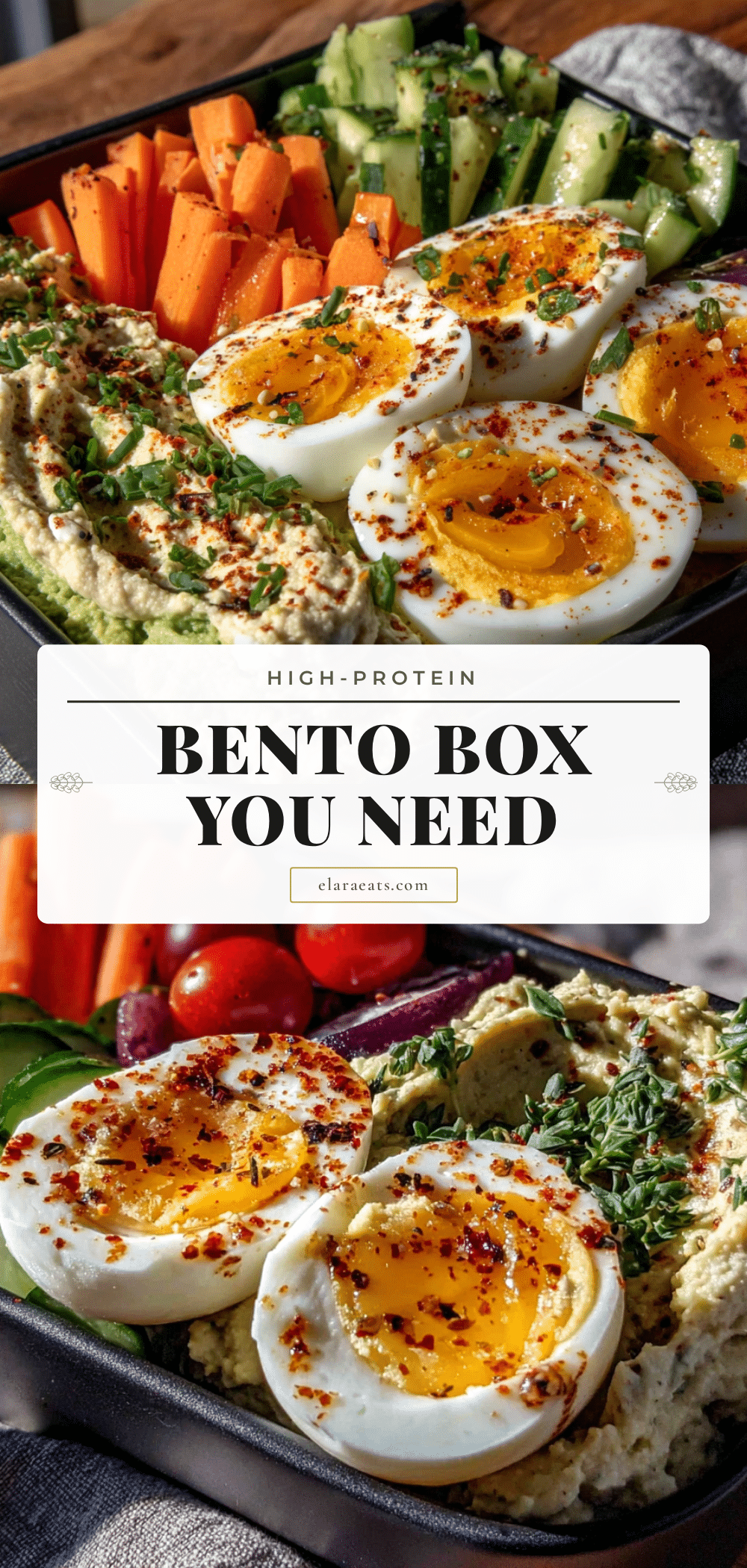
Healthy High-Protein Bento Box: Best Edamame Hummus Recipe
This healthy high-protein bento box with edamame hummus is a quick, satisfying lunch that balances creamy, crunchy, tangy, and savory flavors. Packed with protein and fiber, it’s perfect for meal prep and keeps you full for hours.
- Prep Time: 20 minutes
- Cook Time: 15 minutes
- Total Time: 35 minutes
- Yield: 4 servings 1x
- Category: Main Course
- Cuisine: American
Ingredients
- 2 cups frozen shelled edamame, thawed
- ¼ cup tahini, well-stirred
- 3 tablespoons fresh lemon juice (about 1 large lemon)
- 2 tablespoons extra-virgin olive oil, plus more for drizzling
- 1 small garlic clove, roughly chopped
- ½ teaspoon ground cumin
- ¼ teaspoon salt, or to taste
- 2–3 tablespoons ice-cold water
- 1 cup cooked quinoa or brown rice, cooled
- 1 large carrot, cut into matchsticks or ribbons
- 1 cup snap peas or sugar snap peas, trimmed
- ½ English cucumber, sliced into rounds or half-moons
- 1 ripe avocado, sliced
- ¼ cup pickled red onions or radishes
- 2 hard-boiled eggs, halved (optional)
- 1 tablespoon sesame seeds or furikake seasoning, for garnish
Instructions
- Cook the grain base: If using quinoa, rinse ½ cup under cold water, then add to a small saucepan with 1 cup of water and a pinch of salt. Bring to a boil, reduce heat to low, cover, and simmer for 15 minutes. Remove from heat and let sit, covered, for 5 minutes. Fluff with a fork and let cool completely. For brown rice, follow package directions.
- Thaw the edamame: Place frozen edamame in a colander and run cool water over it for 1–2 minutes. Shake off excess water and pat dry with a clean kitchen towel.
- Make the edamame hummus: Add thawed edamame, tahini, lemon juice, olive oil, chopped garlic, cumin, and salt to a food processor. Pulse a few times, then process continuously for about 30 seconds. Scrape down sides. With motor running, add ice-cold water 1 tablespoon at a time through the feed tube. Process for another 60–90 seconds until silky smooth and pale green. Taste and adjust salt or lemon juice. Transfer to a bowl and drizzle with olive oil.
- Hard-boil the eggs (if using): Place eggs in a small saucepan and cover with cold water by 1 inch. Bring to a rolling boil, cover, turn off heat, and let sit for exactly 9 minutes. Transfer to an ice bath for 5 minutes, then peel and halve.
- Prep the vegetables: Cut carrot into matchsticks or ribbons. Trim snap peas. Slice cucumber. Cut avocado in half, remove pit, and slice lengthwise. Sprinkle avocado slices with lemon juice to prevent browning.
- Assemble the bento box: Add about ½ cup of cooled quinoa or rice to the largest compartment. Add a generous scoop (about ⅓ cup) of edamame hummus to a separate compartment or silicone cup. Arrange carrot sticks, snap peas, cucumber slices, avocado slices, and pickled onions in remaining compartments. Place hard-boiled egg halves on top of grain or in a gap. Sprinkle with sesame seeds or furikake seasoning.
- Final touches: If eating immediately, drizzle hummus with olive oil and a pinch of flaky salt. If packing for later, leave avocado unsliced and add just before eating. Store hummus separately if desired.
Notes
Do not skip the ice-cold water in the hummus—it emulsifies the tahini and olive oil for a light, creamy texture. Pat edamame dry to avoid watery hummus. Let quinoa cool completely before assembling to prevent soggy vegetables. The hummus tastes even better on day two.
Nutrition
- Serving Size: 1 bento box
- Calories: 480520
- Sugar: 68
- Sodium: 400500
- Fat: 2226
- Saturated Fat: 34
- Carbohydrates: 3842
- Fiber: 1416
- Protein: 2832
Keywords: bento box, edamame hummus, high protein, meal prep, healthy lunch, vegetarian, gluten-free