Love this? Save it for later!
Share the inspiration with your friends
There used to be a tiny French bistro tucked between a laundromat and a dusty antique shop on the outskirts of Portland that made a beef stew I still dream about. When they closed their doors three years ago—just a handwritten sign on the window one Tuesday morning—I honestly felt a little lost. After twelve tries—some burnt, some bland, one that my husband politely called “aggressively salty”—I finally got it.
The secret, let me tell you, wasn’t some fancy chef technique. It was patience and a good bottle of red wine. And a slow cooker, obviously. I mean, who has time to stand over a pot for three hours on a Tuesday? Not me. I wanted that deep, rich flavor without babysitting the stove. You know that feeling when you want something that tastes like it took all day but actually took fifteen minutes of hands-on work? That’s this stew.
The first successful batch happened on a rainy Sunday afternoon. I had my favorite wine glass in one hand, a wooden spoon in the other, and I just knew when the aroma started filling the kitchen that I had cracked the code. The beef was fall-apart tender. The broth was silky and dark, with that subtle wine tang that makes you close your eyes after the first spoonful. This recipe stayed with me because it’s not just dinner—it’s a hug in a bowl on a cold night.
Why You’ll Love This Recipe
This isn’t just another beef stew recipe you’ll find floating around the internet. After testing this dish more times than I care to admit, I can honestly say this version hits different. It’s the kind of meal that makes your whole house smell like a fancy restaurant, but you barely broke a sweat making it.
- Incredibly Easy: Fifteen minutes of prep, and your slow cooker does the heavy lifting. Perfect for busy weeknights when you want something hearty without the stress.
- Rich, Complex Flavor: The red wine isn’t just for show—it adds a depth that water or broth alone just can’t touch. It melds with the vegetables and herbs to create something truly special.
- Simple Ingredients: No trips to specialty stores. You probably have most of these pantry staples already, minus maybe the chuck roast and wine.
- Perfect for Meal Prep: This stew actually gets better after a day in the fridge. Make it on Sunday, eat it all week, and thank yourself later.
- Crowd-Pleaser: I’ve served this at dinner parties, family gatherings, and quiet nights in. It gets rave reviews every single time, from picky kids to food-snob uncles.
- Comfort Food at Its Finest: Let’s face it—some days just call for a bowl of something warm and satisfying. This stew delivers on that promise every time.
What makes this recipe different from the rest? It’s the wine-to-broth ratio, honestly. I spent weeks tweaking it until the wine was present but not overpowering, the vegetables were tender but not mushy, and the beef literally fell apart at the touch of a fork. This isn’t just another version—it’s my best version, and I’m pretty proud of it.
What Ingredients You Will Need
This recipe uses simple, wholesome ingredients to deliver bold flavor and satisfying texture without the fuss. Most of these are kitchen staples, which makes this dish perfect for those “I need comfort food now” moments.
For the Beef and Base
- 2 pounds beef chuck roast, cut into 1.5-inch cubes (look for good marbling—it’s what makes the meat tender)
- 3 tablespoons all-purpose flour (for coating the beef; helps thicken the stew later)
- 2 tablespoons olive oil, divided (use a good quality one for browning)
- 1 teaspoon salt (plus more to taste)
- ½ teaspoon black pepper (freshly ground is best)
For the Aromatic Vegetables
- 1 large yellow onion, diced (about 1.5 cups)
- 3 cloves garlic, minced (I use fresh, not the jarred stuff)
- 4 medium carrots, peeled and cut into 1-inch chunks
- 3 celery stalks, sliced into ½-inch pieces
- 1.5 pounds Yukon Gold potatoes, cut into 1-inch cubes (they hold their shape better than Russets)
For the Liquid and Flavor
- 1.5 cups dry red wine (I recommend a Cabernet Sauvignon or Merlot—something you’d actually drink)
- 2 cups beef broth (low-sodium is best so you can control the salt)
- 2 tablespoons tomato paste (adds richness and color)
- 2 bay leaves
- 1 teaspoon dried thyme (or 3 sprigs fresh if you have it)
- 1 teaspoon dried rosemary (crushed between your fingers to release the oils)
- 1 tablespoon Worcestershire sauce (trust me on this—it’s the secret umami boost)
For the Finish
- 1 cup frozen peas (add them at the end for that pop of green and sweetness)
- 2 tablespoons fresh parsley, chopped (for garnish, optional but pretty)
- Salt and pepper to taste (always adjust at the end)
Ingredient Tips: I prefer using chuck roast over stew meat from the store because it has better marbling and stays tender. If you can’t find chuck, look for any well-marbled beef suitable for braising. For the wine, don’t use “cooking wine”—it’s salty and weird. Grab a bottle you’d enjoy drinking; the flavor concentrates in the stew. I’ve used Yellow Tail Cabernet Sauvignon with great results, but any dry red will work.
Equipment Needed
You don’t need a fancy kitchen to make this stew, but a few key tools will make your life easier.
- Slow Cooker (5-6 quart size is ideal for this recipe; any brand works, but I love my Cuisinart for even heating)
- Large Skillet or Dutch Oven (for browning the beef—don’t skip this step)
- Cutting Board and Sharp Knife (a good chef’s knife makes vegetable prep a breeze)
- Measuring Cups and Spoons
- Wooden Spoon or Spatula
- Tongs (for flipping the beef while browning)
- Mixing Bowl (for coating the beef with flour and seasonings)
If you don’t have a slow cooker, you can use a Dutch oven and cook it in the oven at 300°F for about 3 hours. I’ve done it both ways, and honestly, the slow cooker version is more forgiving and hands-off. The first time I made this, I used a cheap slow cooker I found at a garage sale—it worked just fine. Don’t let equipment hold you back.
Preparation Method
Ready to make the best beef stew of your life? Let’s get cooking. This recipe takes about 15 minutes of active prep and then 6-8 hours of slow cooker magic.
- Prep the Beef: Pat the beef chuck cubes dry with paper towels. In a mixing bowl, combine the flour, 1 teaspoon salt, and ½ teaspoon pepper. Toss the beef cubes in the flour mixture until evenly coated. Shake off any excess flour.
- Brown the Beef: Heat 1 tablespoon of olive oil in a large skillet over medium-high heat. Working in batches (don’t overcrowd the pan!), add the beef cubes and cook for 2-3 minutes per side until deeply browned. Use tongs to flip them. Transfer the browned beef to your slow cooker. Pro tip: Those brown bits stuck to the pan are pure flavor—don’t clean the skillet yet!
- Sauté the Aromatics: Reduce the heat to medium and add the remaining 1 tablespoon of olive oil to the same skillet. Add the diced onion and cook for 3-4 minutes until softened and translucent. Add the minced garlic and cook for 30 seconds until fragrant, stirring constantly so it doesn’t burn.
- Deglaze the Pan: Pour about ½ cup of the red wine into the skillet and scrape up all those delicious brown bits from the bottom with a wooden spoon. Let it simmer for 1-2 minutes until slightly reduced. This step is where the magic happens—don’t skip it!
- Build the Base: Pour the onion mixture into the slow cooker over the beef. Add the carrots, celery, and potatoes. In a separate bowl or measuring cup, whisk together the remaining 1 cup of red wine, beef broth, tomato paste, and Worcestershire sauce. Pour this over the meat and vegetables.
- Add the Herbs: Tuck the bay leaves, dried thyme, and dried rosemary into the liquid. Give everything a gentle stir to combine. The liquid should almost cover the ingredients—if it doesn’t, add a little more broth or water.
- Cook Low and Slow: Cover the slow cooker and cook on LOW for 7-8 hours or on HIGH for 4-5 hours. I prefer low and slow for the most tender beef. About 30 minutes before serving, remove the bay leaves and stir in the frozen peas. They’ll warm through quickly.
- Finish and Serve: Taste the stew and adjust salt and pepper as needed. The flour from the beef coating should have thickened the broth nicely, but if you want it thicker, mix 1 tablespoon cornstarch with 2 tablespoons cold water and stir it in. Let it cook uncovered for 10 more minutes. Ladle into bowls, garnish with fresh parsley, and serve with crusty bread for dipping.
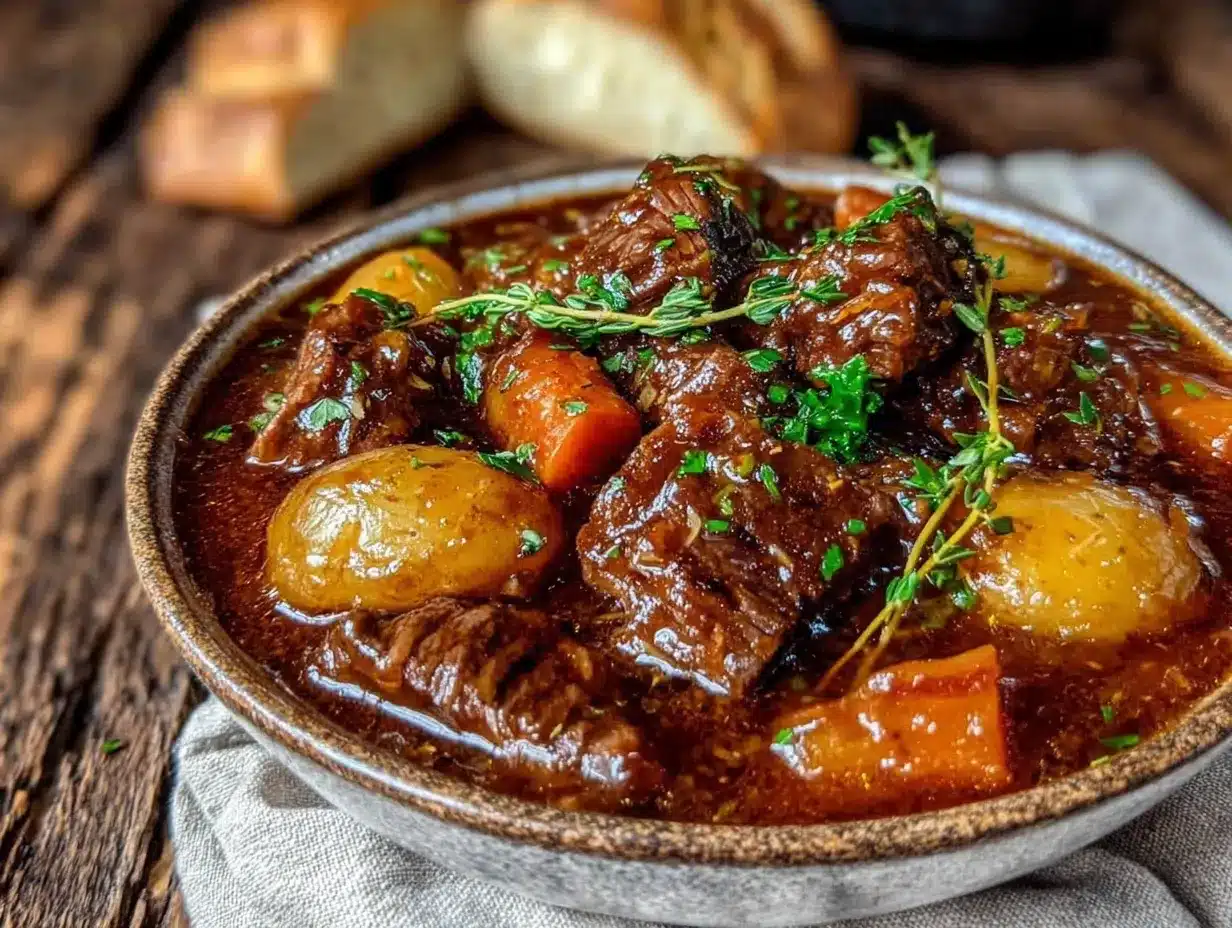
Sensory Cues: When the stew is ready, the beef should be so tender it falls apart with a gentle prod from a fork. The broth should be rich and dark, with a silky texture that coats the back of a spoon. The aroma—oh, the aroma—will be deeply savory with hints of wine and herbs. Your whole kitchen will smell like a cozy Sunday afternoon.
Cooking Tips & Techniques
After making this stew more times than I can count, I’ve picked up a few tricks that make a real difference. Here are my best tips for stew success.
Don’t Skip the Browning: I know it’s tempting to just dump everything in the slow cooker and walk away, but browning the beef first is non-negotiable. That caramelized crust adds a depth of flavor you simply can’t get any other way. The first time I made this, I was in a hurry and skipped this step. The stew was fine, but it was missing that rich, savory umami that makes this recipe special. Trust me on this one.
Use the Right Wine: Remember, you’re concentrating the wine flavor, so use something you’d actually enjoy drinking. A cheap, overly tannic wine can make the stew bitter. I’ve had great results with a mid-range Cabernet Sauvignon or a fruity Merlot. If you’re unsure, ask at your local wine shop—they’ll point you in the right direction.
Cut Vegetables Uniformly: This sounds fussy, but it matters. If your potato chunks are twice the size of your carrot chunks, they’ll cook at different rates. Aim for 1-inch pieces across the board. Your stew will be more consistent, and you won’t end up with mushy carrots and crunchy potatoes.
Layer Your Flavors: Adding the tomato paste with the wine and broth helps it dissolve evenly. Adding the peas at the end keeps them bright green and slightly sweet. Small details like this add up to a stew that tastes thoughtfully made, not just thrown together.
My Biggest Failure: I once added the wine straight to the slow cooker without deglazing the pan first. The stew ended up tasting flat and slightly acidic. Deglazing cooks off the harsh alcohol and melds the wine with the browned bits—it’s a game-changer. Learn from my mistake!
Variations & Adaptations
One of the best things about this stew is how adaptable it is. Here are some of my favorite variations to keep things interesting.
Dietary Adaptations
- Gluten-Free: Swap the all-purpose flour for a gluten-free flour blend or cornstarch. Coat the beef with it before browning, and if the stew needs thickening at the end, use a cornstarch slurry.
- Low-Carb/Keto: Skip the potatoes and add extra low-carb veggies like mushrooms, turnips, or cauliflower. The stew will still be hearty and satisfying.
- Dairy-Free: This recipe is naturally dairy-free, but if you’re serving it with bread or mashed potatoes on the side, use a dairy-free butter alternative.
Flavor Twists
- Herb Swap: Try using fresh rosemary and thyme instead of dried—add them in the last hour of cooking for a brighter flavor. Or add a sprig of fresh sage for an earthy note.
- Smoky Version: Add 4 ounces of diced smoked bacon or pancetta. Cook it before browning the beef and use the rendered fat instead of olive oil. The smoky flavor is incredible.
- Mushroom Love: Sauté 8 ounces of sliced cremini mushrooms with the onions. They add an earthy, meaty flavor that complements the beef beautifully.
Seasonal Variations
- Summer: Swap the potatoes for zucchini or summer squash (add them in the last 30 minutes so they don’t get mushy). Use fresh herbs from the garden.
- Fall: Add cubed butternut squash or sweet potatoes along with the carrots. They’ll add a subtle sweetness that pairs perfectly with the red wine.
Serving & Storage Suggestions
This stew is incredibly versatile when it comes to serving. Here’s how to make the most of it.
Serving: Ladle the stew into deep bowls while it’s piping hot. I love serving it with a thick slice of crusty sourdough or a warm baguette for dipping into that rich broth. A sprinkle of fresh parsley on top adds a pop of color and freshness. For a heartier meal, serve it over egg noodles, mashed potatoes, or creamy polenta. The stew is also fantastic with a simple side salad dressed with a vinaigrette to cut through the richness.
Storage: This stew tastes even better the next day—the flavors have time to meld and deepen. Let the stew cool completely, then transfer it to an airtight container. It will keep in the refrigerator for up to 4 days. The stew will thicken as it sits, so you might want to add a splash of broth or water when reheating.
Freezing: This stew freezes beautifully. Portion it into freezer-safe containers or zip-top bags, leaving a little room for expansion. It will keep for up to 3 months. Thaw overnight in the refrigerator before reheating. I like to freeze individual portions for quick lunches on busy days.
Reheating: Reheat the stew gently on the stovetop over medium-low heat, stirring occasionally. You can also microwave individual portions in 1-minute increments, stirring between each. If the stew seems too thick, add a splash of beef broth or water to reach your desired consistency.
Nutritional Information & Benefits
This stew is not just delicious—it’s packed with good-for-you ingredients that make it a wholesome meal choice.
Estimated Nutritional Values (per serving, based on 6 servings):
- Calories: 425
- Protein: 35g
- Fat: 18g
- Carbohydrates: 32g
- Fiber: 5g
- Sugar: 8g
- Sodium: 680mg
Health Highlights: The beef provides high-quality protein and essential nutrients like iron and B vitamins, which support energy levels and red blood cell production. The carrots and potatoes are rich in fiber, vitamin A, and potassium. The red wine, in moderation, contains antioxidants like resveratrol, which may support heart health. The garlic and onions add anti-inflammatory compounds that boost your immune system.
Dietary Considerations: This recipe is naturally dairy-free and nut-free. For a gluten-free version, simply swap the flour as mentioned above. If you’re watching your sodium, use low-sodium beef broth and adjust the salt at the end—you might find you need less than you think.
I love that this stew feels indulgent but is actually a balanced meal. It’s the kind of food that nourishes both body and soul, especially on a cold winter night.
Conclusion
This Cozy Slow Cooker Beef Stew with Red Wine is more than just a recipe—it’s a solution to those days when you need something warm, comforting, and deeply satisfying without spending hours in the kitchen. The rich, wine-infused broth, the fall-apart tender beef, and the perfectly cooked vegetables come together to create a meal that feels special but requires minimal effort.
I encourage you to make this stew your own. Play with the herbs, swap in different vegetables, or experiment with the wine. That’s the beauty of a good stew—it’s forgiving and adaptable. And when you find your perfect combination, I’d love to hear about it.
Have you tried this recipe? Did you add your own twist? Drop a comment below and let me know how it turned out. And if you loved it, share it with a friend who needs a little comfort food in their life. Happy cooking, friends—here’s to warm bowls and cozy nights!
Frequently Asked Questions
Can I make this stew in an Instant Pot or pressure cooker?
Absolutely! Use the sauté function to brown the beef and cook the onions, then add all ingredients except the peas. Pressure cook on high for 35 minutes, then do a natural release for 15 minutes. Stir in the peas and let them warm through before serving.
What’s the best cut of beef for stew?
Chuck roast is my top choice because it has excellent marbling that breaks down during slow cooking, resulting in tender, flavorful meat. Other good options include brisket, bottom round, or shoulder steak. Avoid lean cuts like sirloin—they’ll end up dry and tough.
Can I use a different type of wine?
Yes, but stick with dry red wines. A Cabernet Sauvignon, Merlot, or Malbec all work beautifully. Avoid sweet wines like port or dessert wines—they’ll make the stew taste sugary and unbalanced. If you don’t have wine, you can substitute with additional beef broth plus a tablespoon of balsamic vinegar for acidity.
How do I thicken the stew if it’s too thin?
If your stew is thinner than you’d like, mix 1 tablespoon of cornstarch with 2 tablespoons of cold water until smooth. Stir this slurry into the stew and let it cook uncovered for 10-15 minutes. The stew will thicken as it simmers. Alternatively, you can mash some of the cooked potatoes against the side of the slow cooker to naturally thicken the broth.
Can I add other vegetables to this stew?
Definitely! This recipe is very flexible. Try adding parsnips, turnips, mushrooms, or even green beans. Just keep in mind that different vegetables have different cooking times. Add hardy root vegetables at the beginning and more delicate vegetables like peas or green beans in the last 30 minutes of cooking.
Pin This Recipe!
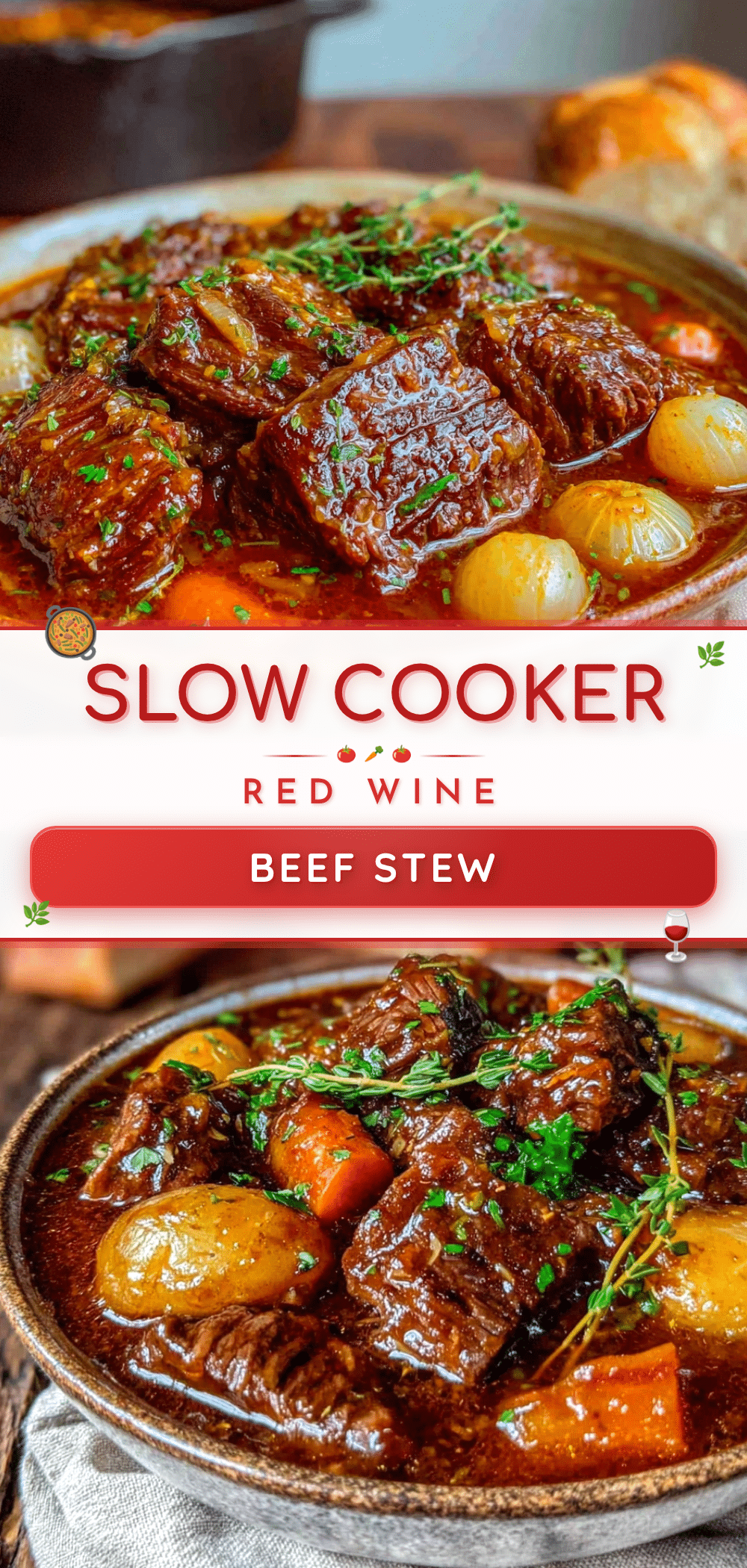
Cozy Slow Cooker Beef Stew with Red Wine – Easy One-Pot Dinner
This rich, wine-infused beef stew features fall-apart tender chuck roast, hearty vegetables, and a silky broth that tastes like it simmered all day—but requires just 15 minutes of hands-on prep. Perfect for busy weeknights or cozy Sunday dinners.
- Prep Time: 15 minutes
- Cook Time: 7-8 hours (low) or 4-5 hours (high)
- Total Time: 7 hours 15 minutes to 8 hours 15 minutes
- Yield: 6 servings 1x
- Category: Main Course
- Cuisine: American
Ingredients
- 2 pounds beef chuck roast, cut into 1.5-inch cubes
- 3 tablespoons all-purpose flour
- 2 tablespoons olive oil, divided
- 1 teaspoon salt, plus more to taste
- ½ teaspoon black pepper, freshly ground
- 1 large yellow onion, diced (about 1.5 cups)
- 3 cloves garlic, minced
- 4 medium carrots, peeled and cut into 1-inch chunks
- 3 celery stalks, sliced into ½-inch pieces
- 1.5 pounds Yukon Gold potatoes, cut into 1-inch cubes
- 1.5 cups dry red wine (Cabernet Sauvignon or Merlot recommended)
- 2 cups low-sodium beef broth
- 2 tablespoons tomato paste
- 2 bay leaves
- 1 teaspoon dried thyme (or 3 sprigs fresh)
- 1 teaspoon dried rosemary, crushed
- 1 tablespoon Worcestershire sauce
- 1 cup frozen peas
- 2 tablespoons fresh parsley, chopped (for garnish)
- Salt and pepper to taste
Instructions
- Prep the Beef: Pat the beef chuck cubes dry with paper towels. In a mixing bowl, combine the flour, 1 teaspoon salt, and ½ teaspoon pepper. Toss the beef cubes in the flour mixture until evenly coated. Shake off any excess flour.
- Brown the Beef: Heat 1 tablespoon of olive oil in a large skillet over medium-high heat. Working in batches (don’t overcrowd the pan!), add the beef cubes and cook for 2-3 minutes per side until deeply browned. Use tongs to flip them. Transfer the browned beef to your slow cooker. Pro tip: Those brown bits stuck to the pan are pure flavor—don’t clean the skillet yet!
- Sauté the Aromatics: Reduce the heat to medium and add the remaining 1 tablespoon of olive oil to the same skillet. Add the diced onion and cook for 3-4 minutes until softened and translucent. Add the minced garlic and cook for 30 seconds until fragrant, stirring constantly so it doesn’t burn.
- Deglaze the Pan: Pour about ½ cup of the red wine into the skillet and scrape up all those delicious brown bits from the bottom with a wooden spoon. Let it simmer for 1-2 minutes until slightly reduced. This step is where the magic happens—don’t skip it!
- Build the Base: Pour the onion mixture into the slow cooker over the beef. Add the carrots, celery, and potatoes. In a separate bowl or measuring cup, whisk together the remaining 1 cup of red wine, beef broth, tomato paste, and Worcestershire sauce. Pour this over the meat and vegetables.
- Add the Herbs: Tuck the bay leaves, dried thyme, and dried rosemary into the liquid. Give everything a gentle stir to combine. The liquid should almost cover the ingredients—if it doesn’t, add a little more broth or water.
- Cook Low and Slow: Cover the slow cooker and cook on LOW for 7-8 hours or on HIGH for 4-5 hours. I prefer low and slow for the most tender beef. About 30 minutes before serving, remove the bay leaves and stir in the frozen peas. They’ll warm through quickly.
- Finish and Serve: Taste the stew and adjust salt and pepper as needed. The flour from the beef coating should have thickened the broth nicely, but if you want it thicker, mix 1 tablespoon cornstarch with 2 tablespoons cold water and stir it in. Let it cook uncovered for 10 more minutes. Ladle into bowls, garnish with fresh parsley, and serve with crusty bread for dipping.
Notes
Don’t skip browning the beef—it adds essential depth of flavor. Use a dry red wine you’d enjoy drinking; avoid ‘cooking wine.’ For gluten-free, substitute flour with a gluten-free blend or cornstarch. The stew tastes even better the next day. To thicken, use a cornstarch slurry or mash some potatoes.
Nutrition
- Serving Size: 1 serving (about 1.5
- Calories: 425
- Sugar: 8
- Sodium: 680
- Fat: 18
- Saturated Fat: 6
- Carbohydrates: 32
- Fiber: 5
- Protein: 35
Keywords: beef stew, slow cooker, red wine, comfort food, one-pot, easy dinner, fall-apart beef, hearty stew