Love this? Save it for later!
Share the inspiration with your friends
This was supposed to be a classic, elegant potato gratin for my sister’s birthday dinner. I had the gruyère ready, the cream measured, and a specific mandoline slicer that I’d cleaned just for the occasion. But somewhere between the third glass of wine I poured myself and the phone call from my sister asking if she could bring her new boyfriend—who I’d never met—I grabbed the wrong bag from the fridge. Instead of heavy cream, I pulled out a tub of sour cream. Instead of gruyère, I grabbed a block of cheddar. And instead of carefully layering thin slices, I just threw everything into a casserole dish because honestly, by that point, I was already ten minutes behind and my kitchen looked like a potato bomb had gone off.
I stared at this lumpy, cheesy mess in the dish and almost started over. I mean, the boyfriend was coming. This was supposed to be impressive. But I was tired, the wine was good, and I just thought, well, let’s see what happens. I shoved it in the oven, crossed my fingers, and spent the next forty minutes frantically wiping down counters and hiding the evidence of my kitchen meltdown.
When I pulled that casserole out, I honestly didn’t know what to expect. The top was golden and bubbly, the edges were crispy, and the smell—let me tell you—made the boyfriend walk into the kitchen and ask, “What is that?” My sister took one bite, closed her eyes, and said, “This is the best thing you’ve ever made.” And that was it. The happy accident became the only potato dish I make for a crowd now. It’s not fancy, it’s not French, and it’s definitely not what I planned. But it’s honest, it’s loaded, and it disappears every single time.
Why You’ll Love This Recipe
Look, I’ve tested a lot of potato casseroles in my time. Some are too dry, some are too soupy, and some just taste like a pile of starch with no personality. This loaded mashed potato casserole hits that perfect sweet spot—creamy, cheesy, and packed with texture, but sturdy enough to hold its shape on a serving spoon. It’s the kind of dish that makes people go quiet at the table, and as a host, that’s the best compliment you can get.
- Perfect for a Crowd: This recipe scales beautifully. I’ve made it for eight people and for twenty, and it works every single time without extra fuss.
- Make-Ahead Friendly: You can assemble this casserole a full day in advance. Just pop it in the oven when your guests arrive, and you get to enjoy the party instead of hiding in the kitchen.
- Simple Ingredients: No fancy grocery store trips. Potatoes, cheese, sour cream, butter, and a few pantry staples—that’s it. You probably have most of this already.
- Always Gets Rave Reviews: I’ve served this alongside roast chicken, grilled steak, and even holiday turkey. It’s the side dish that steals the show, and I’ve had multiple friends text me for the recipe the next morning.
- Unbelievably Comforting: There’s something about that crispy, cheesy top layer giving way to a creamy, buttery interior that just hits different. It’s soul food, plain and simple.
What makes this version different from every other loaded mashed potato casserole out there? It’s the technique. Most recipes tell you to just mix everything together and bake it. But I’ve learned that the secret is in the texture of the potatoes themselves—you want them creamy but not gummy, and the way you mash them matters more than you’d think. I also use a specific ratio of sour cream to cream cheese that gives this casserole a tangy richness without making it heavy. It’s not just another recipe—it’s the one I bring to every potluck, every holiday, and every dinner party where I want to look like I tried really hard when I actually just threw it together.
What Ingredients You Will Need
This recipe uses simple, honest ingredients that come together to create something truly special. The beauty of this loaded mashed potato casserole is that each ingredient plays a specific role—some for creaminess, some for flavor, and some for that irresistible texture on top.
For the Mashed Potato Base
- 5 pounds Yukon Gold potatoes, peeled and quartered (I find Yukon Golds give the creamiest texture without getting gluey—Russets work too, but they absorb more liquid)
- 1 cup sour cream, room temperature (adds tang and lightness; I prefer full-fat for best results)
- 8 ounces cream cheese, softened (this is my secret weapon for ultra-creamy texture without making the casserole greasy)
- 1/2 cup unsalted butter, melted (salted butter works if you reduce the added salt slightly)
- 1 cup whole milk, warmed (you can use 2% or half-and-half for a richer version)
- 2 teaspoons garlic powder (not garlic salt—you want the flavor without extra sodium)
- 1 teaspoon onion powder
- 1 teaspoon salt, plus more for the cooking water
- 1/2 teaspoon black pepper
For the Loaded Toppings
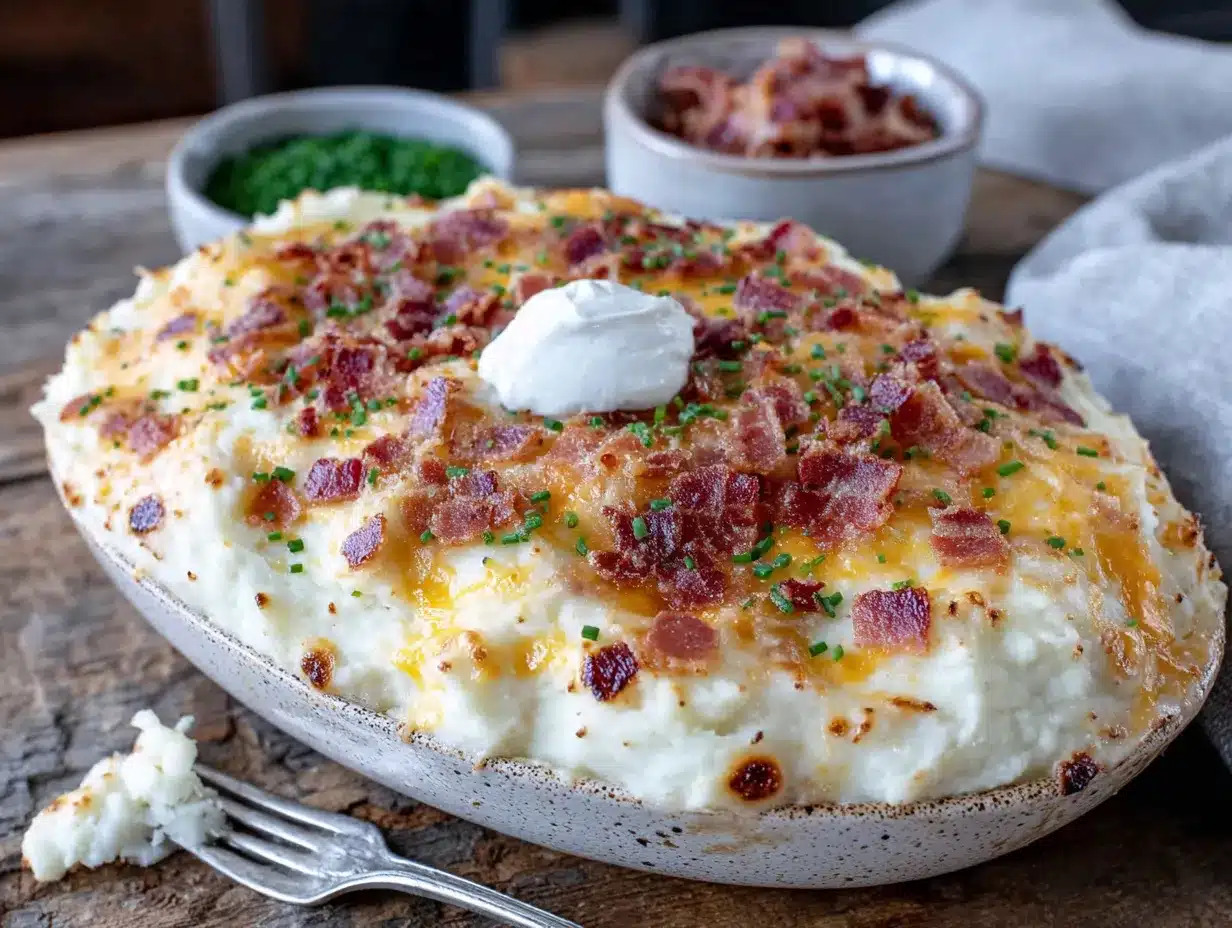
- 2 cups sharp cheddar cheese, shredded (I recommend Tillamook or Cabot for that sharp, melty finish)
- 1 cup cooked bacon, chopped (about 10-12 strips; I prefer thick-cut for more texture)
- 1/2 cup green onions, sliced (both white and green parts—don’t skip these, they add freshness)
- 1/4 cup fresh chives, chopped (optional but lovely for garnish)
Ingredient Tips from My Kitchen
Let me save you some trial and error. First, don’t use red potatoes or waxy potatoes here—they don’t mash well and your casserole will end up chunky instead of creamy. I learned this the hard way when I was out of Yukon Golds and thought, “how different can it be?” Very different. Not good.
Second, bring your sour cream and cream cheese to room temperature before mixing. Cold dairy will seize up your hot potatoes and leave you with a lumpy mess. I usually set them on the counter about an hour before I start boiling the potatoes.
And third, shred your own cheddar. I know, I know—pre-shredded is convenient. But it’s coated in anti-caking agents that prevent it from melting smoothly. For a casserole this loaded, you want that cheese to melt into a silky, stretchy layer, not a grainy one. Trust me on this one.
Equipment Needed
You don’t need a professional kitchen to pull this off, but having the right tools makes the process so much smoother. Here’s what you’ll need:
- Large stockpot (at least 6 quarts) for boiling the potatoes
- Colander for draining
- Potato masher or ricer (I prefer a ricer for the smoothest texture, but a good old-fashioned masher works perfectly fine)
- Large mixing bowl
- 9×13-inch baking dish (this is the sweet spot for feeding 8-12 people)
- Cheese grater (box grater or handheld—just shred your own cheese)
- Sharp knife and cutting board
- Measuring cups and spoons
- Aluminum foil for covering during baking
If you don’t have a ricer, don’t stress. I used a fork for years before I finally bought one. The key is just to mash thoroughly and not overwork the potatoes. A hand mixer works in a pinch, but be careful—it can turn your potatoes gummy if you go too long.
Preparation Method
Alright, let’s get into the actual cooking. I’ve broken this down step by step so you don’t miss anything. Take your time, and remember—this is supposed to be fun, not stressful.
Step 1: Boil the Potatoes
Place your peeled and quartered Yukon Gold potatoes in a large stockpot and cover them with cold water by about an inch. Add a generous tablespoon of salt to the water—this seasons the potatoes from the inside out. Bring the water to a boil over high heat, then reduce to a simmer and cook for 15-20 minutes, until the potatoes are fork-tender. You should be able to pierce a piece with a fork and have it slide off easily. Drain the potatoes in a colander and let them sit for a minute or two to steam dry. This is important—excess water will make your casserole watery.
Step 2: Mash the Potatoes
Return the drained potatoes to the pot or transfer them to a large mixing bowl. Mash them while they’re still hot—this is non-negotiable. Cold potatoes don’t absorb the dairy properly. If you’re using a ricer, rice the potatoes directly into the bowl. If you’re using a masher, go for it, but don’t over-mash. You want smooth but not gluey. A few small lumps are totally fine—they add texture.
Step 3: Add the Creamy Base
While the potatoes are still warm, add the softened cream cheese and melted butter. Stir gently until they’re incorporated. Then add the sour cream, warmed milk, garlic powder, onion powder, salt, and pepper. Mix until everything is combined and creamy. Taste it here—this is your moment to adjust seasoning. I usually add a pinch more salt at this stage because potatoes are greedy little things that need a lot of seasoning.
Step 4: Assemble the Casserole
Preheat your oven to 375°F (190°C). Grease your 9×13-inch baking dish with butter or non-stick spray. Spread the mashed potato mixture evenly into the dish. Sprinkle the shredded cheddar cheese all over the top—don’t be shy, cover every inch. Then scatter the chopped bacon evenly over the cheese.
Step 5: Bake to Golden Perfection
Bake the casserole uncovered for 25-30 minutes, until the cheese is melted and bubbly and the edges are starting to brown. If you want an extra-crispy top, switch your oven to broil for the last 2-3 minutes—but watch it closely, because broiling can go from golden to burnt in seconds. I learned this the hard way when I got distracted by a text message and ended up with charcoal topping.
Step 6: Rest and Serve
Let the casserole rest for 5-10 minutes after it comes out of the oven. This allows it to set up so it doesn’t turn into a soupy mess when you scoop it. Sprinkle the sliced green onions and fresh chives over the top just before serving. The heat from the casserole will slightly wilt them, releasing their aroma.
Cooking Tips & Techniques
After making this loaded mashed potato casserole more times than I can count, I’ve picked up a few tricks that make a real difference. Let me share them so you don’t have to learn the hard way like I did.
Don’t overwork the potatoes. This is the number one mistake I see. When you over-mash potatoes, you break down the starch cells and release too much starch, which turns your creamy casserole into a gluey, paste-like mess. Mash just until smooth, then stop. Your arm might want to keep going, but resist the urge.
Warm your milk before adding it. Cold milk will cool down your hot potatoes and make them dense and heavy. I just microwave the milk for 30-40 seconds until it’s warm to the touch. Same goes for the sour cream and cream cheese—room temperature is your friend.
Use a water bath for extra creaminess. If you’re feeling fancy, place your baking dish inside a larger pan and pour hot water halfway up the sides of the casserole dish. This creates a humid environment that keeps the edges from drying out while the center cooks through. I do this for holiday dinners when I want the casserole to be absolutely perfect.
Toast the bacon separately. Some recipes tell you to just sprinkle raw bacon on top and let it cook in the oven. Don’t do this. The bacon won’t render properly and you’ll end up with chewy, fatty bits. Cook your bacon until crispy, crumble it, then sprinkle it on. The texture difference is night and day.
Make it ahead without worry. This casserole is a host’s best friend. You can assemble it completely (minus the green onion garnish) up to 24 hours in advance. Just cover it tightly with foil and refrigerate. When you’re ready to bake, add about 10-15 minutes to the cooking time since you’re starting from cold. I’ve done this for every Thanksgiving for the past three years, and it’s never let me down.
Variations & Adaptations
One of the things I love about this loaded mashed potato casserole is how flexible it is. Here are some variations I’ve tried and loved:
Loaded Baked Potato Style
Add 1/2 cup of finely diced broccoli florets (blanched first) and swap the cheddar for a mix of cheddar and Monterey Jack. Top with extra bacon and a dollop of sour cream before serving. This version is a hit with kids who think they don’t like vegetables.
Spicy Southwestern Version
Mix in 1 can of drained diced green chiles, 1/2 cup of corn kernels, and 1/4 cup of chopped jalapeños (seeded if you want less heat). Use pepper jack cheese instead of cheddar and top with fresh cilantro. I made this for a Super Bowl party and it was gone in twenty minutes.
Garlic Herb Lovers
Roast a whole head of garlic (cut the top off, drizzle with olive oil, wrap in foil, and bake at 400°F for 40 minutes) and squeeze the soft cloves into the mashed potatoes. Add 2 tablespoons of fresh chopped rosemary and thyme. This version is elegant enough for a holiday table and pairs beautifully with roast beef or lamb.
Dairy-Free Adaptation
Use vegan butter, dairy-free sour cream (I like Tofutti), and a plant-based cream cheese. For the cheese topping, look for a good melting vegan cheddar—Violife works well. The texture won’t be exactly the same, but it’s still creamy and satisfying. I tested this for a friend with lactose intolerance and she asked for seconds.
Low-Carb Option
Swap the potatoes for cauliflower (about 2 large heads, steamed and well-drained). Follow the same recipe but reduce the milk to 1/2 cup since cauliflower releases more moisture. The texture is lighter but still delicious. Just don’t call it “cauliflower casserole” when you serve it—let people discover it on their own.
Serving & Storage Suggestions
This loaded mashed potato casserole is at its best served hot, straight from the oven. The contrast between the crispy, cheesy top and the creamy interior is what makes it so addictive. I like to serve it in the baking dish itself—it’s rustic and honest, and it keeps everything warm throughout the meal.
What to serve alongside: This casserole is a team player. It’s incredible with roasted chicken, grilled steak, meatloaf, or holiday turkey. I also love it with a simple green salad dressed with lemon vinaigrette—the acidity cuts through the richness perfectly. For a complete dinner party menu, pair it with honey glazed carrots and a cranberry walnut salad for a meal that feels special without being fussy.
Storage: Leftovers (if you have any) keep beautifully in an airtight container in the refrigerator for up to 4 days. The flavors actually meld together overnight, so it might even taste better the next day. I’ve been known to eat cold mashed potato casserole straight from the fridge at 11 PM, and I have no regrets.
Reheating: The best way to reheat is in the oven at 350°F for 15-20 minutes, covered with foil to prevent drying out. You can microwave individual portions in 30-second bursts, but the top won’t be as crispy. If you’re reheating a large portion, add a splash of milk and stir it in before warming to restore creaminess.
Freezing: This casserole freezes surprisingly well. Assemble it completely (without the green onion garnish), wrap it tightly in foil, and freeze for up to 3 months. Thaw overnight in the refrigerator before baking. Add about 15-20 minutes to the baking time since you’re starting from cold. I always keep one in the freezer for unexpected guests or busy weeknights.
Nutritional Information & Benefits
Let’s be honest—this is not a health food. But it’s comfort food made with real ingredients, and there’s something to be said for that. Here’s the estimated nutritional breakdown per serving (based on 12 servings):
| Nutrient | Amount per Serving |
|---|---|
| Calories | 385 |
| Total Fat | 24g |
| Saturated Fat | 14g |
| Cholesterol | 75mg |
| Sodium | 620mg |
| Total Carbohydrates | 32g |
| Dietary Fiber | 3g |
| Sugar | 4g |
| Protein | 12g |
| Calcium | 250mg |
| Potassium | 780mg |
Potatoes get a bad rap, but they’re actually a good source of vitamin C, potassium, and vitamin B6—especially when you eat the skin (though we’ve peeled them here for texture). The calcium from the cheese and dairy is a bonus for bone health. And honestly, sometimes your soul just needs a warm, cheesy, comforting dish. I believe in balance—eat your vegetables, but also eat this casserole and enjoy every single bite.
Dietary Considerations: This recipe contains dairy and gluten (if using store-bought bacon with additives). It can be made gluten-free by checking your bacon ingredients. For a dairy-free version, see the variations section above.
Conclusion
This loaded mashed potato casserole started as a mistake, but it’s become my most-requested dish. Every time I bring it to a gathering, someone asks for the recipe. Every holiday, my family asks, “Are you making the potatoes?” And every time I make it, I smile remembering that chaotic night when I grabbed the wrong ingredients and accidentally created something wonderful.
That’s the thing about cooking—sometimes the best dishes come from the moments when everything goes wrong. You learn to trust your instincts, to work with what you have, and to laugh at yourself when you mess up. This casserole is proof that perfection is overrated. What matters is that it’s made with love, shared with people you care about, and eaten with joy.
I’d love to hear how yours turns out. Did you add your own twist? Did it disappear as fast as mine always does? Leave a comment below and let me know—and don’t forget to share this recipe with a friend who needs a foolproof dish for their next gathering. Happy cooking, friends!
Frequently Asked Questions
Can I make this loaded mashed potato casserole ahead of time?
Absolutely! You can assemble the entire casserole (minus the green onion garnish) up to 24 hours in advance. Cover it tightly with foil and refrigerate. When you’re ready to bake, add about 10-15 minutes to the cooking time since it’s starting from cold. This is my go-to strategy for holiday dinners and dinner parties.
What’s the best potato for this casserole?
Yukon Gold potatoes are my top choice. They have a naturally buttery flavor and creamy texture that works perfectly here. Russet potatoes are a good second option, but they absorb more liquid, so you might need to add an extra splash of milk. Avoid waxy potatoes like red or new potatoes—they don’t mash well and will leave you with a chunky casserole.
Can I freeze this casserole?
Yes! Assemble the casserole completely (without the green onion garnish), wrap it tightly in foil, and freeze for up to 3 months. Thaw overnight in the refrigerator before baking. Add about 15-20 minutes to the baking time. I always keep one in the freezer for last-minute guests or busy weeks.
How do I prevent my mashed potato casserole from being watery?
The key is to let your potatoes steam dry after draining them. Let them sit in the colander for a minute or two before mashing. Also, make sure your cream cheese and sour cream are at room temperature—cold dairy can cause the potatoes to seize up and release water. And don’t over-mash, which can break down the starch and make the texture gluey.
Can I make this recipe gluten-free?
Yes, this recipe is naturally gluten-free as long as you check your bacon ingredients. Some bacon brands use additives that contain gluten, so look for a brand that’s labeled gluten-free. All the other ingredients—potatoes, dairy, cheese, and seasonings—are naturally gluten-free.
Pin This Recipe!
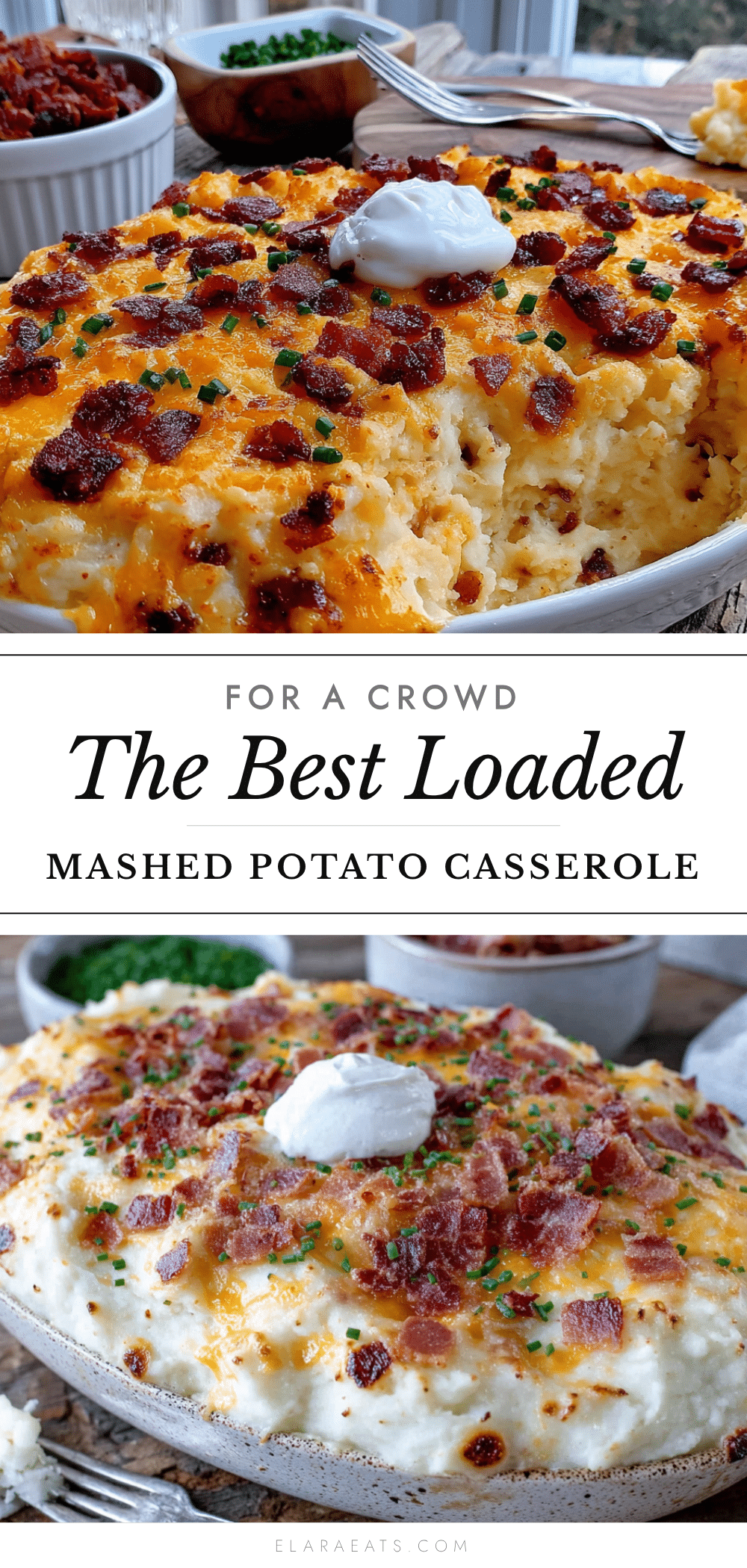
The Best Loaded Mashed Potato Casserole for a Crowd

This loaded mashed potato casserole is creamy, cheesy, and packed with texture, perfect for feeding a crowd. It started as a happy accident but has become the most-requested dish for gatherings and holidays.
- Prep Time: 20 minutes
- Cook Time: 45 minutes
- Total Time: 1 hour 5 minutes
- Yield: 12 servings 1x
- Category: Side Dish
- Cuisine: American
Ingredients
- 5 pounds Yukon Gold potatoes, peeled and quartered
- 1 cup sour cream, room temperature
- 8 ounces cream cheese, softened
- 1/2 cup unsalted butter, melted
- 1 cup whole milk, warmed
- 2 teaspoons garlic powder
- 1 teaspoon onion powder
- 1 teaspoon salt, plus more for cooking water
- 1/2 teaspoon black pepper
- 2 cups sharp cheddar cheese, shredded
- 1 cup cooked bacon, chopped (about 10–12 strips)
- 1/2 cup green onions, sliced
- 1/4 cup fresh chives, chopped (optional)
Instructions
- Place peeled and quartered Yukon Gold potatoes in a large stockpot and cover with cold water by about an inch. Add a generous tablespoon of salt. Bring to a boil over high heat, then reduce to a simmer and cook for 15-20 minutes until fork-tender. Drain in a colander and let steam dry for a minute or two.
- Return drained potatoes to the pot or transfer to a large mixing bowl. Mash while still hot using a potato masher or ricer until smooth but not gluey.
- While potatoes are still warm, add softened cream cheese and melted butter. Stir gently until incorporated. Add sour cream, warmed milk, garlic powder, onion powder, salt, and pepper. Mix until combined and creamy. Adjust seasoning to taste.
- Preheat oven to 375°F (190°C). Grease a 9×13-inch baking dish with butter or non-stick spray. Spread the mashed potato mixture evenly into the dish. Sprinkle shredded cheddar cheese over the top, then scatter chopped bacon evenly over the cheese.
- Bake uncovered for 25-30 minutes until cheese is melted and bubbly and edges are starting to brown. For an extra-crispy top, broil for the last 2-3 minutes, watching closely.
- Let casserole rest for 5-10 minutes after baking. Sprinkle sliced green onions and fresh chives over the top just before serving.
Notes
Bring sour cream and cream cheese to room temperature before mixing. Shred your own cheddar for best melting. For make-ahead, assemble completely (minus green onion garnish) up to 24 hours in advance, cover with foil, and refrigerate. Add 10-15 minutes to baking time when starting from cold. For freezing, assemble without garnish, wrap tightly in foil, and freeze up to 3 months. Thaw overnight in refrigerator before baking, adding 15-20 minutes to baking time.
Nutrition
- Serving Size: 1 serving (1/12 of r
- Calories: 385
- Sugar: 4
- Sodium: 620
- Fat: 24
- Saturated Fat: 14
- Carbohydrates: 32
- Fiber: 3
- Protein: 12
Keywords: loaded mashed potato casserole, potato casserole, mashed potato casserole, loaded potatoes, comfort food, holiday side dish, crowd-pleasing recipe