Love this? Save it for later!
Share the inspiration with your friends
I had refused to make a charcuterie board for football season for years. Three whole seasons of game days where I’d watch friends show up with these elaborate, Pinterest-perfect spreads while I stuck to my tried-and-true buffalo wings and seven-layer dip. Then I found my husband standing in front of the open fridge on a Sunday afternoon, eating prosciutto straight from the package with this look on his face like he’d been caught doing something wrong. “It’s just easier this way,” he mumbled. That’s when it clicked — I wasn’t avoiding charcuterie boards because they were hard. I was avoiding them because I thought they were fussy and impractical for actual game watching. You know that feeling when you realize you’ve been avoiding something for the wrong reasons? That was me, standing in my kitchen with a half-eaten package of prosciutto and a husband who looked genuinely disappointed I’d caught him.
So I did what any reasonable person would do. I went all in. I grabbed every snack-adjacent thing in my pantry, raided the cheese drawer, and started arranging. The power went out halfway through — a transformer blew somewhere down the street — and I finished building this board by flashlight with my phone propped up against a jar of pickles. Honestly, that might have been the best thing that could have happened. Without perfect lighting to stress over, I just piled things on until it looked right. My husband walked back in, saw the spread, and didn’t say a word for a solid ten seconds. Then he grabbed a cracker and just started pointing at things. That board became the reason our friends now fight over who hosts the next game day. This is that board — the one that converted me, the one that proves charcuterie and football actually belong together.
Why You’ll Love This Loaded Football Charcuterie Board
Let me tell you why this particular board works where others fall flat. I’ve tested this combination through three full football seasons, through playoff games where tensions ran high, and through Super Bowl parties where the food needed to hold its own against the commercials. This isn’t just cheese and meat thrown on a platter. It’s a strategic lineup designed for grazing over four quarters without falling apart.
- Game-Day Ready in 20 Minutes : No cooking required. No timing issues. You can assemble this during pregame shows without missing a single play.
- Feeds a Crowd Without the Fuss : This board handles anywhere from 6 to 12 people easily. Everyone grazes at their own pace, which means no one’s food gets cold during a timeout review.
- All the Right Textures : Crunchy, creamy, salty, sweet, tangy — every bite hits different. That’s what keeps people coming back for more.
- No Special Equipment Needed : One large board or baking sheet. That’s it. No weird tools, no special gadgets.
- Customizable for Any Crowd : Swap out meats, switch up cheeses, add your team’s local specialties. This board flexes hard.
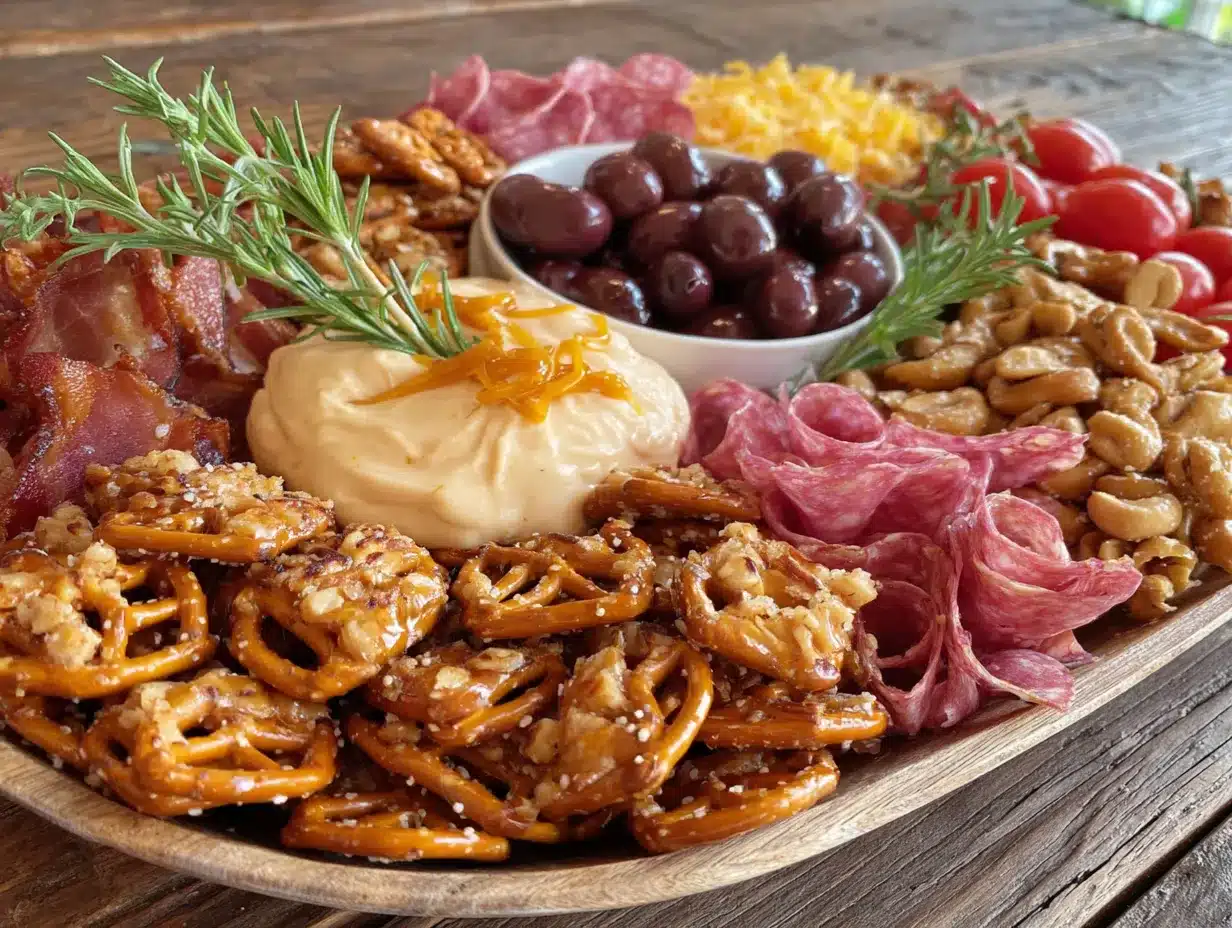
What makes this different from every other charcuterie board you’ve seen? It’s built for actual eating during actual games. I’m not arranging flowers around cheese wheels here. Every component serves a purpose — the salty meats balance the creamy cheeses, the crunchy elements give you something to do with your hands during tense moments, and the sweet pops keep energy up through the fourth quarter. This is the board you make when you actually want people to eat, not just photograph.
There’s something deeply satisfying about watching a room full of people gathered around a board like this. It becomes the center of conversation between plays. Someone reaches for a piece of salami, their friend follows with a cheese cube, and suddenly they’re debating the ref’s call while reaching for the same stuffed pepper. That’s the magic. Food that brings people together without demanding attention. This board does exactly that.
What Ingredients You Will Need
This recipe uses simple, crowd-pleasing ingredients that come together to deliver maximum flavor and variety without any actual cooking. Everything should be easy to find at any grocery store — no specialty markets required.
Meats (Choose 3-4)
- Prosciutto (8 oz) — Look for thinly sliced, not shaved. The texture holds up better on a board. I prefer the Del Duca brand for consistent quality.
- Sopressata (8 oz) — A dry salami with nice spice. Pre-sliced works fine, but whole slices you can fold yourself look more intentional.
- Pepperoni (6 oz) — The game-day classic. Get the larger diameter slices if you can find them. They’re easier to grab and dip.
- Capicola (6 oz) — Adds a softer, more tender option alongside the firmer meats. Boar’s Head makes a solid version.
Cheeses (Choose 3-4)
- Aged Cheddar (8 oz) — Sharp, crumbly, stands up to bold flavors. Cube it, don’t slice it. Cubes are easier to grab with one hand.
- Brie (8 oz wheel) — The soft, creamy counterpoint to all that salt. Leave it whole with a knife beside it. People love cutting their own slice.
- Smoked Gouda (8 oz) — That smoky flavor pairs perfectly with football food. Cut into thin triangles so they layer nicely on crackers.
- Blue Cheese (4 oz) — Optional but recommended for the bold eaters. Crumbles work better than wedges for easy grabbing.
Crackers & Crunch
- Water Crackers (1 box) — Neutral base that doesn’t compete with toppings. Carr’s are my go-to.
- Pita Chips (1 bag) — Sturdy enough for dips. Stacy’s Simply Naked work great.
- Pretzel Crisps (1 bag) — Salty crunch that everyone reaches for first. The Snack Factory original flavor is perfect.
- Breadsticks (1 package) — Adds height and visual interest. Grissini-style are ideal.
Dips & Spreads
- Honey (small jar) — Drizzle over brie or blue cheese. Local honey adds nice flavor variation if you have it.
- Whole Grain Mustard (small jar) — For the meats. Maille is my preferred brand.
- Fig Jam or Pepper Jelly (small jar) — Sweet heat that cuts through rich cheese. Bonne Maman fig jam is excellent.
- Ranch or Blue Cheese Dip (1 cup) — Because football needs ranch. Make your own or use Litehouse.
Fresh & Pickled Elements
- Red Grapes (1 bunch) — Sweet pops that cleanse the palate. Seedless, obviously.
- Dried Apricots (1 cup) — Chewy sweetness that balances salt. Look for Turkish apricots.
- Cornichons (1 jar) — Tiny pickles that cut through rich meat and cheese. Essential for balance.
- Pickled Okra or Banana Peppers (1 jar) — Adds acidity and heat. Optional but highly recommended for variety.
Extras for the Win
- Roasted Nuts (1 cup) — Salted almonds or honey-roasted peanuts add crunch. Planters lightly salted almonds work well.
- Dark Chocolate (4 oz) — Broken into pieces. Sounds weird on a savory board, but trust me. People find it and get excited.
- Olives (1 cup) — Castelvetrano green olives are buttery and mild. Everyone likes these.
- Stuffed Peppers (1 jar) — Mini sweet peppers stuffed with cheese or rice. Adds color and a pop of flavor.
Equipment Needed
You don’t need much for this board. Honestly, the less equipment you use, the more relaxed the process feels.
- A Large Board or Platter (at least 12×18 inches) — Wooden cutting boards work beautifully. So do marble slabs, ceramic platters, or even a clean baking sheet lined with parchment. I use a large acacia wood board I found at HomeGoods for twenty bucks. It’s held up through three seasons of game days.
- Small Bowls or Ramekins (4-5) — For dips, honey, mustard, olives, and anything wet that shouldn’t touch the crackers directly. Mismatched ramekins actually look more interesting than matching sets.
- Cheese Knives (2-3) — One for soft cheese, one for hard cheese, one for spreading. If you don’t have cheese knives, butter knives work fine.
- Serving Spoons and Tongs (2-3) — Small tongs for olives and pickles. A spoon for the jam. Nothing fancy needed.
- Parchment Paper (optional) — Lining your board makes cleanup infinitely easier. Guests never notice it’s there.
Pro tip: If you’re serving a crowd larger than 8 people, consider using two smaller boards instead of one giant one. They’re easier to pass around and keep the food accessible from both sides of the table.
Preparation Method
Take everything out of the refrigerator 30 minutes before you start assembling. Cheese and meat taste better at room temperature, and cold cheese doesn’t spread well. Trust me on this one — I learned the hard way after serving rock-hard brie to a room full of hungry football fans.
- Set Up Your Small Bowls First (2 minutes)
Place your ramekins or small bowls on the board first. This determines the layout of everything else. Put the honey, mustard, fig jam, ranch dip, and olives in separate bowls. Spread them out so there’s a dip or spread within easy reach of every seat. I usually place one near each corner of the board and one in the middle. - Add the Cheeses (5 minutes)
Place the brie wheel whole on the board — it becomes a natural anchor point. Cube the aged cheddar into 1-inch pieces and pile them near one edge. Slice the smoked gouda into thin triangles and fan them out. If you’re using blue cheese, crumble it into a small pile rather than leaving it in a wedge. Position the cheeses so they’re not all clustered together. Spread them around the board so guests have to move around to try different ones. - Fold the Meats (5 minutes)
Fold prosciutto slices into loose ribbons — don’t roll them tight, they look better when they’re relaxed. Layer sopressata slices in overlapping rows. Fan pepperoni slices out in a line. Fold capicola into loose bundles. Place each meat near a complementary cheese. Prosciutto near brie is a classic combo. Sopressata near cheddar works beautifully. Leave space between meat piles so they don’t blend together visually. - Add Crackers and Crunch (3 minutes)
Arrange crackers in small clusters around the board. Don’t line them up perfectly — scattered looks more natural and inviting. Water crackers near the brie. Pita chips near the ranch dip. Pretzel crisps near the mustard. Breadsticks can stand upright in a small jar or lay diagonally across one corner of the board. You want guests to be able to grab a cracker and reach a topping without stretching. - Fill in the Gaps with Fruits and Pickles (4 minutes)
Scatter red grapes in small clusters throughout the board. Tuck dried apricots between cheese piles. Place cornichons in a small pile near the meats. Arrange pickled okra or banana peppers near the blue cheese if you’re using it. These bright, acidic elements are what keep the board from feeling heavy. They’re palate cleansers between rich bites. - Add the Extras (3 minutes)
Fill any remaining empty spaces with roasted nuts, dark chocolate pieces, olives, and stuffed peppers. Don’t overthink this part — just tuck them into gaps. A board that looks too arranged feels precious. A board that looks abundant feels welcoming. You want abundance. Sprinkle a few nuts around for texture, drop chocolate pieces near the dried fruit, and let olives sit in their own small cluster. - Final Touches (1 minute)
Drizzle honey over the brie. Add a spoon to the fig jam. Tuck a small knife beside the brie. Step back and look at the board from all angles. If something looks empty, add more crackers or nuts. If something looks crowded, move it slightly. The goal is a board that looks full but not packed. You want guests to see variety without feeling overwhelmed.
Your board is ready. Total active time: about 20 minutes. Total stress level: minimal. You did it.
Cooking Tips & Techniques
Here’s what I’ve learned from building about fifty of these boards over the past few years. Some lessons came from successes. Others came from boards that looked sad and sparse.
Don’t overthink the layout. The biggest mistake people make is trying to make the board look like a magazine photo. Real boards look better when they’re a little messy. Think about how food lands on a plate at a party — it’s not perfect, and that’s fine. Let the ingredients fall naturally. A cracker leaning against a cheese cube looks more inviting than one standing at attention.
Room temperature is your friend. I cannot stress this enough. Cold cheese tastes like nothing. Cold meat feels greasy. Take everything out of the fridge 30 minutes before serving. If you’re building the board ahead of time, cover it loosely with plastic wrap and let it sit on the counter. Don’t refrigerate the finished board — you’ll undo all that room temperature work.
Build in layers. Start with the bowls and cheeses because they’re the biggest elements. Then add meats. Then crackers. Then small items fill the gaps. Working from largest to smallest prevents you from running out of space for big items. I learned this the hard way when I placed crackers first and couldn’t fit the brie wheel anywhere.
Keep refill ingredients handy. Whatever you put on the board, have more of it in the kitchen. Crackers disappear fast. Grapes vanish. Have backup bags ready so you can refresh the board during halftime without rebuilding the whole thing. I keep a small tray in the kitchen with extra crackers, nuts, and cheese cubes for quick refills.
Watch the wet-to-dry ratio. Too many wet ingredients (pickles, olives, grapes) can make crackers soggy if they sit too long. Place wet items in small bowls or on the edges of the board where they won’t touch crackers directly. If you’re serving in a humid environment, refresh the crackers at halftime. Soggy crackers are the one thing that can ruin an otherwise perfect board.
Label nothing. Part of the fun of a charcuterie board is the discovery. Let people ask what something is. Let them guess. The conversation that starts with “What is this cheese?” often leads to “Oh, try it with this honey.” That’s the whole point of a board — it creates interaction. Don’t ruin it with labels.
Variations & Adaptations
This board is built to flex. Here are some variations I’ve tested and loved.
Low-Carb / Keto Version : Skip the crackers and breadsticks entirely. Add extra nuts, cheese crisps (like Whisps), cucumber slices, and bell pepper strips for dipping. Double the meat portions since you’re not filling up on carbs. Add celery sticks and radish slices for crunch. This version actually holds up better for longer grazing because the vegetables don’t get soggy.
Vegetarian Game Day Board : Replace all meats with marinated mushrooms, grilled artichoke hearts, roasted red peppers, and extra cheese varieties. Add hummus and baba ganoush as dips. Include marinated mozzarella balls and herbed goat cheese for protein. Smoked paprika on the nuts adds that savory depth you’d normally get from meat. My vegetarian friends request this version specifically now.
Spicy Southwestern Board : Swap the fig jam for jalapeño jelly. Add pepper jack cheese, chorizo slices, pickled jalapeños, and tortilla chips instead of crackers. Include mango chunks for sweetness to balance the heat. A small bowl of crema or sour cream helps cool things down. This version gets demolished at every game day I’ve brought it to.
Tailgate Portable Board : Use a rimmed baking sheet instead of a wooden board. Everything stays contained during transport. Pack wet items in separate containers and add them at the destination. Wrap the whole baking sheet in plastic wrap and transport it flat in the trunk. Bring extra napkins — tailgate boards get messy and that’s part of the fun.
Holiday Football Board : Add pomegranate seeds, candied pecans, and a small wheel of baked brie topped with cranberry sauce. Use rosemary sprigs as garnish. The red and green colors make it festive without being cheesy. This version works for Thanksgiving football games and Christmas Day NFL matchups.
I once made a version with all Wisconsin cheeses and bratwurst bites for a Packers game. The board was gone by the second quarter. Customizing for your team’s region adds a personal touch that guests really appreciate.
Serving & Storage Suggestions
Serve this board at room temperature — never straight from the fridge. Set it out 15 minutes before guests arrive so it’s ready when the game starts. Place it in the center of the table or coffee table where everyone can reach it. If you’re serving on a coffee table, keep the board smaller so people don’t have to lean across each other.
This board pairs beautifully with cold beer (IPAs cut through the richness), crisp white wine (Sauvignon Blanc works great), or sparkling water with lemon for the non-drinkers. I always set out small plates and napkins so guests can build their own little combinations without double-dipping.
Storage : If you have leftovers (rare, but it happens), separate the components into individual containers. Cheese keeps for 3-5 days in the fridge. Meats last 3-4 days. Crackers go stale fast — store them in an airtight container at room temperature. Grapes and fresh fruit should be refrigerated separately. Dips and spreads can stay in their original jars.
Reheating : Nothing on this board needs reheating. If the brie was baked, you can warm it in a 300°F oven for 5-7 minutes. Otherwise, just let everything come to room temperature again before serving leftovers.
Flavors actually develop overnight. The cheeses continue to ripen slightly, and the meats dry out just a touch, concentrating their flavor. Leftovers the next day often taste even better than the fresh board. I’ve been known to make extra meat and cheese specifically for next-day snacking.
One note: don’t try to store an assembled board. The crackers absorb moisture from the cheeses and fruits, and everything gets sad. Always break it down before storing. It takes two minutes and saves you from soggy disappointment.
Nutritional Information & Benefits
This board is indulgent, and that’s okay. Game day isn’t the time for counting calories. But here’s a rough estimate for a typical serving (about 4 ounces of meat, 2 ounces of cheese, a handful of crackers, and some extras).
| Nutrient | Per Serving (approx) |
|---|---|
| Calories | 450-550 |
| Protein | 25-30g |
| Fat | 30-35g |
| Carbohydrates | 20-25g |
| Fiber | 3-5g |
| Sugar | 10-15g (mostly from fruit and honey) |
| Sodium | 800-1000mg |
The protein from meats and cheese keeps you full through the game. The fiber from nuts and fruit helps balance the richness. Dark chocolate provides antioxidants, and olives offer healthy monounsaturated fats. Grapes add hydration and natural sweetness without processed sugar.
If you’re watching sodium, choose low-sodium meats and unsalted nuts. For a lighter option, increase the fresh fruit and vegetable components while reducing cheese portions. This board can flex to fit different dietary needs without losing its essential character.
One serving of this board provides about 30% of your daily protein needs and a solid dose of calcium from the cheese. It’s not a health food, but it’s real food made from real ingredients — and that counts for something.
Conclusion
This loaded football charcuterie board changed how I host game day. Gone are the days of juggling multiple hot dishes and timing everything to be ready at kickoff. Now I spend pregame actually hanging out with my guests, arranging cheese and meat while we talk about the upcoming match. The board becomes part of the experience, not a distraction from it.
What I love most about this board is how it adapts to whoever’s eating it. The picky eater finds their safe zone of crackers and cheddar. The adventurous eater discovers prosciutto wrapped around a cornichon. The sweet tooth finds chocolate hiding near the almonds. Everyone gets what they want from one single board. That’s rare in group entertaining.
Make this board your own. Swap in your team’s local specialties. Add your grandmother’s pepper jelly. Include whatever feels right for your crowd. The only rule is that it should look abundant and welcoming — like you made more than enough, even if you didn’t.
I’d love to hear how your board turns out. Drop a comment below with your favorite combination. Did you discover a new cheese-meat pairing? Did someone request the recipe? Share it all. And if you’re looking for more game day inspiration, check out my game day snack recipes for dips and bites that pair perfectly with this board. Now go build something beautiful and enjoy the game.
Frequently Asked Questions
How far in advance can I assemble this charcuterie board?
You can assemble the entire board up to 2 hours before serving. Just cover it loosely with plastic wrap and keep it at room temperature. Don’t refrigerate it after assembly — cold cheese loses its flavor. If you need to prep further ahead, chop cheeses and fold meats the night before, then assemble the day of.
How much food should I plan per person?
For a game day crowd where this is the main snack, plan on 3-4 ounces of meat and 2-3 ounces of cheese per person. For crackers, figure about 6-8 per person. If you’re also serving other dishes like wings or dip, you can reduce those amounts by about a third. It’s always better to have too much than too little — leftovers make great lunches.
Can I make this board dairy-free or vegan?
Absolutely. Use vegan cheeses (Miyoko’s makes excellent options), replace meats with marinated vegetables and vegan pepperoni, and choose dairy-free dips. The structure stays the same — just swap the components. Add extra nuts and roasted chickpeas for protein. I’ve made a vegan version for a friend’s party and it disappeared just as fast as the original.
What if I don’t have a large wooden board?
Use whatever flat surface you have. A baking sheet lined with parchment paper works perfectly. A large cutting board, a marble pastry slab, or even a clean pizza pan will do the job. The board doesn’t matter nearly as much as the food on it. I’ve served this on a clean cookie sheet and nobody cared because the food was good.
How do I keep crackers from getting soggy?
Keep crackers away from wet ingredients. Place pickles, olives, and grapes in small bowls or on the opposite side of the board from the crackers. If you’re serving in a humid environment, only put out half the crackers at first and refresh them at halftime. You can also serve crackers in a separate basket alongside the board.
Pin This Recipe!
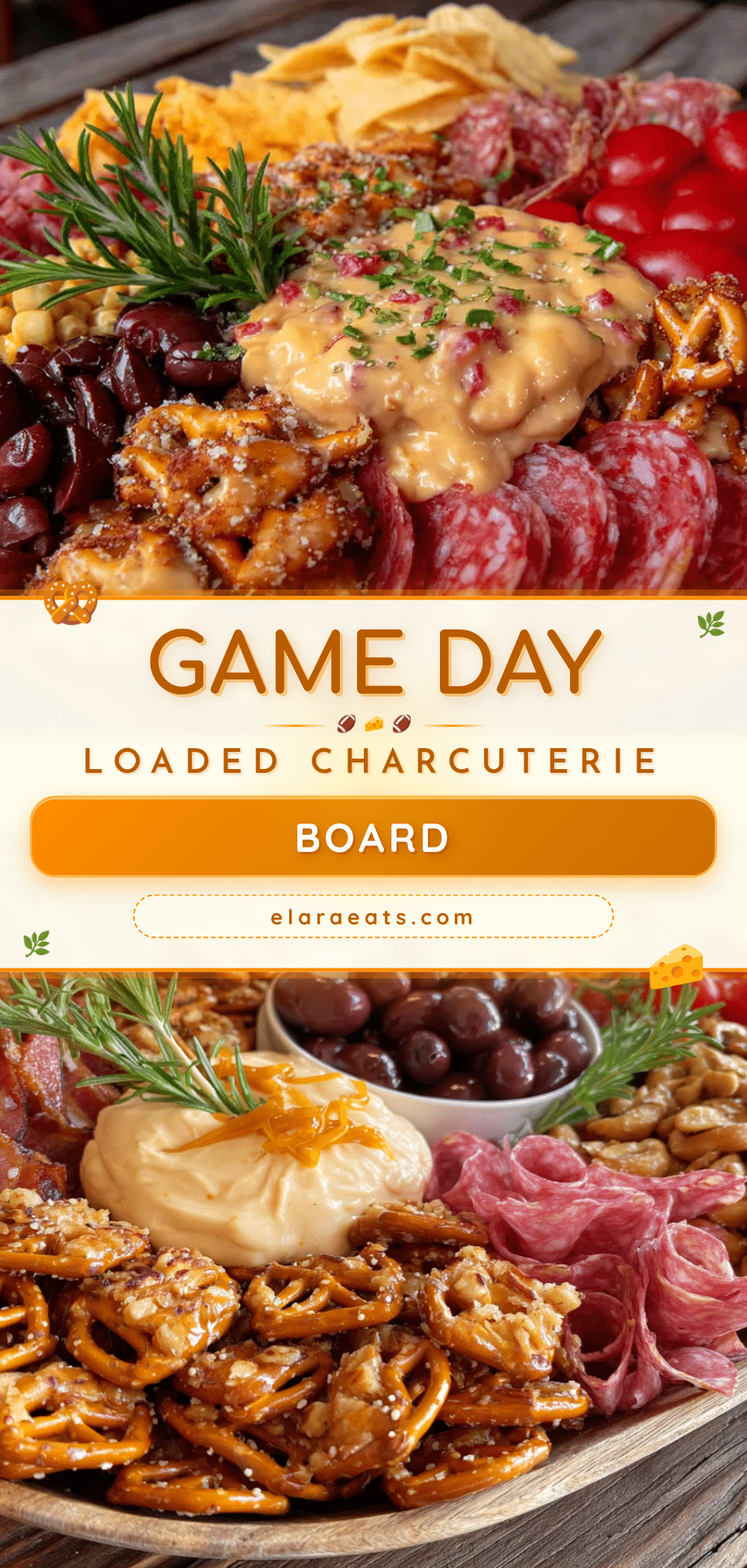
Perfect Loaded Football Charcuterie Board for Game Day
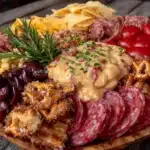
A strategic charcuterie board designed for grazing over four quarters, featuring a lineup of meats, cheeses, crackers, dips, and extras that bring people together without demanding attention. No cooking required, ready in 20 minutes.
- Prep Time: 20 minutes
- Cook Time: 0 minutes
- Total Time: 20 minutes
- Yield: 8 servings 1x
- Category: Appetizer
- Cuisine: American
Ingredients
- 8 oz prosciutto, thinly sliced
- 8 oz sopressata, sliced
- 6 oz pepperoni, large diameter slices
- 6 oz capicola, sliced
- 8 oz aged cheddar cheese, cubed
- 8 oz brie cheese wheel
- 8 oz smoked gouda cheese, sliced into thin triangles
- 4 oz blue cheese, crumbled
- 1 box water crackers
- 1 bag pita chips
- 1 bag pretzel crisps
- 1 package breadsticks (grissini-style)
- 1 small jar honey
- 1 small jar whole grain mustard
- 1 small jar fig jam or pepper jelly
- 1 cup ranch or blue cheese dip
- 1 bunch red grapes, seedless
- 1 cup dried apricots (Turkish apricots)
- 1 jar cornichons
- 1 jar pickled okra or banana peppers (optional)
- 1 cup roasted nuts (salted almonds or honey-roasted peanuts)
- 4 oz dark chocolate, broken into pieces
- 1 cup olives (Castelvetrano green olives)
- 1 jar stuffed peppers (mini sweet peppers stuffed with cheese or rice)
Instructions
- Take everything out of the refrigerator 30 minutes before assembling to bring to room temperature.
- Set up small bowls or ramekins on the board first: place honey, mustard, fig jam, ranch dip, and olives in separate bowls, spreading them out so there’s a dip within easy reach of every seat.
- Add the cheeses: place the brie wheel whole on the board as an anchor point. Cube the aged cheddar into 1-inch pieces and pile near one edge. Slice smoked gouda into thin triangles and fan them out. Crumble blue cheese into a small pile. Spread cheeses around the board.
- Fold the meats: fold prosciutto slices into loose ribbons. Layer sopressata slices in overlapping rows. Fan pepperoni slices out in a line. Fold capicola into loose bundles. Place each meat near a complementary cheese.
- Add crackers and crunch: arrange water crackers, pita chips, pretzel crisps, and breadsticks in small clusters around the board, scattered naturally. Breadsticks can stand upright in a small jar or lay diagonally across a corner.
- Fill in gaps with fruits and pickles: scatter red grapes in small clusters, tuck dried apricots between cheese piles, place cornichons near meats, and arrange pickled okra or banana peppers near blue cheese.
- Add extras: fill remaining empty spaces with roasted nuts, dark chocolate pieces, olives, and stuffed peppers. Tuck them into gaps for an abundant look.
- Final touches: drizzle honey over the brie, add a spoon to the fig jam, tuck a small knife beside the brie. Step back and adjust as needed for a full but not packed appearance.
Notes
Don’t overthink the layout; a slightly messy board looks more inviting. Room temperature is key for flavor. Build in layers from largest to smallest items. Keep refill ingredients handy for halftime. Watch the wet-to-dry ratio to avoid soggy crackers. Label nothing to encourage discovery and conversation.
Nutrition
- Serving Size: 1 serving (approx 4
- Calories: 500
- Sugar: 12.5
- Sodium: 900
- Fat: 32.5
- Saturated Fat: 12
- Carbohydrates: 22.5
- Fiber: 4
- Protein: 27.5
Keywords: charcuterie board, football game day, appetizer, party platter, no-cook recipe, grazing board, game day snacks