Love this? Save it for later!
Share the inspiration with your friends
There used to be a little French bistro tucked away on a side street in my old neighborhood that made a braised beef that practically made you weep. I’m not exaggerating. When they closed after twenty years—the owner retired, which is fair, but still—I felt a genuine sense of loss. I mean, where was I supposed to go when I needed that deep, winey, fall-apart tenderness on a random Tuesday night? After seven tries—seven, including one where I accidentally used a bottle of cooking wine that shall remain nameless—I finally cracked the code.
This Easy Slow-Braised Brisket with Red Wine is my love letter to that bistro. It’s the kind of meal that tastes like you spent all day hovering over a pot, but honestly, the oven does all the heavy lifting. You just need a good sear, a decent bottle of red, and a little patience. The first time I nailed it, I actually texted my sister a photo with the caption “We’re back.” She knew exactly what I meant.
The key was realizing I didn’t need to replicate the restaurant’s entire setup. I needed the flavor, the texture, that specific richness that only comes from low, slow heat. And, let’s be real, I needed it to work on a weeknight when I’m already exhausted. This version delivers that same soul-soothing satisfaction without the three-hour commute or the fancy chef’s salary. If you’ve ever had a restaurant dish you couldn’t forget, you know the feeling. This is the one you recreate and make your own.
Why You’ll Love This Recipe
I’ve tested this Easy Slow-Braised Brisket with Red Wine more times than I care to count, tweaking the liquid ratio, the cooking time, the type of wine. It’s been through a few disasters—including one where I forgot to sear the meat (don’t do that). But now it’s absolutely foolproof. Here’s why this version is different from every other brisket recipe out there.
- Weeknight-Friendly: This is not a “start at 6 AM” kind of recipe. With a little prep the night before or a quick 20-minute morning sear, it’s ready to go into the oven. You come home to a house that smells like Sunday supper, even on a Wednesday.
- Simple Ingredients: No trips to a specialty butcher or a gourmet market. You need a brisket, a decent red wine (more on that later), carrots, onions, garlic, and beef broth. That’s it. Everything else is a pantry staple.
- Minimal Cleanup: This is a one-pot meal. You sear the meat, sweat the veggies, and braise it all in the same Dutch oven. That means fewer dishes, which is a win for any tired cook.
- Crowd-Pleaser: Seriously, I have never met anyone who didn’t love this. It’s rich, tender, and deeply savory. Kid-approved? My niece asked for seconds, and she’s usually a chicken nugget purist.
- Unbelievably Delicious: The texture is the real star here. The brisket becomes so tender it practically melts. The wine reduces into a glossy, flavor-packed sauce that you’ll want to put on everything—mashed potatoes, crusty bread, even just a spoon.
This isn’t just another brisket recipe. It’s the one where you blend the braising liquid for a silky, restaurant-quality sauce without any cream or flour. It’s the one where the seasoning is perfectly balanced so the wine shines without being boozy. It’s the one that makes you close your eyes after the first bite. It’s comfort food reimagined—richer, faster, and with the same soul-soothing satisfaction.
What Ingredients You Will Need
This recipe relies on a handful of humble ingredients that work together to create something truly special. Most of these are probably already in your kitchen, which makes this an easy decision for a busy weeknight.
- Beef Brisket (3-4 pounds): This is the star. Look for a flat-cut brisket, which is leaner and more uniform, making it easier to slice. If you can find a point-cut, it’s more marbled and even more forgiving, but it can be a bit fattier. I usually ask my butcher for a “first-cut” or “flat-cut” brisket. It’s the most reliable for even cooking.
- Red Wine (1 ½ cups): Don’t use anything you wouldn’t drink. A good rule of thumb is a dry red like Cabernet Sauvignon, Merlot, or a Côtes du Rhône. The wine is a major flavor component, so a cheap cooking wine will give you a harsh, metallic taste. I personally love using a Malbec—it’s fruity enough to add depth but not too sweet.
- Beef Broth (1 cup): Use a low-sodium broth so you can control the salt level. Better Than Bouillon is my go-to for a rich, deep flavor without needing to simmer bones for hours.
- Yellow Onions (2 large, diced): They melt into the sauce, adding a subtle sweetness that balances the wine. Don’t skip them.
- Carrots (3 medium, chopped): They add a touch of natural sweetness and a little texture. They also get incredibly tender and flavorful after braising.
- Garlic (4 cloves, smashed): Smashed, not minced. This keeps the garlic from burning during the initial sear and allows it to infuse the braising liquid gently.
- Tomato Paste (2 tablespoons): This is a secret weapon. It adds umami and helps thicken the sauce slightly. I like to buy it in a tube so I can just squeeze out what I need.
- Olive Oil (2 tablespoons): For searing the meat. Use a good extra-virgin olive oil for flavor, but not the super expensive stuff—it will be heated.
- Fresh Thyme (4 sprigs): The earthy, slightly floral notes are perfect with beef and red wine. If you only have dried, use 1 teaspoon.
- Bay Leaves (2): They add a subtle, aromatic depth. Remember to remove them before serving.
- Salt and Black Pepper: Generously season the brisket. This is the only chance to season the meat itself, so don’t be shy.
Ingredient Tips for the Best Results
For the wine, I recommend a bottle of Bogle Vineyards Merlot or Apothic Red. They are affordable, widely available, and have the right balance of fruit and tannins. If you have an open bottle of red from the previous night, that works perfectly too. Just make sure it hasn’t been sitting out for more than a day.
For the brisket, if you’re short on time, you can ask your butcher to trim the fat cap to about ¼ inch. This saves you a step and ensures the meat renders properly. And if you can’t find brisket, a chuck roast is a fantastic substitute. It has similar marbling and becomes just as tender when braised.
Equipment Needed
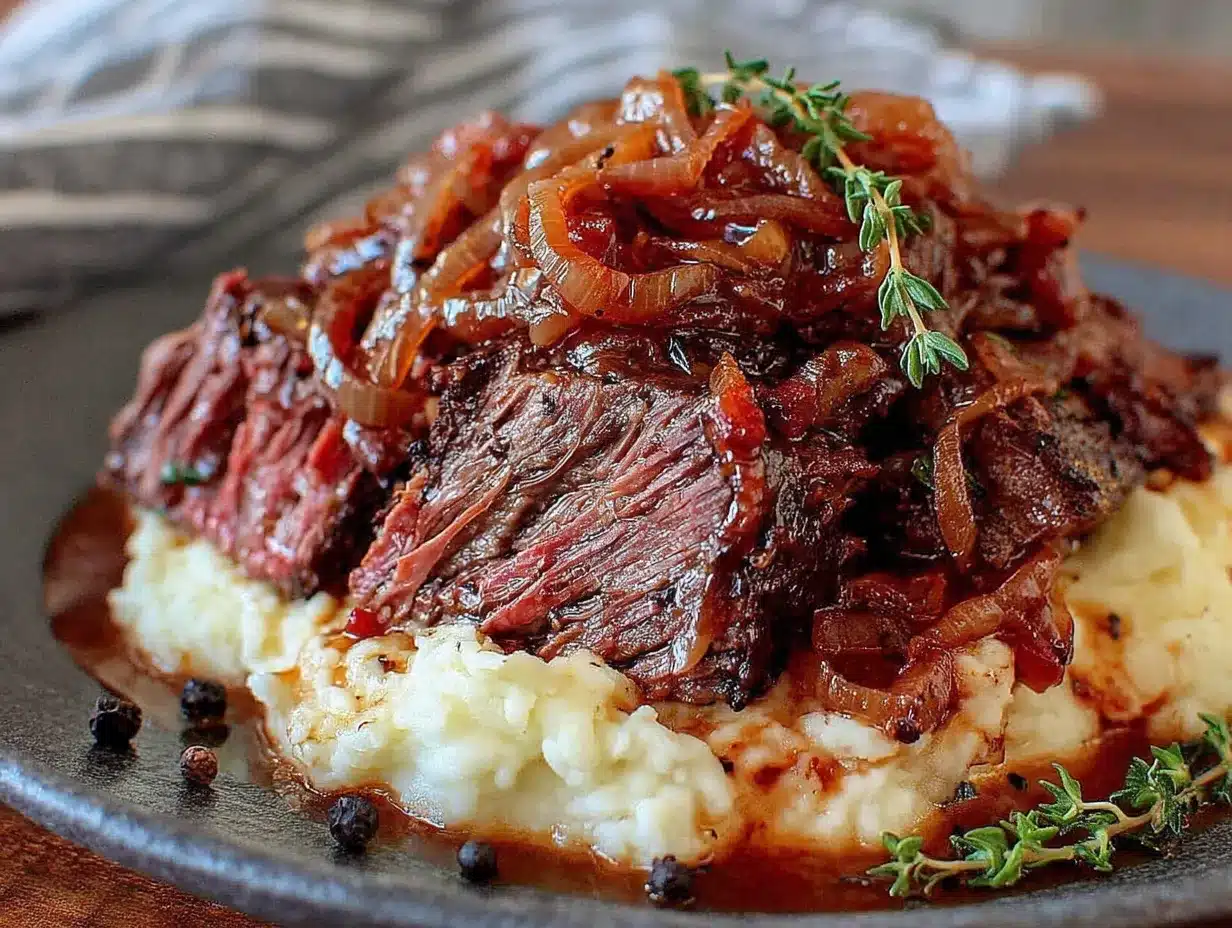
You don’t need a lot of fancy gear for this recipe, which is part of its beauty. Here’s what you’ll need to make this Easy Slow-Braised Brisket with Red Wine a success.
- Dutch Oven (6-8 quarts): This is the MVP. A heavy-bottomed, oven-safe pot with a tight-fitting lid is ideal for even heat distribution and moisture retention. My go-to is a Lodge 7-Quart Enameled Cast Iron Dutch Oven. It’s durable, affordable, and does a fantastic job. If you don’t have one, a large, deep oven-safe skillet or a roasting pan covered tightly with foil will work.
- Sharp Chef’s Knife: For trimming the brisket and chopping the vegetables. A dull knife makes prep work frustrating and can be dangerous.
- Cutting Board: A large, sturdy board makes prep a breeze. I prefer a wooden one for vegetables and a separate plastic one for raw meat.
- Tongs: For searing the brisket and turning it. They give you better control than a fork, which can pierce the meat and release juices.
- Wooden Spoon or Spatula: For scraping up the browned bits from the bottom of the pot (the fond). That’s where so much flavor lives.
- Measuring Cups and Spoons: For accurate liquid and spice measurements. Precision matters, especially with the wine and broth.
- Fine-Mesh Strainer (Optional): If you want a perfectly smooth sauce, you can strain the braising liquid after cooking. I usually skip this step for a more rustic feel.
Budget-Friendly Alternatives
A good Dutch oven is an investment, but you can absolutely make this recipe in a heavy-bottomed stockpot or a deep roasting pan. Just make sure whatever you use is oven-safe. If using a roasting pan, cover it tightly with a double layer of heavy-duty aluminum foil to trap the steam. I’ve done it this way when my Dutch oven was otherwise occupied, and it worked beautifully.
Preparation Method
This method is designed to be as hands-off as possible. The active time is about 20 minutes, and then the oven does the rest. Here’s how to make the best Easy Slow-Braised Brisket with Red Wine of your life.
- Preheat and Prep (5 minutes): Preheat your oven to 325°F (160°C). While it’s heating, take your brisket out of the fridge and pat it completely dry with paper towels. This is crucial for a good sear. Season it generously on all sides with salt and black pepper. Don’t be shy—use about 1 ½ teaspoons of salt and ½ teaspoon of pepper.
- Sear the Brisket (8-10 minutes): Place your Dutch oven over medium-high heat and add the olive oil. Once the oil is shimmering (almost smoking), carefully lay the brisket in the pot. Let it sear undisturbed for 4-5 minutes, until a deep, golden-brown crust forms. Use your tongs to flip it and sear the other side for another 4 minutes. Don’t move it around while it’s searing—patience here builds flavor. Transfer the seared brisket to a plate. It doesn’t need to be cooked through at this point.
- Sweat the Vegetables (5 minutes): Reduce the heat to medium. Add the diced onions and chopped carrots to the pot. There should still be some fat in the pot from the brisket. If not, add another tablespoon of oil. Cook, stirring occasionally with your wooden spoon, for 4-5 minutes, until the onions are softened and translucent. Scrape up any browned bits from the bottom of the pot as you stir.
- Add the Aromatics (2 minutes): Add the smashed garlic cloves and the tomato paste. Cook, stirring constantly, for 1-2 minutes, until the tomato paste darkens slightly and becomes fragrant. This step deepens the flavor of the sauce.
- Deglaze the Pot (1 minute): Pour in the red wine. It will sizzle and steam. Use your wooden spoon to scrape up any remaining browned bits from the bottom of the pot. This is called deglazing, and it’s where all that incredible flavor gets incorporated into the sauce. Let the wine simmer for about a minute to cook off some of the alcohol.
- Add the Broth and Herbs (1 minute): Pour in the beef broth, then add the fresh thyme sprigs and bay leaves. Stir everything together. The liquid should come about halfway up the sides of the brisket. If it doesn’t, add a splash more broth or water.
- Braise (2.5 – 3 hours): Return the seared brisket to the pot, along with any juices that have accumulated on the plate. The liquid should come about halfway up the sides of the meat. Bring the liquid to a gentle simmer on the stovetop. Then, cover the pot with its lid and transfer it to the preheated oven.
- Check for Doneness (After 2.5 hours): After 2.5 hours, carefully remove the pot from the oven. The brisket should be fork-tender. Stick a fork into the thickest part of the meat—it should slide in with almost no resistance. If it doesn’t, return the pot to the oven, covered, for another 30 minutes. Most briskets I make are perfect right at the 2-hour 45-minute mark.
- Rest and Slice (10-15 minutes): Once the brisket is tender, carefully transfer it to a cutting board. Tent it loosely with aluminum foil and let it rest for at least 10 minutes. This allows the juices to redistribute throughout the meat. While it rests, you can finish the sauce.
- Finish the Sauce (5 minutes): Place the pot back on the stovetop over medium heat. Remove the thyme sprigs and bay leaves. Use an immersion blender to blend the vegetables into the sauce until smooth. If you don’t have an immersion blender, carefully transfer the sauce to a regular blender and blend in batches. Taste the sauce and adjust seasoning with salt and pepper. If it’s too thin, let it simmer for 5-10 minutes to reduce. If it’s too thick, add a splash of broth.
- Slice and Serve (2 minutes): Slice the brisket against the grain into ½-inch thick slices. This is important—slicing against the grain ensures the meat is tender, not chewy. Arrange the slices on a platter and spoon the luscious sauce over the top. Serve immediately.
Cooking Tips & Techniques
I’ve made this Easy Slow-Braised Brisket with Red Wine enough times to have a few tricks up my sleeve. Here are the things I wish I had known from the start.
Don’t Skip the Sear: I know it’s tempting to just throw everything in the pot and walk away, but that sear is non-negotiable. It creates the Maillard reaction, which adds a deep, savory crust that you simply can’t get any other way. I learned this the hard way on attempt number two—the meat was tender but tasted flat.
Low and Slow is the Law: Braising is all about low, gentle heat. 325°F is the sweet spot. If you crank the oven up to 350°F to save time, the meat will be tough and the liquid will evaporate too quickly. Trust the process. Your patience will be rewarded with that fall-apart texture.
Make It Ahead: This is my biggest weeknight secret. You can sear the brisket and sweat the vegetables the night before. Store the seared meat and the vegetable-wine mixture separately in the fridge. The next morning, just combine everything in the pot, bring it to a simmer, and pop it in the oven before you leave for work. Dinner is ready when you walk in the door.
Use a Meat Thermometer: While I usually go by the fork-tender test, a meat thermometer is a great backup. You’re looking for an internal temperature of about 200-205°F (93-96°C). This is when the collagen has fully broken down into gelatin, giving you that melt-in-your-mouth texture.
The Sauce is Everything: Don’t forget to blend the sauce. It might feel like an extra step, but it transforms the braising liquid from a chunky vegetable mess into a silky, restaurant-quality sauce. I once skipped this step and just served the vegetables alongside the meat. It was fine, but it wasn’t the same. The blended sauce is what makes this dish feel special.
Variations & Adaptations
One of the best things about this recipe is how adaptable it is. You can tweak it to fit your mood, your diet, or what you have in the pantry.
For a Lighter Version: Swap the red wine for an equal amount of low-sodium beef broth and add a tablespoon of balsamic vinegar for acidity. This cuts the richness while still giving you a deeply savory sauce. I’ve done this when I wanted the comfort without the heaviness, and it works surprisingly well.
Gluten-Free Adaptation: This recipe is naturally gluten-free as written, as long as you use a certified gluten-free beef broth. Some broths contain additives that have gluten, so always check the label. Serve it with mashed potatoes or roasted vegetables for a completely gluten-free meal.
Add More Vegetables: Braised brisket is a great way to use up vegetables. Add a cup of sliced mushrooms along with the onions for an earthy boost. Or toss in some parsnips or celery root with the carrots. Just make sure to cut them into uniform pieces so they cook evenly.
Spice It Up: For a Moroccan-inspired twist, add 1 teaspoon of ground cumin, ½ teaspoon of ground coriander, and a pinch of cinnamon along with the tomato paste. The warm spices pair beautifully with the red wine and beef. I tried this on a whim one rainy Sunday and it was a revelation.
Make It in a Slow Cooker: If you prefer a true set-it-and-forget-it method, you can absolutely make this in a slow cooker. Sear the brisket and sweat the vegetables on the stovetop first, then transfer everything to the slow cooker. Cook on low for 8-10 hours or on high for 5-6 hours, until the meat is fork-tender. The sauce won’t reduce as much, so you may want to transfer it to a pot and simmer it on the stovetop for 10 minutes after the meat is done.
Serving & Storage Suggestions
This Easy Slow-Braised Brisket with Red Wine is a meal in itself, but the right sides can make it truly spectacular.
Serving: I like to serve the brisket on a large platter, with the sauce spooned generously over the top. It’s beautiful as is, but a sprinkle of fresh parsley or thyme leaves adds a nice pop of color. For the perfect weeknight pairing, serve it over a bed of creamy mashed potatoes or with a side of crusty bread to soak up every last drop of that incredible sauce. A simple green salad with a lemon vinaigrette is the perfect counterpoint to the richness of the brisket.
Storage: This brisket is one of those rare dishes that tastes even better the next day. The flavors have time to meld, and the texture becomes even more tender. Store leftover brisket and sauce in an airtight container in the refrigerator for up to 4 days.
Freezing: This freezes beautifully. Let the brisket and sauce cool completely, then transfer them to a freezer-safe container or a zip-top bag. It will keep for up to 3 months. To thaw, place it in the refrigerator overnight.
Reheating: The best way to reheat brisket is low and slow. Place the sliced brisket and sauce in a covered baking dish and warm it in a 300°F (150°C) oven for 15-20 minutes, until heated through. You can also reheat it in a saucepan over low heat on the stovetop, adding a splash of broth if the sauce has thickened too much. Avoid microwaving, as it can make the meat tough.
Flavor Development: Honestly, I think this brisket is at its peak on day two. The flavors deepen and become more complex. If you can, make it a day ahead and reheat it for dinner. Your future self will thank you.
Nutritional Information & Benefits
While this is a rich, comforting dish, it also has some surprising nutritional benefits. Here’s a quick look at what you’re getting in a serving (about 6 ounces of brisket with ¼ cup of sauce).
| Nutrient | Amount per Serving |
|---|---|
| Calories | 420 |
| Protein | 38g |
| Fat | 22g |
| Saturated Fat | 8g |
| Carbohydrates | 12g |
| Fiber | 3g |
| Sugar | 6g |
| Sodium | 580mg |
| Iron | 4mg (22% DV) |
| Vitamin A | 80% DV |
Health Highlights: Brisket is an excellent source of high-quality protein, which is essential for muscle repair and satiety. It’s also rich in iron, which helps carry oxygen through your blood. The carrots provide a hefty dose of vitamin A, which is great for your eyes and immune system. And the red wine? In moderation, it contains antioxidants called polyphenols, which are linked to heart health. This isn’t a health food, but it’s a meal that nourishes you on multiple levels.
Dietary Considerations: This recipe is naturally gluten-free and low-carb (about 12g of carbs per serving). It’s also nut-free and egg-free. The main allergens to be aware of are the beef itself and the potential sulfites in the wine.
Conclusion
This Easy Slow-Braised Brisket with Red Wine is more than just a recipe—it’s a little piece of that bistro memory I get to enjoy anytime I want. It’s the kind of meal that makes a regular Tuesday feel like a special occasion, without requiring a ton of effort or a culinary degree. The deep, rich sauce, the impossibly tender meat, the way it fills your whole house with the most incredible aroma—it’s pure comfort.
I hope you give this a try and make it your own. Maybe you’ll add a little extra garlic, or serve it over polenta, or discover that it’s even better the next day. That’s the beauty of a recipe like this—it’s a starting point for your own kitchen adventures. I’d love to hear how it turns out for you. Drop a comment below and let me know what you thought, or share a photo of your brisket on social media. Don’t forget to pin this recipe for later, and happy cooking!
Frequently Asked Questions
Can I use a different cut of beef for this recipe?
Absolutely. While brisket is traditional, a chuck roast is an excellent substitute. It has similar marbling and becomes just as tender when braised. You may need to adjust the cooking time slightly, as chuck roasts can vary in size. Just use the fork-tender test to determine when it’s done.
Do I have to use red wine, or can I substitute it?
You can substitute the red wine with an equal amount of beef broth plus a tablespoon of balsamic vinegar or red wine vinegar. This will give you a similar depth of flavor without the alcohol. The dish won’t be quite as rich, but it will still be delicious.
Can I make this recipe in a slow cooker?
Yes, you can! Sear the brisket and sweat the vegetables on the stovetop first, then transfer everything to a slow cooker. Cook on low for 8-10 hours or on high for 5-6 hours. The sauce may be thinner, so you can simmer it on the stovetop for 10 minutes after the meat is done to thicken it.
How do I store leftovers, and how long will they last?
Store leftover brisket and sauce in an airtight container in the refrigerator for up to 4 days. The flavors actually improve over time. You can also freeze it for up to 3 months. To reheat, warm it in a covered dish in a 300°F oven or on the stovetop over low heat.
My brisket came out tough. What went wrong?
The most common reason for tough brisket is not cooking it long enough. The collagen in the meat needs time to break down into gelatin, which gives you that tender texture. Make sure you cook it until it’s fork-tender—usually around 2.5 to 3 hours at 325°F. It could also be that you sliced it with the grain instead of against it. Always slice against the grain for the most tender bite.
Pin This Recipe!
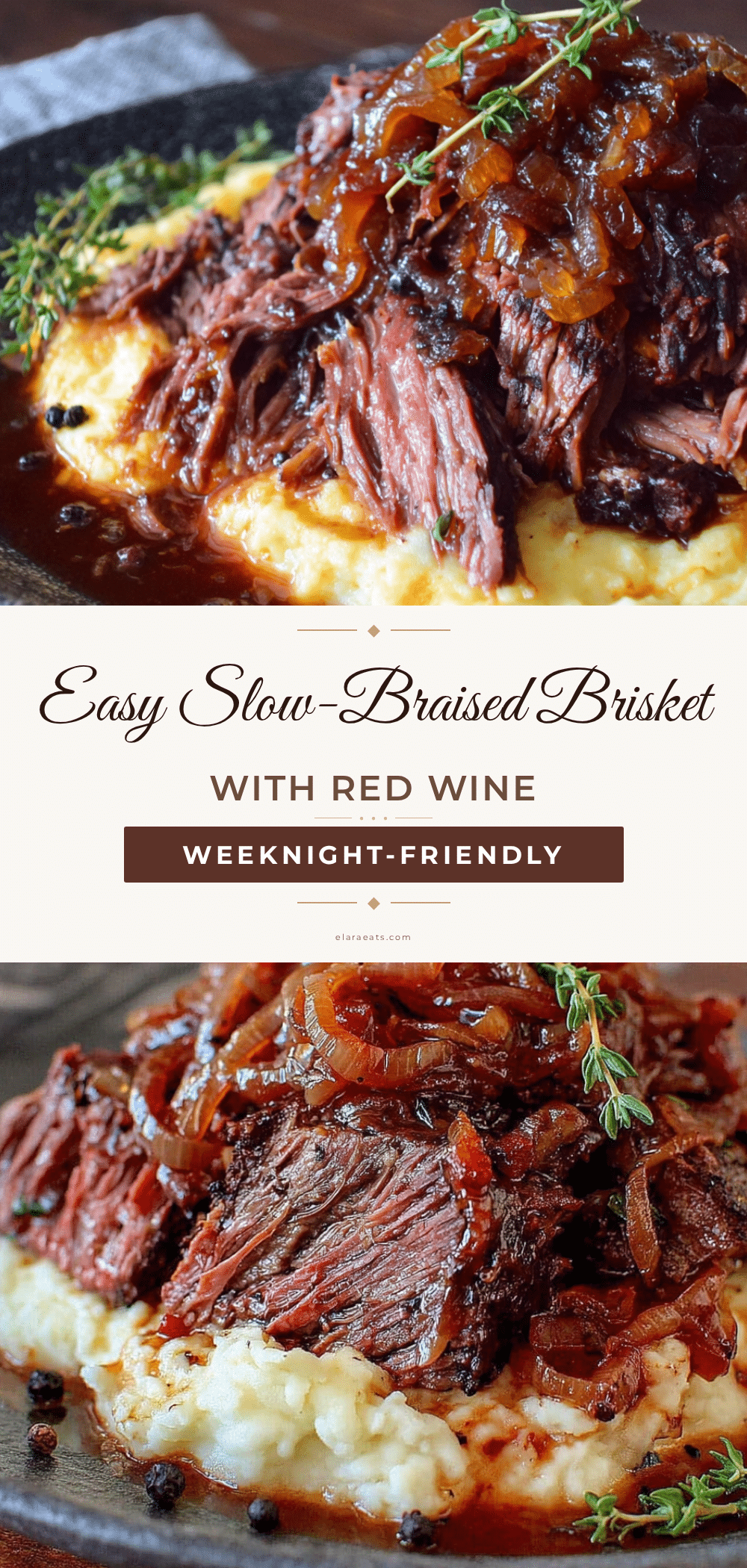
Easy Slow-Braised Brisket with Red Wine: Best Weeknight Dinner
This Easy Slow-Braised Brisket with Red Wine is a love letter to a classic French bistro dish, delivering deep, winey, fall-apart tenderness with minimal effort. The oven does all the heavy lifting, making it a perfect weeknight dinner that tastes like you spent all day cooking.
- Prep Time: 20 minutes
- Cook Time: 2 hours 45 minutes
- Total Time: 3 hours 5 minutes
- Yield: 6 servings 1x
- Category: Main Course
- Cuisine: French
Ingredients
- 3–4 pounds beef brisket (flat-cut or first-cut)
- 1 ½ cups dry red wine (e.g., Cabernet Sauvignon, Merlot, Malbec)
- 1 cup low-sodium beef broth
- 2 large yellow onions, diced
- 3 medium carrots, chopped
- 4 cloves garlic, smashed
- 2 tablespoons tomato paste
- 2 tablespoons olive oil
- 4 sprigs fresh thyme (or 1 teaspoon dried)
- 2 bay leaves
- Salt and black pepper, to taste
Instructions
- Preheat oven to 325°F (160°C). Pat brisket dry with paper towels and season generously on all sides with salt and black pepper.
- Heat olive oil in a Dutch oven over medium-high heat. Sear brisket for 4-5 minutes per side until deep golden brown. Transfer to a plate.
- Reduce heat to medium. Add onions and carrots to the pot; cook 4-5 minutes until softened, scraping up browned bits.
- Add smashed garlic and tomato paste; cook 1-2 minutes until fragrant and tomato paste darkens.
- Pour in red wine, scraping up any remaining browned bits. Let simmer for 1 minute.
- Add beef broth, thyme sprigs, and bay leaves. Stir to combine.
- Return brisket to pot along with any accumulated juices. Liquid should come about halfway up the meat. Bring to a gentle simmer on stovetop.
- Cover pot and transfer to preheated oven. Braise for 2.5 to 3 hours, until fork-tender (internal temperature 200-205°F).
- Remove brisket from pot and tent with foil; let rest 10-15 minutes.
- Meanwhile, remove thyme sprigs and bay leaves from sauce. Use an immersion blender to blend vegetables into sauce until smooth. Adjust seasoning with salt and pepper. Simmer to thicken if needed.
- Slice brisket against the grain into ½-inch thick slices. Arrange on platter and spoon sauce over top. Serve immediately.
Notes
For best results, sear the brisket the night before and refrigerate separately from the vegetable-wine mixture. Reheat gently in a 300°F oven. The brisket tastes even better the next day. Always slice against the grain for tenderness.
Nutrition
- Serving Size: 6 ounces brisket wit
- Calories: 420
- Sugar: 6
- Sodium: 580
- Fat: 22
- Saturated Fat: 8
- Carbohydrates: 12
- Fiber: 3
- Protein: 38
Keywords: braised brisket, red wine brisket, slow-cooked brisket, weeknight dinner, comfort food, beef brisket, one-pot meal