Love this? Save it for later!
Share the inspiration with your friends
My youngest swore they hated vegetables for three years, seven months, and approximately twelve days. I kept count. Every Halloween, I’d watch them trade the little bag of baby carrots in their treat bag for a stale lollipop, and I’d feel that familiar pinch of defeat. Then last October, I caught them—I mean, I literally walked into the kitchen and caught them—standing on a stool, dipping a bell pepper slice into a bowl of ranch dressing like it was a stolen treasure. They froze, eyes wide, pepper halfway to their mouth. “I’m just… testing it,” they mumbled. That night, I made this spiderweb veggie platter “just for the Halloween party.” By the time I’d finished arranging the cucumber slices, they’d already eaten the first two legs of the spider. Honestly, I pretended not to notice. Maybe you’ve been there—that moment when you realize the trick isn’t hiding the veggies, it’s making them look like something worth stealing. This platter became our Halloween tradition because it finally stopped being a battle. It’s the one snack that disappears before the candy does, and let me tell you, that feels like winning.
Why You’ll Love This Recipe
This isn’t just another veggie tray that sits untouched next to the brownies. This spiderweb platter actually works for real families. Here’s why you’ll keep coming back to it:
- Budget-Friendly: You can make this whole platter for under $10 using basic grocery store veggies. No fancy organic farm boxes required.
- Quick Assembly: It comes together in about 15 minutes. Seriously, you can prep this while the kids are still fighting over costume pieces.
- Picky Eater Approved: The web shape makes veggies feel like a game, not a chore. Kids actually reach for these without being asked.
- Leftovers Reheat Well: Wait, veggies don’t really reheat. But they keep in the fridge for lunchboxes the next day, so nothing goes to waste.
- Customizable: Use whatever veggies your family actually eats. My kids hate celery but love snap peas, so guess what goes in the web?
What makes this different from every other veggie platter you’ve seen? It’s the spider. That little creature made from a bell pepper and olives gives kids permission to interact with their food. I’ve watched toddlers who normally refuse cucumbers pick one up just to feed the spider. It sounds silly, but it works. This platter isn’t about tricking anyone—it’s about making vegetables feel like part of the fun. And honestly, when you’re feeding a family on a budget, anything that gets veggies eaten without a fight is worth its weight in gold.
What Ingredients You Will Need
This recipe uses simple, affordable ingredients that won’t blow your grocery budget. Most of these are pantry staples or seasonal fall vegetables you can grab during your regular shopping trip.
For the Spiderweb Base
- 1 large round platter or cutting board (about 12 inches in diameter)
- 1 cup hummus or ranch dressing (I prefer store-brand ranch for budget, or make your own if you have time)
- 1 small bowl or ramekin (to hold the dip in the center)
For the Veggie Web
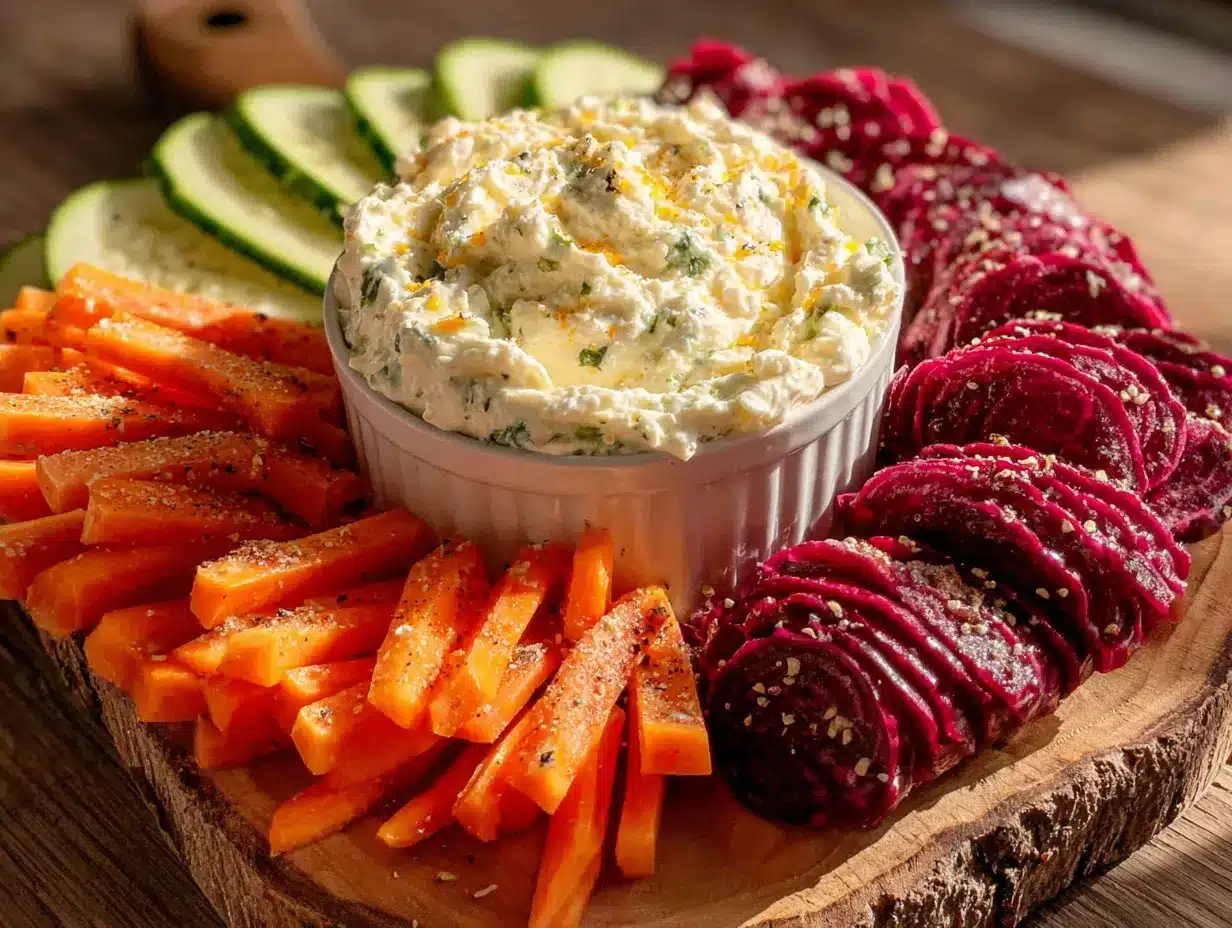
- 1 medium cucumber, sliced into thin rounds (use English cucumber for less seeds)
- 1 red bell pepper, sliced into thin strips (these make the web lines pop)
- 1 yellow bell pepper, sliced into thin strips (adds color contrast)
- 1 cup cherry tomatoes, halved (or grape tomatoes, whatever is on sale)
- 1 cup broccoli florets, blanched for 1 minute if you want them softer (my kids prefer raw, so I skip this)
- 1 cup carrot sticks or baby carrots (the pre-bagged ones work fine and save time)
- Optional: snap peas, celery sticks, or cauliflower florets (use whatever your family eats)
For the Spider
- 1 large black olive (for the body)
- 8 small black olive slices (for the legs—you can use canned olives, they’re cheap)
- 2 small dollops of cream cheese or ranch (for the eyes—just a tiny bit to stick the olive pieces together)
- Optional: 2 tiny sesame seeds for the eyes (I usually skip this, kids don’t care)
I recommend using whatever brand of hummus or ranch your family already likes. For the veggies, look for firm cucumbers and brightly colored bell peppers—they hold their shape better and look more appealing on the platter. If you’re feeding a crowd, double the veggies and use a larger platter. The spider itself is very forgiving; if you accidentally squish an olive, just call it a “flat spider” and move on. Trust me, the kids won’t notice.
Equipment Needed
You don’t need fancy kitchen gadgets for this platter. Here’s what you’ll actually use:
- Large round platter or cutting board: A pizza pan works great if you don’t have a platter. I’ve even used a clean cookie sheet in a pinch.
- Small bowl or ramekin: About 4 inches wide to hold the dip in the center. A small cereal bowl works if that’s all you have.
- Sharp knife and cutting board: For slicing veggies. A serrated knife works well for tomatoes without squishing them.
- Vegetable peeler: Optional, for carrot ribbons if you want to get fancy. I usually just buy baby carrots to save time.
- Small spoon: For arranging the dip and placing the olive spider parts.
I’ve made this platter with a dull knife and a warped baking sheet, and it still turned out fine. Don’t overthink the equipment. The only thing I’d recommend spending a little extra on is a good vegetable peeler if you don’t have one—it makes quick work of carrot ribbons if you want to add them. But honestly, baby carrots from a bag work just as well and cost less.
Preparation Method
- Set up your platter (2 minutes): Place your large round platter or cutting board on a flat surface. Put the small bowl or ramekin in the very center. This bowl will hold your dip and act as the center of the spiderweb.
- Add the dip (1 minute): Spoon your hummus or ranch dressing into the small bowl. Spread it level with the back of a spoon. Don’t worry about making it perfect—the veggies will cover the edges anyway.
- Create the web lines (3 minutes): Take your red and yellow bell pepper strips. Arrange them like spokes of a wheel, radiating outward from the dip bowl to the edge of the platter. Space them evenly, like you’re drawing lines on a clock face. You want about 8 to 12 lines total. Press the ends gently under the dip bowl so they stay in place.
- Build the web rings (5 minutes): Start with the cucumber slices. Place them in concentric circles around the dip bowl, weaving them between the bell pepper spokes. Think of it like drawing a spiderweb—start close to the bowl and work your way outward. Leave small gaps between the cucumber circles so the web pattern is visible. My first attempt looked more like a blob, so don’t stress if yours isn’t perfect.
- Fill the web sections (4 minutes): Now fill the spaces between the web lines with your other veggies. Place cherry tomato halves along one section, broccoli florets in another, carrot sticks in another. Alternate colors and shapes for visual appeal. Press veggies gently into the cucumber rings so they stay put.
- Make the spider (3 minutes): Take your large black olive for the body. Cut 8 small slices from another olive for the legs—4 on each side. Arrange the legs on top of a veggie section near the edge of the platter, then place the body olive on top. Use tiny dabs of cream cheese to attach the legs if they slide around. Add two tiny dollops of cream cheese for eyes, and press sesame seeds on top if you’re using them.
- Final touches (2 minutes): Step back and look at your platter. Rearrange any veggies that look uneven. Add extra cucumber slices to fill empty spots. The spider should be visible but not overwhelming—it’s a fun surprise, not the main event.
Pro tip: If the veggie rings keep sliding around, use a tiny bit of hummus as “glue” under the cucumber slices. It’s not cheating, it’s strategy. And if your spider looks more like a deformed beetle, just tell the kids it’s a “Halloween mystery bug.” They’ll love it even more.
Cooking Tips & Techniques
I’ve made this platter about a dozen times now, and I’ve learned a few things the hard way. Here’s what I wish I’d known from the start:
Keep veggies dry: Wet veggies slide around and make the web pattern fall apart. Pat your cucumber slices and bell pepper strips dry with a paper towel before arranging them. I learned this after my first platter turned into a veggie slip-and-slide.
Cut uniform slices: Try to make your cucumber slices about the same thickness—quarter-inch works best. If some are thicker than others, the web looks lopsided. I use a mandoline slicer for consistency, but a sharp knife works fine if you go slowly.
Don’t overfill: Leave some space between veggies so the web pattern is visible. A crowded platter looks messy and kids won’t know where to grab. Think of it like a coloring book—you want the lines to show.
Prep ahead: You can slice all the veggies the night before and store them in separate bags in the fridge. Assemble the platter right before serving. The veggies stay crisp and the spider doesn’t get squished by other fridge items.
My biggest failure: I once made the spider too big and it looked like a tarantula had drowned in the hummus. The kids thought it was hilarious, but the web pattern was completely hidden. Keep the spider small—about the size of a quarter—so it’s a cute accent, not the main attraction.
Variations & Adaptations
This platter is endlessly customizable. Here are a few ways I’ve adapted it for different situations:
Dairy-Free Version: Use hummus instead of ranch dressing for the center dip. Hummus is naturally dairy-free and most kids love it. I’ve also used guacamole in a pinch, though it browns faster.
Allergy-Friendly: Skip the sesame seeds on the spider eyes if you’re serving kids with sesame allergies. Use tiny dots of red bell pepper instead. For nut allergies, make sure your hummus is nut-free (most store brands are).
Seasonal Swap: In summer, use zucchini slices instead of cucumber and add cherry tomatoes from the garden. In fall, add roasted pumpkin seeds around the edges for crunch. I’ve even used apple slices for the web rings in a pinch—they add sweetness that kids love.
Color Theme: For a spookier look, use only green and black veggies—cucumber, broccoli, black olives, and green bell pepper. For a rainbow version, add purple cabbage shreds and orange bell pepper strips. My kids prefer the rainbow version because it looks like a “party web.”
Dip Variations: Besides ranch and hummus, try Greek yogurt dip with dill, or a simple sour cream and onion powder mix. One time I used leftover spinach dip, and it was a huge hit. Just make sure the dip is thick enough to hold the veggie spokes in place.
Serving & Storage Suggestions
Serve this platter at room temperature for the best flavor. Cold veggies straight from the fridge taste bland, so let the platter sit out for about 10 minutes before serving. The dip should be cool but not ice-cold.
What to serve with it: This platter pairs perfectly with Halloween party snacks like popcorn, pretzels, or cheese cubes. For a full meal, serve it alongside mini sliders or pizza rolls. The contrast between the fresh veggies and the indulgent party food balances everything out—plus, it makes you feel better about the pizza rolls.
Storage: If you have leftovers (unlikely, but possible), store the veggies and dip separately in airtight containers in the fridge. The veggies stay fresh for about 2 days, but the cucumber slices will soften. The spider will definitely fall apart, so just laugh it off and rebuild it next time.
Reheating: You don’t reheat a veggie platter. But if the dip is hummus, let it sit at room temperature for 15 minutes before serving again. The flavors actually develop overnight—leftover hummus always tastes better the next day.
Flavor development: The veggies absorb a tiny bit of flavor from the dip if they sit together for a few hours. I’ve noticed that cucumber slices near the ranch dip taste slightly tangy after an hour. It’s not a bad thing, just something to keep in mind if you’re prepping ahead.
Nutritional Information & Benefits
This platter is packed with nutrients, and the best part is that kids actually eat them without complaint. Here’s a rough estimate per serving (about 1 cup of veggies with 2 tablespoons of dip):
Calories: 85 | Fat: 4g | Carbs: 10g | Fiber: 3g | Protein: 3g
Health benefits of key ingredients:
- Cucumbers: High in water content, which keeps kids hydrated during Halloween excitement. Also contains vitamin K for bone health.
- Bell peppers: Loaded with vitamin C—more than an orange, actually. The red ones have the most antioxidants.
- Broccoli: Contains sulforaphane, a compound that supports the immune system. Perfect for keeping kids healthy during candy season.
- Carrots: Rich in beta-carotene, which supports eye health. Tell the kids it helps them spot candy from across the room.
Dietary considerations: This platter is naturally gluten-free, dairy-free if you use hummus, and vegan-friendly. The main allergen is sesame if you use tahini-based hummus, so check labels if needed. I’ve served this to kids with various dietary restrictions and it’s always a safe choice.
Personal wellness perspective: I love that this platter gives kids a chance to eat vegetables in a low-pressure setting. There’s no “eat your veggies” lecture—just a fun spiderweb that makes them curious. That’s a win in my book.
Conclusion
This spiderweb veggie platter has become my secret weapon for Halloween parties, school events, and even just regular Tuesday dinners when I need a little fun. It’s cheap, it’s fast, and it actually gets kids to eat vegetables without a fight. I’ve made it for three Halloweens now, and every time, I watch kids reach for the broccoli before the candy. That never gets old.
I hope you make this platter your own. Swap in whatever veggies your family loves, let the kids help arrange the spider legs, and don’t worry if it’s not perfect. The imperfections are what make it fun—and honestly, kids love a lopsided spider. If you try this recipe, I’d love to hear how it went. Drop a comment below and tell me what your kids thought of the spider. Did they eat the legs first? Did they name it? I’m genuinely curious. Happy Halloween, and happy snacking!
Frequently Asked Questions
Can I make this platter the night before?
Yes, you can prep all the veggies the night before and store them in separate bags in the fridge. Assemble the platter right before serving so the veggies stay crisp and the spider doesn’t get squished.
What if my kids don’t like hummus?
Swap the hummus for ranch dressing, Greek yogurt dip, or even a small bowl of melted cheese dip. The dip is just the center anchor—use whatever your family actually eats.
How do I keep the veggie rings from sliding?
Pat your cucumber slices dry with a paper towel before arranging them. If they still slide, use a tiny dab of hummus as “glue” under each slice. It works like a charm.
Can I use frozen vegetables?
I don’t recommend frozen veggies for this platter because they release water as they thaw, making the web pattern soggy and messy. Stick with fresh vegetables for the best results.
What if I don’t have a round platter?
Use a pizza pan, a large dinner plate, or even a clean cookie sheet. The round shape helps the web pattern look natural, but a rectangular tray works fine too—just call it a “spiderweb on a budget.”
Pin This Recipe!
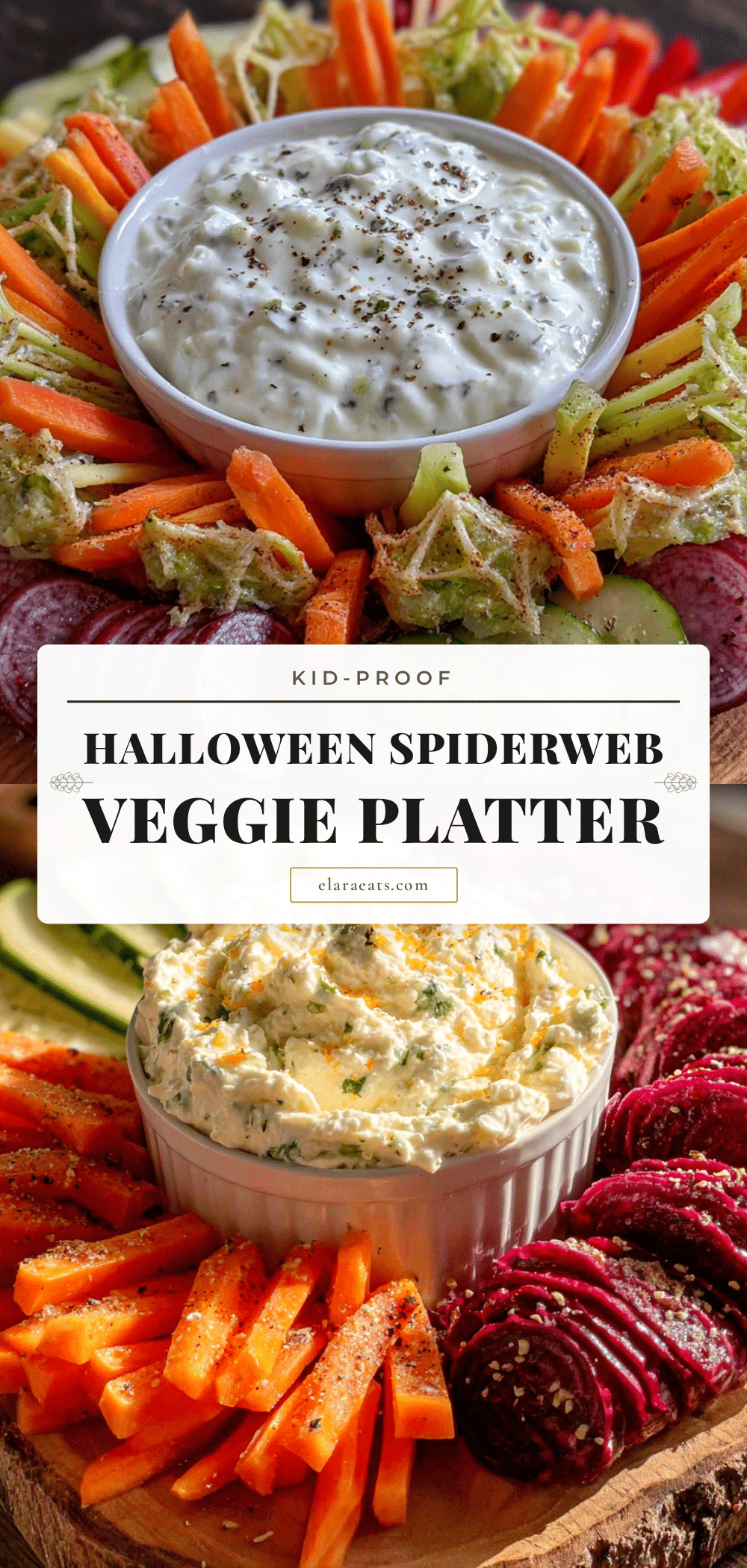
Easy Halloween Spiderweb Veggie Platter for Kids

A fun and budget-friendly Halloween veggie platter shaped like a spiderweb, complete with a cute olive spider. This quick and customizable snack gets kids excited about eating their vegetables without a fight.
- Prep Time: 15 minutes
- Cook Time: 0 minutes
- Total Time: 15 minutes
- Yield: 6 servings 1x
- Category: Appetizer
- Cuisine: American
Ingredients
- 1 large round platter or cutting board (about 12 inches in diameter)
- 1 cup hummus or ranch dressing
- 1 small bowl or ramekin (to hold the dip in the center)
- 1 medium cucumber, sliced into thin rounds
- 1 red bell pepper, sliced into thin strips
- 1 yellow bell pepper, sliced into thin strips
- 1 cup cherry tomatoes, halved
- 1 cup broccoli florets
- 1 cup carrot sticks or baby carrots
- Optional: snap peas, celery sticks, or cauliflower florets
- 1 large black olive (for the body)
- 8 small black olive slices (for the legs)
- 2 small dollops of cream cheese or ranch (for the eyes)
- Optional: 2 tiny sesame seeds for the eyes
Instructions
- Set up your platter (2 minutes): Place your large round platter or cutting board on a flat surface. Put the small bowl or ramekin in the very center. This bowl will hold your dip and act as the center of the spiderweb.
- Add the dip (1 minute): Spoon your hummus or ranch dressing into the small bowl. Spread it level with the back of a spoon. Don’t worry about making it perfect—the veggies will cover the edges anyway.
- Create the web lines (3 minutes): Take your red and yellow bell pepper strips. Arrange them like spokes of a wheel, radiating outward from the dip bowl to the edge of the platter. Space them evenly, like you’re drawing lines on a clock face. You want about 8 to 12 lines total. Press the ends gently under the dip bowl so they stay in place.
- Build the web rings (5 minutes): Start with the cucumber slices. Place them in concentric circles around the dip bowl, weaving them between the bell pepper spokes. Think of it like drawing a spiderweb—start close to the bowl and work your way outward. Leave small gaps between the cucumber circles so the web pattern is visible.
- Fill the web sections (4 minutes): Now fill the spaces between the web lines with your other veggies. Place cherry tomato halves along one section, broccoli florets in another, carrot sticks in another. Alternate colors and shapes for visual appeal. Press veggies gently into the cucumber rings so they stay put.
- Make the spider (3 minutes): Take your large black olive for the body. Cut 8 small slices from another olive for the legs—4 on each side. Arrange the legs on top of a veggie section near the edge of the platter, then place the body olive on top. Use tiny dabs of cream cheese to attach the legs if they slide around. Add two tiny dollops of cream cheese for eyes, and press sesame seeds on top if you’re using them.
- Final touches (2 minutes): Step back and look at your platter. Rearrange any veggies that look uneven. Add extra cucumber slices to fill empty spots. The spider should be visible but not overwhelming—it’s a fun surprise, not the main event.
Notes
Keep veggies dry to prevent sliding. Cut uniform cucumber slices (about 1/4 inch thick). Don’t overfill the platter so the web pattern is visible. Prep veggies the night before and assemble just before serving. If the spider looks imperfect, tell kids it’s a ‘Halloween mystery bug’—they’ll love it.
Nutrition
- Serving Size: 1 cup of veggies wit
- Calories: 85
- Sugar: 4
- Sodium: 180
- Fat: 4
- Saturated Fat: 1
- Carbohydrates: 10
- Fiber: 3
- Protein: 3
Keywords: Halloween, veggie platter, spiderweb, kids snack, party appetizer, healthy snack, budget-friendly, quick recipe