Love this? Save it for later!
Share the inspiration with your friends
There used to be this tiny, steamy noodle shop tucked in the back of a Chinatown alley—the kind of place with mismatched bowls and a handwritten menu taped to the wall. They made these Cozy Garlic Chive and Shiitake Longevity Noodles that I still dream about. When the shop closed abruptly two winters ago, the owner just vanished, and I felt a weird little grief over a bowl of noodles. Honestly, I tried recreating it probably eight times. The first few attempts were sad—mushy noodles, bland broth, no soul. After six tries—and a lot of wasted garlic chives—I finally got it. This is that bowl.
The noodles arrive in a glossy, savory bath, studded with fragrant garlic chives and meaty shiitake mushrooms. It smells like comfort in a bowl—earthy, warm, and slightly sweet from the soy. The first time I nailed the sauce-to-noodle ratio, I actually texted my friend Marie, who used to go to that shop with me. She didn’t respond for an hour, but when she did, she just wrote, “Finally.” That’s the energy here.
Maybe you’ve been there—obsessed with a dish from a place that no longer exists, trying to chase that exact flavor. Let me tell you, this recipe delivers. It’s the kind of meal that makes you slow down, breathe, and actually taste what you’re eating. The garlic chives bring this subtle oniony kick, the shiitakes add that deep umami chew, and the noodles? They’re the perfect vehicle for all that saucy goodness. I keep making it because it feels like a hug from a place I can’t visit anymore.
Why You’ll Love This Recipe
I’ve tested this recipe more times than I care to admit, and each batch taught me something new about balancing flavors and textures. Here’s why I think you’ll fall for it too:
- Quick & Easy: From prep to plate in just 15 minutes. Seriously—this is faster than ordering takeout, and honestly, it tastes better.
- Simple Ingredients: No obscure grocery store scavenger hunts here. Garlic chives, shiitake mushrooms, noodles, and a handful of pantry staples are all you need.
- Perfect for Cozy Evenings: Cold weather, a rough day, or just one of those nights when you need something warm and soothing—this bowl delivers.
- Crowd-Pleaser: I’ve served these noodles to my picky nephew and my mushroom-hesitant neighbor, and both went back for seconds. It’s magic.
- Unbelievably Delicious: The texture combo is next-level. Silky noodles, tender mushrooms, and that fragrant garlic chive bite—it’s comfort food that actually feels special.
What makes this recipe different from the rest? It’s the technique. I found that sautéing the shiitakes until they’re just starting to caramelize before adding the sauce unlocks this incredible depth of flavor. Most recipes rush this step, but letting those mushrooms get a little color changes everything. Plus, the sauce-to-noodle ratio is carefully calibrated so every strand is coated without being soggy. This isn’t just another noodle recipe—it’s the one I kept tweaking until it felt like that lost shop’s version.
This recipe isn’t just good—it’s the kind that makes you close your eyes after the first bite. It’s comfort food reimagined: faster, more intentional, but with the same soul-soothing satisfaction. Perfect for impressing someone on a quiet weeknight, or turning a simple evening into something memorable.
What Ingredients You Will Need
This recipe uses simple, wholesome ingredients to deliver bold flavor and satisfying texture without the fuss. Most of these are pantry staples or easy to find at any grocery store.
- For the Noodles:
- 8 ounces dried thin wheat noodles (like lo mein or fresh udon) – I prefer the texture of fresh noodles if you can find them, but dried work beautifully too
- 2 tablespoons vegetable oil (or any neutral oil like avocado or grapeseed)
- For the Aromatics & Mushrooms:
- 4 ounces fresh shiitake mushrooms, stems removed and caps sliced (about 1/4-inch thick) – Look for firm, dry caps; avoid slimy ones
- 1 cup garlic chives, chopped into 2-inch pieces (about 1 bunch) – These are also called Chinese chives or gau choy; they’re flatter and more garlicky than regular chives
- 3 cloves garlic, minced (fresh is non-negotiable here)
- 1 tablespoon fresh ginger, finely grated (I use a microplane for this)
- For the Sauce:
- 3 tablespoons low-sodium soy sauce (I recommend Kikkoman or San-J for consistent flavor)
- 1 tablespoon dark soy sauce (for color and a touch of sweetness – Lee Kum Kee is my go-to)
- 1 tablespoon oyster sauce (use vegetarian oyster sauce made from mushrooms if needed)
- 1 teaspoon sesame oil (toasted, for that nutty finish)
- 1 teaspoon sugar (just a pinch to balance the saltiness)
- 1/4 cup reserved noodle water (this is the secret to a silky sauce)
- For Garnish:
- 1 tablespoon toasted sesame seeds (white or black)
- Thinly sliced green onions (optional, for extra freshness)
A quick note on substitutions: If you can’t find garlic chives, you can use a mix of regular chives and one minced garlic clove—it won’t be exactly the same, but it’ll still be delicious. For a gluten-free version, swap the wheat noodles for rice noodles or soba noodles (just adjust cooking time). And if you’re avoiding oyster sauce, a mix of soy sauce and a tiny bit of molasses works in a pinch.
Equipment Needed
You don’t need a fancy kitchen for this recipe, which is part of its charm. Here’s what I use:
- Large pot for boiling noodles – I use my trusty 5-quart pot, but anything big enough to give noodles room works
- Colander for draining
- Large skillet or wok – A 12-inch non-stick skillet is ideal, but a well-seasoned wok is even better for that high-heat toss
- Chef’s knife and cutting board
- Measuring spoons and a small bowl for mixing the sauce
- Wooden spoon or tongs for tossing noodles
If you don’t have a wok, don’t stress—a large skillet works perfectly. I’ve used both, and honestly, the skillet is easier to manage if you’re not used to high-heat stir-frying. Just make sure it’s big enough to toss everything without spilling. Oh, and if you have a microplane, it makes grating ginger a breeze, but a regular grater works too.
Preparation Method
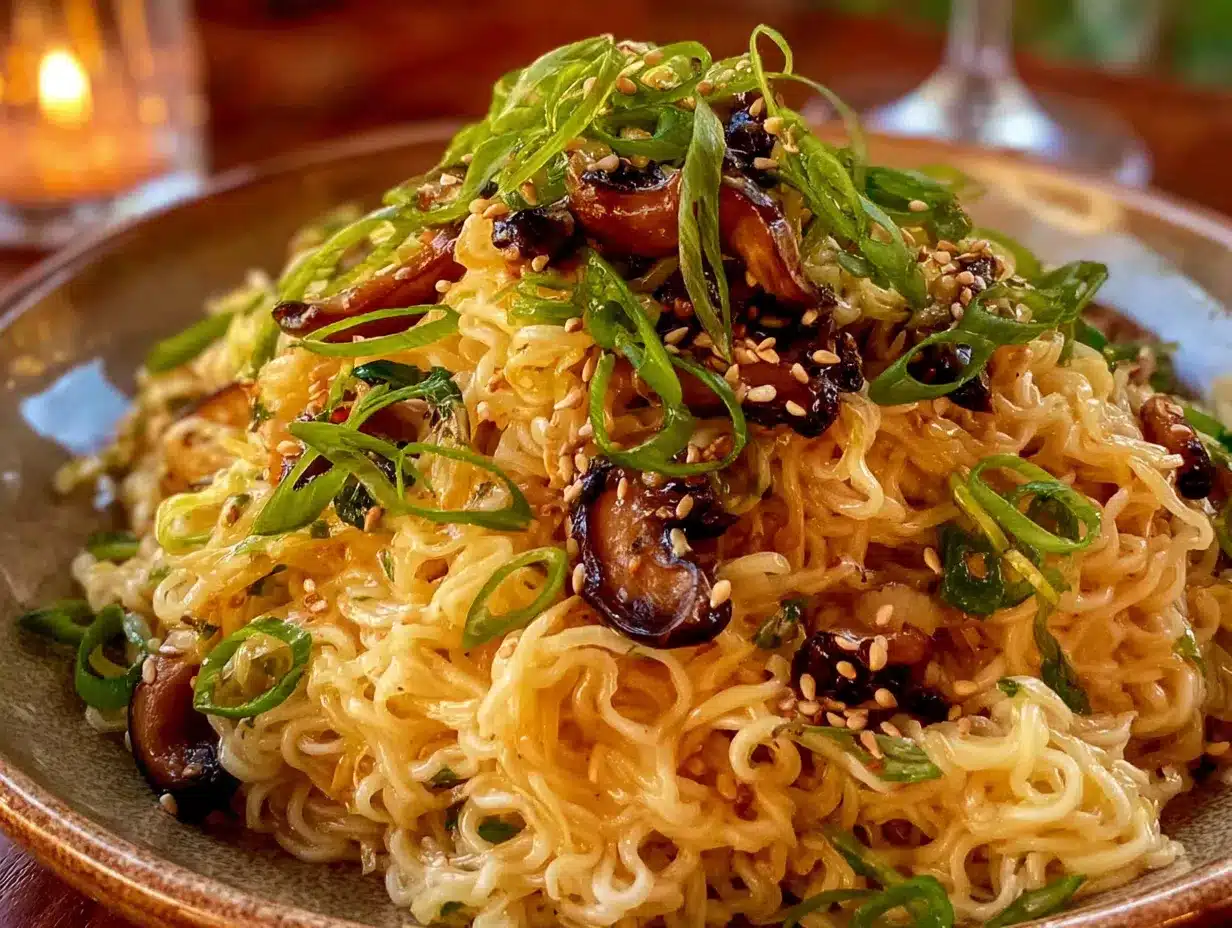
Let’s get cooking. This comes together fast, so I recommend prepping everything before you turn on the heat. Trust me on this—I learned the hard way when my garlic burned while I was still chopping chives.
- Cook the noodles: Bring a large pot of water to a rolling boil. Add the noodles and cook according to package directions until just al dente—usually about 3-4 minutes for thin wheat noodles. Drain, reserving 1/4 cup of the starchy noodle water. Rinse the noodles briefly under cold water to stop the cooking, then set aside. Pro tip: Slightly undercook them by 30 seconds since they’ll cook more in the sauce later.
- Mix the sauce: In a small bowl, whisk together the soy sauce, dark soy sauce, oyster sauce, sesame oil, and sugar. Set it near the stove so you can grab it quickly.
- Sauté the mushrooms: Heat the vegetable oil in your large skillet or wok over medium-high heat until it shimmers. Add the sliced shiitake mushrooms in a single layer. Let them cook undisturbed for 2 minutes—they should be golden brown on the bottom. Then toss and cook for another 1-2 minutes until they’re tender and slightly caramelized. Your kitchen will smell incredible at this point.
- Add aromatics: Push the mushrooms to one side of the pan. Add the minced garlic and grated ginger to the empty space. Cook for 30 seconds, stirring constantly, until fragrant. Be careful not to let the garlic burn—it turns bitter fast.
- Combine noodles and sauce: Add the cooked noodles to the skillet. Pour the sauce mixture over the top. Use tongs to toss everything together, making sure every strand gets coated. Add the reserved noodle water, 1 tablespoon at a time, if the noodles seem dry. You want them glossy, not soupy.
- Add garlic chives: Toss in the chopped garlic chives. Cook for another 30-60 seconds, just until they wilt slightly but still have some bite. You don’t want them completely limp—they should add a fresh, oniony pop.
- Finish and serve: Remove from heat. Sprinkle with toasted sesame seeds and green onions if using. Serve immediately while everything is hot and fragrant.
A quick note: If the noodles stick together while sitting, don’t panic—just add a splash of hot water and toss again. The starch from the reserved noodle water is your best friend here; it helps the sauce cling to every strand.
Cooking Tips & Techniques
I’ve made this recipe enough times to know exactly where things can go wrong—and how to fix them. Here are my hard-earned tips:
Don’t overcrowd the pan. If your skillet is too small, the mushrooms will steam instead of sear, and you’ll lose that lovely caramelized flavor. Use the biggest pan you have, or cook the mushrooms in two batches if needed.
Prep everything first. This is a fast-cooking dish—once you start, there’s no time to chop or measure. I learned this the hard way when I had to fish burnt garlic out of my noodles. Set all your ingredients within arm’s reach before you turn on the heat.
Reserve that noodle water. I cannot stress this enough. The starchy water helps thicken the sauce and gives it a silky texture that plain water just can’t replicate. Even if you think you won’t need it, save it. I’ve had batches where I needed every last drop.
Watch the heat. Medium-high is your sweet spot. Too low, and the noodles get mushy; too high, and the garlic burns before the mushrooms are done. If you see smoke, dial it back immediately.
Taste as you go. Soy sauces vary in saltiness, so trust your palate. If the sauce tastes too salty, add a splash more noodle water. If it needs more depth, a tiny extra drizzle of sesame oil works wonders.
I once forgot to add the garlic chives until after I’d plated the noodles—I had to stir them in cold, and they never softened properly. That’s the kind of mistake you only make once. So follow the order, and you’ll be golden.
Variations & Adaptations
This recipe is wonderfully flexible. Here are a few ways I’ve tweaked it over the years:
Vegetarian Version: Swap the oyster sauce for a vegetarian mushroom-based version, and you’re good to go. The mushrooms provide plenty of umami, so you won’t miss the oyster flavor at all.
Protein-Packed: Add thinly sliced chicken, beef, or tofu. Sear the protein first, remove it from the pan, then proceed with the recipe. Toss it back in with the noodles at the end. I’ve added leftover rotisserie chicken before, and it was fantastic.
Spicy Kick: Stir in 1 teaspoon of chili oil or sambal oelek with the sauce. The heat cuts through the richness beautifully. My neighbor swears by adding gochujang for a Korean-inspired twist.
Seasonal Swap: In summer, I sometimes swap half the shiitakes for fresh wood ear mushrooms for a different texture. In spring, I add a handful of pea shoots along with the garlic chives for extra green goodness.
Gluten-Free Option: Use rice noodles or soba noodles (make sure they’re 100% buckwheat). Adjust cooking time according to package directions, and be gentle when tossing—rice noodles break more easily.
I once tried adding a splash of rice vinegar to the sauce on a whim, and honestly, it was a little too tangy for my taste. But you might love it! That’s the beauty of this recipe—it’s a canvas for your preferences.
Serving & Storage Suggestions
These noodles are best served immediately, steaming hot, straight from the skillet. I like to pile them into shallow bowls and garnish generously with sesame seeds and green onions. The contrast of warm noodles and cool garnish is lovely.
For a complete meal, I pair these noodles with a simple cucumber salad dressed with rice vinegar and a pinch of sugar. The cool, crunchy cucumbers balance the warm, savory noodles perfectly. If you’re feeling indulgent, serve alongside crispy spring rolls or a bowl of miso soup.
Storage: Leftovers keep in an airtight container in the refrigerator for up to 2 days. The noodles will absorb some sauce overnight, so they’ll be a bit drier—but still delicious. I actually think they’re great cold, straight from the fridge, as a noodle salad.
Reheating: The best method is in a hot skillet with a splash of water or broth. Toss over medium heat for 1-2 minutes until warmed through. Microwaving works in a pinch, but add a damp paper towel over the bowl to prevent the noodles from drying out. The flavors actually deepen overnight, so leftovers can taste even better the next day.
Nutritional Information & Benefits
Per serving (based on 4 servings): Approximately 320 calories, 12g fat, 42g carbohydrates, 8g protein, 3g fiber, 6g sugar, 780mg sodium.
This dish packs some surprising health benefits. Shiitake mushrooms are rich in B vitamins and contain compounds that support immune function—perfect for those cold-weather cozy nights. Garlic chives are a good source of vitamin K and antioxidants. And ginger? It’s known for its anti-inflammatory properties and digestive benefits.
If you’re watching your sodium, use low-sodium soy sauce and reduce the oyster sauce slightly. The recipe is naturally dairy-free and can be made gluten-free with the right noodle swap. It’s also relatively low in saturated fat, making it a lighter comfort food option that still feels satisfying.
Conclusion
This Cozy Garlic Chive and Shiitake Longevity Noodles recipe is more than just a quick dinner—it’s a little piece of culinary memory that I’m thrilled to share with you. After all those failed attempts, this version finally captures the warmth and soul of that lost Chinatown shop. The tender mushrooms, the fragrant garlic chives, the silky sauce—every bite brings me back.
I hope you’ll make this your own. Adjust the spice level, add your favorite protein, or just follow the recipe exactly as written. Either way, I’d love to hear how it goes. Drop a comment below and tell me about your version—did you add something unexpected? Did it remind you of a dish from your own past? That’s what cooking is all about, right? Sharing flavors and memories.
So grab your biggest skillet, put on some music, and give yourself 15 minutes to make something truly comforting. You deserve it.
Frequently Asked Questions
Can I use dried shiitake mushrooms instead of fresh?
Yes, but you’ll need to rehydrate them first. Soak dried shiitakes in hot water for 20 minutes until softened, then squeeze out excess water and slice. The flavor will be more concentrated, which is lovely, but the texture will be slightly chewier. Use the soaking liquid in place of some noodle water for extra mushroom flavor.
What if I can’t find garlic chives?
Regular chives mixed with one minced garlic clove is your best substitute. It won’t have quite the same punch, but it’ll still be delicious. You can also use the green parts of scallions in a pinch—just add them earlier in the cooking process since they’re less delicate.
Can I make this ahead of time for meal prep?
You can, but the noodles will absorb sauce and soften over time. I recommend prepping all the ingredients ahead (wash and chop the chives, slice the mushrooms, mix the sauce) and cooking fresh when you’re ready to eat. The actual cooking takes just 7 minutes, so it’s almost as fast as reheating.
Is this recipe spicy?
No, as written it’s mild and savory. The heat comes only if you add chili oil or red pepper flakes. I like it without spice to let the garlic chives and mushrooms shine, but feel free to adjust to your preference.
Can I freeze the leftovers?
I don’t recommend freezing this dish. The noodles become mushy when thawed, and the sauce separates. It’s best enjoyed fresh or within 2 days from the fridge. If you have extra sauce, though, you can freeze that separately for up to a month.
Pin This Recipe!
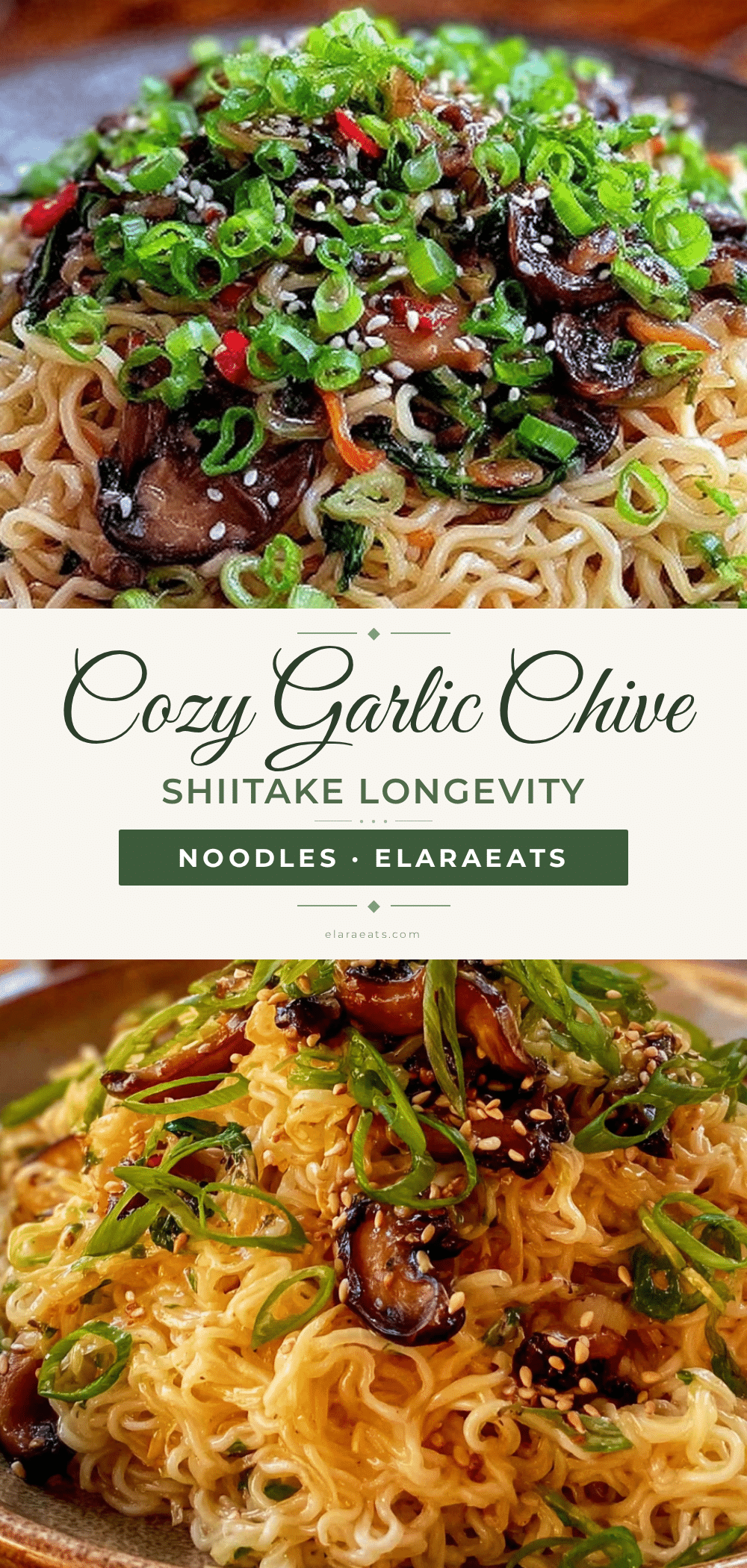
Cozy Garlic Chive and Shiitake Longevity Noodles (Easy 15-Min Recipe)
A quick and comforting noodle dish featuring fragrant garlic chives, meaty shiitake mushrooms, and a glossy savory sauce. Ready in just 15 minutes, this recipe recreates the warmth of a lost Chinatown noodle shop.
- Prep Time: 8 minutes
- Cook Time: 7 minutes
- Total Time: 15 minutes
- Yield: 4 servings 1x
- Category: Main Course
- Cuisine: Chinese
Ingredients
- 8 ounces dried thin wheat noodles (like lo mein or fresh udon)
- 2 tablespoons vegetable oil (or any neutral oil like avocado or grapeseed)
- 4 ounces fresh shiitake mushrooms, stems removed and caps sliced (about 1/4-inch thick)
- 1 cup garlic chives, chopped into 2-inch pieces (about 1 bunch)
- 3 cloves garlic, minced
- 1 tablespoon fresh ginger, finely grated
- 3 tablespoons low-sodium soy sauce
- 1 tablespoon dark soy sauce
- 1 tablespoon oyster sauce (use vegetarian oyster sauce made from mushrooms if needed)
- 1 teaspoon sesame oil (toasted)
- 1 teaspoon sugar
- 1/4 cup reserved noodle water
- 1 tablespoon toasted sesame seeds (white or black)
- Thinly sliced green onions (optional, for garnish)
Instructions
- Cook the noodles: Bring a large pot of water to a rolling boil. Add the noodles and cook according to package directions until just al dente—usually about 3-4 minutes for thin wheat noodles. Drain, reserving 1/4 cup of the starchy noodle water. Rinse the noodles briefly under cold water to stop the cooking, then set aside. Pro tip: Slightly undercook them by 30 seconds since they’ll cook more in the sauce later.
- Mix the sauce: In a small bowl, whisk together the soy sauce, dark soy sauce, oyster sauce, sesame oil, and sugar. Set it near the stove so you can grab it quickly.
- Sauté the mushrooms: Heat the vegetable oil in your large skillet or wok over medium-high heat until it shimmers. Add the sliced shiitake mushrooms in a single layer. Let them cook undisturbed for 2 minutes—they should be golden brown on the bottom. Then toss and cook for another 1-2 minutes until they’re tender and slightly caramelized.
- Add aromatics: Push the mushrooms to one side of the pan. Add the minced garlic and grated ginger to the empty space. Cook for 30 seconds, stirring constantly, until fragrant. Be careful not to let the garlic burn—it turns bitter fast.
- Combine noodles and sauce: Add the cooked noodles to the skillet. Pour the sauce mixture over the top. Use tongs to toss everything together, making sure every strand gets coated. Add the reserved noodle water, 1 tablespoon at a time, if the noodles seem dry. You want them glossy, not soupy.
- Add garlic chives: Toss in the chopped garlic chives. Cook for another 30-60 seconds, just until they wilt slightly but still have some bite. You don’t want them completely limp—they should add a fresh, oniony pop.
- Finish and serve: Remove from heat. Sprinkle with toasted sesame seeds and green onions if using. Serve immediately while everything is hot and fragrant.
Notes
Prep all ingredients before cooking as this dish comes together quickly. Slightly undercook noodles by 30 seconds as they will cook more in the sauce. Reserve noodle water to help create a silky sauce. For best results, do not overcrowd the pan when sautéing mushrooms.
Nutrition
- Serving Size: 1 serving
- Calories: 320
- Sugar: 6
- Sodium: 780
- Fat: 12
- Saturated Fat: 2
- Carbohydrates: 42
- Fiber: 3
- Protein: 8
Keywords: garlic chive noodles, shiitake noodles, longevity noodles, quick noodle recipe, 15-minute dinner, Chinese noodles, comfort food, easy stir-fry