Love this? Save it for later!
Share the inspiration with your friends
It was 11:47 PM on a random Wednesday, and I had an overwhelming need for a bowl of ramen. Not the instant kind you eat straight from the cup when you’re camping or desperate, but the real-deal kind with a broth that takes hours. The problem? I didn’t have any pork bones, no kombu, no dried mushrooms for the tare. But I had a carton of eggs, a bottle of good soy sauce, and this wild idea that maybe the eggs themselves could be the star of the show. I mean, let’s be honest, the jammy yolk is always the best part anyway, right?
So there I was, bleary-eyed at midnight, boiling eggs and mixing a soy marinade in a bowl I’d probably wash tomorrow. I cracked one open after just six minutes, watched that golden, molten center ooze out, and honestly, I let out a little gasp. It was perfect. The weirdest part? I wasn’t even hungry for a full bowl of noodles anymore. I just wanted these eggs, cold from the fridge, sliced over a bowl of rice or eaten straight from the shell with a tiny spoon. Maybe you’ve been there—that moment when a single component of a dish becomes the whole point of the meal.
I let them sit in that soy bath for a full 24 hours, and by the next evening, they were transformed. The white had turned a deep, caramelized brown, and the flavor had seeped right into the outer edge of the yolk. I served them to my friend Leo during a casual dinner party, and he literally stopped mid-sentence to say, “What did you do to these eggs?” That’s when I knew this wasn’t just a late-night experiment. This was a keeper. This is the recipe I now make for every gathering, every potluck, every time I want to look like I put in way more effort than I actually did.
Why You’ll Love This Recipe
Look, I’ve tested a lot of egg recipes in my time. I’ve had rubbery whites, chalky yolks, and marinades that tasted like straight-up salt. These Best Ramen-Style Soy Sauce Eggs with Jammy Yolks are different. They’re the result of about twelve batches of trial and error, so you don’t have to do the hard part. Here’s why they work so well for your next dinner party or get-together:
- Quick & Easy: The active cooking time is about 10 minutes. The rest is just waiting, which is the easiest part of any recipe.
- Simple Ingredients: You probably have soy sauce, mirin, and eggs in your kitchen right now. No weird specialty items required.
- Perfect for Entertaining: These are the ultimate make-ahead appetizer. You can prep them two days before your party and just pull them out when guests arrive. They look incredibly impressive with almost zero last-minute effort.
- Crowd-Pleaser: I have never, not once, had someone turn down one of these eggs. Even picky eaters go back for seconds. The jammy yolk is universally loved.
- Unbelievably Delicious: The texture is what gets you. The white is firm but tender from the salt brine, and the yolk is this rich, buttery sauce that coats everything it touches. It’s next-level comfort food.
What makes this version different from all the others? It’s the timing. I’ve found the exact minute mark for a perfect jammy center, and I’ve adjusted the soy-to-mirin ratio so it’s savory without being overwhelming. This isn’t just another soy sauce egg recipe—it’s the one I’d serve to anyone who thinks they’ve had the best version already. It’s the kind of dish that makes you close your eyes after the first bite, especially when you’re sitting at a table full of friends who are all doing the same thing.
What Ingredients You Will Need
This recipe relies on a handful of pantry staples to create something that tastes way more complex than it is. The magic is in the balance of salty, sweet, and umami. Here’s exactly what you need to make the Best Ramen-Style Soy Sauce Eggs with Jammy Yolks:
- 6 large eggs (room temperature is best—take them out of the fridge 15 minutes before boiling)
- 1/2 cup low-sodium soy sauce (I prefer Kikkoman for its consistent flavor, but any brand works)
- 1/4 cup mirin (this adds a subtle sweetness and helps tenderize the egg white; look for real mirin, not the seasoned kind)
- 1/4 cup water (just tap water is fine, but filtered is better if you have it)
- 1 tablespoon sugar (white granulated sugar dissolves easily; you can swap for honey if you want a different sweetness profile)
- 2 cloves garlic (smashed, not minced—this gives a gentle aromatic flavor without being too sharp)
- 1 teaspoon sesame oil (toasted sesame oil is best; it adds a nutty finish that ties everything together)
- Optional: 1 teaspoon gochugaru or red pepper flakes (for a little heat, though I usually leave this out when serving guests who might not love spice)
A quick note on the eggs: the freshness matters more than you think. Fresher eggs hold their shape better when you peel them, and the whites stay firmer. If your eggs are a week old, they’ll still work, but you might lose a little bit of white during peeling. I always buy my eggs a few days before I plan to make these, just to give them a tiny bit of age. Also, if you can find pasture-raised eggs, the yolks are usually a deeper orange color, which makes the final dish look even more stunning on the plate.
For the soy sauce, I really recommend using a low-sodium variety. Regular soy sauce will make the eggs incredibly salty after a full day of marinating, and you’ll lose that delicate balance. The mirin is non-negotiable in my book—it’s what gives the marinade that glossy, almost syrupy quality that clings to the egg white. If you absolutely can’t find mirin, you can substitute with a mix of 2 tablespoons sake and 1 tablespoon sugar, but the flavor won’t be quite the same.
Equipment Needed
You don’t need a fancy kitchen to pull these off. Here’s what I use every time I make a batch:
- A medium saucepan (big enough to hold the eggs in a single layer without crowding)
- A slotted spoon (for gently lowering the eggs into the water and fishing them out)
- A bowl of ice water (this is crucial for stopping the cooking process and getting that perfect jammy yolk)
- A small bowl or container (for mixing the marinade; I use a glass measuring cup)
- A resealable bag or shallow container (for marinating; a quart-sized zip-top bag works best because it keeps the eggs fully submerged)
- A sharp knife (for cleanly slicing the eggs in half right before serving)
If you don’t have a slotted spoon, a pair of tongs work just fine, though you have to be gentler to avoid cracking the shells. I’ve also used a large soup spoon in a pinch. For the ice bath, any bowl that’s bigger than your saucepan will do—I’ve used a plastic mixing bowl more times than I can count. The container for marinating is the one piece of equipment I’d recommend investing in. A shallow dish with a lid works, but the bag method ensures every inch of the egg gets coated in that beautiful soy mixture. I learned that lesson the hard way after making a batch where the tops of the eggs stayed pale while the bottoms were dark.
Preparation Method
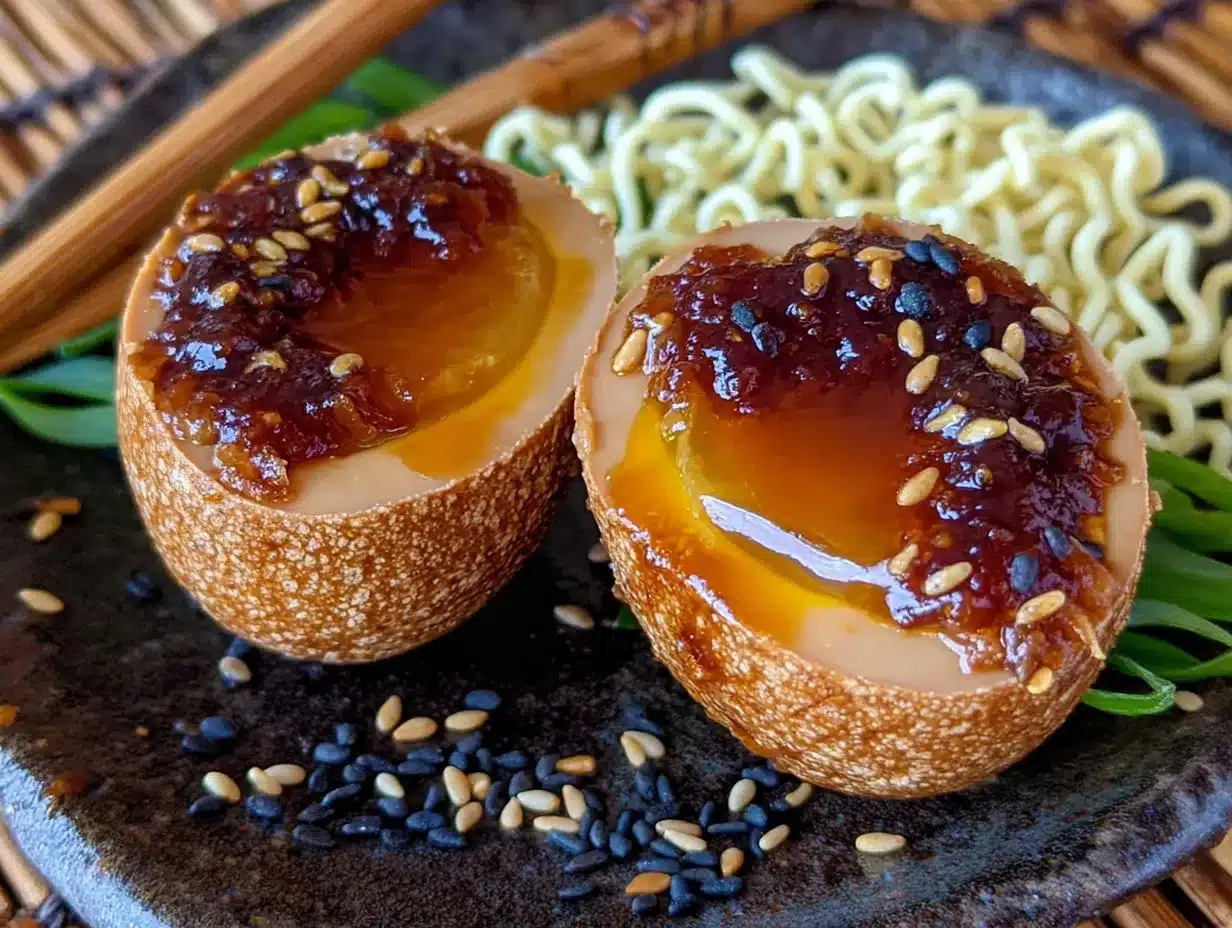
Making these eggs is a two-day process, but don’t let that scare you. The actual hands-on time is maybe 15 minutes total. The rest is just patience, which I know is hard when you’re hungry. Here’s the exact method I use for perfect results every single time:
- Bring the eggs to room temperature. Take your eggs out of the fridge about 15 minutes before you start. This prevents them from cracking when they hit the boiling water. I’ve forgotten this step before, and let me tell you, fishing egg white threads out of boiling water is not a fun way to spend your evening.
- Boil the water. Fill your saucepan with enough water to cover the eggs by at least an inch. Bring it to a rolling boil over high heat. Don’t add salt or vinegar—you don’t need it for this recipe, and it can actually affect the texture of the white.
- Gently lower the eggs. Using your slotted spoon, carefully lower each egg into the boiling water. Do this one at a time to avoid cracking. I usually do this in sets of three, giving each a few seconds to settle before adding the next. Set a timer for exactly 6 minutes and 30 seconds.
- Prepare the ice bath. While the eggs are boiling, fill your bowl with cold water and a generous amount of ice. You want the water to be really cold—like, painfully cold to the touch. This is what stops the cooking process and keeps that yolk perfectly jammy.
- Transfer to ice bath. As soon as the timer goes off, use your slotted spoon to move the eggs directly into the ice bath. Let them sit there for at least 5 minutes. I’ve left them for up to 10 minutes without any issues. The eggs should feel completely cool to the touch before you try to peel them.
- Peel carefully. Gently tap each egg on the counter to crack the shell all over, then start peeling under running cold water. The water helps separate the shell from the white. This is the most delicate part—slow and steady wins the race. If a little piece of white comes off with the shell, don’t panic; it happens to everyone.
- Make the marinade. In your small bowl, combine the soy sauce, mirin, water, sugar, smashed garlic, and sesame oil. Stir until the sugar is completely dissolved. Give it a taste—it should be savory with a hint of sweetness and a little nuttiness from the sesame oil.
- Marinate the eggs. Place the peeled eggs in your resealable bag or shallow container. Pour the marinade over them, making sure they’re fully submerged. If using a bag, squeeze out as much air as possible before sealing. Place the bag in a bowl (in case of leaks) and refrigerate for at least 8 hours, but ideally 24 hours. I’ve gone up to 48 hours, and the flavor just gets deeper and more complex.
- Serve. Remove the eggs from the marinade about 10 minutes before you want to serve them. Let them come to room temperature slightly—this makes the yolk even creamier. Slice each egg in half lengthwise with a sharp knife, wiping the blade clean between cuts for a neat presentation.
A quick note on timing: the 6 minutes and 30 seconds is for large eggs straight from the fridge. If your eggs are extra-large or jumbo, add 30 seconds. If they’re medium, subtract 30 seconds. The perfect jammy yolk should be set on the outside but still liquid and golden in the center. You’ll know you’ve nailed it when you cut into the egg and the yolk slowly pools onto the plate without running everywhere.
Cooking Tips & Techniques
I’ve made about fifty batches of these eggs over the past year, and I’ve learned a few things the hard way. Here are the tips that will save you from my mistakes:
Don’t skip the ice bath. I know it’s tempting to just run the eggs under cold water and call it a day, but the ice bath is non-negotiable for that jammy yolk. The residual heat in the egg will continue cooking the yolk for another minute or two if you don’t shock them properly. I learned this when I made a batch for a brunch and all the yolks were fully set instead of jammy. It was a sad, sad day.
Peel under running water. This is the single biggest tip I can give you. The water gets between the shell and the egg white, making the shell slide off much more easily. If you try to peel them dry, you’ll end up with pockmarked eggs that look more like golf balls than the beautiful, smooth orbs you’re aiming for.
Flip the bag halfway through marinating. If you’re using a resealable bag, give it a gentle flip after about 12 hours. This ensures both sides of the egg get equal exposure to the marinade. I forgot to do this once, and one side of the eggs was significantly darker than the other. Still tasted great, but the presentation was uneven.
Save the marinade. After you’ve used the eggs, don’t throw away that beautiful soy mixture. You can boil it for a few minutes to sterilize it, then store it in the fridge for up to a week. I’ve used leftover marinade to dress simple salads, drizzle over tofu, or even as a quick sauce for noodles. It’s liquid gold, honestly.
Make extra. These eggs disappear fast, especially at parties. I always make at least double what I think I need. They keep in the marinade for up to 4 days, and the flavor just gets better. I’ve had guests ask for the recipe and then beg for a doggy bag of the eggs themselves.
Variations & Adaptations
One of the best things about this recipe is how flexible it is. Once you’ve mastered the basic technique, you can play around with the flavors to suit your mood or what you have on hand. Here are a few variations I’ve tried and loved:
Spicy Soy Eggs: Add 1 tablespoon of gochugaru (Korean red pepper flakes) or 1 teaspoon of sriracha to the marinade. The heat builds slowly and pairs beautifully with the rich yolk. I made these for a game night once, and they were gone in 10 minutes flat.
Citrus Soy Eggs: Replace the water with fresh orange juice and add a strip of orange zest to the marinade. The acidity cuts through the richness of the yolk and adds a bright, unexpected note. This is my go-to version for summer picnics when I want something a little lighter.
Garlic-Lover’s Eggs: Double the garlic and let it steep in the marinade for an extra day before adding the eggs. The garlic flavor becomes more pronounced without being overwhelming. Just be prepared for some serious garlic breath afterward.
Gluten-Free Option: Use tamari instead of soy sauce. Tamari is naturally gluten-free and has a slightly richer, less salty flavor that works beautifully here. I’ve tested this version several times, and honestly, I can barely tell the difference.
Tea-Marinated Eggs: Add 2 black tea bags and a star anise to the marinade. Let it steep for 30 minutes before removing the tea bags, then proceed with the recipe. The tea adds a subtle earthiness and gives the eggs a beautiful marbled appearance on the white. It’s a classic Chinese preparation that works perfectly with the soy base.
My personal favorite variation is the citrus one. I stumbled on it when I had leftover orange juice in the fridge and didn’t want to waste it. The result was so good that it’s now my default version for spring and summer gatherings. Don’t be afraid to experiment—these eggs are forgiving and reward creativity.
Serving & Storage Suggestions
These eggs are incredibly versatile when it comes to serving. Here’s how I like to present them for different occasions:
For a dinner party: Slice the eggs in half and arrange them on a platter with a sprinkle of flaky sea salt, some toasted sesame seeds, and a drizzle of the leftover marinade. They look stunning on a dark plate or a wooden board. I usually serve them as a starter alongside a simple cucumber salad or some edamame.
For a potluck: Leave the eggs whole and pack them in a container with a little of the marinade. Bring a separate bowl for the shells and let people peel and eat them as they please. They’re a hit at any gathering because they’re so easy to eat standing up with a drink in hand.
For a simple weeknight dinner: Serve them over a bowl of steamed rice with a drizzle of sesame oil and some chopped scallions. Add a side of steamed broccoli or bok choy, and you’ve got a complete meal in about 15 minutes. This is honestly how I eat them most often.
Storage: Keep the eggs in the marinade in an airtight container in the refrigerator for up to 4 days. The flavor will continue to develop, so they’ll actually taste better on day 2 or 3. After 4 days, the texture of the white starts to get a little too firm, so I try to use them up by then. You can also store peeled, un-marinated eggs in the fridge for up to 5 days and marinate them a day before you plan to serve them.
Reheating: Honestly, I prefer these eggs cold or at room temperature. The yolk gets that almost fudgy texture that’s hard to replicate after reheating. If you absolutely must warm them up, place the halved eggs in a bowl and pour a little hot broth or water over them. Let them sit for 30 seconds, then drain. This warms them through without cooking the yolk further.
One more thing: the flavors really do develop over time. I made a batch for a Saturday dinner party once, and we ended up with leftovers that I ate on Tuesday. Those Tuesday eggs were hands-down the best of the batch. The marinade had penetrated deeper into the white, and the yolk had taken on a subtle soy flavor that was just incredible. So don’t be afraid to make these a few days ahead of your event.
Nutritional Information & Benefits
I’m not a nutritionist, but I’ve done enough research to know that these eggs pack a surprising amount of goodness. Here’s a rough breakdown per serving (one whole egg):
- Calories: Approximately 80-90 calories
- Protein: 6-7 grams
- Fat: 5-6 grams (mostly from the yolk)
- Carbohydrates: 2-3 grams (from the marinade)
- Sodium: 400-500 mg (varies based on soy sauce brand)
Eggs are one of those foods that have been unfairly demonized in the past. The truth is, they’re packed with high-quality protein, healthy fats, and essential vitamins like B12, D, and choline. Choline is especially important for brain health and liver function, and egg yolks are one of the best dietary sources. The soy sauce adds a dose of umami and some antioxidants from the fermentation process, though it does bump up the sodium content.
If you’re watching your sodium intake, you can use a low-sodium soy sauce or reduce the marinating time to just 4-6 hours. The eggs won’t be as deeply flavored, but they’ll still be delicious. For a lower-carb option, these eggs are naturally keto-friendly and gluten-free if you use tamari. They’re also a great source of energy without spiking your blood sugar, which makes them perfect for a pre-workout snack or a midday pick-me-up.
I personally love that these eggs let me indulge in something rich and satisfying without feeling heavy or guilty afterward. They’re proof that you don’t need a complicated, multi-step recipe to eat well. Sometimes the simplest things are the most nourishing, both for your body and your soul.
Conclusion
These Best Ramen-Style Soy Sauce Eggs with Jammy Yolks have become a staple in my kitchen for a reason. They’re the recipe I turn to when I want to impress guests without breaking a sweat, when I need a quick protein boost, or when I just want something that tastes like I spent hours in the kitchen when I really didn’t. They’ve saved me more times than I can count, from last-minute dinner parties to lazy Sunday mornings when I want a fancy breakfast with minimal effort.
I hope you give these a try and make them your own. Play with the marinade, adjust the cooking time to your perfect yolk consistency, and don’t be afraid to experiment with the variations. The best recipes are the ones that evolve with you, and these eggs have definitely evolved with me over the past year. I’d love to hear how they turn out for you—drop a comment below and let me know your favorite way to serve them, or tag me in your photos if you share them online.
Until next time, happy cooking, and remember: sometimes the best dishes come from the most unexpected late-night cravings. Trust your instincts and keep a carton of eggs handy. You never know when inspiration will strike.
Frequently Asked Questions
Can I use brown eggs instead of white eggs?
Absolutely. The color of the shell doesn’t affect the flavor or texture at all. I’ve used both, and the results are identical. Just make sure they’re the same size so the cooking time stays consistent.
How do I know when the yolk is perfectly jammy?
The 6-minute 30-second mark is my sweet spot for large eggs straight from the fridge. The yolk should be set on the outside but still liquid in the center. If you cut into it and it runs everywhere, it needs another 30 seconds. If it’s fully solid and crumbly, it’s been cooked too long.
Can I reuse the marinade?
Yes, but only once. After you’ve used it for one batch of eggs, bring it to a boil for 2 minutes to kill any bacteria, let it cool, and then you can use it for another batch. The flavor will be a little weaker, so you might want to add a splash of fresh soy sauce and mirin.
Why did my eggs crack while boiling?
This usually happens when the eggs are too cold when they hit the boiling water. Let them sit at room temperature for 15-20 minutes before cooking. Also, lower them gently with a spoon instead of dropping them in directly.
Can I make these without mirin?
You can, but the flavor won’t be quite the same. Mirin adds a subtle sweetness and helps tenderize the egg white. If you don’t have it, mix 2 tablespoons of sake (or dry sherry) with 1 tablespoon of sugar as a substitute. It’s not perfect, but it works in a pinch.
Pin This Recipe!
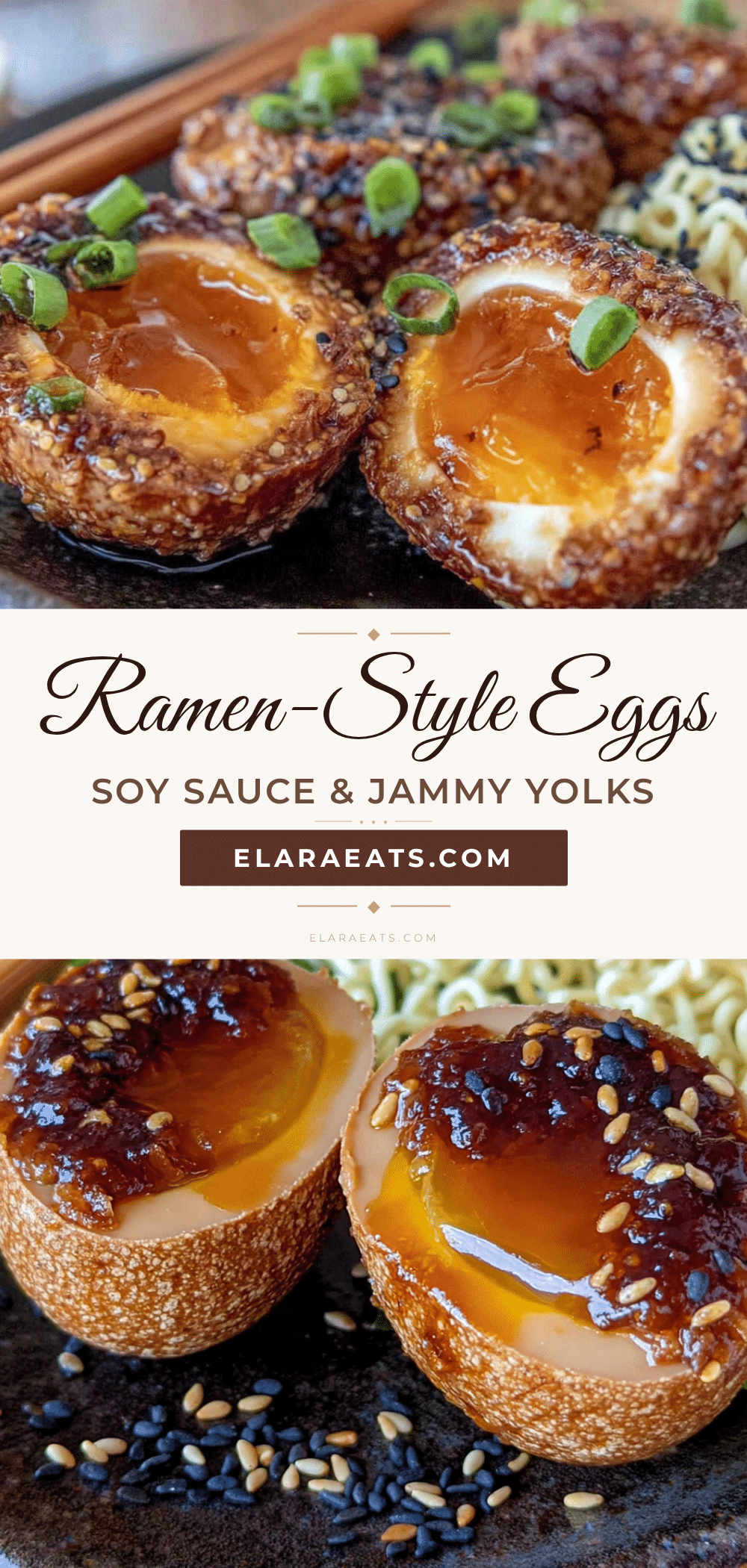
Best Ramen-Style Soy Sauce Eggs with Perfect Jammy Yolks

These ramen-style soy sauce eggs feature perfectly jammy yolks marinated in a savory-sweet soy mixture. They’re quick to make, perfect for entertaining, and incredibly delicious as a snack or over rice.
- Prep Time: 15 minutes
- Cook Time: 6 minutes 30 seconds
- Total Time: 24 hours 21 minutes 30 seconds (including marinating)
- Yield: 6 servings 1x
- Category: Appetizer
- Cuisine: Japanese
Ingredients
- 6 large eggs (room temperature)
- 1/2 cup low-sodium soy sauce
- 1/4 cup mirin
- 1/4 cup water
- 1 tablespoon white granulated sugar
- 2 cloves garlic (smashed)
- 1 teaspoon toasted sesame oil
- Optional: 1 teaspoon gochugaru or red pepper flakes
Instructions
- Bring the eggs to room temperature by taking them out of the fridge 15 minutes before starting.
- Fill a saucepan with enough water to cover the eggs by at least an inch. Bring to a rolling boil over high heat.
- Gently lower the eggs into the boiling water using a slotted spoon. Set a timer for exactly 6 minutes and 30 seconds.
- While the eggs boil, prepare an ice bath by filling a bowl with cold water and ice.
- As soon as the timer goes off, transfer the eggs to the ice bath. Let them sit for at least 5 minutes until completely cool.
- Peel the eggs carefully under running cold water.
- In a small bowl, combine soy sauce, mirin, water, sugar, smashed garlic, and sesame oil. Stir until sugar is dissolved.
- Place the peeled eggs in a resealable bag or shallow container. Pour the marinade over them, ensuring they are fully submerged. Seal and refrigerate for at least 8 hours, ideally 24 hours.
- Remove eggs from marinade about 10 minutes before serving. Slice each egg in half lengthwise with a sharp knife and serve.
Notes
For perfect jammy yolks, use large eggs straight from the fridge and boil for exactly 6 minutes 30 seconds. Adjust time by 30 seconds for different egg sizes. The marinade can be reused once after boiling to sterilize. Eggs keep in the marinade for up to 4 days.
Nutrition
- Serving Size: 1 whole egg
- Calories: 8090
- Sugar: 12
- Sodium: 400500
- Fat: 56
- Saturated Fat: 1.52
- Carbohydrates: 23
- Protein: 67
Keywords: ramen eggs, soy sauce eggs, jammy eggs, marinated eggs, Japanese eggs, easy appetizer