Love this? Save it for later!
Share the inspiration with your friends
I wasn’t expecting cooking advice from a tax accountant, but there I was, stuck in a folding chair at my kid’s third-grade talent show, listening to Mr. Henderson describe exactly how to make the best Oktoberfest bratwurst and sauerkraut skillet. The man had just spent twenty minutes explaining depreciation schedules to the parent next to him, and now he was leaning across the bleachers, whispering about caraway seeds and the perfect sear on bratwurst. Honestly, it was the last place I expected to find a recipe that would completely change how I host fall dinners.
He told me his grandmother brought the recipe over from Munich in the 1950s, written on the back of a steamship ticket. I scribbled his instructions on a napkin smeared with someone’s juice box spill, and let me tell you, I was skeptical. I mean, I’d made bratwurst before—tossed it on the grill, called it a day. But this skillet thing? It sounded like too much fuss for a weeknight. Then I made it for a small gathering, and the whole kitchen went quiet. That first bite had this unexpected depth—the tangy sauerkraut soaking into the juicy sausage, the slight pop of mustard seed, the warmth of beer simmering through everything. I was hooked.
Maybe you’ve been there, standing over a hot stove, hoping this time the dish will actually impress your guests. This one does. It’s the kind of meal that makes people close their eyes and nod slowly. And it all started with a tax guy at a talent show. You just never know where good food will find you.
Why You’ll Love This Recipe
Let me tell you why this Oktoberfest bratwurst and sauerkraut skillet has become my secret weapon for hosting. I’ve tested this recipe at least a dozen times—for my in-laws, for a neighborhood potluck, even for my husband’s picky poker group. Every single time, the skillet comes back empty, and someone asks for the recipe. That’s the kind of track record you can trust.
- Quick & Easy: This whole dish comes together in about 35 minutes, start to finish. You can prep the onions while the bratwurst browns, and everything simmers in one pan. Perfect for those evenings when guests are arriving in an hour and you forgot to plan dinner.
- Simple Ingredients: No fancy grocery trips needed. Bratwurst, sauerkraut, onions, apples, beer, and a few spices. You probably already have most of this in your fridge or pantry. I always keep a jar of sauerkraut and a couple of brats in the freezer for last-minute hosting emergencies.
- Perfect for Fall Gatherings: This dish screams Oktoberfest. It’s hearty, warming, and fills your house with that incredible aroma of sizzling sausage and caramelized onions. Your guests will walk in and immediately feel like they’re at a beer hall in Munich.
- Crowd-Pleaser: I’ve served this to kids, grandparents, and everyone in between. The flavors are bold but not scary, and the combination of juicy sausage with tangy-sweet kraut wins over even the skeptics. My friend Sarah, who swore she hated sauerkraut, asked for seconds.
- Unbelievably Delicious: The texture here is next-level. You get the crispy, caramelized exterior on the bratwurst, the soft, almost melt-in-your-mouth onions, and the slightly crunchy kraut all mingling together. It’s comfort food that feels a little special.
What makes this recipe different from every other bratwurst skillet out there is the apple. I know, it sounds weird. But adding a diced Granny Smith apple right at the end brings this bright, tart pop that cuts through the richness of the sausage and beer. It’s a tiny twist that makes the whole dish sing. This isn’t just another version of Oktoberfest dinner—it’s the one that’ll earn you bragging rights.
What Ingredients You Will Need
This recipe uses simple, honest ingredients to build layers of flavor without any fuss. Most are pantry staples, and the few special ones are easy to find at any grocery store.
For the Skillet
- 4-6 fresh bratwurst sausages (about 1.5 lbs / 680 g) — Look for uncooked, fresh bratwurst from the meat counter. I prefer Johnsonville or a local butcher’s brand for the best snap. If you can find them, pre-cooked brats work too, but you’ll need to adjust the cooking time.
- 1 tablespoon olive oil (15 ml) — For browning the sausages. You can use avocado oil or even bacon fat for extra flavor.
- 1 large yellow onion, thinly sliced (about 2 cups / 200 g) — Yellow onions caramelize beautifully. Sweet onions like Vidalia work too, but they’ll be a little sweeter.
- 1 Granny Smith apple, peeled, cored, and diced (about 1 cup / 150 g) — The tartness is key here. Don’t use a sweet apple like Gala or Fuji; it’ll throw off the balance.
- 3 cloves garlic, minced (about 1 tablespoon / 15 g) — Fresh garlic is non-negotiable. The jarred stuff just doesn’t have the same punch.
- 1 teaspoon caraway seeds (optional but highly recommended) — These little seeds add that classic German flavor. Toast them in the pan for a minute before adding other ingredients to wake up their oils.
- 1/2 teaspoon black pepper (freshly ground)
- 1/4 teaspoon salt (or to taste)
For the Sauerkraut Base

- 1 (14-ounce / 400 g) jar sauerkraut, drained but not rinsed — I recommend Bubbies or Wildbrine for a crisp, tangy kraut. Rinsing removes too much flavor. Just drain it well.
- 1 cup German-style beer (240 ml) — A wheat beer, hefeweizen, or Märzen works perfectly. Avoid dark stouts or IPAs, which can be too bitter. If you don’t drink beer, use low-sodium chicken broth mixed with 1 tablespoon apple cider vinegar.
- 1 tablespoon brown sugar (12 g) — Just a touch to balance the acidity of the sauerkraut and beer. You can substitute honey or maple syrup.
- 1 bay leaf
For Garnish (Optional but Lovely)
- Fresh parsley, chopped (about 2 tablespoons)
- Whole-grain mustard, for serving
- Pretzel rolls or crusty bread, for soaking up the juices
Substitution Guidance: If you’re gluten-free, use gluten-free bratwurst and a gluten-free beer or broth. For a dairy-free option, this recipe is already dairy-free as written. If you don’t have caraway seeds, you can skip them or add a pinch of fennel seeds for a similar vibe.
Equipment Needed
You don’t need a fully stocked German kitchen to pull this off. Here’s what you’ll actually use:
- A large, heavy-bottomed skillet or Dutch oven (12-inch / 30 cm) — Cast iron is my go-to for this recipe. It holds heat beautifully and gives the bratwurst that gorgeous golden crust. A stainless steel pan works too, just make sure it’s oven-safe if you want to finish the dish in the oven.
- Tongs — For flipping the sausages without piercing them. Piercing lets the juices escape, and nobody wants dry bratwurst.
- A sharp chef’s knife — For slicing the onion and dicing the apple. A dull knife makes this prep take twice as long.
- A wooden spoon or spatula — For stirring the onions and sauerkraut without scratching your pan.
- A lid or foil — To cover the skillet while the bratwurst simmers. If your skillet doesn’t have a lid, a sheet of heavy-duty aluminum foil works perfectly.
- A cutting board — Preferably one that won’t slide around on your counter.
I’ve made this in a cheap nonstick skillet before, and honestly, it worked fine. You don’t need fancy equipment. Just something that can go from stovetop to table if you want to serve it straight from the pan—which I highly recommend for maximum wow factor.
Preparation Method
Let’s get cooking. This whole thing takes about 35 minutes, and most of that is hands-off simmering time. Perfect for when you’re juggling a dozen other hosting tasks.
- Prep your ingredients first. Thinly slice the onion, mince the garlic, peel and dice the apple, and drain the sauerkraut. Having everything ready before you start cooking makes the process so much smoother. I learned this the hard way—burned garlic while frantically chopping an onion is not a good look.
- Brown the bratwurst. Heat the olive oil in your large skillet over medium-high heat. Once the oil shimmers, add the bratwurst in a single layer. Don’t crowd the pan—if you have more than 6 sausages, do them in batches. Cook for 4-5 minutes per side, until deep golden brown all over. The key here is to let them sit without moving for the full 4 minutes. That’s how you get that beautiful crust. Use tongs to turn them. Do not pierce the casings. I repeat, do not pierce them. Piercing lets all those lovely juices escape into the pan, and you’ll end up with dry sausages.
- Set the bratwurst aside. Transfer the browned sausages to a plate. They won’t be cooked through yet—that’s fine. We’ll finish them in the skillet.
- Cook the onions. Reduce the heat to medium. Add the sliced onion to the same skillet (don’t clean it—those browned bits are flavor gold). Cook, stirring occasionally, for 6-8 minutes, until the onions are soft and starting to turn golden. If the pan looks dry, add a splash of beer or water. You want them to soften without burning.
- Add the garlic and caraway seeds. Stir in the minced garlic and caraway seeds (if using). Cook for 30 seconds, just until fragrant. Garlic burns fast, so keep it moving.
- Build the sauerkraut base. Add the drained sauerkraut, beer, brown sugar, and bay leaf to the skillet. Stir everything together, scraping up any browned bits from the bottom of the pan. Bring the mixture to a gentle simmer.
- Return the bratwurst to the skillet. Nestle the browned sausages into the sauerkraut mixture. Spoon some of the kraut over the top of each sausage so they stay moist. Cover the skillet with a lid or foil.
- Simmer. Reduce the heat to low and let everything simmer gently for 15 minutes. This is where the magic happens—the beer and kraut infuse the bratwurst with flavor, and the sausages finish cooking through. Your kitchen will smell incredible at this point.
- Add the apple. After 15 minutes, uncover the skillet and stir in the diced Granny Smith apple. Let it cook for 2-3 minutes, just until the apple softens slightly but still holds its shape. The apple adds that bright, tart note that cuts through the richness.
- Finish and serve. Remove the bay leaf. Taste the sauerkraut and adjust seasoning if needed. If you want a little more tang, add a splash of apple cider vinegar. If you want more sweetness, another pinch of brown sugar. Serve the bratwurst and sauerkraut straight from the skillet, garnished with fresh parsley and a dollop of whole-grain mustard on the side.
Pro Tip for Hosting: You can do steps 1 through 8 up to an hour before guests arrive. Just cover the skillet and leave it on the lowest heat, or turn it off and reheat gently before serving. Then add the apple right before you bring it to the table. That way, you’re not stuck in the kitchen when people show up.
Cooking Tips & Techniques
After making this Oktoberfest bratwurst and sauerkraut skillet more times than I can count, I’ve picked up a few tricks that make a real difference.
Don’t skip the browning step. I know it’s tempting to just dump everything in the pan and let it simmer, but that initial sear on the bratwurst is where all the flavor lives. The Maillard reaction—that browning process—creates complex, savory notes that you simply can’t get any other way. Trust me, I tried the shortcut version once when I was in a hurry, and the whole dish tasted flat. Never again.
Watch your heat. Browning the bratwurst over medium-high heat is perfect, but once you add the onions and sauerkraut, you need to lower the heat. If you keep it too high, the beer will evaporate too quickly and the sugars in the brown sugar will burn. You want a gentle simmer, not a rolling boil. Little bubbles breaking the surface every few seconds—that’s your target.
Use the right beer. I once made this with a dark stout because that’s all I had in the fridge, and the result was way too bitter. Stick with a wheat beer, hefeweizen, or Märzen. These beers have a mild, slightly sweet flavor that complements the sauerkraut without overpowering it. If you’re not sure, ask the folks at your local bottle shop—they love helping with cooking questions.
A common mistake I made early on: I used to rinse the sauerkraut because I thought it would be too sour. Big mistake. Rinsing washes away all that tangy flavor that makes the dish work. Just drain it well and let it do its thing. The beer and brown sugar balance the acidity perfectly.
Multitasking strategy: While the bratwurst browns, slice your onion and dice your apple. While the onions cook, set the table and open the beer. By the time everything is simmering, you’ll have a solid 15 minutes to greet guests, pour drinks, or just stand there sniffing the amazing aroma.
Variations & Adaptations
One of the best things about this Oktoberfest bratwurst and sauerkraut skillet is how adaptable it is. Here are a few ways I’ve tweaked it over the years.
Dietary Variations:
- Low-Carb/Keto: Skip the brown sugar and use a sugar-free beer or broth. The sauerkraut is naturally low in carbs, and the bratwurst is protein-rich. Serve with roasted vegetables instead of bread.
- Gluten-Free: Use gluten-free bratwurst (many brands offer them) and a gluten-free beer or chicken broth. Everything else in the recipe is naturally gluten-free.
- Vegetarian: Swap the bratwurst for plant-based sausages. I’ve used Beyond Meat brats and Field Roast apple-sage sausages with great results. Just reduce the simmering time since plant-based sausages cook faster.
Flavor Twists:
- Spicy Version: Add 1/2 teaspoon of red pepper flakes along with the garlic, or use spicy bratwurst. A drizzle of sriracha at the end adds a fun kick.
- Smoky Version: Use smoked bratwurst and add 1/2 teaspoon of smoked paprika. The smokiness pairs beautifully with the tangy kraut.
- Herbaceous Version: Stir in 1 tablespoon of fresh thyme leaves or 2 teaspoons of dried marjoram with the sauerkraut. These herbs are classic in German cooking.
Different Cooking Methods:
- Slow Cooker: Brown the bratwurst and cook the onions on the stovetop first, then transfer everything to a slow cooker. Cook on low for 4-6 hours. Add the apple in the last 30 minutes. This is perfect for parties where you want the food to stay warm.
- Instant Pot: Use the sauté function to brown the bratwurst and cook the onions. Add the sauerkraut, beer, brown sugar, and bay leaf. Pressure cook on high for 5 minutes. Quick release, stir in the apple, and serve. So fast.
Seasonal Adaptation: In summer, I sometimes swap the apple for a diced peach or nectarine. The sweetness is different but equally delicious. In fall, a diced pear works beautifully.
Serving & Storage Suggestions
This dish is made for sharing, and how you serve it can really elevate the whole experience. Here’s what I’ve learned from hosting with this recipe.
Serving Temperature and Presentation: Serve this Oktoberfest bratwurst and sauerkraut skillet straight from the pan—it’s rustic and inviting. Place the skillet on a trivet in the center of the table and let everyone help themselves. The visual of the golden-brown sausages nestled in the glistening sauerkraut, studded with bits of apple and onion, is absolutely gorgeous. Garnish with a sprinkle of fresh parsley and a small bowl of whole-grain mustard on the side. For an extra festive touch, add a few pretzel rolls or slices of dark rye bread for sopping up the juices.
Complementary Dishes and Beverages:
- Sides: German potato salad, roasted Brussels sprouts, or a simple cucumber-dill salad. A side of spaetzle or buttered egg noodles is also fantastic for soaking up the sauce.
- Beverages: The obvious choice is a cold German beer—a hefeweizen, Märzen, or pilsner. For wine drinkers, a dry Riesling or a Grüner Veltliner cuts through the richness beautifully. Non-alcoholic options include sparkling apple cider or a ginger beer.
Storage Instructions: Leftovers keep well in an airtight container in the refrigerator for up to 4 days. The flavors actually meld and deepen overnight, so it’s even better the next day. I often make a double batch specifically for leftovers.
Reheating Methods:
- Stovetop (Best Method): Reheat in a skillet over medium-low heat with a splash of water or beer. Cover and cook for 5-7 minutes, stirring occasionally, until heated through. The sausages stay juicy this way.
- Microwave (Quick Method): Place individual portions in a microwave-safe dish, cover, and heat in 30-second bursts until hot. The texture won’t be quite as good, but it’s fine for a quick lunch.
- Oven: Spread everything in an oven-safe dish, cover with foil, and reheat at 350°F (175°C) for 10-15 minutes.
Freezing: This dish freezes surprisingly well. Let it cool completely, then transfer to a freezer-safe container. It will keep for up to 3 months. Thaw overnight in the refrigerator and reheat on the stovetop. The apple will be softer after freezing, but the flavor is still fantastic.
Nutritional Information & Benefits
Here’s the nutritional breakdown for one serving (1 bratwurst with about 3/4 cup of sauerkraut mixture). Values are approximate and will vary based on specific ingredients and brands.
| Nutrient | Amount per Serving |
|---|---|
| Calories | 380 |
| Total Fat | 24g |
| Saturated Fat | 8g |
| Cholesterol | 65mg |
| Sodium | 1050mg |
| Total Carbohydrates | 18g |
| Dietary Fiber | 4g |
| Sugars | 10g |
| Protein | 22g |
Health Benefits of Key Ingredients:
- Sauerkraut is a fermented food packed with probiotics that support gut health. It’s also rich in vitamin C and vitamin K.
- Bratwurst provides high-quality protein and essential B vitamins, including B12, which is important for energy metabolism.
- Apples are a great source of fiber and antioxidants, including quercetin, which supports immune health.
- Onions and garlic contain allicin and other sulfur compounds that have anti-inflammatory properties.
Dietary Considerations: This recipe is naturally dairy-free and nut-free. For gluten-free and low-carb options, see the variations section above. The sodium content is moderate due to the bratwurst and sauerkraut, so if you’re watching your salt intake, look for low-sodium versions of both ingredients.
I personally love that this dish feels indulgent but actually has a good balance of protein, fiber, and vegetables. It’s comfort food that doesn’t leave you feeling heavy and sluggish.
Conclusion
This Oktoberfest bratwurst and sauerkraut skillet has become my go-to for fall hosting, and I think it’ll become yours too. It’s the kind of recipe that looks and tastes like you spent hours in the kitchen, but really, you just let a few simple ingredients do all the work. The bratwurst gets juicy and flavorful, the sauerkraut turns sweet and tangy, and that little pop of apple at the end makes everything sing.
What I love most about this dish is how forgiving it is. You can tweak the spices, swap the beer, add more apples, or throw in some extra onions—it always turns out delicious. It’s a recipe you can make your own, and that’s the best kind of recipe to have in your back pocket.
I’d love to hear how yours turns out. Did you try a variation? Serve it with something unexpected? Drop a comment below and let me know. And if you’re looking for another crowd-pleasing German-inspired dish, you might enjoy my creamy German potato salad—it pairs perfectly with this skillet. Happy cooking, and prost!
Frequently Asked Questions
Can I make this Oktoberfest bratwurst and sauerkraut skillet ahead of time?
Absolutely. You can prepare the entire dish up to the point of adding the apple, then cover and refrigerate for up to 2 days. When you’re ready to serve, reheat gently on the stovetop, stir in the diced apple, and cook for 2-3 minutes. The flavors will be even deeper.
What’s the best beer to use for this recipe?
A German wheat beer, hefeweizen, or Märzen is ideal. These beers have a mild, slightly sweet flavor that complements the sauerkraut without overpowering it. Avoid dark stouts or very hoppy IPAs, as they can make the dish bitter. If you don’t drink alcohol, use low-sodium chicken broth mixed with 1 tablespoon of apple cider vinegar.
Do I need to rinse the sauerkraut before using it?
No, please don’t rinse it! Rinsing washes away all the tangy flavor that makes this dish work. Just drain it well in a colander or squeeze out the excess liquid with your hands. The beer and brown sugar in the recipe balance the acidity perfectly.
Can I use pre-cooked bratwurst instead of fresh?
Yes, you can, but the texture will be slightly different. Pre-cooked bratwurst won’t need as long to cook through—just brown them for 2-3 minutes per side, then simmer for 5-7 minutes instead of 15. Fresh bratwurst gives you that satisfying snap when you bite into it, which I personally prefer.
How do I prevent the bratwurst from drying out?
The key is to never pierce the casings while browning or cooking. Use tongs to turn them, not a fork. Also, make sure the sauerkraut mixture covers the sausages partially while they simmer—that keeps them moist and infuses them with flavor. If you’re worried, you can add an extra splash of beer or broth to the pan.
Pin This Recipe!
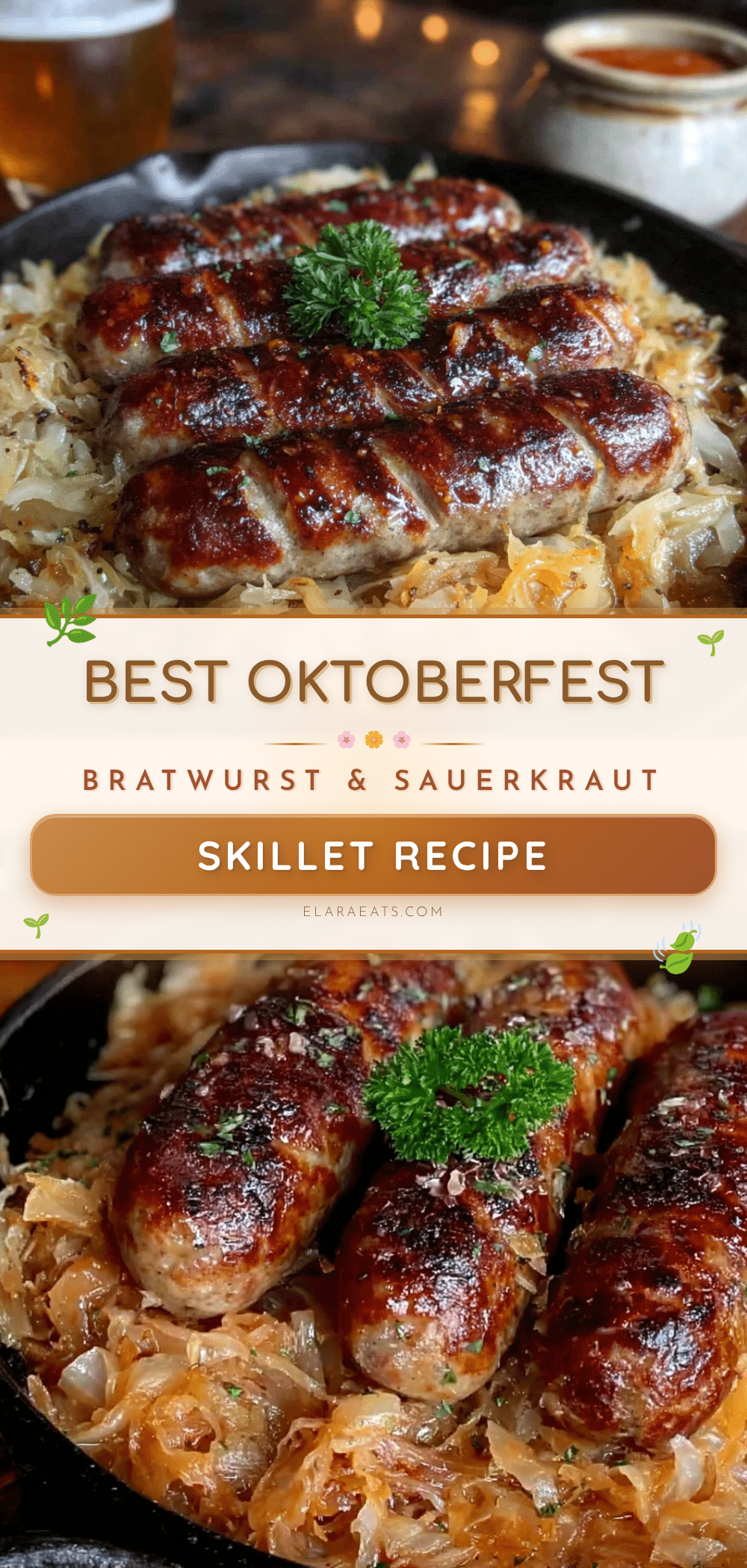
Best Oktoberfest Bratwurst and Sauerkraut Skillet: Easy German Dinner

This hearty Oktoberfest bratwurst and sauerkraut skillet comes together in about 35 minutes with simple ingredients like bratwurst, sauerkraut, onions, apples, and beer. A tart Granny Smith apple adds a bright pop that cuts through the richness, making it a crowd-pleasing fall dinner.
- Prep Time: 10 minutes
- Cook Time: 25 minutes
- Total Time: 35 minutes
- Yield: 4 servings 1x
- Category: Main Course
- Cuisine: German
Ingredients
- 4–6 fresh bratwurst sausages (about 1.5 lbs / 680 g)
- 1 tablespoon olive oil (15 ml)
- 1 large yellow onion, thinly sliced (about 2 cups / 200 g)
- 1 Granny Smith apple, peeled, cored, and diced (about 1 cup / 150 g)
- 3 cloves garlic, minced (about 1 tablespoon / 15 g)
- 1 teaspoon caraway seeds (optional)
- 1/2 teaspoon black pepper (freshly ground)
- 1/4 teaspoon salt (or to taste)
- 1 (14-ounce / 400 g) jar sauerkraut, drained but not rinsed
- 1 cup German-style beer (240 ml)
- 1 tablespoon brown sugar (12 g)
- 1 bay leaf
- Fresh parsley, chopped (about 2 tablespoons, for garnish)
- Whole-grain mustard (for serving)
- Pretzel rolls or crusty bread (for serving)
Instructions
- Prep your ingredients first: thinly slice the onion, mince the garlic, peel and dice the apple, and drain the sauerkraut.
- Brown the bratwurst: Heat olive oil in a large skillet over medium-high heat. Add bratwurst in a single layer and cook for 4-5 minutes per side until deep golden brown. Use tongs to turn them; do not pierce the casings.
- Set the bratwurst aside on a plate (they will not be cooked through yet).
- Cook the onions: Reduce heat to medium. Add sliced onion to the same skillet and cook, stirring occasionally, for 6-8 minutes until soft and starting to turn golden. Add a splash of beer or water if the pan looks dry.
- Add garlic and caraway seeds: Stir in minced garlic and caraway seeds (if using) and cook for 30 seconds until fragrant.
- Build the sauerkraut base: Add drained sauerkraut, beer, brown sugar, and bay leaf to the skillet. Stir, scraping up browned bits from the bottom. Bring to a gentle simmer.
- Return the bratwurst to the skillet: Nestle the browned sausages into the sauerkraut mixture, spooning some kraut over the top. Cover the skillet with a lid or foil.
- Simmer: Reduce heat to low and let simmer gently for 15 minutes.
- Add the apple: Uncover the skillet and stir in the diced Granny Smith apple. Cook for 2-3 minutes until the apple softens slightly but still holds its shape.
- Finish and serve: Remove the bay leaf. Taste and adjust seasoning if needed. Serve straight from the skillet, garnished with fresh parsley and whole-grain mustard on the side.
Notes
For best results, do not pierce the bratwurst casings while browning. Use a German wheat beer, hefeweizen, or Märzen; avoid dark stouts or IPAs. Do not rinse the sauerkraut. The apple adds a bright tartness that balances the richness. You can prepare steps 1-8 up to an hour before serving; add the apple just before serving.
Nutrition
- Serving Size: 1 bratwurst with abo
- Calories: 380
- Sugar: 10
- Sodium: 1050
- Fat: 24
- Saturated Fat: 8
- Carbohydrates: 18
- Fiber: 4
- Protein: 22
Keywords: Oktoberfest, bratwurst, sauerkraut, skillet, German dinner, fall recipe, one-pan meal