Love this? Save it for later!
Share the inspiration with your friends
I was elbow-deep in a test batch of stuffing last November, muttering about gluten-free bread cubes that turned to mush the second they touched broth. My ten-year-old, Leo, wandered in and asked why I couldn’t just crumble up cornbread instead. I started to explain why that wouldn’t work — cornbread is too delicate, it falls apart, it’s not traditional. Then I stopped. Honestly, I had no good reason. I was just being stubborn about what “real” stuffing should be.
So I tried it. I made a batch of my favorite gluten-free cornbread, let it go stale on the counter for a day, and crumbled it into a bowl. I added the usual suspects: onions, celery, sage, thyme, a mountain of butter. I baked it, held my breath, and took a bite. And let me tell you — I have never been so happy to be wrong. That stuffing was golden, herby, and actually had texture. It didn’t turn into a gluey mess. It was better than any bread-based stuffing I’d made in years.
That moment changed how I approach Thanksgiving entirely. I mean, if I’m being honest, I’d spent years trying to force gluten-free bread cubes to behave like regular ones. They never did. But cornbread? Cornbread wants to be stuffing. It soaks up flavor without losing its shape. It gets those crispy, browned edges that everyone fights over. And when you load it with fresh herbs and a little garlic, it becomes the dish that gets the “wait, this is gluten-free?” reaction every single time.
This Best Gluten-Free Herb Thanksgiving Stuffing is the result of that kitchen counter revelation. It’s the recipe I bring to every potluck, every Friendsgiving, and every family dinner where I need to prove that gluten-free food can be the star of the show. If you’ve been struggling with soggy, disappointing gluten-free stuffing, maybe you’ve been there — this one is for you. It’s the stuffing that taught me to stop overthinking and start trusting a ten-year-old’s instinct.
Why You’ll Love This Recipe
Let’s be real — gluten-free stuffing has a reputation. It’s either dry as sawdust or a gluey brick that tastes faintly of cardboard. This recipe breaks that cycle completely. It’s the kind of dish that makes people ask for the recipe before they even know it’s gluten-free.
- Made with Cornbread, Not Bread Cubes: This is the game-changer. Gluten-free cornbread has a sturdy crumb that holds up to broth and eggs without turning to paste. It stays tender on the inside and gets beautifully crisp on top.
- Bold Herb Flavor: We’re using a full quarter-cup of fresh herbs here — sage, thyme, rosemary, and parsley. No skimping. Every bite tastes like Thanksgiving.
- Perfect for a Crowd: This recipe scales beautifully. I’ve made it for a cozy dinner for four and for a gathering of twenty. It bakes up the same either way.
- Make-Ahead Friendly: You can assemble this stuffing a day in advance and pop it in the oven when guests arrive. Zero stress on the big day.
- Naturally Gluten-Free: No special flours, no weird gums, no hunting down obscure ingredients. Just real food that happens to be safe for celiacs and gluten-sensitive guests.
- Impresses Everyone: I’ve served this to gluten-eaters who went back for thirds. It’s that good. The texture is spot-on, the flavor is layered, and it looks gorgeous on a serving platter.
This isn’t just another gluten-free stuffing recipe. It’s the one that finally works. The cornbread base gives it a slightly sweet, buttery foundation that pairs perfectly with savory herbs and caramelized vegetables. It’s comfort food that doesn’t compromise — and honestly, isn’t that what we all want on Thanksgiving?
What Ingredients You Will Need
This recipe uses simple, whole ingredients that you can find at any grocery store. The magic is in how they come together. Here’s what you’ll need:
For the Cornbread
- 1 ½ cups yellow cornmeal (I prefer Bob’s Red Mill medium-grind for the best texture)
- ½ cup gluten-free all-purpose flour (use a blend with xanthan gum, like King Arthur Measure for Measure)
- 1 tablespoon baking powder (aluminum-free, if you can find it)
- 1 teaspoon salt
- 1 tablespoon sugar (optional — adds a touch of sweetness that balances the herbs)
- 2 large eggs, room temperature
- 1 cup buttermilk (or 1 cup milk + 1 tablespoon lemon juice, let sit 5 minutes)
- ¼ cup unsalted butter, melted and cooled slightly
For the Stuffing
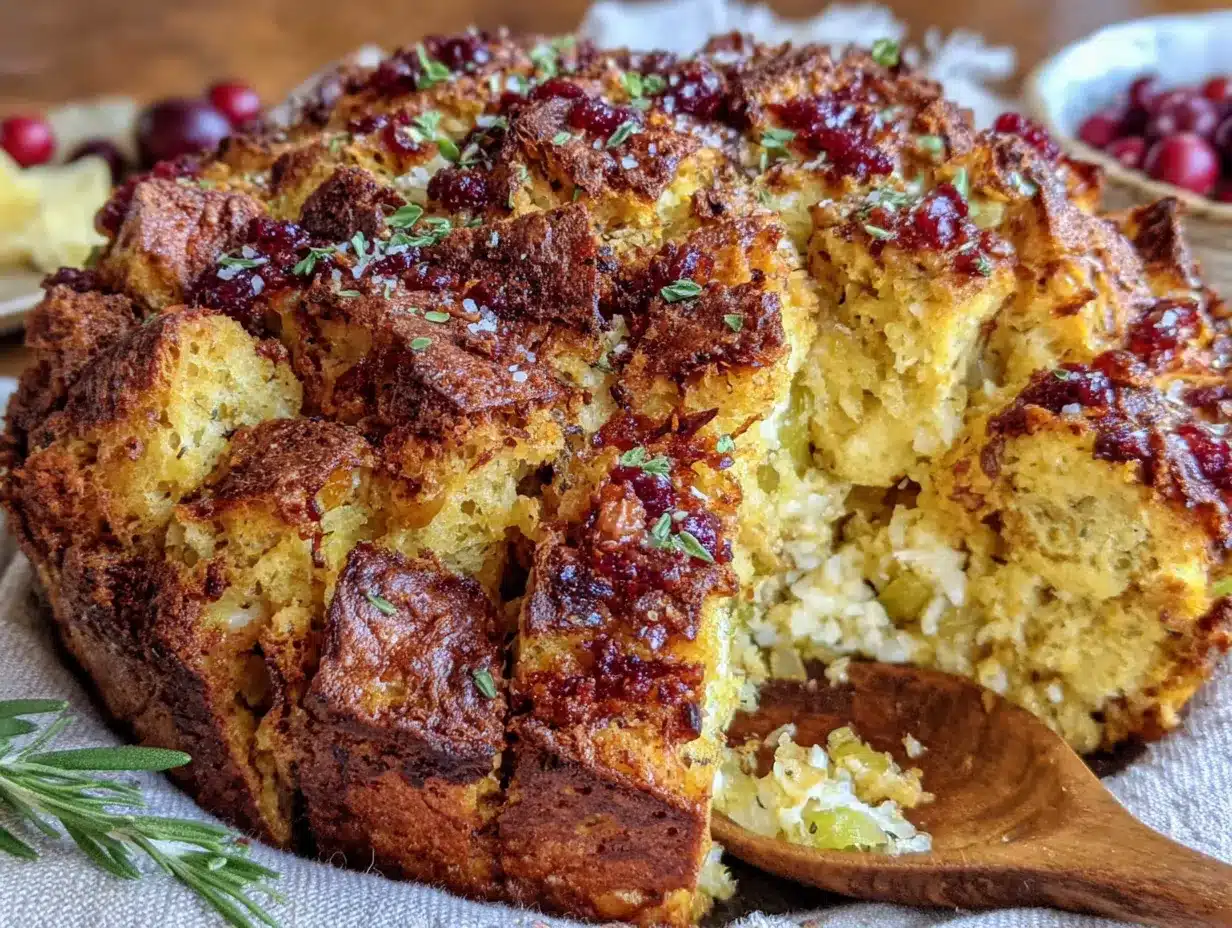
- 8 cups crumbled day-old cornbread (about one 9×9 pan of cornbread, crumbled into bite-sized pieces)
- 4 tablespoons unsalted butter, plus more for greasing the dish
- 1 large yellow onion, diced (about 1 ½ cups)
- 3 celery stalks, diced (about 1 cup)
- 4 cloves garlic, minced
- 2 tablespoons fresh sage, finely chopped
- 1 tablespoon fresh thyme leaves
- 1 tablespoon fresh rosemary, finely chopped
- ¼ cup fresh parsley, chopped
- 1 ½ cups low-sodium chicken or vegetable broth, warmed
- 2 large eggs, beaten
- ½ teaspoon black pepper
- ½ teaspoon salt (adjust based on your broth)
Ingredient Notes: For the cornbread, I really do recommend making it a day ahead. Fresh cornbread crumbles too easily and can turn gummy. Day-old cornbread has dried out just enough to soak up the broth without falling apart. If you’re in a pinch, you can spread fresh cornbread on a baking sheet and dry it in a 300°F oven for about 15 minutes. It works in a bind, but overnight drying gives the best texture.
For the herbs, fresh is non-negotiable here. Dried herbs will work in a pinch, but you’ll need to use about one-third the amount, and the flavor won’t be as bright. If you’re using dried, add them to the butter when you sauté the vegetables to help rehydrate them.
Equipment Needed
You don’t need a professional kitchen to make this stuffing. Here’s what you’ll need:
- 9×9-inch baking pan (for the cornbread)
- 9×13-inch baking dish (for the stuffing — a 3-quart dish works perfectly)
- Large skillet (for sautéing the vegetables)
- Large mixing bowl (big enough to hold all the crumbled cornbread and vegetables)
- Whisk (for the cornbread batter and the egg mixture)
- Sharp knife and cutting board
- Measuring cups and spoons
- Aluminum foil (for covering the stuffing while it bakes)
Budget-Friendly Tip: If you don’t have a 9×13 dish, you can use a large cast-iron skillet or even two 8×8 pans. Just adjust the baking time slightly — smaller pans will cook a bit faster. I’ve also made this in a disposable aluminum pan for potlucks, and it works great. Just place it on a baking sheet for stability.
Preparation Method
Let’s get cooking. I’ll walk you through every step so there’s no guesswork.
Step 1: Make the Cornbread (Day Before)
Preheat your oven to 400°F. Grease a 9×9-inch baking pan with butter or nonstick spray. In a large bowl, whisk together the cornmeal, gluten-free flour, baking powder, salt, and sugar (if using). In a separate bowl, whisk the eggs, buttermilk, and melted butter until combined. Pour the wet ingredients into the dry and stir until just combined — a few lumps are fine. Pour the batter into the prepared pan and bake for 20-25 minutes, until golden on top and a toothpick inserted in the center comes out clean. Let it cool completely in the pan, then cover loosely and leave it on the counter overnight.
Sensory Cue: The cornbread should smell nutty and buttery when it’s done. The edges will be slightly darker than the center, and the top should be a deep golden brown.
Step 2: Crumble the Cornbread
The next day, preheat your oven to 350°F. Grease a 9×13-inch baking dish with butter. Crumble the cornbread into a large mixing bowl. You want pieces that range from the size of a pea to the size of a grape — some smaller crumbs for tenderness, some larger chunks for texture. Don’t pulverize it. Aim for about 8 cups of crumbled cornbread.
Step 3: Sauté the Aromatics
In a large skillet over medium heat, melt the 4 tablespoons of butter. Add the diced onion and celery. Cook, stirring occasionally, for 8-10 minutes, until the vegetables are soft and translucent. The onions should look like they’re starting to caramelize at the edges — that’s where the sweetness comes from. Add the minced garlic and cook for 1 minute more, until fragrant. Remove from heat.
Personal Tip: Don’t rush this step. I once tried to speed things up by cranking the heat, and I ended up with burnt garlic and undercooked onions. Low and slow is the way. The vegetables should be soft enough that you can easily smash a piece of celery with the back of your spoon.
Step 4: Combine the Herbs and Broth
Add the sautéed vegetables to the bowl with the crumbled cornbread. Add the chopped sage, thyme, rosemary, and parsley. Toss everything together gently with your hands or a large spoon until the herbs are evenly distributed. In a separate small bowl, whisk together the warm broth, beaten eggs, salt, and pepper. Pour this mixture over the cornbread mixture. Fold everything together gently until the cornbread is evenly moistened. You want all the pieces to be coated, but you don’t want it to be soupy. It should look like a cohesive, slightly wet mixture that holds together when pressed.
Step 5: Bake the Stuffing
Transfer the mixture to the prepared baking dish and spread it into an even layer. Cover tightly with foil and bake for 30 minutes. Remove the foil and bake for another 20-25 minutes, until the top is golden brown and crispy. The edges should be dark and crunchy — that’s the best part. Let it rest for 5-10 minutes before serving.
Make-Ahead Note: You can assemble the stuffing up to this point, cover it, and refrigerate for up to 24 hours. When you’re ready to bake, add about 10 minutes to the covered baking time to account for the cold start.
Cooking Tips & Techniques
I’ve made this stuffing more times than I can count, and I’ve learned a few things along the way. Here are my best tips:
Don’t Overmix. When you add the broth and eggs, fold gently. Overmixing breaks down the cornbread too much and gives you a dense, pasty stuffing. You want distinct pieces of cornbread throughout.
Check Your Cornbread’s Dryness. Gluten-free cornbread can vary wildly depending on the brand of cornmeal and flour you use. If your cornbread feels very dry and crumbly, you might need an extra ¼ cup of broth. If it’s still a bit moist, use a little less. The mixture should look like wet sand — it should hold together when squeezed but not release liquid.
Crisp It Up. If you love crispy edges as much as I do, spread the stuffing into a thinner layer in a larger dish. A 9×13 dish gives you a good balance of soft interior and crispy top, but if you use a 9×9 dish, you’ll get more soft, custard-like stuffing. Both are delicious, just different.
Toast the Herbs. For an even deeper flavor, add the fresh herbs to the skillet with the butter for the last 30 seconds of cooking the vegetables. This releases their essential oils and makes the whole kitchen smell like Thanksgiving.
My Biggest Failure: I once forgot to add the eggs entirely. The stuffing came out of the oven looking beautiful, but it fell apart into a pile of crumbs the second I tried to serve it. The eggs are crucial for binding everything together. Don’t skip them.
Variations & Adaptations
This recipe is flexible. Here are some ways to make it your own:
Add Sausage: Brown 1 pound of gluten-free Italian sausage or breakfast sausage in the skillet before cooking the vegetables. Remove it, crumble it, and add it back when you combine everything. This turns the stuffing into a full meal.
Make It Vegan: Use vegan butter and replace the eggs with flax eggs (2 tablespoons ground flaxseed mixed with 6 tablespoons water, let sit for 10 minutes). Use vegetable broth instead of chicken broth. The texture will be slightly less firm, but the flavor is still fantastic.
Add Dried Fruit: For a sweeter, more complex stuffing, fold in ½ cup of dried cranberries or chopped dried apricots along with the herbs. The tartness cuts through the richness beautifully.
Go Nutty: Toast ½ cup of pecans or walnuts and fold them in just before baking. The crunch is a lovely contrast to the soft cornbread.
Spice It Up: Add ½ teaspoon of red pepper flakes along with the garlic for a subtle kick. It doesn’t make the stuffing spicy, just more interesting.
Serving & Storage Suggestions
This stuffing is a showstopper on any Thanksgiving table. Here’s how to serve and store it:
Serving: Serve it hot, straight from the oven. I like to garnish it with a sprinkle of fresh parsley and a few extra sage leaves for color. It pairs beautifully with roasted turkey, mashed potatoes, and cranberry sauce. For a lighter meal, serve it alongside a simple green salad with a vinaigrette to cut through the richness.
Storage: Leftover stuffing keeps well in the refrigerator for up to 4 days. Store it in an airtight container. The flavors actually deepen overnight, so it might taste even better the next day.
Reheating: The best way to reheat this stuffing is in the oven. Spread it on a baking sheet and warm it at 350°F for 10-15 minutes. This restores the crispy edges. The microwave works in a pinch, but it will soften the crispy bits.
Freezing: You can freeze this stuffing for up to 3 months. Assemble it completely, but don’t bake it. Wrap the dish tightly in plastic wrap and then foil. When you’re ready to bake, thaw it in the refrigerator overnight and bake as directed, adding 10-15 minutes to the covered baking time.
Nutritional Information & Benefits
Here’s an approximate nutritional breakdown per serving (based on 12 servings):
- Calories: 285
- Fat: 14g
- Carbohydrates: 34g
- Fiber: 3g
- Protein: 7g
- Sodium: 480mg
Health Benefits: This stuffing is made with whole ingredients and no processed gluten-free fillers. Cornmeal is a good source of fiber and contains antioxidants called carotenoids. Fresh herbs like sage and thyme are packed with anti-inflammatory compounds. Celery and onions add vitamins and minerals with very few calories. And because this recipe uses cornbread instead of processed bread cubes, it’s naturally lower in preservatives and additives.
Dietary Note: This recipe is gluten-free, nut-free (unless you add nuts), and can be made dairy-free and vegan with simple substitutions. It contains eggs and dairy in the standard version.
Conclusion
This Best Gluten-Free Herb Thanksgiving Stuffing is more than just a recipe — it’s proof that gluten-free cooking can be genuinely, deeply delicious. It’s the dish that converted my gluten-eating father-in-law, the one that gets requested every year, and the one that makes me feel like I’m actually contributing something special to the Thanksgiving table, not just a sad alternative for the “sensitive” guests.
I hope you make this for your next gathering. I hope you double the recipe because one pan won’t be enough. And I hope you let yourself be surprised by how good gluten-free stuffing can be. Trust me — if a ten-year-old’s offhand suggestion can change my entire approach to Thanksgiving, there’s hope for all of us.
Have you made this stuffing? Did you try a variation I didn’t mention? I’d love to hear about it in the comments below. Share your photos, your tweaks, and your own kitchen counter revelations. Happy cooking, friends!
Frequently Asked Questions
Can I use store-bought gluten-free cornbread for this recipe?
Absolutely. If you’re short on time, pick up a loaf or two of gluten-free cornbread from your local bakery or grocery store. Just make sure it’s day-old or dry it out in the oven before crumbling. Fresh cornbread straight from the package will be too soft and may turn mushy.
Can I make this stuffing dairy-free?
Yes! Use vegan butter or olive oil in place of the butter, and use a dairy-free milk (like oat or almond milk) with a splash of lemon juice to replace the buttermilk in the cornbread. For the stuffing itself, just use vegan butter. The texture will be slightly different, but the flavor is still wonderful.
How do I know when the stuffing is done baking?
The stuffing is done when the top is golden brown and crispy, and the internal temperature reaches 165°F. The edges should be dark and crunchy, and the center should be firm to the touch. If you insert a knife into the center, it should come out clean.
Can I add meat to this stuffing?
Definitely. Cooked and crumbled gluten-free sausage, bacon, or even shredded turkey are all excellent additions. Add them when you fold the vegetables into the cornbread. Just be sure to adjust the salt accordingly, as meat can add quite a bit of sodium.
Why did my stuffing turn out dry?
This usually happens for one of two reasons: either the cornbread was too dry to begin with, or you didn’t add enough broth. Next time, try adding an extra ¼ cup of broth and make sure your cornbread isn’t overly stale. Also, be sure to cover the dish with foil for the first half of baking to trap moisture.
Pin This Recipe!
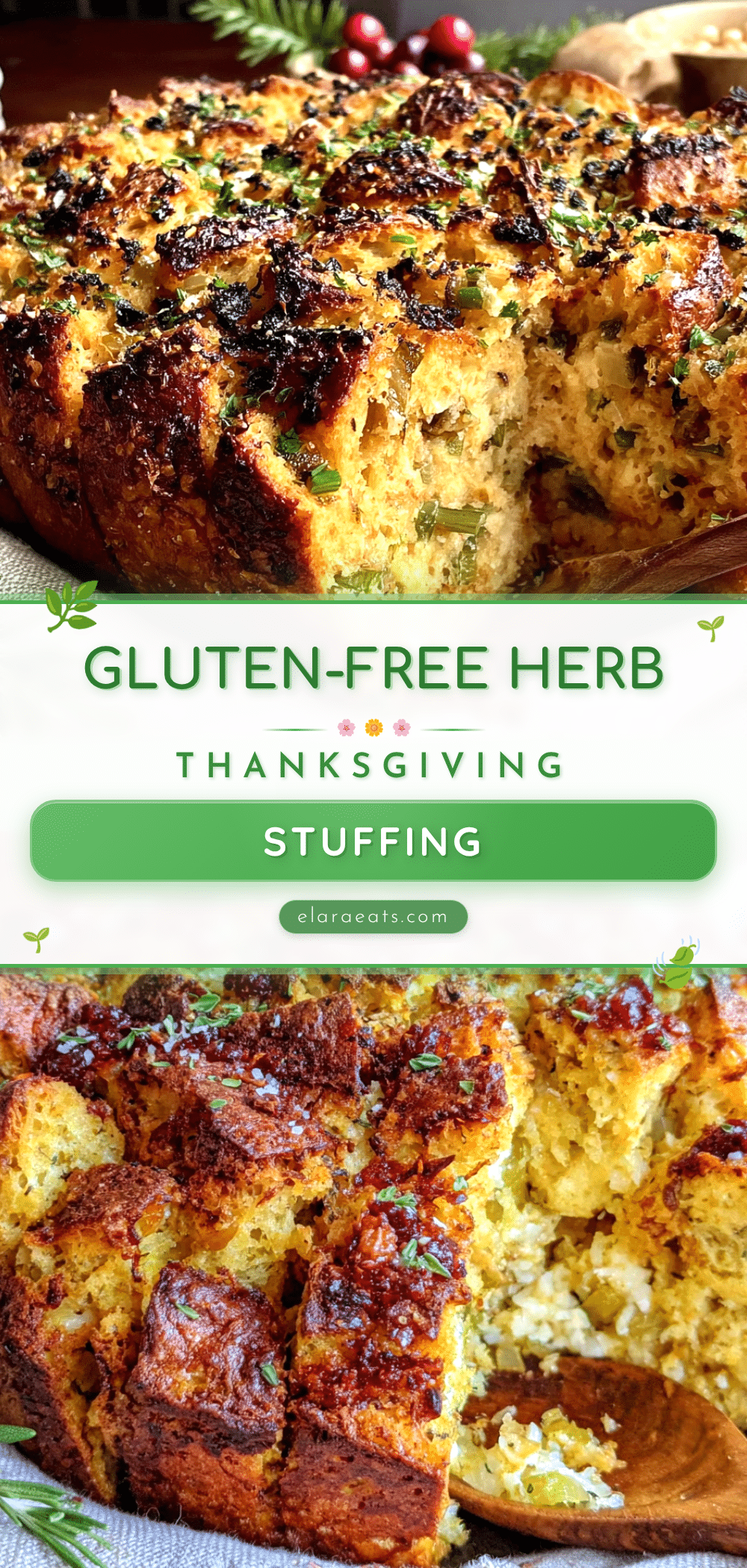
Best Gluten-Free Herb Thanksgiving Stuffing (Easy Recipe)
This gluten-free stuffing uses cornbread instead of bread cubes for a sturdy, flavorful base that stays tender inside and crispy on top. Loaded with fresh herbs and caramelized vegetables, it’s the dish that proves gluten-free food can be the star of the Thanksgiving table.
- Prep Time: 30 minutes
- Cook Time: 50 minutes (plus 20-25 minutes for cornbread)
- Total Time: 1 hour 20 minutes (plus overnight for cornbread to dry)
- Yield: 12 servings 1x
- Category: Side Dish
- Cuisine: American
Ingredients
- 1 ½ cups yellow cornmeal (preferably Bob’s Red Mill medium-grind)
- ½ cup gluten-free all-purpose flour (with xanthan gum, like King Arthur Measure for Measure)
- 1 tablespoon baking powder (aluminum-free if possible)
- 1 teaspoon salt
- 1 tablespoon sugar (optional)
- 2 large eggs, room temperature
- 1 cup buttermilk (or 1 cup milk + 1 tablespoon lemon juice, let sit 5 minutes)
- ¼ cup unsalted butter, melted and cooled slightly
- 8 cups crumbled day-old cornbread (about one 9x9 pan)
- 4 tablespoons unsalted butter, plus more for greasing
- 1 large yellow onion, diced (about 1 ½ cups)
- 3 celery stalks, diced (about 1 cup)
- 4 cloves garlic, minced
- 2 tablespoons fresh sage, finely chopped
- 1 tablespoon fresh thyme leaves
- 1 tablespoon fresh rosemary, finely chopped
- ¼ cup fresh parsley, chopped
- 1 ½ cups low-sodium chicken or vegetable broth, warmed
- 2 large eggs, beaten
- ½ teaspoon black pepper
- ½ teaspoon salt (adjust based on broth)
Instructions
- Make the cornbread (day before): Preheat oven to 400°F. Grease a 9×9-inch baking pan. In a large bowl, whisk together cornmeal, gluten-free flour, baking powder, salt, and sugar. In a separate bowl, whisk eggs, buttermilk, and melted butter. Pour wet into dry and stir until just combined. Pour into prepared pan and bake 20-25 minutes until golden and a toothpick comes out clean. Cool completely, then cover and leave on counter overnight.
- Crumble the cornbread: Preheat oven to 350°F. Grease a 9×13-inch baking dish. Crumble cornbread into a large bowl into pieces ranging from pea-sized to grape-sized. Aim for about 8 cups.
- Sauté the aromatics: In a large skillet over medium heat, melt 4 tablespoons butter. Add onion and celery. Cook 8-10 minutes until soft and translucent. Add garlic and cook 1 minute more. Remove from heat.
- Combine herbs and broth: Add sautéed vegetables to crumbled cornbread. Add sage, thyme, rosemary, and parsley. Toss gently. In a small bowl, whisk together warm broth, beaten eggs, salt, and pepper. Pour over cornbread mixture and fold gently until evenly moistened (should hold together when pressed but not be soupy).
- Bake the stuffing: Transfer mixture to prepared dish and spread evenly. Cover tightly with foil and bake 30 minutes. Remove foil and bake 20-25 minutes more until top is golden brown and crispy. Let rest 5-10 minutes before serving.
Notes
For best texture, make cornbread a day ahead and let it dry overnight. If using fresh cornbread, spread on a baking sheet and dry in a 300°F oven for 15 minutes. Fresh herbs are non-negotiable for best flavor; if using dried, use one-third the amount and add to butter when sautéing vegetables. Don’t overmix when adding broth and eggs. The stuffing can be assembled up to 24 hours in advance and refrigerated; add 10 minutes to covered baking time if starting cold. For crispy edges, spread in a thinner layer.
Nutrition
- Serving Size: 1 serving (about 1 c
- Calories: 285
- Sugar: 4
- Sodium: 480
- Fat: 14
- Saturated Fat: 7
- Carbohydrates: 34
- Fiber: 3
- Protein: 7
Keywords: gluten-free stuffing, cornbread stuffing, Thanksgiving stuffing, herb stuffing, gluten-free Thanksgiving, easy stuffing recipe