Love this? Save it for later!
Share the inspiration with your friends
It was 11:47 PM on a rainy Tuesday, and I had a desperate craving for meatloaf. Not just any meatloaf—the kind my grandmother used to make, with that sticky-sweet glaze that caramelizes into something almost candied on top. The problem? I didn’t have her recipe memorized, and calling her at nearly midnight felt a little dramatic. But I did have two pounds of ground beef in the fridge, a half-empty bottle of ketchup, and some brown sugar that was starting to clump. So I did what any reasonable person would do at that hour—I started throwing things together, hoping for the best.
Honestly, that first attempt was a mess. The loaf fell apart when I tried to slice it, and I’d added way too much Worcestershire sauce. But that glaze? That brown sugar glaze was something special. I sat there at my kitchen counter at 1 AM, eating crumbled meatloaf with a fork, thinking about how close I was to something really good. Over the next few weeks, I made meatloaf four more times. My neighbors probably thought I was feeding an army. But each time, I got a little closer to that perfect balance—moist but not soggy, flavorful but not overwhelming, and that glaze that sets like a jewel on top.
So this is that recipe. The one I stayed up late perfecting, the one that finally made me stop tweaking and start writing it down. Maybe you’ve been there—standing in your kitchen at odd hours, convinced that if you just tried one more thing, you’d crack the code. Well, here it is. The best classic meatloaf with brown sugar glaze, born from a midnight craving and a whole lot of determination.
Why You’ll Love This Recipe
This isn’t just another meatloaf recipe you’ll find floating around the internet. I’ve tested this thing six ways from Sunday, and here’s what makes it stand out from the crowd.
- Budget-Friendly Hero: Ground beef, breadcrumbs, eggs, and ketchup—these are pantry staples that won’t break the bank. You can feed a family of six for under $15, and that’s including the side dishes.
- Picky Eater Approved: My own kids used to give me the side-eye when I said “meatloaf for dinner.” This version? They ask for seconds. The brown sugar glaze is basically magic for winning over skeptical little taste buds.
- Leftovers That Actually Get Better: I’m not kidding. Day-old meatloaf sliced cold on a sandwich might be better than the fresh version. The flavors meld together overnight, and the texture firms up perfectly for slicing.
- No Fancy Equipment Needed: You don’t need a stand mixer or a food processor. Just a big bowl, your hands, and a loaf pan. That’s it.
- Comes Together in Under an Hour: From start to finish, you’re looking at about 55 minutes. That’s fast enough for a Tuesday night but fancy enough to feel like Sunday dinner.
What really sets this recipe apart is the technique. Instead of just mixing everything together and hoping for the best, we’re using a few tricks I picked up from years of trial and error. The milk-soaked breadcrumbs keep the meatloaf incredibly moist without making it dense. The glaze is applied in two stages—half goes on before baking to create that sticky base, and the rest goes on in the last 15 minutes for that glossy, caramelized finish. It’s those little details that turn a good meatloaf into the best meatloaf.
And let me tell you, there’s something deeply satisfying about pulling a perfectly glazed meatloaf out of the oven. The aroma fills your whole house, and when you slice into it and see that tender, juicy interior—it’s comfort food at its finest. This is the kind of meal that makes everyone at the table go quiet for a minute, just enjoying every bite.
What Ingredients You Will Need
This recipe uses simple, honest ingredients that you probably already have in your kitchen. No weird specialty items or expensive cuts of meat—just good, basic components that work together beautifully.
For the Meatloaf
- 2 pounds ground beef (80/20) — The 80/20 ratio is important here. Leaner meat will give you a dry meatloaf, and you need that fat for moisture and flavor. I prefer ground chuck for the best balance.
- 1 cup plain breadcrumbs — These act as a binder and help absorb moisture. Panko works great too, but regular breadcrumbs give a finer texture. If you’re gluten-free, use crushed pork rinds or gluten-free breadcrumbs.
- 1/2 cup whole milk — This soaks into the breadcrumbs and keeps the meatloaf tender. You can use 2% or even oat milk in a pinch, but whole milk gives the best results.
- 1 medium yellow onion, finely diced — About 1 cup once chopped. The onion adds moisture and sweetness as it cooks. Don’t skip it, and don’t use onion powder—fresh makes a real difference.
- 2 large eggs — These bind everything together. Make sure they’re at room temperature so they mix in evenly.
- 3 cloves garlic, minced — Fresh garlic is non-negotiable here. The jarred stuff just doesn’t have the same punch.
- 2 tablespoons Worcestershire sauce — This adds that deep, savory umami flavor. I’ve tried a few brands, and Lea & Perrins is my go-to.
- 1 tablespoon Dijon mustard — Don’t worry, you won’t taste mustard. It just enhances the other flavors and adds a little tang.
- 1 teaspoon salt — Use kosher salt if you have it. It distributes more evenly than table salt.
- 1/2 teaspoon black pepper — Freshly ground is always better.
- 1/2 teaspoon dried thyme — This adds a subtle earthy note that pairs beautifully with beef.
- 1/4 teaspoon smoked paprika — Optional, but I love the subtle smokiness it brings.
For the Brown Sugar Glaze
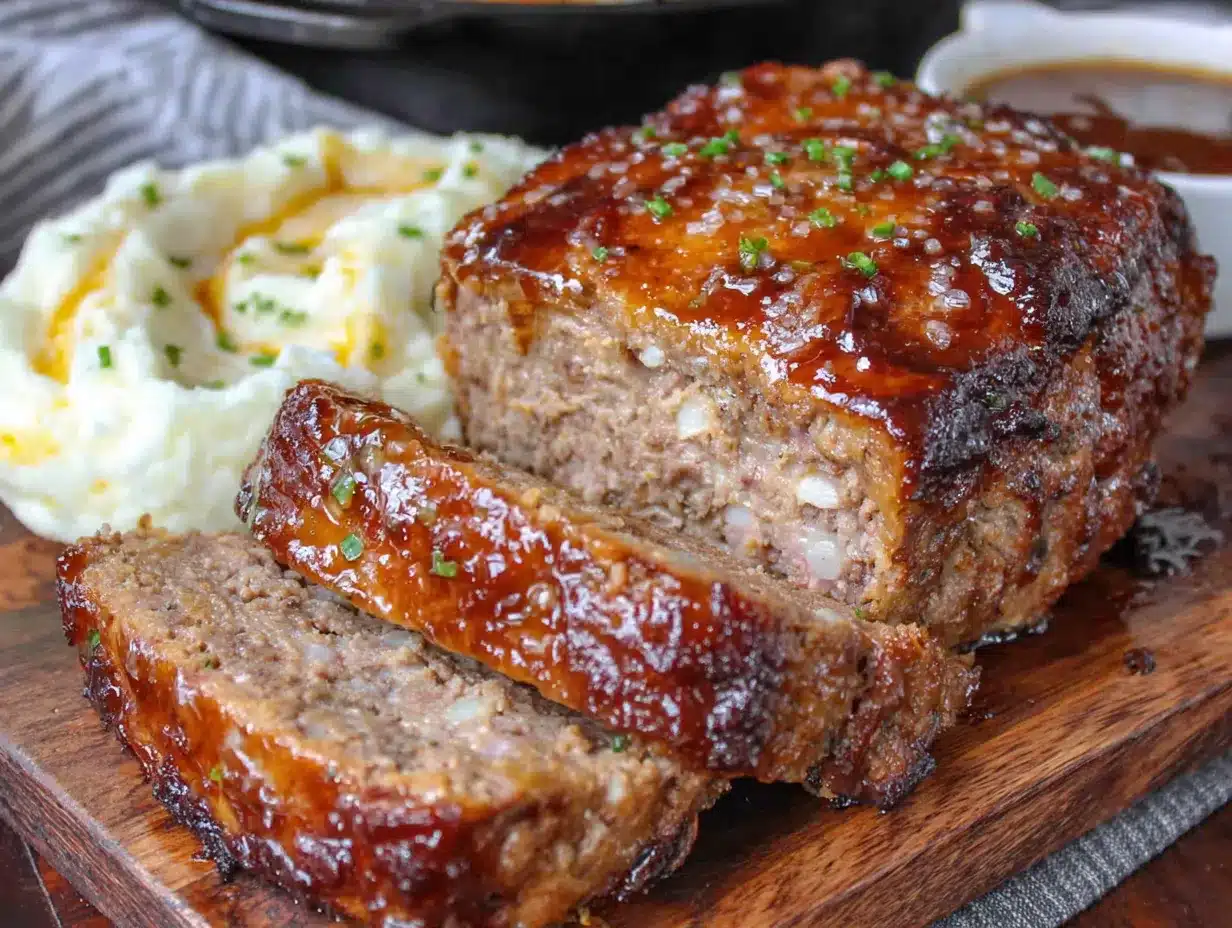
- 1/2 cup ketchup — This is the base of the glaze. Heinz is my preference, but any brand works.
- 1/3 cup packed brown sugar — Light or dark both work. Dark brown sugar gives a deeper, more molasses-y flavor.
- 1 tablespoon apple cider vinegar — This cuts through the sweetness and adds balance. White vinegar works in a pinch.
- 1 teaspoon Worcestershire sauce — More umami goodness.
- 1/2 teaspoon garlic powder — Not fresh garlic here—powder dissolves better into the glaze.
The beauty of this ingredient list is that almost everything is a pantry staple. The only things you might need to pick up are the ground beef and fresh produce. And honestly, if you’re out of fresh onion, you can use 1 tablespoon of onion powder—just know the texture won’t be quite the same.
Equipment Needed
You don’t need a fancy kitchen to make this meatloaf. Here’s what you’ll need:
- 9×5 inch loaf pan — This is the standard size for a 2-pound meatloaf. If you only have an 8×4 pan, the loaf will be taller and可能需要 a few extra minutes of baking time.
- Large mixing bowl — Big enough to get your hands in there and mix everything together. I use a stainless steel bowl because it doesn’t absorb odors.
- Measuring cups and spoons — For accuracy. I’ve learned the hard way that eyeballing ingredients in meatloaf leads to inconsistent results.
- Chef’s knife and cutting board — For dicing the onion and mincing the garlic.
- Small bowl — For mixing the glaze.
- Whisk or fork — For combining the glaze ingredients.
- Parchment paper — This is optional but highly recommended. Lining the pan makes cleanup so much easier, and it helps prevent the glaze from sticking to the pan.
- Meat thermometer — This is your best friend for ensuring the meatloaf is cooked through without being overdone. I use a simple instant-read thermometer and it’s never let me down.
If you don’t have a loaf pan, you can shape the meatloaf by hand on a parchment-lined baking sheet. It won’t have the classic loaf shape, but it’ll taste just as good. And if you’re on a budget, dollar stores often carry perfectly good loaf pans for a few bucks.
Preparation Method
Alright, let’s get cooking. I’ll walk you through every step so you end up with a perfect meatloaf, even if it’s your first time making one.
Step 1: Preheat and Prep
Preheat your oven to 350°F (175°C). While it’s heating up, line your loaf pan with parchment paper, leaving some overhang on the sides. This will help you lift the meatloaf out later. If you don’t have parchment, just grease the pan lightly with cooking spray.
Step 2: Soak the Breadcrumbs
In your large mixing bowl, combine the breadcrumbs and milk. Stir them together and let them sit for about 5 minutes. The breadcrumbs will absorb the milk and turn into a paste-like mixture. This is the secret to a moist meatloaf—those soaked breadcrumbs release moisture as the meatloaf bakes, keeping everything tender. Don’t skip this step, I’ve tried rushing it and ended up with a dry, crumbly loaf.
Step 3: Sauté the Aromatics
Heat a small skillet over medium heat and add a drizzle of oil. Sauté the diced onion for about 3-4 minutes until it’s translucent and fragrant. Add the minced garlic and cook for another 30 seconds, just until you can smell it. Set this aside to cool for a minute. You don’t want hot onions hitting your raw meat—it’ll start cooking the beef prematurely.
Step 4: Mix the Meatloaf
Add the ground beef to the bowl with the soaked breadcrumbs. Then add the sautéed onions and garlic, eggs, Worcestershire sauce, Dijon mustard, salt, pepper, thyme, and smoked paprika if using. Now comes the fun part—get your hands in there and mix everything together.
Here’s the trick: mix gently and don’t overwork it. You want to combine everything until it’s just incorporated, about 1-2 minutes. Overmixing will make the meatloaf tough and dense. I usually use my fingers in a claw-like motion, gently folding and pressing until I don’t see any more streaks of breadcrumb or egg. It should look uniform but not like a paste.
Step 5: Shape and Place in Pan
Transfer the meat mixture to your lined loaf pan. Press it in gently, making sure it fills all the corners evenly. Don’t pack it down too hard—you want it to hold its shape but still have some air pockets for tenderness. Smooth the top with your hands or a spatula.
Step 6: Make the Glaze
In a small bowl, whisk together the ketchup, brown sugar, apple cider vinegar, Worcestershire sauce, and garlic powder. It should be smooth and slightly thick. Taste it—you should get a nice balance of sweet, tangy, and savory. If it’s too sweet for your liking, add a splash more vinegar.
Step 7: First Glaze Application
Spread about half of the glaze over the top of the meatloaf. Use a spoon or a pastry brush to get an even layer. This first coat will bake into the meatloaf, creating a flavorful crust. Reserve the remaining glaze for later.
Step 8: Bake
Place the meatloaf on the middle rack of your preheated oven. Bake for 40 minutes. During this time, the glaze will start to caramelize and the meatloaf will begin to pull away from the sides of the pan slightly. Your kitchen will smell incredible about 20 minutes in—that’s the brown sugar doing its thing.
Step 9: Second Glaze Application
After 40 minutes, carefully remove the meatloaf from the oven. Spread the remaining glaze over the top. This second layer will create that gorgeous, sticky, glossy finish that makes this meatloaf so special. Return it to the oven for another 10-15 minutes.
Step 10: Check Temperature and Rest
The meatloaf is done when an instant-read thermometer inserted into the center reads 160°F (71°C). This usually takes about 50-55 minutes total. Once it hits that temperature, remove it from the oven and let it rest in the pan for 10 minutes. This is crucial—the resting time allows the juices to redistribute throughout the meatloaf. If you slice it right away, all those lovely juices will run out onto the cutting board, leaving you with a dry loaf.
Step 11: Slice and Serve
After resting, use the parchment paper overhang to lift the meatloaf out of the pan. Transfer it to a cutting board. Use a sharp knife to slice it into 1-inch thick pieces. The glaze should be sticky and caramelized, and the inside should be moist and tender. Serve warm with your favorite sides.
Cooking Tips & Techniques
After making this recipe more times than I care to count, I’ve picked up a few tricks that make a real difference. Here’s what I’ve learned the hard way so you don’t have to.
Don’t skip the milk soak. I know it seems like an extra step, but that soaked breadcrumb mixture is what keeps your meatloaf from turning into a brick. I once tried using dry breadcrumbs straight from the bag, thinking it would save time. The result was a dense, crumbly mess that my family politely ate but didn’t ask for seconds of.
Use a light hand when mixing. This is probably the most common mistake people make. You want to mix just until everything comes together. If you’re seeing streaks of breadcrumb or egg after a minute of mixing, keep going gently. But if the mixture starts looking like a smooth paste, you’ve gone too far. The ideal texture is still a little bumpy and irregular.
Let the meatloaf rest. I cannot stress this enough. Those 10 minutes of resting time are not optional. I’ve had nights where I was so hungry I skipped the rest and sliced right away. The slices fell apart, and the meatloaf was noticeably drier. Patience pays off here.
Line your pan with parchment. This is one of those tips that feels optional until you try it. The glaze gets sticky and caramelized, and without parchment, you’ll be scrubbing your pan for 20 minutes. With parchment, you just lift the whole thing out and toss the paper. Game changer.
Use a meat thermometer. Guessing when meatloaf is done is a recipe for disaster. Undercook it and you’re serving raw beef. Overcook it and it’s dry as sawdust. A simple instant-read thermometer takes all the guesswork out. Trust the numbers, not the clock.
Let the glaze do its thing. That two-stage glazing technique isn’t just for show. The first coat bakes into the meatloaf, creating a flavorful crust. The second coat stays on top, forming that sticky, glossy layer. If you put all the glaze on at once, it either burns or slides right off. Trust the process.
Variations & Adaptations
One of the best things about meatloaf is how adaptable it is. Here are some variations I’ve tried that worked out great.
Turkey Meatloaf
Swap the ground beef for ground turkey or chicken. Since poultry is leaner, add 2 tablespoons of olive oil or an extra egg to keep it moist. The cooking time stays about the same, but check the internal temperature—turkey is done at 165°F (74°C).
Cheese-Stuffed Meatloaf
This one’s a crowd-pleaser. After mixing the meat mixture, press half of it into the pan. Make a shallow well down the center and fill it with shredded cheddar, mozzarella, or pepper jack. Top with the remaining meat mixture, sealing the edges so the cheese doesn’t leak out. The melted cheese center is pure comfort.
Gluten-Free Version
Use gluten-free breadcrumbs or crushed pork rinds instead of regular breadcrumbs. The pork rinds add a surprising amount of flavor and keep the texture light. Make sure your Worcestershire sauce is also gluten-free—some brands contain malt vinegar.
Spicy Kick
Add 1-2 tablespoons of sriracha or your favorite hot sauce to the meat mixture. You can also add 1/2 teaspoon of cayenne pepper to the glaze for a sweet-and-spicy finish. My brother-in-law loves this version and requests it every time he visits.
Vegetable-Packed
Finely grate a carrot and a zucchini into the meat mixture. Squeeze out any excess moisture with a clean kitchen towel first. This adds moisture and nutrients without changing the flavor much. It’s a great way to sneak veggies past picky eaters—they’ll never know they’re there.
Serving & Storage Suggestions
This meatloaf is versatile enough for a casual weeknight dinner or a special Sunday meal. Here’s how to make the most of it.
Serving Suggestions
Serve the meatloaf warm, sliced into 1-inch thick pieces. The classic sides are mashed potatoes and green beans, but I also love it with roasted carrots, buttered egg noodles, or a simple side salad. The brown sugar glaze pairs beautifully with something tangy, like a vinegary coleslaw or pickled vegetables.
For presentation, arrange the slices on a platter and spoon any extra glaze from the pan over the top. A sprinkle of fresh parsley adds a nice pop of color. If you’re serving a crowd, slice the meatloaf ahead of time and arrange it on a warm platter with the sides around it.
Storage Instructions
Leftover meatloaf keeps beautifully. Store it in an airtight container in the refrigerator for up to 4 days. The flavors actually meld together overnight, making day-old meatloaf even better in my opinion.
For longer storage, wrap the whole meatloaf or individual slices tightly in plastic wrap, then foil. Freeze for up to 3 months. Thaw overnight in the refrigerator before reheating.
Reheating Methods
The best way to reheat meatloaf is in a 300°F (150°C) oven. Place slices on a baking sheet, cover loosely with foil, and heat for 10-15 minutes. The foil prevents the glaze from burning while the meatloaf warms through.
For a quicker option, microwave individual slices on a microwave-safe plate, covered with a damp paper towel, for 1-2 minutes. The damp paper towel adds moisture so the meatloaf doesn’t dry out.
And here’s a pro tip: cold meatloaf makes the best sandwich. Slice it thin, pile it on toasted bread with a little mayo and some crisp lettuce. It’s a lunch that’ll make your coworkers jealous.
Nutritional Information & Benefits
Here’s the nutritional breakdown for one serving (about 1/6 of the recipe, or roughly 6 ounces):
| Nutrient | Amount |
|---|---|
| Calories | 385 |
| Protein | 28g |
| Fat | 22g |
| Saturated Fat | 8g |
| Carbohydrates | 18g |
| Fiber | 1g |
| Sugar | 12g |
| Sodium | 680mg |
This recipe is a good source of protein, iron, and B vitamins from the beef. The onion and garlic add antioxidants and anti-inflammatory compounds. While it’s not a low-calorie dish, it’s a satisfying meal that keeps you full and energized.
If you’re watching your sodium, you can reduce the salt to 1/2 teaspoon and use low-sodium Worcestershire sauce. For a lower-fat option, use ground sirloin (90/10) and add an extra tablespoon of olive oil to maintain moisture.
This recipe contains gluten (from breadcrumbs), dairy (from milk), and eggs. For allergen-friendly versions, see the variations section above.
Conclusion
This classic meatloaf with brown sugar glaze is more than just a recipe—it’s a weeknight hero, a Sunday dinner star, and a leftover lunch dream. It’s the kind of meal that brings people together, fills your home with incredible aromas, and leaves everyone at the table satisfied.
I love this recipe because it’s forgiving. You can tweak it, adapt it, and make it your own without worrying about ruining it. It’s sturdy enough for beginners and rewarding enough for experienced cooks. And that glaze? It’s the kind of thing that makes you feel like you’ve accomplished something special, even on a regular Tuesday night.
So go ahead—give it a try. Make it for your family, your friends, or just for yourself with leftovers in mind. And when you do, I’d love to hear how it turned out. Drop a comment below and let me know if you tried any variations, or share a photo of your meatloaf on social media. Happy cooking, friends!
Frequently Asked Questions
Can I make this meatloaf ahead of time?
Absolutely! You can assemble the meatloaf in the pan, cover it, and refrigerate for up to 24 hours before baking. Just add about 10 minutes to the baking time since you’re starting from cold. You can also bake it fully, let it cool, and reheat it later.
Why did my meatloaf fall apart when I sliced it?
This usually happens for one of two reasons: either the meatloaf didn’t have enough binder (breadcrumbs and eggs), or it wasn’t rested long enough before slicing. Make sure you’re using the full cup of breadcrumbs and letting it rest for a full 10 minutes after baking.
Can I use a different type of meat?
Yes! Ground turkey, chicken, or a mix of beef and pork all work well. Just adjust the cooking time as needed and add a little extra fat (like olive oil) if using very lean meats. A mix of beef and pork gives a particularly juicy, flavorful result.
How do I know when the meatloaf is done without a thermometer?
If you don’t have a thermometer, look for these signs: the meatloaf should be pulling away from the sides of the pan, the glaze should be dark and caramelized, and the juices should run clear when you pierce the center with a knife. But honestly, a thermometer is cheap and takes the guesswork out completely.
Can I freeze the meatloaf before baking?
Yes, you can freeze the unbaked meatloaf. Assemble it in the pan, wrap it tightly in plastic wrap and then foil, and freeze for up to 3 months. Thaw overnight in the refrigerator before baking as directed. You may need to add 10-15 minutes to the baking time.
Pin This Recipe!
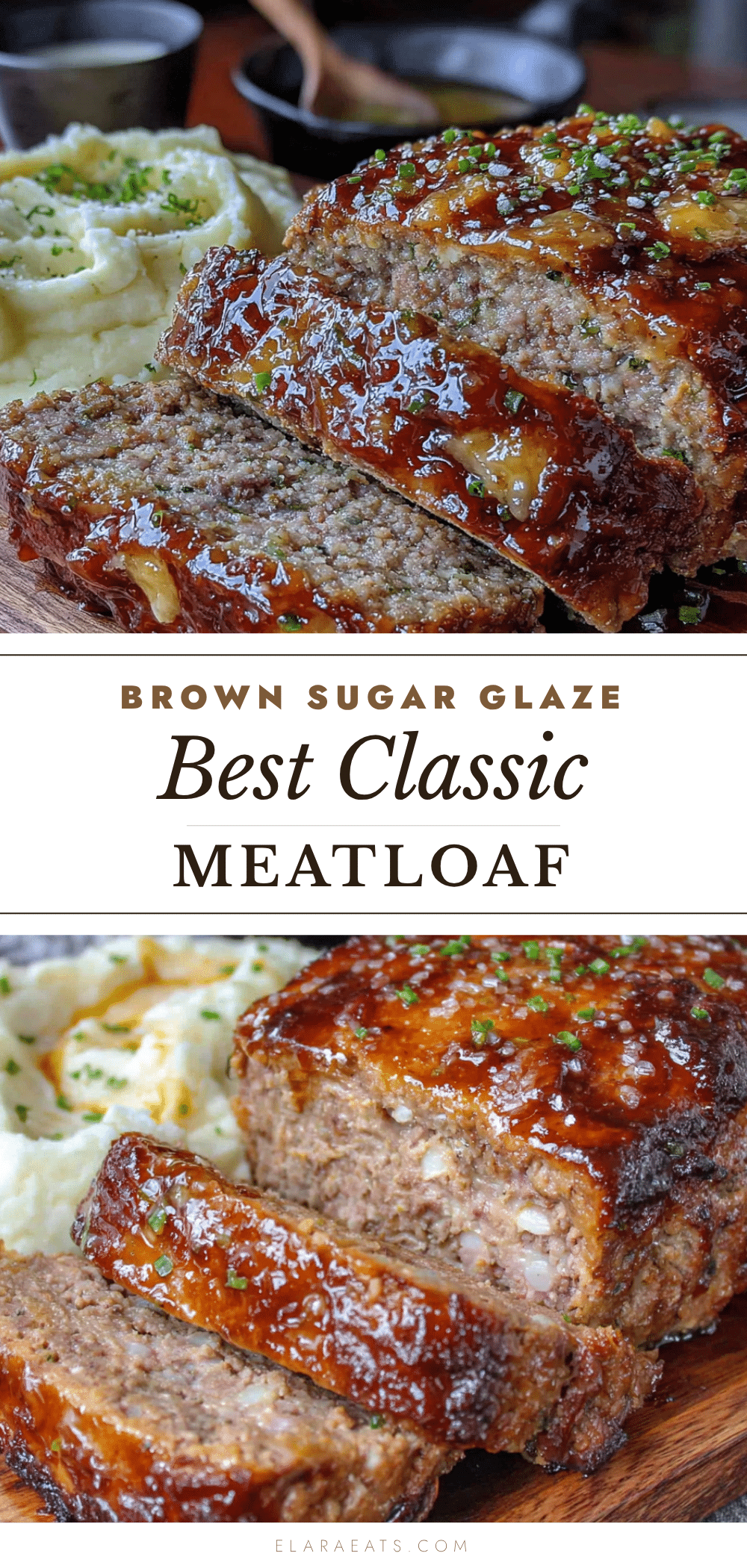
Best Classic Meatloaf with Brown Sugar Glaze
This classic meatloaf with a sticky-sweet brown sugar glaze is the ultimate comfort food. Moist, tender, and packed with flavor, it’s a weeknight hero that comes together in under an hour.
- Prep Time: 15 minutes
- Cook Time: 50 minutes
- Total Time: 1 hour 5 minutes
- Yield: 6 servings 1x
- Category: Main Course
- Cuisine: American
Ingredients
- 2 pounds ground beef (80/20)
- 1 cup plain breadcrumbs
- 1/2 cup whole milk
- 1 medium yellow onion, finely diced
- 2 large eggs
- 3 cloves garlic, minced
- 2 tablespoons Worcestershire sauce
- 1 tablespoon Dijon mustard
- 1 teaspoon salt
- 1/2 teaspoon black pepper
- 1/2 teaspoon dried thyme
- 1/4 teaspoon smoked paprika (optional)
- 1/2 cup ketchup
- 1/3 cup packed brown sugar
- 1 tablespoon apple cider vinegar
- 1 teaspoon Worcestershire sauce
- 1/2 teaspoon garlic powder
Instructions
- Preheat oven to 350°F (175°C). Line a 9×5 inch loaf pan with parchment paper, leaving overhang on the sides.
- In a large mixing bowl, combine breadcrumbs and milk. Let sit for 5 minutes until breadcrumbs absorb the milk.
- Heat a small skillet over medium heat with a drizzle of oil. Sauté diced onion for 3-4 minutes until translucent. Add minced garlic and cook for 30 seconds. Set aside to cool.
- Add ground beef to the bowl with soaked breadcrumbs. Add sautéed onions and garlic, eggs, Worcestershire sauce, Dijon mustard, salt, pepper, thyme, and smoked paprika (if using). Mix gently with your hands until just combined, about 1-2 minutes.
- Transfer meat mixture to the lined loaf pan. Press gently to fill corners evenly without packing too hard. Smooth the top.
- In a small bowl, whisk together ketchup, brown sugar, apple cider vinegar, Worcestershire sauce, and garlic powder until smooth.
- Spread half of the glaze over the top of the meatloaf.
- Bake for 40 minutes.
- Remove from oven and spread remaining glaze over the top. Return to oven and bake for another 10-15 minutes, until internal temperature reaches 160°F (71°C).
- Let meatloaf rest in the pan for 10 minutes.
- Use parchment overhang to lift meatloaf out of pan. Transfer to cutting board. Slice into 1-inch thick pieces and serve warm.
Notes
Don’t skip the milk soak for the breadcrumbs—it keeps the meatloaf moist. Use a light hand when mixing to avoid a dense loaf. Let the meatloaf rest for 10 minutes before slicing to allow juices to redistribute. Line the pan with parchment for easy cleanup. The two-stage glazing technique creates a caramelized crust and glossy finish.
Nutrition
- Serving Size: 1 slice (about 6 oun
- Calories: 385
- Sugar: 12
- Sodium: 680
- Fat: 22
- Saturated Fat: 8
- Carbohydrates: 18
- Fiber: 1
- Protein: 28
Keywords: meatloaf, brown sugar glaze, classic meatloaf, comfort food, ground beef, easy dinner