Love this? Save it for later!
Share the inspiration with your friends
“You know that feeling when you crave pasta, but gluten just isn’t your friend? That was me last Thursday evening, standing in my tiny kitchen after a long day, staring blankly at a mountain of gluten-free options in the pantry. Honestly, I wasn’t expecting much success making my own gluten-free pasta, but I had this stubborn itch to try something homemade rather than relying on store-bought rice pasta that sometimes tastes like cardboard.
The idea struck me while chatting with my neighbor, who casually mentioned how her grandmother used to make rice pasta from scratch back in her village in southern Italy. I mean, who would’ve guessed that this simple technique could be adapted so easily at home? I was skeptical at first—rice flour pasta sounded dry and crumbly, but after a messy attempt with flour dust everywhere (and a slightly cracked mixing bowl—don’t ask), I ended up with this surprisingly tender, silky pasta that held sauce beautifully. It’s become my go-to when I want a comforting, gluten-free pasta night without the usual fuss.
Maybe you’ve been there too—wanting to enjoy pasta without worrying about gluten or weird additives. This easy homemade gluten-free rice pasta recipe is exactly that kind of kitchen win. It’s straightforward, uses minimal ingredients, and honestly tastes like a little bit of magic. Let me tell you, once you try making your own rice pasta, store-bought versions just won’t cut it anymore.
Why You’ll Love This Recipe
After testing this easy homemade gluten-free rice pasta recipe multiple times (and trust me, I’ve learned what works and what doesn’t), I’m confident it’s one of the best ways to enjoy pasta without gluten drama. Here’s why it’s become a staple in my kitchen:
- Quick & Easy: Comes together in under 30 minutes, perfect for those weeknights when you want comfort food fast.
- Simple Ingredients: Just rice flour, tapioca starch, eggs, and a pinch of salt—no mysterious additives or preservatives.
- Perfect for Gluten-Free Diets: Safe and satisfying for those avoiding gluten, without sacrificing flavor or texture.
- Crowd-Pleaser: Whether it’s a family dinner or a casual potluck, this pasta gets compliments from everyone—even gluten eaters.
- Unbelievably Delicious: The texture is smooth and tender, perfect for soaking up your favorite sauce, whether it’s a rich marinara or a light olive oil drizzle.
This recipe stands out because of its balance—using tapioca starch alongside rice flour gives the pasta just enough elasticity without making it gummy. Plus, making it at home means you can customize thickness and cut shapes to your liking (and yes, I’ve even made little rice pasta ribbons that looked adorable). It’s not just another gluten-free pasta; it’s my kitchen’s little secret that I’m excited to share with you.
What Ingredients You Will Need
This recipe uses simple, wholesome ingredients to deliver bold flavor and satisfying texture without the fuss. All the ingredients are pantry staples, and you might already have most of them on hand.
- Rice Flour (1 ½ cups / 180g): The main base for the pasta. I recommend a finely milled white rice flour for the smoothest texture. Bob’s Red Mill works great.
- Tapioca Starch (½ cup / 60g): Adds elasticity and chewiness, preventing the pasta from falling apart.
- Large Eggs (2, room temperature): They bind the dough and add richness. If you’re vegan, you can try a flax egg substitute, but texture will vary.
- Olive Oil (1 tablespoon): Adds moisture and helps the dough come together silky smooth.
- Salt (½ teaspoon): Enhances flavor without overpowering.
- Water (2-4 tablespoons): Used to adjust dough consistency, add gradually as needed.
Optional:
- Fresh herbs or spices: like finely chopped basil or garlic powder, if you want to add a subtle flavor twist.
If you’re lacking tapioca starch, cornstarch can be a substitute but expect a slightly different texture—less chew, more tender. For gluten-free options, make sure your rice flour and starch are certified gluten-free to avoid cross-contamination.
Equipment Needed
- Mixing Bowl: A medium-sized bowl for combining ingredients. I usually use my trusty glass bowl that’s seen better days but still does the job.
- Rolling Pin: For rolling out the dough thinly. If you don’t have one, a clean wine bottle works in a pinch!
- Knife or Pasta Cutter: To slice the dough into your preferred pasta shapes. A pizza cutter also works well for quick strips.
- Large Pot: For boiling the pasta. Make sure it’s big enough to give the pasta room to cook evenly.
- Colander: To drain the cooked pasta.
- Optional: Pasta drying rack if you want to dry your pasta before cooking, but it’s not necessary.
Pro tip: Use a silicone or non-stick baking mat for rolling out the dough to avoid sticking and make cleanup easier. I picked one up at a local kitchen store for under $10, and it’s been a game-changer for pasta and pastry work!
Preparation Method
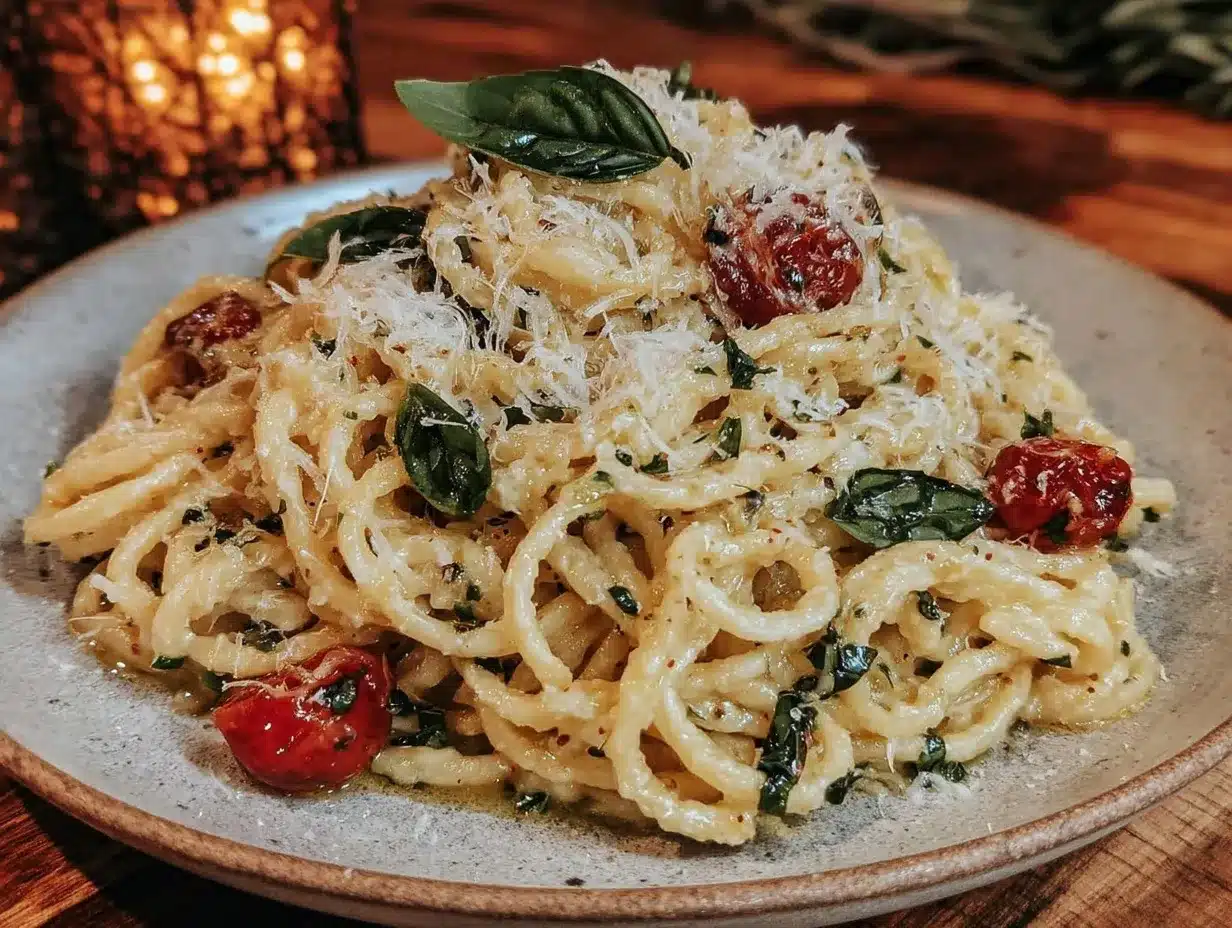
- Mix Dry Ingredients: In a mixing bowl, whisk together 1 ½ cups (180g) rice flour, ½ cup (60g) tapioca starch, and ½ teaspoon salt. This ensures even distribution before adding wet ingredients. (Time: 2 minutes)
- Add Wet Ingredients: Create a well in the center, crack in 2 large eggs (room temperature), and add 1 tablespoon olive oil. Begin folding the mixture gently with a fork, slowly incorporating the dry flour into the eggs until a shaggy dough forms. (Time: 3-5 minutes)
- Adjust Dough Consistency: Sprinkle in water 1 tablespoon at a time, mixing after each addition, until the dough comes together but isn’t sticky. I usually end up adding about 3 tablespoons total. The dough should feel soft but firm enough to roll. (Time: 2 minutes)
- Knead the Dough: Transfer the dough to a lightly floured surface (using rice flour) and knead gently for about 3 minutes. It should be smooth and pliable, not crumbly or overly sticky. If it’s too dry, add a tiny splash more water; too sticky, dust with more flour. (Time: 3 minutes)
- Rest the Dough: Wrap the dough in plastic wrap or cover with a damp cloth and let it rest for at least 20 minutes. This relaxes the starches, making rolling easier. (Time: 20 minutes)
- Roll Out the Dough: Divide the dough into two portions. On a floured surface, roll out each portion to about 1/8 inch (3mm) thickness. Keep dusting with rice flour to prevent sticking. (Time: 10 minutes)
- Cut the Pasta: Using a sharp knife or pizza cutter, slice the dough into your desired shape—fettuccine strips, tagliatelle ribbons, or even small squares for a fun twist like mini ravioli. (Time: 5 minutes)
- Cook the Pasta: Bring a large pot of salted water to a boil. Drop the pasta in and cook for 2-3 minutes or until tender but still slightly firm (al dente). Fresh rice pasta cooks faster than dried pasta, so keep an eye on it. (Time: 3 minutes)
- Drain and Serve: Drain the pasta using a colander. Toss with your favorite sauce immediately. This recipe pairs beautifully with a simple garlic olive oil sauce or a fresh tomato basil sauce. (Time: 2 minutes)
Note: Fresh rice pasta is delicate, so handle it gently when rolling and cutting. If the dough cracks or feels dry, add a bit more olive oil and knead again. I found resting the dough is a must to avoid breakage.
Cooking Tips & Techniques
Gluten-free pasta can be tricky, but with a few tricks up your sleeve, you’ll get consistent results every time. Here’s what I learned from my early pasta-making disasters:
- Keep Dough Moist but Not Sticky: The balance between wet and dry ingredients is key. Too dry and it cracks; too wet and it sticks to everything. Add water or flour gradually.
- Resting is Crucial: Letting the dough sit for at least 20 minutes helps the rice flour hydrate, making rolling easier and preventing breakage.
- Roll Thin but Not Paper-Thin: About 1/8 inch thickness is perfect for most shapes. Too thick and the pasta feels heavy; too thin and it breaks apart.
- Use Plenty of Water When Boiling: Fresh pasta sticks easily, so a large pot with lots of salted water helps. Stir gently right after adding pasta.
- Cook Briefly: Fresh rice pasta cooks in just 2-3 minutes. Overcooking makes it mushy.
- Multitasking Tip: While the dough rests, prep your sauce or chop veggies. This keeps the cooking flow smooth and stress-free.
Personally, my first batch stuck together like glue—lesson learned: don’t crowd the pot! Cooking in smaller batches prevents clumping and keeps the pasta texture perfect.
Variations & Adaptations
Once you get the hang of this easy homemade gluten-free rice pasta recipe, feel free to switch things up to suit your taste and dietary needs:
- Vegan Version: Replace eggs with a flax egg (1 tablespoon ground flaxseed + 3 tablespoons water) and add a little extra olive oil for moisture. Dough will be more fragile but still tasty.
- Herb-Infused Pasta: Add finely chopped fresh herbs like basil, parsley, or oregano to the dough for a fresh flavor boost, perfect for spring or summer meals.
- Whole Grain Twist: Swap half the rice flour for brown rice flour for a nuttier flavor and slightly denser texture.
- Flavored Dough: Incorporate 1 tablespoon of turmeric or beet powder into the dry mix for vibrant color and subtle taste variations.
- Cooking Method: You can dry the pasta on a rack for a few hours and then freeze it for later use. Just boil a bit longer when cooking from frozen.
My favorite personal variation includes folding in a teaspoon of garlic powder and a handful of chopped spinach right into the dough. It looks stunning and adds a little veggie goodness without fuss.
Serving & Storage Suggestions
This homemade rice pasta tastes best served immediately while it’s warm and tender. I usually dress it simply with a drizzle of good olive oil, fresh basil, and a sprinkle of Parmesan cheese.
For a heartier meal, pair it with a rich tomato sauce or a light lemon-garlic butter sauce. A crisp green salad or roasted veggies on the side round out the meal perfectly.
Leftovers can be stored in an airtight container in the refrigerator for up to 3 days. To reheat, quickly toss the pasta in a hot skillet with a little olive oil or warm it gently in boiling water for 30 seconds. Avoid microwaving to keep the texture intact.
If you want to store uncooked pasta, lay it flat on a tray dusted with rice flour and let it dry for several hours or overnight before freezing. This way, you can enjoy fresh rice pasta anytime without making a new batch.
Over time, the flavors meld beautifully if tossed with sauce and refrigerated overnight—kind of like a pasta salad but warm and comforting.
Nutritional Information & Benefits
This easy homemade gluten-free rice pasta recipe is a light and nourishing option, free from gluten and made with simple ingredients. Here’s a rough estimate per serving (based on 4 servings):
- Calories: ~220 kcal
- Carbohydrates: 40g
- Protein: 7g
- Fat: 5g (mostly from olive oil and eggs)
- Fiber: 1g
Rice flour is naturally gluten-free and easy to digest, suitable for those with gluten intolerance or celiac disease. Eggs provide protein and essential nutrients like vitamin D and B12. Olive oil adds healthy monounsaturated fats that support heart health.
This recipe is low in added sugars and preservatives, making it a wholesome choice for balanced meals. Just pair with fresh veggies or lean proteins for a well-rounded plate.
Conclusion
This easy homemade gluten-free rice pasta recipe is a wonderful way to enjoy your favorite pasta nights without the gluten worries. It’s simple enough for beginners but yields results that even pasta purists will appreciate.
Feel free to tweak the shapes, try different herbs, or swap out ingredients to fit your style. What I love most is how it makes pasta approachable for everyone, whether you have dietary restrictions or just want to try something new.
If you give this recipe a shot, please share how it went! I’d love to hear your variations or any tips you discover along the way. Pasta nights don’t have to be complicated—sometimes the easiest recipes bring the most joy. Happy cooking!
Frequently Asked Questions
Can I make this rice pasta recipe vegan?
Yes! Replace the eggs with flax eggs (1 tablespoon ground flaxseed mixed with 3 tablespoons water) and add a bit more olive oil for moisture. The texture will be softer but still tasty.
How do I prevent the pasta from sticking together when cooking?
Use a large pot with plenty of boiling salted water and stir gently right after adding the pasta. Cooking in small batches helps too.
Can I store uncooked rice pasta for later use?
Absolutely. Dry the cut pasta on a floured surface or drying rack for several hours or overnight, then freeze in an airtight container. Cook from frozen, adding a minute or two to the boiling time.
What sauces pair best with this gluten-free rice pasta?
Simple olive oil with garlic and herbs, classic marinara, or a light lemon-butter sauce all complement the delicate rice pasta well.
Is it possible to make this pasta without tapioca starch?
You can substitute cornstarch, but the texture will be less elastic and a bit more crumbly. Tapioca starch is preferred for the best chew and stretch.
Pin This Recipe!
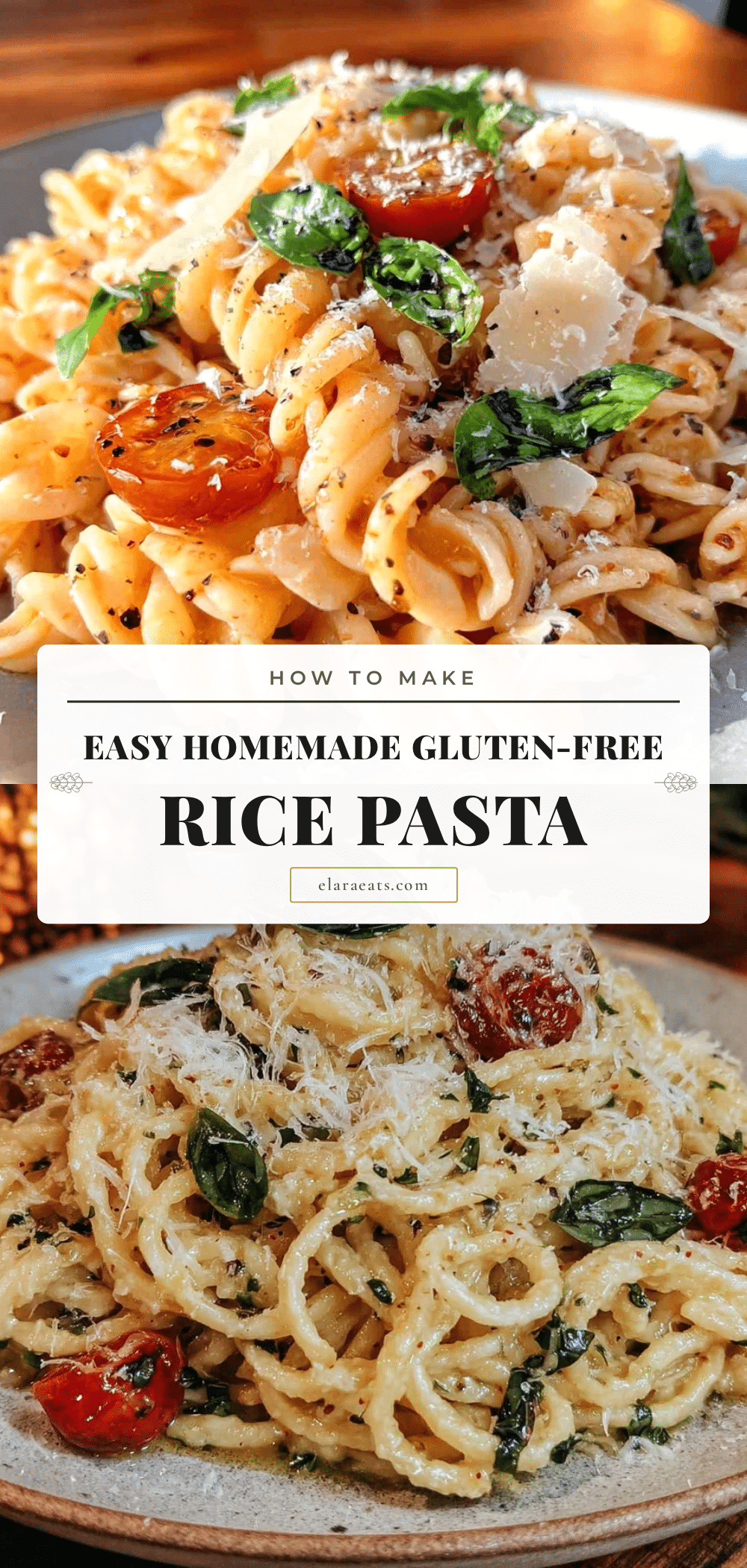
Easy Homemade Gluten-Free Rice Pasta Recipe for Perfect Pasta Nights
A simple and quick gluten-free rice pasta recipe that yields tender, silky pasta perfect for comforting meals without gluten. Made with minimal ingredients and easy to customize.
- Prep Time: 15 minutes
- Cook Time: 3 minutes
- Total Time: 30 minutes
- Yield: 4 servings 1x
- Category: Main Course
- Cuisine: Italian
Ingredients
- 1 ½ cups (180g) rice flour
- ½ cup (60g) tapioca starch
- 2 large eggs, room temperature
- 1 tablespoon olive oil
- ½ teaspoon salt
- 2–4 tablespoons water, as needed
- Optional: fresh herbs or spices like chopped basil or garlic powder
Instructions
- In a mixing bowl, whisk together rice flour, tapioca starch, and salt.
- Create a well in the center, add eggs and olive oil, and fold gently with a fork until a shaggy dough forms.
- Add water 1 tablespoon at a time, mixing until dough is soft but not sticky.
- Knead dough on a floured surface for about 3 minutes until smooth and pliable.
- Wrap dough and let rest for at least 20 minutes.
- Divide dough into two portions and roll out to about 1/8 inch (3mm) thickness, dusting with rice flour to prevent sticking.
- Cut dough into desired shapes using a knife or pizza cutter.
- Boil pasta in a large pot of salted water for 2-3 minutes until tender but firm.
- Drain pasta and toss immediately with your favorite sauce.
Notes
Resting the dough for at least 20 minutes is crucial to prevent breakage and make rolling easier. Use plenty of salted water when boiling and cook pasta in small batches to avoid sticking. Fresh rice pasta cooks quickly, so watch carefully to avoid overcooking. For vegan version, replace eggs with flax eggs and add extra olive oil.
Nutrition
- Serving Size: 1 serving (approxima
- Calories: 220
- Fat: 5
- Carbohydrates: 40
- Fiber: 1
- Protein: 7
Keywords: gluten-free pasta, rice pasta, homemade pasta, gluten-free recipe, easy pasta recipe, tapioca starch pasta, rice flour pasta