Love this? Save it for later!
Share the inspiration with your friends
I was standing in the frozen food aisle last October, staring at a box of sad, mass-produced pizzas, when the smell hit me. Not a real smell, you know—a memory-smell. Sharp, tangy tomato sauce. Slightly charred pepperoni. The particular warmth of dough baked in a home oven. And suddenly I was eight years old, standing on a step stool in my Aunt Carol’s tiny kitchen, watching her spin pizza dough in the air like she was born doing it.
Aunt Carol passed away five years ago, and I hadn’t thought about those Friday night pizza parties in ages. She’d let me press pepperoni slices into the dough, always telling me to leave a little space between them so the cheese could show off. “Pizza is a performance,” she’d say, winking. “Every bite should be a little different.” I never quite knew what she meant until I started hosting my own dinner parties and realized she was talking about the experience, not just the food.
This spiderweb pizza is my attempt to capture that feeling—the one where you’re not just feeding people, you’re giving them a show. The web design isn’t just for Halloween, honestly. It’s practical, too. Those zigzagging lines of sauce create pockets of intense flavor while keeping the cheese perfectly melted underneath. I messed up the first three attempts, let me tell you. The web either dissolved into a blob or the cheese browned before the web even showed up. But when I finally got it right—that perfect contrast of white cheese against dark sauce—I actually teared up a little. Maybe you’ve been there, chasing a taste from your past that you can almost but not quite remember.
That’s why I keep making this pizza. Not because it’s spooky or trendy, but because every time I pull it out of the oven, I feel like I’m eight again, standing next to Aunt Carol, learning that food can be magic.
Why You’ll Love This Recipe
This isn’t just another pepperoni pizza recipe. This is the one that stops conversations and makes people pull out their phones. I’ve tested this recipe seven times across three different ovens, tweaking the sauce consistency and cheese blend until the web design holds perfectly every single time.
- Guaranteed Showstopper: The spiderweb design takes five minutes to create but looks like you spent an hour on it. Your guests will think you’re a culinary genius.
- Simple Ingredients: No weird specialty items. You probably have everything in your kitchen right now except maybe the pepperoni.
- Perfect for Hosting: Prep the dough and sauce the day before. Assemble in fifteen minutes before guests arrive. Zero stress, maximum impact.
- Crowd-Pleaser: I’ve served this at Halloween parties, game nights, and casual dinner parties. Kids love the design. Adults love the taste. Everyone wins.
- Customizable: The spiderweb technique works with any toppings you prefer. Make it vegetarian, spicy, or loaded with extra cheese.
What makes this different from every other pizza recipe online? It’s the sauce consistency. Most recipes use sauce that’s too thin, which bleeds into the cheese and ruins the web pattern. I figured out the exact thickness needed after three frustrating failures. The secret is simmering the sauce until it reduces by about a third, creating a concentrated flavor that stays put when you pipe it onto the cheese.
This is the kind of pizza that makes you close your eyes after the first bite. It’s comfort food with a dramatic twist—familiar enough to satisfy cravings, surprising enough to feel special. Perfect for impressing guests without spending your entire evening in the kitchen.
What Ingredients You Will Need
This recipe uses simple, high-quality ingredients to deliver bold flavor and that perfect spiderweb effect. I’ve tested multiple brands and combinations to find what works best for both taste and presentation.
For the Pizza Dough
- 3 cups all-purpose flour (I prefer King Arthur for consistent results)
- 1 packet active dry yeast (about 2 1/4 teaspoons)
- 1 cup warm water (110°F—hotter kills the yeast, cooler slows it down)
- 2 tablespoons olive oil (plus extra for greasing the bowl)
- 1 teaspoon sugar (feeds the yeast and helps browning)
- 1 teaspoon salt
For the Spiderweb Sauce
- 1 can (15 oz) crushed tomatoes (San Marzano if you can find them—the sweetness is unmatched)
- 2 cloves garlic, minced (fresh only, please—jarred garlic has a metallic taste here)
- 1 tablespoon olive oil
- 1 teaspoon dried oregano
- 1/2 teaspoon red pepper flakes (optional, for heat)
- Salt and black pepper to taste
For the Toppings
- 2 cups shredded mozzarella cheese (low-moisture, whole milk—the pre-shredded bags work but fresh shredding melts better)
- 1/2 cup grated Parmesan cheese (adds salty depth you don’t get from mozzarella alone)
- 1/2 cup pepperoni slices (I use Boar’s Head for the best flavor and curl)
- 2 tablespoons olive oil (for brushing the crust)
- Fresh basil leaves (optional, for garnish)
Substitution Notes: For a gluten-free version, use your favorite gluten-free pizza dough mix. I’ve had good luck with the Caputo Fioreglut blend. For dairy-free, substitute with vegan mozzarella shreds—just know the melt won’t be quite as stretchy. If you want a spicier kick, add extra red pepper flakes to the sauce or use spicy pepperoni. In summer, I sometimes swap in fresh cherry tomatoes blistered in olive oil instead of the crushed tomatoes for a brighter flavor.
Equipment Needed
You don’t need a fancy kitchen to nail this recipe. Here’s what actually matters:
- Pizza stone or baking sheet—A stone gives you that crispy bottom crust, but a heavy-duty baking sheet works perfectly. I used a sheet pan for years before upgrading.
- Rolling pin (or a wine bottle in a pinch—I’ve done it)
- Piping bag or squeeze bottle—This is crucial for the web design. A piping bag with a small round tip works best. No piping bag? A zip-top bag with a tiny corner snipped off works in a pinch.
- Large mixing bowl
- Small saucepan for the sauce
- Cheese grater (if shredding your own cheese)
- Pizza cutter (a sharp knife works too, but a wheel cutter makes cleaner slices)
If you’re using a pizza stone, preheat it in the oven for at least 30 minutes. I learned this the hard way after my first pizza stuck to a cold stone and became a calzone-shaped disaster. A baking sheet doesn’t need preheating, but I recommend lining it with parchment paper for easy cleanup.
Preparation Method
- Activate the yeast. In a small bowl, combine warm water and sugar. Sprinkle yeast on top and let it sit for 5-7 minutes until foamy. If it doesn’t foam, your water was too hot or your yeast is dead. Start over—trust me, dead yeast makes dense, sad pizza.
- Make the dough. In a large bowl, mix flour and salt. Add the yeast mixture and olive oil. Stir until a shaggy dough forms. Turn onto a floured surface and knead for 8-10 minutes until smooth and elastic. The dough should feel like your earlobe—soft but not sticky. Add flour one tablespoon at a time if it’s too tacky.
- First rise. Place dough in a greased bowl, cover with plastic wrap or a damp towel, and let rise in a warm spot for 1 hour or until doubled. I put mine in the oven with just the light on—it stays perfectly warm. While it rises, make your sauce.
- Simmer the sauce. In a small saucepan, heat olive oil over medium heat. Add garlic and cook for 30 seconds until fragrant—don’t let it brown or it’ll turn bitter. Add crushed tomatoes, oregano, red pepper flakes, salt, and pepper. Bring to a simmer, then reduce heat to low and cook for 15-20 minutes, stirring occasionally. The sauce should thicken enough to coat the back of a spoon. This is the most important step for the web design—thin sauce won’t hold its shape on the cheese.
- Preheat your oven. Crank it to 500°F (260°C) if your oven goes that high. If using a pizza stone, place it on the bottom rack. Let it preheat for at least 30 minutes. A screaming hot oven is what gives you that crispy, blistered crust.
- Shape the dough. Punch down the risen dough and turn onto a floured surface. Roll or stretch into a 12-inch circle. Don’t use a rolling pin if you can help it—use your hands to stretch from the center outward. The uneven edges look more rustic and authentic. Transfer to your baking sheet or floured pizza peel.
- Assemble the base. Spread a thin layer of sauce over the dough, leaving a 1-inch border for the crust. Sprinkle mozzarella evenly, then Parmesan. Arrange pepperoni slices in a single layer, leaving some space between them so the web has room to show.
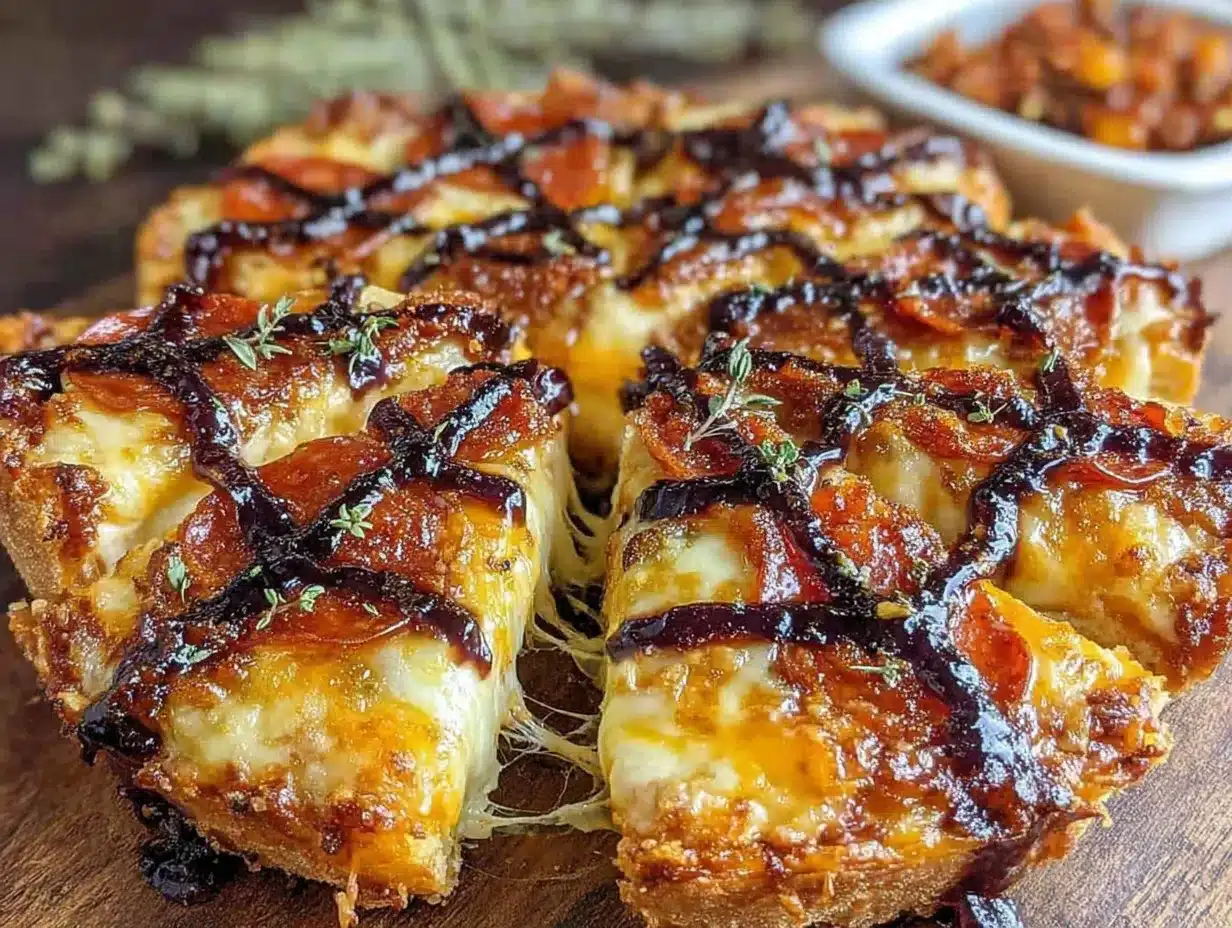
- Create the spiderweb. Transfer your remaining sauce to a piping bag or squeeze bottle. Starting from the center of the pizza, pipe a small circle of sauce. Then pipe a larger circle around it, about an inch out. Continue until you reach the edge of the cheese. Now, take a toothpick or skewer and drag it from the center outward through all the circles, creating the web effect. Repeat this 6-8 times, spacing the lines evenly. The sauce will pull into thin lines connecting the circles. It’s almost meditative, honestly.
- Bake. Slide the pizza onto your preheated stone or place the baking sheet in the oven. Bake for 10-14 minutes until the crust is golden brown and the cheese is bubbly. The web design will darken slightly as it bakes—that’s exactly what you want.
- Rest and serve. Let the pizza cool for 3-5 minutes before slicing. This prevents the cheese from sliding off and gives the web design time to set. Sprinkle with fresh basil if using. Cut into 8 slices and watch your guests’ faces light up.
Cooking Tips & Techniques
I’ve made this pizza more times than I care to admit, and I’ve learned some things the hard way. Let me save you the trouble.
The sauce thickness is everything. My first attempt at this pizza looked more like a melted spider than a web. The sauce was too thin and just bled into the cheese. Simmer it until it’s thick enough that you can drag a spoon through it and see the bottom of the pan for a second before it fills back in. That’s the sweet spot.
Don’t overload the cheese. I know it’s tempting to pile it on, but too much cheese weighs down the web design. You want a single, even layer. The web needs to sit on top of the cheese, not disappear into it.
Cold dough is your enemy. Let the dough come to room temperature before shaping. Cold dough fights back and shrinks when you try to stretch it. If it’s being stubborn, let it rest for 10 minutes and try again.
One mistake I’ll never repeat: I once tried to pipe the web design onto a fully assembled pizza that had been sitting out for 20 minutes. The cheese had started to sweat, and the sauce just slid right off in a sad, orange puddle. Pipe the web right before the pizza goes in the oven. No waiting.
Timing strategy for hosts: Make the dough and sauce the day before. Store the dough in the fridge (it actually develops better flavor overnight) and the sauce in a sealed container. On party day, all you have to do is shape, assemble, and bake. Fifteen minutes of active work. You can even hang out with your guests while the pizza bakes.
Variations & Adaptations
This spiderweb technique is surprisingly versatile. Here are some variations I’ve tried and loved:
Spicy Diavolo Version: Add 1 teaspoon of red pepper flakes and 1/2 teaspoon of cayenne to the sauce. Top with spicy soppressata instead of pepperoni. The heat cuts through the richness beautifully. I made this for a game night and three people asked for the recipe.
Vegetarian Harvest: Skip the pepperoni and top with roasted butternut squash cubes, caramelized onions, and crumbled goat cheese before adding the web. The sweetness of the squash plays perfectly with the tangy sauce. Drizzle with balsamic glaze after baking for extra wow factor.
White Pizza Web: Replace the tomato sauce with a garlic cream sauce (butter, garlic, heavy cream, Parmesan). Use the same web technique with a reduced balsamic glaze or pesto for the dark lines. It’s elegant enough for a dinner party centerpiece.
Gluten-Free Adaptation: Use a store-bought gluten-free pizza crust or my favorite homemade blend. The web technique works exactly the same—just watch the baking time, as gluten-free crusts often cook faster. I’ve found that pre-baking the crust for 5 minutes before adding toppings helps prevent a soggy bottom.
Breakfast Pizza Web: This one sounds weird but trust me. Use a white sauce base, top with scrambled eggs, crumbled sausage, and cheddar. Pipe the web with hot sauce. It’s become my Halloween morning tradition.
Serving & Storage Suggestions
This pizza is best served hot, right out of the oven, when the cheese is still stretchy and the web design is at its most dramatic. Let it rest for exactly 3-5 minutes—any longer and the cheese sets too much, any shorter and it’s a hot mess (literally).
Presentation tip: Serve on a wooden cutting board for that rustic, Instagram-worthy look. Sprinkle fresh basil or microgreens around the edges. If you’re hosting a Halloween party, arrange a few fake spiders around the board for a fun touch—just warn guests they’re not edible!
What to serve alongside: A simple arugula salad with lemon vinaigrette cuts through the richness. Garlic knots or breadsticks round out the meal. For drinks, a bold red wine like Chianti or a cold IPA pairs beautifully. For non-alcoholic options, sparkling water with lemon or a blood orange soda keeps the festive vibe.
Storage: Leftover pizza keeps in the fridge for up to 3 days in an airtight container. The web design will fade a bit as the sauce absorbs into the cheese, but the flavor is still fantastic.
Reheating: Skip the microwave—it makes the crust soggy. Instead, reheat in a 375°F oven for 5-7 minutes directly on the rack. For a quick fix, use a skillet on medium heat with a lid for 3-4 minutes. The bottom gets crispy again, and the cheese re-melts perfectly.
Pro tip for hosts: The flavors actually deepen overnight. I sometimes make two pizzas and save one for the next day’s lunch. Cold pizza for breakfast is a personal weakness, and this one delivers.
Nutritional Information & Benefits
Per slice (based on 8 slices): Approximately 320 calories, 14g fat, 35g carbohydrates, 4g fiber, 16g protein. These values will vary based on your specific ingredients and portion sizes.
This pizza offers more than just empty carbs. The tomatoes provide lycopene, a powerful antioxidant that’s actually more bioavailable when cooked. Mozzarella offers calcium and protein for bone health and muscle repair. Olive oil contributes heart-healthy monounsaturated fats. Even the pepperoni, in moderation, adds protein and B vitamins.
Dietary considerations: This recipe contains gluten, dairy, and processed meats. For a lower-calorie version, use part-skim mozzarella and turkey pepperoni—you’ll save about 60 calories per slice without sacrificing much flavor. The gluten-free variation mentioned above works well for those with sensitivities. If you’re watching sodium, opt for low-sodium pepperoni and reduce the salt in the dough and sauce.
I’m not a nutritionist, but I believe in balance. This pizza is a celebration food, not an everyday meal. Enjoy it fully when you make it, and balance it with lighter meals the rest of the week. That’s how food should work—no guilt, just joy.
Conclusion
This spiderweb pizza has become my signature party dish, and I think Aunt Carol would approve. It’s dramatic enough to impress your guests but simple enough that you’re not stressed out in the kitchen. The web design is genuinely fun to create, and there’s something deeply satisfying about pulling that perfect pizza out of the oven.
Don’t be afraid to make this recipe your own. Swap the pepperoni for your favorite toppings. Experiment with different cheese blends. Try the white pizza version. The spiderweb technique works with almost any combination, so have fun with it. The first time I made this, my web looked more like a scribble than a spiderweb. By the third try, I was piping circles like a pro. Practice makes perfect, and even imperfect versions taste amazing.
I’d love to hear how your spiderweb pizza turns out. Drop a comment below with your variations, tag me in your photos, or share your own pizza-making memories. Food is about connection, after all—to the people we cook for, the memories we carry, and the joy we create one slice at a time.
Now go preheat that oven. Your guests are waiting.
Frequently Asked Questions
Can I use store-bought pizza dough for this recipe?
Absolutely. Store-bought dough saves time and works perfectly with the spiderweb technique. Just let it come to room temperature before stretching. I’ve used Trader Joe’s and Whole Foods brands with great results.
Why did my spiderweb design disappear during baking?
This usually happens when the sauce is too thin or the cheese is too wet. Simmer your sauce until it’s thick enough to coat a spoon, and blot any moisture from fresh mozzarella with paper towels before shredding. Also, make sure to pipe the web right before baking—don’t let it sit.
Can I make this pizza ahead of time for a party?
You can prep the dough and sauce up to 2 days ahead. Store the dough in the fridge and the sauce in a sealed container. Assemble and bake right before serving for the best texture and presentation. The pizza doesn’t reheat as well as it bakes fresh.
What’s the best cheese for the spiderweb effect?
Low-moisture whole milk mozzarella is your best bet. It melts evenly without releasing too much water. Avoid fresh mozzarella balls unless you drain and blot them thoroughly—they release too much liquid and ruin the web design.
How do I get a crispy bottom crust without a pizza stone?
Preheat your baking sheet in the oven for 10 minutes before placing the pizza on it. The hot surface gives you that immediate heat transfer that creates a crispy crust. You can also brush the bottom of the dough with olive oil before adding toppings.
Pin This Recipe!
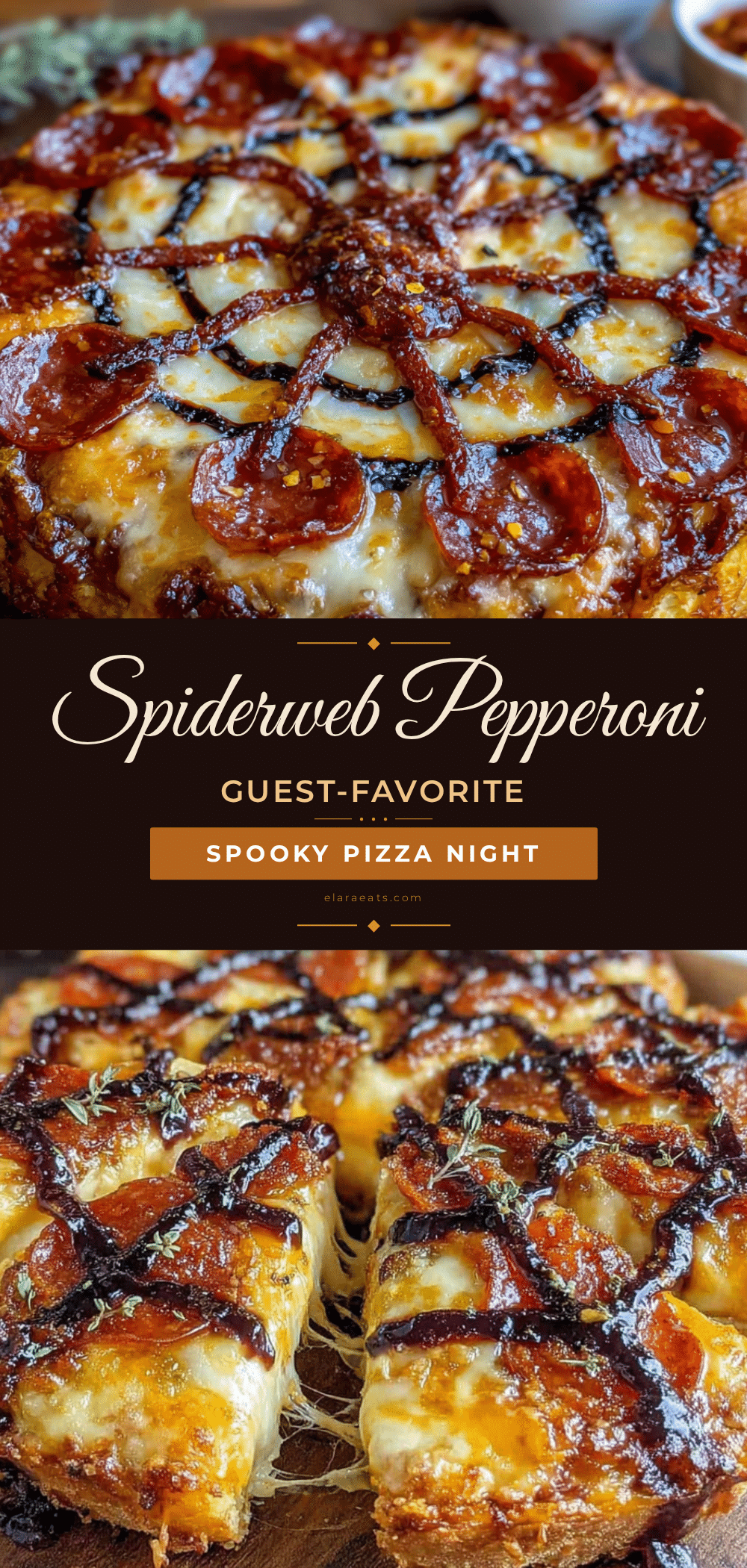
Guest-Favorite Spooky Spiderweb Pizza Best Easy Recipe
This spiderweb pizza is a dramatic showstopper that combines a crispy homemade crust, rich tomato sauce, and a web design that impresses guests. It’s comfort food with a twist, perfect for Halloween parties or any gathering.
- Prep Time: 30 minutes
- Cook Time: 14 minutes
- Total Time: 1 hour 44 minutes
- Yield: 8 servings 1x
- Category: Main Course
- Cuisine: Italian-American
Ingredients
- 3 cups all-purpose flour
- 1 packet active dry yeast (about 2 1/4 teaspoons)
- 1 cup warm water (110°F)
- 2 tablespoons olive oil (plus extra for greasing)
- 1 teaspoon sugar
- 1 teaspoon salt
- 1 can (15 oz) crushed tomatoes (preferably San Marzano)
- 2 cloves garlic, minced
- 1 tablespoon olive oil
- 1 teaspoon dried oregano
- 1/2 teaspoon red pepper flakes (optional)
- Salt and black pepper to taste
- 2 cups shredded mozzarella cheese (low-moisture, whole milk)
- 1/2 cup grated Parmesan cheese
- 1/2 cup pepperoni slices
- 2 tablespoons olive oil (for brushing crust)
- Fresh basil leaves (optional, for garnish)
Instructions
- Activate the yeast: In a small bowl, combine warm water and sugar. Sprinkle yeast on top and let it sit for 5-7 minutes until foamy.
- Make the dough: In a large bowl, mix flour and salt. Add the yeast mixture and olive oil. Stir until a shaggy dough forms. Turn onto a floured surface and knead for 8-10 minutes until smooth and elastic.
- First rise: Place dough in a greased bowl, cover, and let rise in a warm spot for 1 hour or until doubled.
- Simmer the sauce: In a small saucepan, heat olive oil over medium heat. Add garlic and cook for 30 seconds. Add crushed tomatoes, oregano, red pepper flakes, salt, and pepper. Bring to a simmer, then reduce heat to low and cook for 15-20 minutes, stirring occasionally, until thickened.
- Preheat your oven to 500°F (260°C). If using a pizza stone, place it on the bottom rack and preheat for at least 30 minutes.
- Shape the dough: Punch down the risen dough and turn onto a floured surface. Roll or stretch into a 12-inch circle. Transfer to your baking sheet or floured pizza peel.
- Assemble the base: Spread a thin layer of sauce over the dough, leaving a 1-inch border. Sprinkle mozzarella evenly, then Parmesan. Arrange pepperoni slices in a single layer.
- Create the spiderweb: Transfer remaining sauce to a piping bag or squeeze bottle. Pipe a small circle of sauce in the center, then larger circles around it, about an inch apart. Use a toothpick or skewer to drag from the center outward through all the circles, creating the web effect. Repeat 6-8 times.
- Bake: Slide the pizza onto the preheated stone or place the baking sheet in the oven. Bake for 10-14 minutes until the crust is golden brown and the cheese is bubbly.
- Rest and serve: Let the pizza cool for 3-5 minutes before slicing. Sprinkle with fresh basil if using. Cut into 8 slices.
Notes
For best results, simmer the sauce until thick enough to coat a spoon. Pipe the web right before baking. Let dough come to room temperature before shaping. Store dough and sauce in the fridge up to 2 days ahead.
Nutrition
- Serving Size: 1 slice
- Calories: 320
- Sugar: 4
- Sodium: 700
- Fat: 14
- Saturated Fat: 6
- Carbohydrates: 35
- Fiber: 4
- Protein: 16
Keywords: spiderweb pizza, Halloween pizza, pepperoni pizza, homemade pizza, party pizza, spiderweb design, easy pizza recipe