Love this? Save it for later!
Share the inspiration with your friends
My daughter asked why I couldn’t just grind the cashews in the blender instead of soaking and draining them for hours. I started to explain why that wouldn’t work — then stopped. I honestly had no good reason. I’d been making this sweet for years, following the same method my grandmother used. But watching her stare at the blender with that mix of hope and impatience, I realized I was just repeating a habit, not a rule.
“You know what?” I said, dumping the raw cashews straight into the jar. “Let’s find out.”
The kitchen was a mess that Tuesday afternoon. There was flour on the counter from the morning’s pancakes, and I’d forgotten to buy ghee. I was using regular butter, which felt almost wrong for an Indian sweet. But my daughter was already pressing buttons, and I couldn’t stop her. The cashews turned into a powder, then a paste, faster than I’d ever managed with the old method. She looked at me with that smug “I told you so” grin.
I kept waiting for the texture to go wrong. It didn’t. The fudge came together in the pan, smooth and glossy, with that signature melt-in-your-mouth feel. I mean, honestly — I’d been making this harder than it needed to be for years. Maybe you’ve been there, clinging to a method just because it’s the one you were taught. This Homemade Kaju Katli recipe is the proof that sometimes the shortcut is actually the better path.
Why You’ll Love This Recipe
This 4-Ingredient Homemade Kaju Katli has become my most-requested sweet for Diwali, birthdays, and random Tuesday cravings. I’ve tested it with different sugar types, butter brands, and even tried it with a food processor instead of a blender. This version wins every single time.
- Quick & Easy : From start to finish, this takes about 30 minutes. No soaking, no draining, no waiting overnight.
- Simple Ingredients : Cashews, sugar, water, and ghee. That’s it. You probably have three of these right now.
- Perfect for Festivals & Gifting : Kaju Katli is a classic Diwali sweet, but it also makes a thoughtful homemade gift for any celebration.
- Crowd-Pleaser : I’ve served this to my in-laws, my kids’ friends, and my neighbor who “doesn’t like Indian sweets.” All of them asked for seconds.
- Unbelievably Delicious : The texture is silky, the sweetness is balanced, and that cashew flavor shines through without being overpowering.
What makes this recipe different from the dozens of others I’ve tried is the technique. Grinding the cashews dry instead of soaking them creates a smoother paste with less moisture. That means less cooking time and a fudge that sets perfectly without turning grainy. It’s comfort food reimagined — easier, faster, but with the same soul-soothing satisfaction.
This isn’t just another version. It’s the one I now make for every occasion because it works, it’s forgiving, and it tastes like something you’d buy from a fancy sweet shop — except you made it in your own kitchen.
What Ingredients You Will Need
This recipe uses four simple ingredients to deliver that classic Kaju Katli flavor and texture. Each one plays a specific role, and I’ll share a few tips I’ve learned from making this dozens of times.
- Cashews, raw and unsalted : This is the star. Use whole cashews, not broken pieces, for the smoothest paste. I prefer the Kirkland brand from Costco for consistent quality. If you can find them, fresh cashews from an Indian grocery store often have a richer flavor. (Soaking note: we’re not soaking these — see the method below.)
- Sugar, granulated white : Regular white sugar works best. I’ve tried brown sugar, and it adds a molasses flavor that clashes with the delicate cashew taste. Use fine sugar if you have it; it dissolves faster. (Substitution: Use powdered jaggery for a deeper, more traditional flavor, but note the color will be darker.)
- Water : Just regular tap water. The amount matters — too much and you’ll be cooking forever; too little and the sugar won’t dissolve properly. I use exactly 1/4 cup.
- Ghee, unsalted : Ghee adds richness and helps the fudge set with that signature sheen. I use Pure Indian Foods ghee for its authentic taste. In a pinch, you can use unsalted butter, but the texture will be slightly softer and the flavor less nutty. (Dairy-free option: Use coconut oil, but the fudge will have a faint coconut flavor.)
That’s the entire list. No condensed milk, no cardamom powder (though you can add a pinch if you like), no silver leaf. Just four ingredients that come together to create something genuinely special.
Equipment Needed
You don’t need a fancy kitchen to make this. Here’s what I use:
- High-speed blender or food processor : A Vitamix or Blendtec works beautifully. A standard food processor also does the job, but it takes a bit longer. I’ve used a NutriBullet in a pinch — just pulse, don’t run it continuously, or the cashews will turn into butter.
- Non-stick pan : A heavy-bottomed non-stick pan is ideal. The sugar-cashew mixture sticks easily, and a non-stick surface saves you from scraping burnt bits into your fudge. My favorite is a 10-inch T-fal.
- Spatula, silicone : A silicone spatula is gentler on the non-stick surface and helps you scrape every bit of the mixture.
- Baking sheet or plate, greased : You’ll spread the fudge onto a greased surface to set. A quarter-sheet pan works well. I use a ceramic dinner plate when I’m making a smaller batch.
- Rolling pin (optional) : If you want perfectly even thickness, use a rolling pin. I usually just spread it with the spatula and call it rustic.
- Sharp knife or pizza cutter : For cutting the fudge into diamond shapes. A pizza cutter gives cleaner edges than a knife.
Budget-friendly tip: You don’t need a $500 blender. I’ve made this with a $30 food processor from Target. It takes a few more minutes of grinding, but the result is the same. Just be patient and scrape down the sides often.
Preparation Method
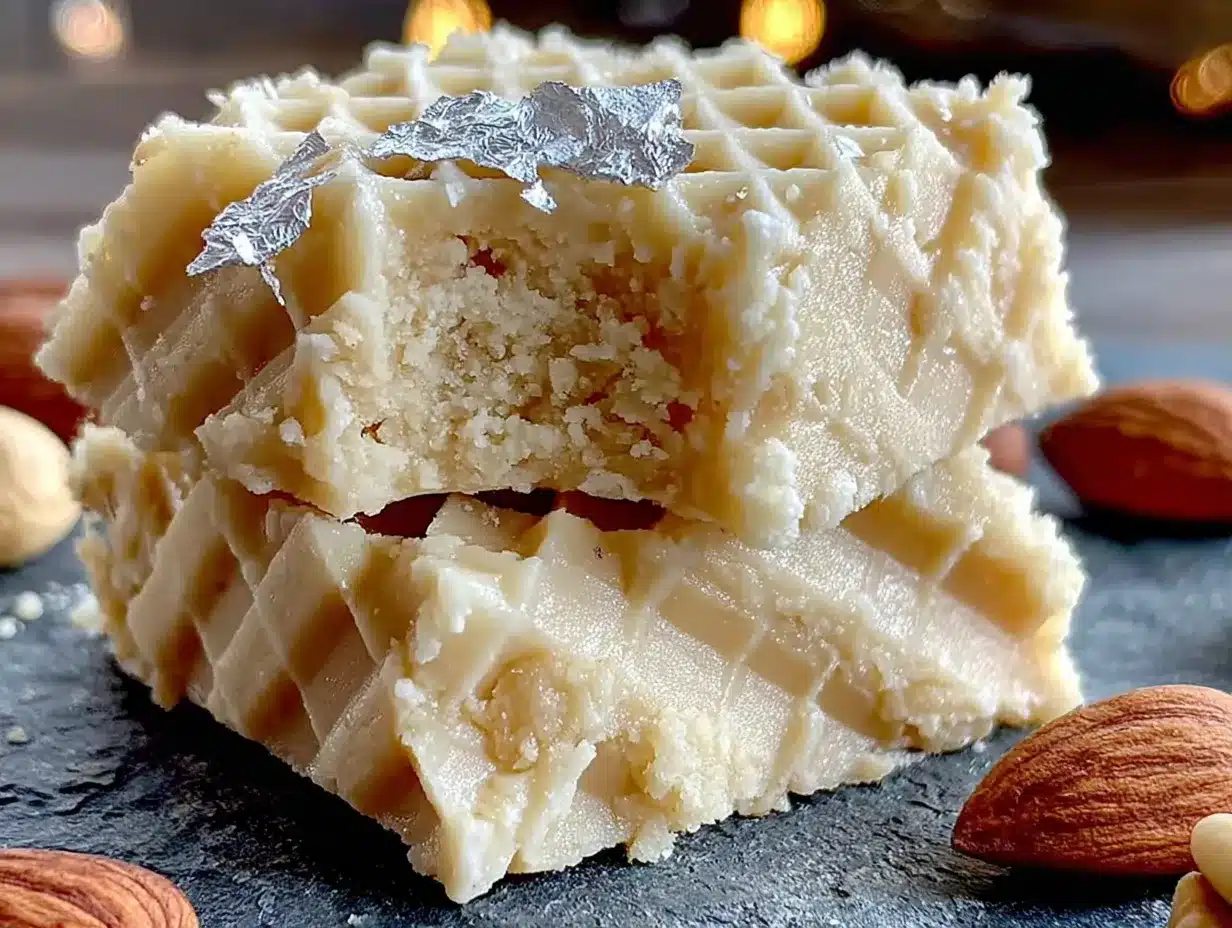
Let me walk you through this step by step. I’ve included the little details that make the difference between good Kaju Katli and great Kaju Katli.
- Grind the cashews into a fine powder. Add 2 cups (250 grams) of raw, unsalted cashews to your blender or food processor. Pulse in short bursts — 5 seconds on, 5 seconds off — until you get a fine powder. This takes about 30-40 seconds in a high-speed blender. Stop when it looks like coarse flour. If you go too long, the cashews release their oils and turn into butter. (Sensory cue: The powder should feel dry and silky between your fingers, not greasy.)
- Make the sugar syrup. In your non-stick pan, combine 1 cup (200 grams) of granulated sugar and 1/4 cup (60 ml) of water. Stir gently over medium heat until the sugar dissolves completely. Don’t walk away — sugar syrup can go from perfect to burnt in seconds. (Time estimate: about 3-4 minutes.)
- Check the syrup consistency. The syrup is ready when it reaches a single-thread consistency. To test this, dip a clean spoon into the syrup, then touch the syrup on the spoon with your finger. When you press your finger and thumb together and pull them apart, a single thread should form. If you don’t have a candy thermometer, this finger test works perfectly. (Warning: Be careful — the syrup is hot. Let it cool for 5 seconds before touching.)
- Add the cashew powder. Reduce the heat to low. Add the ground cashew powder to the sugar syrup all at once. Stir vigorously with your silicone spatula. The mixture will look lumpy and dry at first — don’t panic. Keep stirring. It will come together into a smooth, thick dough. (Time estimate: about 2-3 minutes of stirring.)
- Add the ghee. Once the dough is smooth and pulling away from the sides of the pan, add 2 tablespoons (30 grams) of ghee. Stir until the ghee is fully incorporated and the dough has a glossy sheen. This takes about 1 minute. (Sensory cue: The dough should look like smooth playdough and smell wonderfully nutty.)
- Cool slightly, then knead. Transfer the dough to a clean surface. Let it cool for 2-3 minutes — just until it’s cool enough to touch. Then knead it gently with your palms for about 30 seconds. This step makes the fudge silky. Don’t skip it.
- Shape and set. Place the dough on your greased baking sheet or plate. Cover with a piece of parchment paper. Use your hands or a rolling pin to spread it evenly to about 1/4-inch thickness. (Personal tip: I use a flat-bottomed measuring cup to press it smooth — works better than my hands.)
- Cut into pieces. While the fudge is still warm, use a sharp knife or pizza cutter to cut it into diamond shapes. If you wait until it’s completely cool, it will crack when you cut it. (Time estimate: Cut within 5 minutes of spreading.)
- Let it set completely. Allow the fudge to cool at room temperature for about 30 minutes. Once set, separate the pieces gently. They should lift off the surface easily.
Cooking Tips & Techniques
I’ve made this recipe at least 20 times now, and I’ve learned a few things the hard way. Here are the tips that make the biggest difference.
Don’t over-grind the cashews. The first time I tried this shortcut method, I ran the blender for a full minute, thinking finer is better. Big mistake. The cashews turned into butter, and my fudge came out greasy and soft. Pulse, check, pulse again. You want a powder, not a paste.
The syrup consistency is everything. If your sugar syrup is undercooked, the fudge will be sticky and won’t set. If it’s overcooked, the fudge will be hard and grainy. That single-thread test is your best friend. I keep a small bowl of cold water nearby to test the syrup — drop a bit into the water, and if it forms a soft ball, you’re good.
Work while it’s warm. This fudge sets fast. Once you spread it, you have about 5 minutes to cut it. I learned this the hard way when I got distracted by a phone call and came back to a solid sheet that shattered when I tried to cut it. Cut immediately after spreading.
Multitasking tip: While the sugar syrup is cooking, line your baking sheet with parchment and grease it lightly. That way, when the dough is ready, you can spread it immediately without scrambling for supplies.
Consistency hack: If your dough feels too dry after adding the cashew powder, add 1 teaspoon of warm water. If it feels too sticky, add 1 tablespoon of additional cashew powder. I’ve saved several batches this way.
Variations & Adaptations
This recipe is forgiving, so feel free to play around. Here are some variations I’ve tried and loved.
Chocolate Kaju Katli : After kneading the dough, add 2 tablespoons of cocoa powder and knead again until fully incorporated. The chocolate version is a huge hit with kids. My daughter calls it “brown fudge” and asks for it more than the original.
Cardamom & Saffron : Add 1/2 teaspoon of ground cardamom and a pinch of saffron threads (soaked in 1 teaspoon of warm milk) to the dough while kneading. This gives it a traditional Indian sweet shop flavor. I make this version for Diwali.
Pistachio-Crusted Kaju Katli : After spreading the fudge, press finely chopped pistachios onto the surface. The green and white contrast looks beautiful on a serving plate. I did this for a friend’s wedding and everyone thought I bought it from a bakery.
Vegan version : Replace the ghee with coconut oil. The texture will be slightly firmer, and there will be a faint coconut flavor, but it’s still delicious. Make sure your sugar is vegan-friendly (some white sugars are processed with bone char).
Low-sugar option : Reduce the sugar to 3/4 cup (150 grams). The fudge will be less sweet and slightly softer, but it still sets. I’ve made this for my father-in-law who has diabetes, and he loved it.
Serving & Storage Suggestions
Kaju Katli is best served at room temperature. The texture is perfectly tender — it melts on your tongue without being sticky or hard. I like to arrange the pieces on a white platter in a single layer for the prettiest presentation.
Complementary dishes: Serve alongside other Indian sweets like Gulab Jamun or Besan Ladoo for a festive dessert spread. For a simpler pairing, a cup of hot chai or coffee balances the sweetness beautifully.
Storage instructions: Store in an airtight container at room temperature for up to 2 weeks. Do not refrigerate — the cold makes the fudge hard and grainy. I use a glass container with a tight lid, layered with parchment paper between the pieces.
Freezer instructions: You can freeze Kaju Katli for up to 3 months. Layer the pieces in a freezer-safe container with parchment paper between each layer. Thaw at room temperature for about 30 minutes before serving. The texture may be slightly softer after freezing, but the flavor remains excellent.
Flavor development: Interestingly, the flavor improves after a day or two. The sugar and cashew flavors meld together, and the texture becomes even smoother. I actually prefer eating this on day two.
Gifting tip: Stack the pieces in a small box lined with parchment paper. Tie with a ribbon, and you have a beautiful homemade gift. I’ve given these to neighbors, teachers, and coworkers, and they’re always appreciated.
Nutritional Information & Benefits
Here’s the approximate nutritional breakdown per piece (based on 24 pieces):
- Calories: 120
- Fat: 7g (mostly healthy unsaturated fats from cashews)
- Carbohydrates: 12g
- Protein: 3g
- Fiber: 1g
- Sugar: 9g
Health benefits of cashews: Cashews are rich in heart-healthy monounsaturated fats, magnesium for bone health, and zinc for immune support. They also contain antioxidants that help reduce inflammation. While this is a sweet treat, the cashew base provides more nutritional value than a typical candy.
Dietary considerations: This recipe is naturally gluten-free and contains no eggs. For a dairy-free version, use coconut oil instead of ghee. The sugar content is moderate compared to store-bought versions, which often add extra sweeteners.
Allergen note: Cashews are tree nuts. This recipe is not suitable for those with tree nut allergies. Always check your ghee for dairy content if serving to someone with a dairy allergy.
I personally love that this sweet treat feels indulgent but doesn’t leave me with that heavy, overly processed feeling. It’s dessert, but it’s made from real food.
Conclusion
This Homemade Kaju Katli recipe is the one I keep coming back to because it works. It’s simple enough for a beginner, forgiving enough for a messy kitchen, and impressive enough for a celebration. The four ingredients come together in a way that feels almost magical — a few pantry staples transform into something beautiful and delicious.
I love that I can make this with my daughter now. She’s the one who showed me the shortcut, after all. We make it together for Diwali, for birthdays, for no reason at all. It’s become our thing — and I hope it becomes yours too.
Try it this weekend. Customize it with your favorite add-ins. Share it with someone you love. And when you do, come back and tell me how it turned out. I’d love to hear your version.
Happy cooking, and remember — sometimes the best recipes come from letting go of the old rules.
Frequently Asked Questions
Can I use roasted cashews instead of raw?
I don’t recommend it. Roasted cashews have less moisture and a different fat content, which can make the fudge dry and crumbly. Stick with raw, unsalted cashews for the best texture.
Why did my Kaju Katli turn out grainy?
Grainy texture usually means the sugar syrup was overcooked or the cashews were over-ground. Make sure you stop grinding when the cashews are a fine powder, and test the syrup carefully using the single-thread method.
Can I make this without a blender?
Yes, but it’s more work. You can use a mortar and pestle to grind the cashews into a powder. It takes about 15-20 minutes of steady grinding. I’ve done it once — it works, but the blender is much easier.
How do I store leftover Kaju Katli for gifting?
Layer the pieces in an airtight container with parchment paper between each layer. Store at room temperature for up to 2 weeks. Do not refrigerate, as the cold will make the fudge hard and grainy.
Can I double this recipe?
Absolutely. Just double all the ingredients. Use a larger pan for the sugar syrup, and be prepared to spread the fudge on a larger surface. The cooking time stays the same. I often make a double batch for Diwali.
Pin This Recipe!
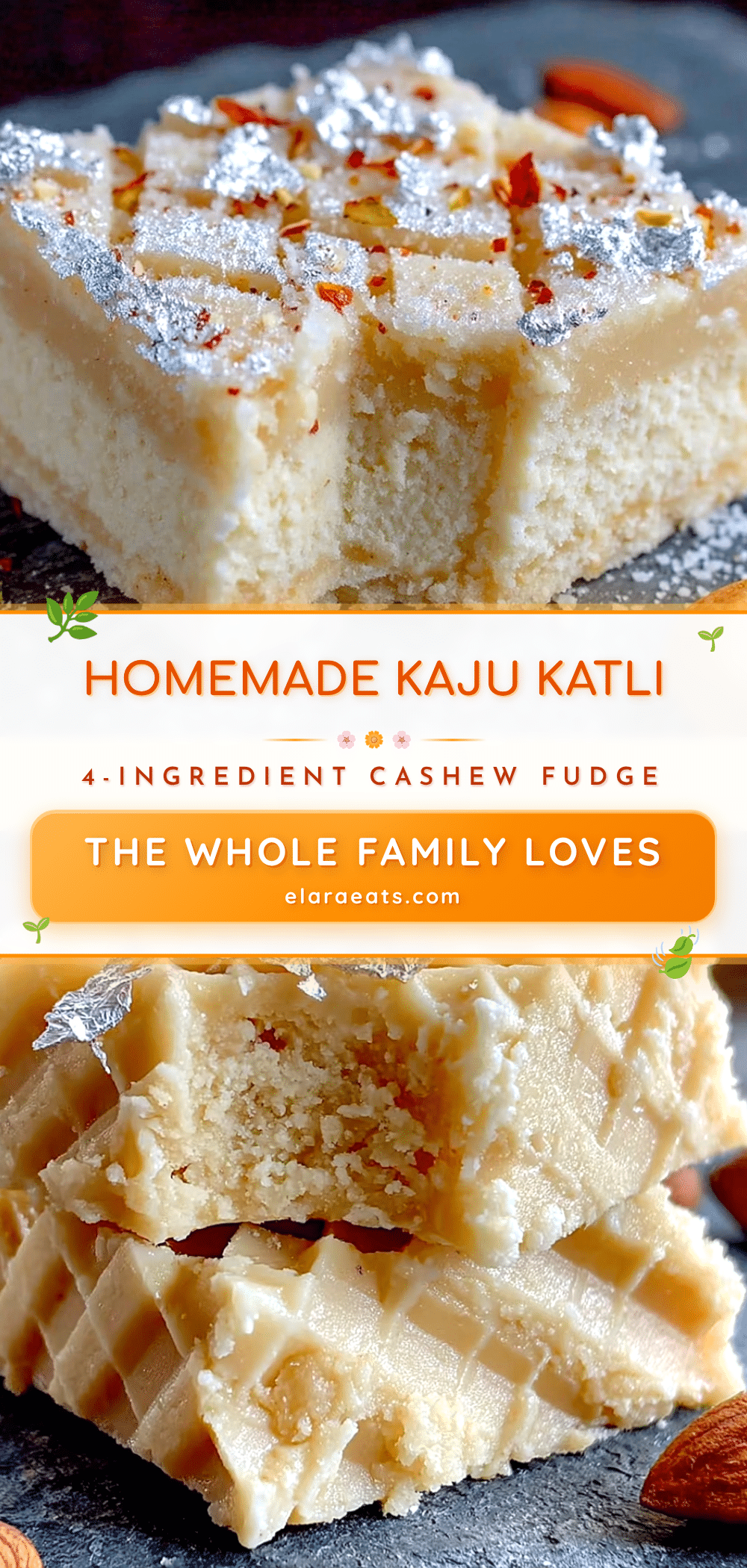
4-Ingredient Homemade Kaju Katli: Best Easy Cashew Fudge
This 4-Ingredient Homemade Kaju Katli is a quick and easy Indian sweet made with cashews, sugar, water, and ghee. It’s silky, melt-in-your-mouth delicious, and perfect for festivals or gifting.
- Prep Time: 10 minutes
- Cook Time: 20 minutes
- Total Time: 30 minutes
- Yield: 24 pieces 1x
- Category: Dessert
- Cuisine: Indian
Ingredients
- 2 cups (250 grams) raw unsalted cashews
- 1 cup (200 grams) granulated white sugar
- 1/4 cup (60 ml) water
- 2 tablespoons (30 grams) unsalted ghee
Instructions
- Grind the cashews into a fine powder. Add 2 cups (250 grams) of raw, unsalted cashews to your blender or food processor. Pulse in short bursts — 5 seconds on, 5 seconds off — until you get a fine powder. This takes about 30-40 seconds in a high-speed blender. Stop when it looks like coarse flour.
- Make the sugar syrup. In your non-stick pan, combine 1 cup (200 grams) of granulated sugar and 1/4 cup (60 ml) of water. Stir gently over medium heat until the sugar dissolves completely. Don’t walk away — sugar syrup can go from perfect to burnt in seconds. (Time estimate: about 3-4 minutes.)
- Check the syrup consistency. The syrup is ready when it reaches a single-thread consistency. To test this, dip a clean spoon into the syrup, then touch the syrup on the spoon with your finger. When you press your finger and thumb together and pull them apart, a single thread should form. If you don’t have a candy thermometer, this finger test works perfectly. (Warning: Be careful — the syrup is hot. Let it cool for 5 seconds before touching.)
- Add the cashew powder. Reduce the heat to low. Add the ground cashew powder to the sugar syrup all at once. Stir vigorously with your silicone spatula. The mixture will look lumpy and dry at first — don’t panic. Keep stirring. It will come together into a smooth, thick dough. (Time estimate: about 2-3 minutes of stirring.)
- Add the ghee. Once the dough is smooth and pulling away from the sides of the pan, add 2 tablespoons (30 grams) of ghee. Stir until the ghee is fully incorporated and the dough has a glossy sheen. This takes about 1 minute.
- Cool slightly, then knead. Transfer the dough to a clean surface. Let it cool for 2-3 minutes — just until it’s cool enough to touch. Then knead it gently with your palms for about 30 seconds. This step makes the fudge silky. Don’t skip it.
- Shape and set. Place the dough on your greased baking sheet or plate. Cover with a piece of parchment paper. Use your hands or a rolling pin to spread it evenly to about 1/4-inch thickness.
- Cut into pieces. While the fudge is still warm, use a sharp knife or pizza cutter to cut it into diamond shapes. If you wait until it’s completely cool, it will crack when you cut it. (Time estimate: Cut within 5 minutes of spreading.)
- Let it set completely. Allow the fudge to cool at room temperature for about 30 minutes. Once set, separate the pieces gently. They should lift off the surface easily.
Notes
Don’t over-grind the cashews or they’ll turn into butter. The syrup consistency is everything — use the single-thread test. Work while the fudge is warm; cut within 5 minutes of spreading. If dough feels too dry, add 1 teaspoon warm water; if too sticky, add 1 tablespoon extra cashew powder. Flavor improves after a day or two.
Nutrition
- Serving Size: 1 piece
- Calories: 120
- Sugar: 9
- Sodium: 2
- Fat: 7
- Saturated Fat: 2
- Carbohydrates: 12
- Fiber: 1
- Protein: 3
Keywords: kaju katli, cashew fudge, Indian sweet, Diwali sweet, 4-ingredient dessert, easy fudge, homemade kaju katli