Love this? Save it for later!
Share the inspiration with your friends
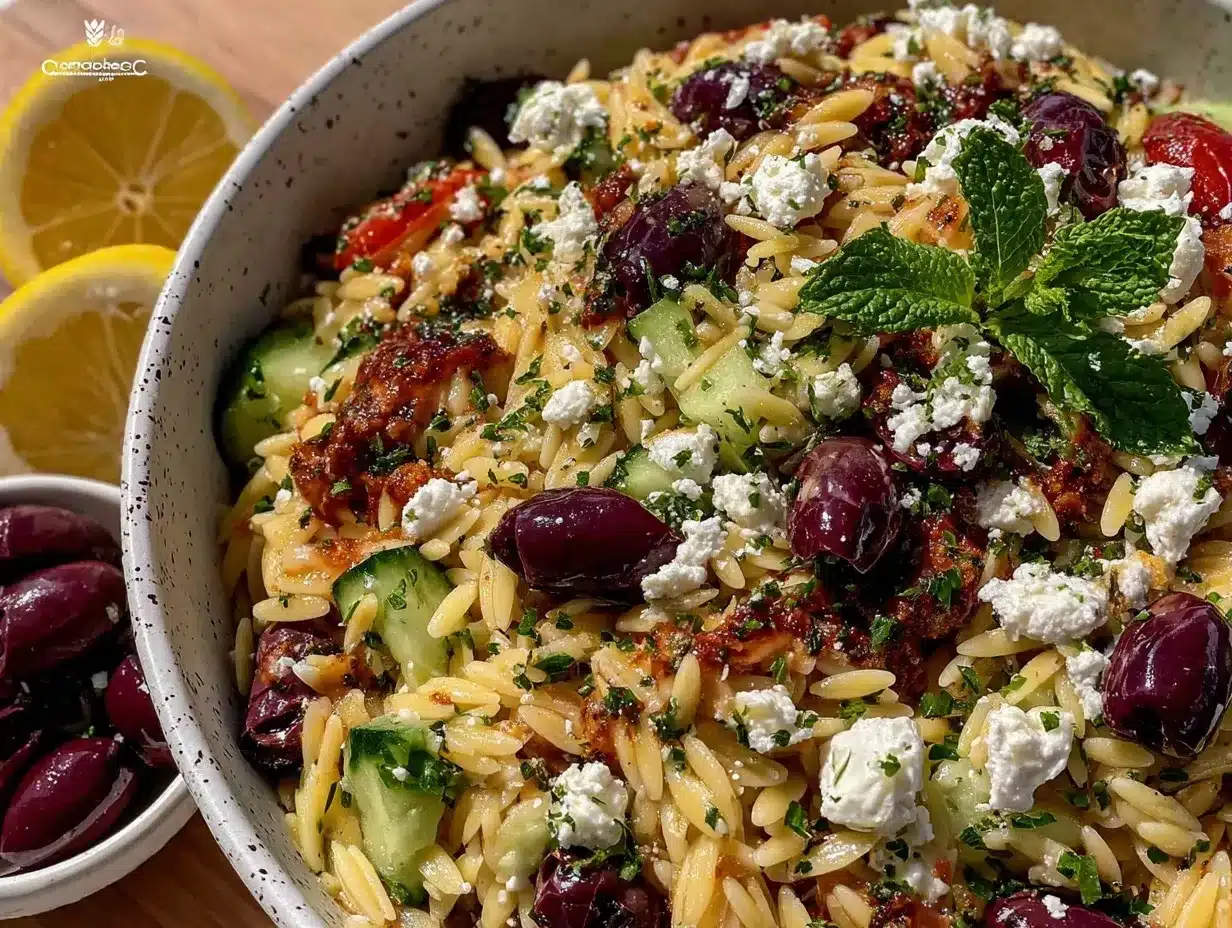
“I never thought a pasta salad could surprise me until that hot July afternoon at the community garden potluck,” I started telling my friend while washing the last of the dishes. The sun was relentless, and everyone else seemed to be aiming for the usual heavy, mayo-laden sides. But then there was this bowl—a bright, colorful mix of tiny orzo pasta, crumbly feta, and those unmistakably briny Kalamata olives. It smelled like the Mediterranean sun itself, fresh and inviting.
The secret? It came from a quiet neighbor I barely knew, George, who was more famous for his tomato plants than his cooking. Honestly, I was skeptical at first. But one bite? I was hooked. That Fresh Greek Orzo Pasta Salad with Feta and Kalamata Olives had this perfect balance of tangy, salty, and herby flavors that just sang on your tongue. And the texture! The way the orzo stayed firm without turning mushy, paired with crisp cucumbers and juicy grape tomatoes, made it downright addictive.
I remember trying to jot down his recipe on a napkin while dodging a swarm of bees and nearly spilling my iced tea. That imperfect little moment reminded me why cooking is as much about the chaos as it is the calm. Maybe you’ve been there too—scrambling to capture a great recipe while the party buzzes around you. Since then, this salad has been my go-to for summer gatherings, potlucks, and even quick lunches when I want something light but satisfying.
Let me tell you, this isn’t just another pasta salad. It’s the kind of dish that makes you close your eyes and savor every forkful. And honestly, it’s the easiest recipe you’ll ever add to your summer repertoire. So let’s get into why you’ll love making and sharing this Fresh Greek Orzo Pasta Salad with Feta and Kalamata Olives.
Why You’ll Love This Recipe
After testing this recipe dozens of times (and adjusting a pinch here and there), I can confidently say it ticks all the boxes for a crowd-pleaser and a quick summer fix. Here’s why this Fresh Greek Orzo Pasta Salad with Feta and Kalamata Olives stands out:
- Quick & Easy: Comes together in under 30 minutes, perfect for busy weeknights or last-minute summer parties.
- Simple Ingredients: Uses pantry staples and fresh produce you can find at any local grocery store or farmer’s market.
- Perfect for Summer Gatherings: Light, refreshing, and colorful—ideal for picnics, barbecues, and potluck dinners.
- Crowd-Pleaser: Kids and adults alike keep coming back for seconds, especially with those salty Kalamata olives and creamy feta.
- Unbelievably Delicious: The balance of zesty lemon, fresh herbs, and tangy cheese makes this salad so flavorful that it never feels boring or plain.
What really makes this recipe different is the way the orzo is cooked to a perfect al dente—that slight firmness that gives it body without turning mushy. Plus, the homemade lemon-oregano dressing that George swore by adds a fresh, vibrant zing that store-bought dressings just can’t match. Honestly, it’s the kind of salad that makes you imagine sitting under an olive tree in Greece, with the sun warming your skin and a gentle breeze carrying the scent of herbs.
This recipe isn’t just food—it’s a little moment of sunshine you can bring to your table no matter where you live. Now, let’s talk about the ingredients that make this magic happen.
What Ingredients You Will Need
This recipe uses simple, wholesome ingredients to deliver bold flavor and a satisfying texture without any fuss. Most of these are pantry staples or fresh produce that you can easily find year-round, though swapping in seasonal tomatoes or herbs gives it a fun twist.
- Orzo pasta: About 1 ½ cups (dry) or 270 grams. I recommend Barilla for the best texture and consistent cooking.
- Kalamata olives: ½ cup (pitted and halved). These add a lovely briny punch that’s signature to Greek salads.
- Feta cheese: ¾ cup, crumbled (about 100 grams). Go for a good-quality block feta, like Athenos or Dodoni, for creaminess and flavor.
- Cucumber: 1 medium, diced. English cucumbers work well here because they’re seedless and less watery.
- Grape tomatoes: 1 cup, halved. Sweet and juicy—substitute with cherry tomatoes if needed.
- Red onion: ¼ cup, finely chopped (optional, but adds a sharp contrast).
- Fresh parsley: ¼ cup, chopped. Flat-leaf parsley is preferred for its bright, clean flavor.
- Fresh oregano: 1 teaspoon, finely chopped (or ½ teaspoon dried oregano).
- Extra virgin olive oil: ⅓ cup (about 80 ml). Use a good quality brand like Colavita for the best flavor.
- Fresh lemon juice: From 1 large lemon (about 3 tablespoons). It brings that necessary zing.
- Garlic: 1 small clove, minced (adds subtle depth).
- Salt and freshly ground black pepper: To taste.
Substitution tips: You can swap the Kalamata olives for green olives if you prefer a milder taste, or use dairy-free feta alternatives for a vegan option. For gluten-free, try a gluten-free orzo or use small gluten-free pasta shapes. In summer, fresh basil can be a nice swap for parsley for a sweeter herbal note.
Equipment Needed
- Large pot: For boiling the orzo pasta. A heavy-bottomed pot helps with even cooking.
- Colander or fine mesh strainer: To drain the cooked pasta thoroughly.
- Large mixing bowl: To combine the salad ingredients without crowding.
- Small bowl or jar: For whisking together the dressing.
- Sharp knife and cutting board: For chopping veggies and herbs.
- Measuring cups and spoons: For accuracy with liquids and seasonings.
If you don’t have a whisk, a fork works fine for mixing the dressing. For chopping, a good-quality chef’s knife makes a difference—honestly, the first time I used my grandmother’s old, dull knife, I nearly gave up! Also, a salad spinner can be handy to dry the parsley after washing, but it’s not essential.
Preparation Method
- Cook the orzo: Bring a large pot of salted water to a boil (about 4 quarts or 4 liters). Add 1 ½ cups (270 g) of orzo and cook uncovered for 8-9 minutes until al dente. Stir occasionally to prevent sticking. (Tip: Test a piece a minute before time’s up to avoid overcooking.)
- Drain and rinse: Drain the orzo in a colander and rinse briefly under cold water to stop the cooking process and cool the pasta. Drain well and transfer to a large mixing bowl. The orzo should be cool or at room temperature before adding dressing to avoid wilting the fresh ingredients.
- Prepare the dressing: In a small bowl or jar, whisk together ⅓ cup (80 ml) extra virgin olive oil, juice of 1 large lemon (about 3 tablespoons), 1 minced garlic clove, 1 teaspoon chopped fresh oregano (or ½ teaspoon dried), and salt and pepper to taste. Taste and adjust seasoning as needed.
- Chop the veggies and herbs: Dice 1 medium English cucumber, halve 1 cup (150 g) grape tomatoes, finely chop ¼ cup red onion if using, and chop ¼ cup fresh parsley. Combine these with the cooled orzo in the large bowl.
- Add olives and feta: Toss in ½ cup pitted and halved Kalamata olives and ¾ cup (100 g) crumbled feta cheese gently, so the feta doesn’t break down too much.
- Combine salad and dressing: Pour the dressing over the salad and toss gently until everything is evenly coated. Be careful not to overmix, especially with the feta.
- Chill and serve: Cover the bowl and refrigerate for at least 30 minutes to let the flavors meld. Before serving, give it one last gentle toss and adjust salt or lemon juice if needed. Serve chilled or at room temperature.
Quick tip: If you’re pressed for time, you can prepare everything ahead except the dressing and toss just before serving. This keeps the salad fresh and vibrant. Also, if the salad looks a bit dry after chilling, a splash of olive oil or lemon juice revives it beautifully.
Cooking Tips & Techniques
Getting the orzo just right is the trickiest part here. Overcooked orzo turns mushy, and undercooked feels gritty. I always recommend tasting a few times during the last minute of cooking. When it’s al dente, it should have a slight bite but not be hard. Rinsing the pasta under cold water immediately stops cooking and prevents clumping.
Another tip is to use fresh lemon juice rather than bottled. The brightness is noticeably better, and it helps balance the saltiness from the feta and olives. Don’t skip the garlic in the dressing—it adds a subtle background note that makes the salad taste homemade and vibrant.
I’ve learned the hard way that chopping the veggies uniformly helps the salad feel cohesive; uneven chunks can make some bites overwhelming and others bland. Also, fold the feta in gently to keep those beautiful chunks intact instead of turning the salad into a creamy mess.
Finally, let the salad rest in the fridge for at least 30 minutes. This little wait allows the flavors to mingle and mellow. If you’re prepping for a party, making this salad the day before is actually a smart move—just give it a quick toss before serving.
Variations & Adaptations
If you want to make this Fresh Greek Orzo Pasta Salad with Feta and Kalamata Olives your own, here are some tasty tweaks I’ve tried or imagined:
- Protein Boost: Add grilled chicken, shrimp, or chickpeas to make it a heartier main dish.
- Vegan Version: Swap feta for a plant-based cheese or add crumbled tofu marinated in lemon and herbs. Use vegan mayo or avocado in the dressing for creaminess.
- Seasonal Veggies: In spring, try adding blanched asparagus or peas. In fall, roasted red peppers or artichoke hearts bring a nice touch.
- Different Herbs: Basil or mint can freshen things up if you want a different herbal profile.
- Alternate Grains: Use quinoa or couscous instead of orzo for gluten-free or texture variations.
One personal favorite is adding toasted pine nuts for a crunchy surprise. It adds a lovely nuttiness that plays well with the salty olives and tangy feta. Just be sure to toast them gently in a dry skillet until golden—trust me, it’s worth the extra five minutes!
Serving & Storage Suggestions
This salad is best served chilled or at room temperature. I like to plate it with a sprinkle of extra fresh parsley and a drizzle of olive oil on top for presentation. Pair it with grilled lamb chops or a simple lemon-herb roasted chicken for a full Mediterranean-inspired meal.
Leftovers keep well in the fridge for up to 3 days in an airtight container. The flavors actually deepen overnight, though the pasta may absorb some dressing and become a bit drier. To freshen it up, add a splash of olive oil or a squeeze of fresh lemon juice and give it a light toss before serving.
Freezing isn’t recommended because the texture of the fresh veggies and pasta changes after thawing. If you plan to meal prep, prepare the dressing separately and add it just before eating to keep everything fresh.
Nutritional Information & Benefits
This Fresh Greek Orzo Pasta Salad with Feta and Kalamata Olives is a balanced dish with carbohydrates from orzo, healthy fats from olive oil and olives, and protein from feta cheese. A typical serving (about 1 cup or 200 grams) contains approximately:
| Calories | Fat | Carbohydrates | Protein |
|---|---|---|---|
| 320 kcal | 18 g | 30 g | 8 g |
The olive oil provides heart-healthy monounsaturated fats, while the fresh vegetables offer antioxidants and fiber. Feta cheese contributes calcium and protein, though it can be higher in sodium, so adjust salt accordingly if you’re watching sodium intake.
This salad fits well into vegetarian diets and can be adapted for gluten-free and vegan preferences. It’s a wholesome option that brings Mediterranean diet benefits to your plate—known for improving heart health and longevity.
Conclusion
If you’re looking for a fresh, flavorful, and fuss-free dish to bring to your next summer gathering, this Fresh Greek Orzo Pasta Salad with Feta and Kalamata Olives is it. It’s the kind of recipe that feels special but doesn’t require hours in the kitchen or hard-to-find ingredients. Plus, it’s endlessly adaptable to your taste and dietary needs.
I love this salad because it reminds me of that sunny day at the potluck and the joy of discovering something unexpectedly delicious from a neighbor’s simple kindness. I hope you find the same joy in making and sharing it with your friends and family.
Give this recipe a try, and if you do, please leave a comment about your favorite variation or serving idea. Sharing your experience means the world and helps others find their new summer favorite too!
Frequently Asked Questions
Can I make this salad ahead of time?
Yes! It actually tastes better after resting for at least 30 minutes or even overnight in the fridge. Just toss gently before serving.
What can I use instead of orzo?
Quinoa, couscous, or small gluten-free pasta shapes work well as substitutes if you want to avoid gluten or try a different texture.
How do I keep the feta from getting too crumbly?
Fold the feta in gently at the end and avoid overmixing. Using a block feta and crumbling it yourself helps control texture better than pre-crumbled.
Is there a way to make this salad vegan?
Definitely. Use a plant-based feta substitute or marinated tofu and skip the cheese altogether if preferred. The dressing is naturally vegan.
Can I add other vegetables to this salad?
Yes! Try bell peppers, artichokes, or roasted zucchini for extra flavor and color. Just chop them finely or roast them before adding.
Pin This Recipe!
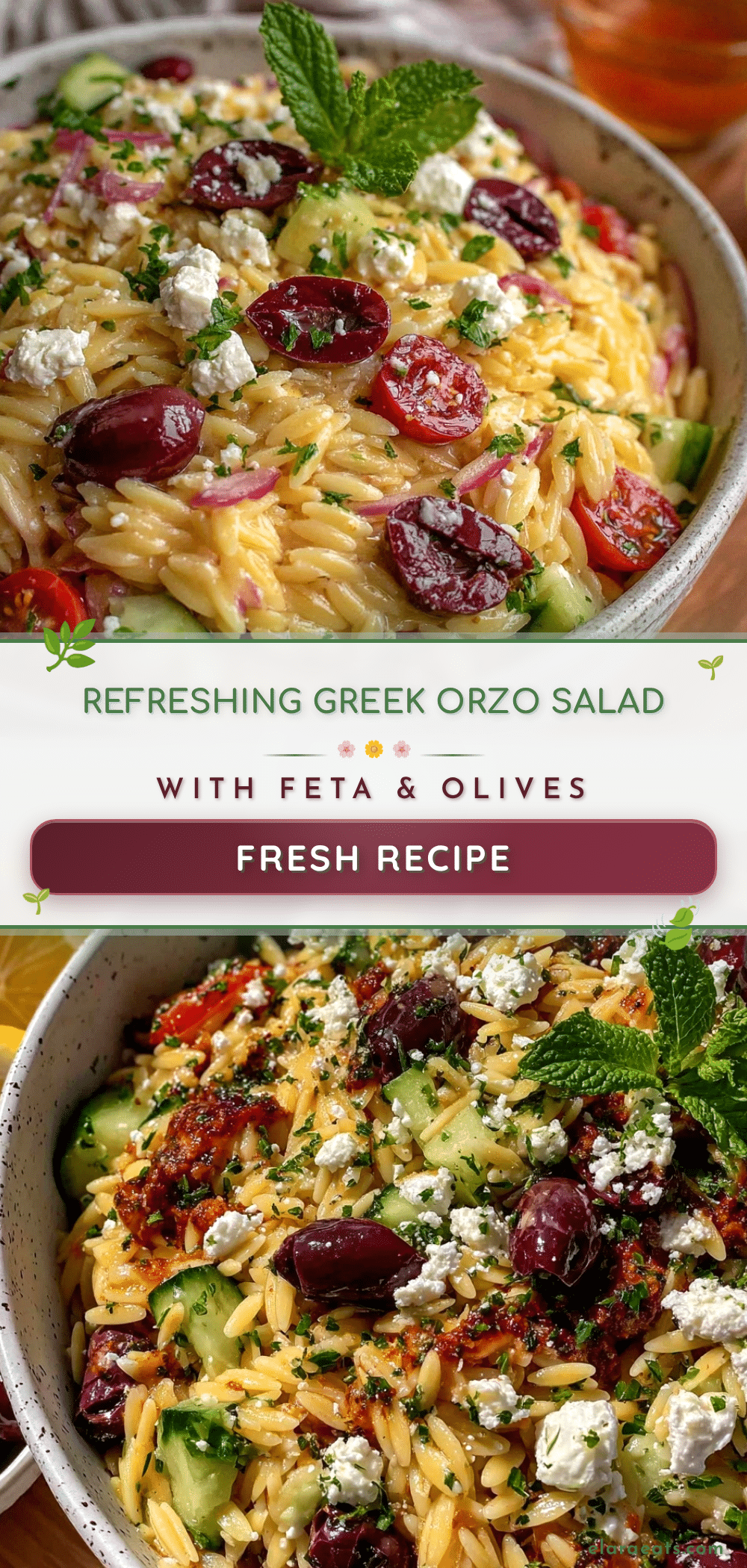
Fresh Greek Orzo Pasta Salad with Feta

A light, refreshing Greek-inspired orzo pasta salad with feta cheese, Kalamata olives, and a zesty lemon-oregano dressing, perfect for summer parties and gatherings.
- Prep Time: 15 minutes
- Cook Time: 9 minutes
- Total Time: 39 minutes
- Yield: 6 servings 1x
- Category: Salad
- Cuisine: Greek
Ingredients
- 1 ½ cups (270 grams) dry orzo pasta
- ½ cup Kalamata olives, pitted and halved
- ¾ cup (100 grams) crumbled feta cheese
- 1 medium cucumber, diced (English cucumber preferred)
- 1 cup (150 grams) grape tomatoes, halved
- ¼ cup red onion, finely chopped (optional)
- ¼ cup fresh parsley, chopped
- 1 teaspoon fresh oregano, finely chopped (or ½ teaspoon dried oregano)
- ⅓ cup (80 ml) extra virgin olive oil
- Juice of 1 large lemon (about 3 tablespoons)
- 1 small garlic clove, minced
- Salt and freshly ground black pepper, to taste
Instructions
- Bring a large pot of salted water (about 4 quarts or 4 liters) to a boil. Add 1 ½ cups (270 g) of orzo and cook uncovered for 8-9 minutes until al dente, stirring occasionally.
- Drain the orzo in a colander and rinse briefly under cold water to stop the cooking process and cool the pasta. Drain well and transfer to a large mixing bowl.
- In a small bowl or jar, whisk together ⅓ cup (80 ml) extra virgin olive oil, juice of 1 large lemon (about 3 tablespoons), 1 minced garlic clove, 1 teaspoon chopped fresh oregano (or ½ teaspoon dried), and salt and pepper to taste. Adjust seasoning as needed.
- Dice 1 medium English cucumber, halve 1 cup (150 g) grape tomatoes, finely chop ¼ cup red onion if using, and chop ¼ cup fresh parsley. Combine these with the cooled orzo in the large bowl.
- Add ½ cup pitted and halved Kalamata olives and ¾ cup (100 g) crumbled feta cheese gently, so the feta doesn’t break down too much.
- Pour the dressing over the salad and toss gently until everything is evenly coated. Be careful not to overmix, especially with the feta.
- Cover the bowl and refrigerate for at least 30 minutes to let the flavors meld. Before serving, give it one last gentle toss and adjust salt or lemon juice if needed. Serve chilled or at room temperature.
Notes
Cook orzo al dente to avoid mushiness. Rinse pasta under cold water immediately after cooking to stop cooking and prevent clumping. Use fresh lemon juice for best flavor. Fold feta gently to keep chunks intact. Chill salad for at least 30 minutes before serving to allow flavors to meld. Prepare dressing separately if making ahead and toss just before serving.
Nutrition
- Serving Size: About 1 cup (200 gra
- Calories: 320
- Fat: 18
- Carbohydrates: 30
- Protein: 8
Keywords: Greek salad, orzo pasta salad, feta cheese, Kalamata olives, summer salad, Mediterranean, easy pasta salad, potluck recipe