Love this? Save it for later!
Share the inspiration with your friends
“I never thought a random chat with my local fishmonger would change my dinner game,” I confessed to my friend last week. It was a rainy Thursday afternoon at the downtown market, and I was debating between salmon and cod when the fishmonger, an older gentleman named Kenji, started telling me about his favorite way to prepare salmon—miso glazed, with a side of sesame bok choy and coconut rice. I was half-listening, distracted by the tempting display of fresh seafood, but his enthusiasm was contagious. So, I grabbed the ingredients on a whim, even though I was skeptical about the coconut rice pairing.
The next evening, I made the dish, kind of clumsily, I admit—I forgot to toast the sesame seeds at first, and my kitchen smelled like a sweet, salty heaven by the time I plated everything. That first bite was something else. The rich umami of the miso glaze combined with the crunchy, fragrant bok choy and the subtle sweetness of the coconut rice hit all the right notes. Honestly, it felt like a cozy little trip to a Japanese eatery without leaving my apartment. Maybe you’ve been there, craving something comforting but a bit different? This recipe stayed with me because it’s both simple and packed with flavor, perfect for those nights when you want to impress yourself (and maybe others) with minimal fuss.
Why You’ll Love This Recipe
After a few rounds of testing and tweaking, I can confidently say this Flavorful Miso Glazed Salmon with Sesame Bok Choy & Coconut Rice recipe is a keeper. Here’s why it’s earned a permanent spot in my kitchen rotation:
- Quick & Easy: Takes under 30 minutes from start to finish—ideal for busy weeknights or those unexpected dinner guests.
- Simple Ingredients: No need for specialty stores; you probably have most of these in your pantry already.
- Perfect for Cozy Dinners: The warming flavors and textures bring a satisfying, soulful vibe to any meal.
- Crowd-Pleaser: Even picky eaters tend to love the sweet-savory balance and that crispy-buttery salmon skin.
- Unbelievably Delicious: The miso glaze adds a depth of flavor that feels gourmet but is surprisingly easy to pull off.
This isn’t just your average salmon dish. The trick lies in the glaze—a blend of white miso, mirin, and a touch of honey that hugs the fish perfectly. Plus, pairing it with nutty sesame bok choy and creamy coconut rice brings harmony to the plate. I’ve tried other miso salmon recipes before, but this one nails a balance of sweet, salty, and umami that makes you pause and savor every bite. Honestly, it’s the kind of meal that makes you want to slow down and appreciate good food and good company.
What Ingredients You Will Need
This recipe uses straightforward, wholesome ingredients that come together to create bold flavors and satisfying textures without hassle. Most are pantry staples or easy to find at your local grocery or Asian market.
- For the Miso Glazed Salmon:
- 4 salmon fillets (6 oz / 170 g each), skin on (fresh is best for texture)
- 2 tablespoons white miso paste (I prefer Hikari brand for its smoothness)
- 1 tablespoon mirin (sweet Japanese rice wine)
- 1 tablespoon soy sauce (use low sodium if preferred)
- 1 tablespoon honey or maple syrup (for a gentle sweetness)
- 1 teaspoon grated fresh ginger (adds a subtle zing)
- 1 teaspoon sesame oil (for that toasty aroma)
- For the Sesame Bok Choy:
- 1 lb (450 g) baby bok choy, halved lengthwise
- 1 tablespoon toasted sesame oil
- 2 cloves garlic, minced
- 1 tablespoon toasted sesame seeds (to sprinkle on top)
- Salt and pepper, to taste
- For the Coconut Rice:
- 1 cup jasmine rice (about 200 g), rinsed
- 1 cup canned coconut milk (full fat for creaminess)
- 1 cup water
- 1/2 teaspoon salt
- Optional: 1 teaspoon sugar (balances coconut flavor)
Ingredient tip: If you want a gluten-free meal, swap soy sauce with tamari. For a dairy-free coconut rice, the recipe is already perfect as is, creamy without any dairy added. In summer, I sometimes swap baby bok choy for tender baby spinach—still delicious but quicker to cook.
Equipment Needed
- Non-stick or cast iron skillet (for crisping the salmon skin nicely)
- Medium saucepan with lid (to cook the coconut rice evenly)
- Wok or large sauté pan (for stir-frying the bok choy)
- Small mixing bowl (to whisk together the miso glaze)
- Measuring cups and spoons (to keep seasoning balanced)
If you don’t have a wok, a large deep skillet works just fine for the bok choy. I’ve used a carbon steel pan for the salmon, and it gave a beautiful sear, but a good non-stick skillet does the job well and makes cleanup easier. Pro tip: keep your pans well-seasoned and avoid overcrowding to get that perfect crisp.
Preparation Method
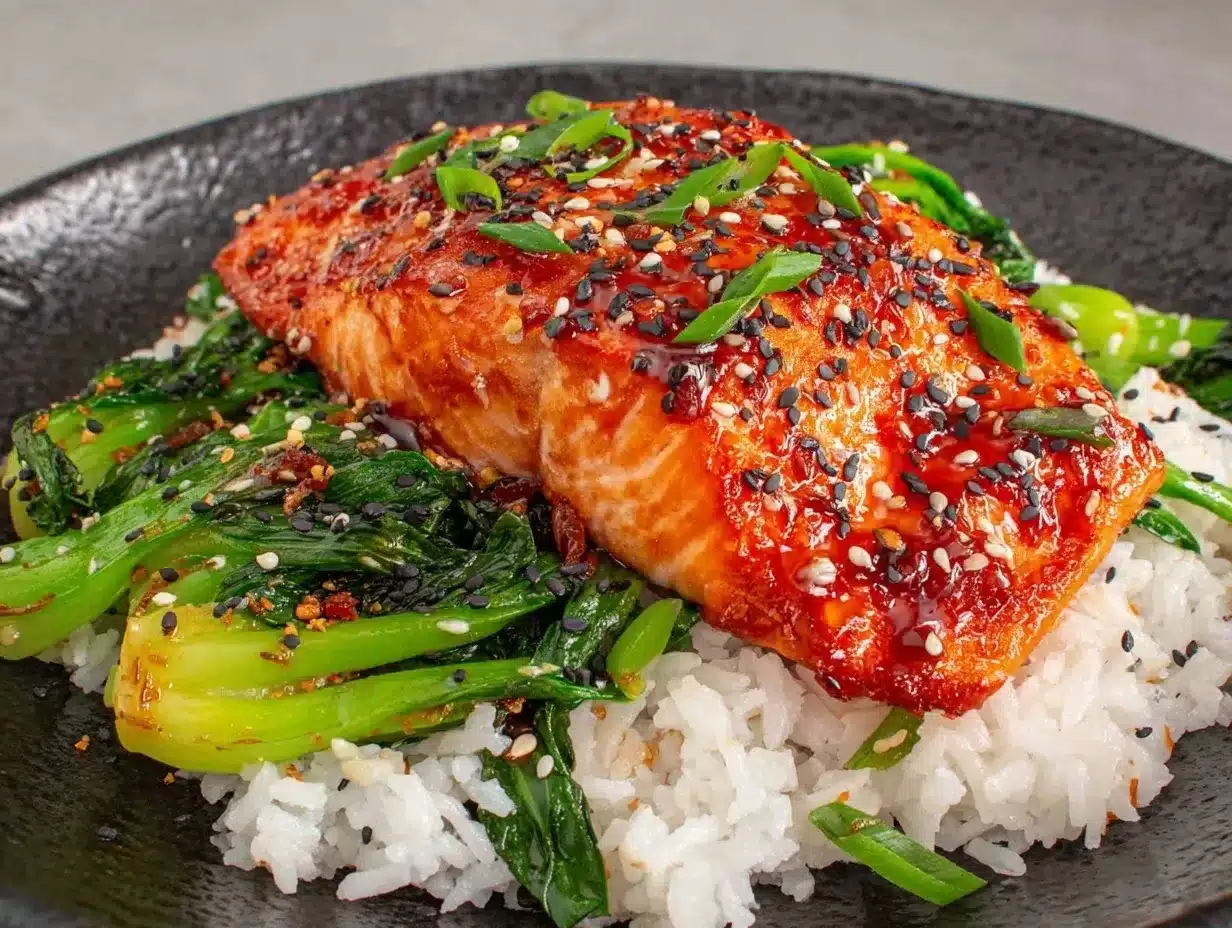
- Prepare the coconut rice: Rinse 1 cup jasmine rice under cold water until the water runs clear. In a medium saucepan, combine the rinsed rice, 1 cup coconut milk, 1 cup water, 1/2 teaspoon salt, and optional sugar. Bring to a boil over medium-high heat, then reduce to low, cover, and simmer for 15 minutes. Turn off heat and let the rice rest, covered, for 10 minutes. Fluff with a fork before serving.
- Make the miso glaze: In a small bowl, whisk together 2 tablespoons white miso paste, 1 tablespoon mirin, 1 tablespoon soy sauce, 1 tablespoon honey, 1 teaspoon grated ginger, and 1 teaspoon sesame oil. Set aside.
- Glaze the salmon: Pat salmon fillets dry with paper towels. Brush the miso glaze generously over the top of each fillet. Let them marinate at room temperature for 10 minutes while you prepare the bok choy.
- Cook the bok choy: Heat 1 tablespoon toasted sesame oil in a wok or large skillet over medium-high heat. Add 2 minced garlic cloves and stir-fry for 30 seconds until fragrant. Add the halved baby bok choy, sprinkle with salt and pepper, and cook for 3-4 minutes, turning occasionally, until tender but still crisp. Sprinkle with toasted sesame seeds and remove from heat.
- Cook the salmon: Heat a non-stick or cast iron skillet over medium-high heat. Place salmon fillets skin-side down carefully. Cook without moving for about 4-5 minutes until the skin is crispy and the salmon is about two-thirds cooked through. Flip gently and cook for another 2-3 minutes until the glaze is caramelized and the salmon is cooked to your liking. Avoid overcooking to keep it moist.
- Plate and serve: Spoon a bed of coconut rice onto each plate, add a portion of sesame bok choy, and top with the miso glazed salmon. Drizzle any extra glaze from the pan over the top if desired.
Note: Keep an eye on the heat when cooking salmon—too hot, and the glaze can burn. Medium heat strikes the perfect balance. Also, resting the salmon for a few minutes after cooking helps juices redistribute, making every bite tender and juicy.
Cooking Tips & Techniques
Getting this dish just right is easier than it looks, but a few tricks can help you nail it every time. For starters, always pat your salmon dry before glazing. You’d be surprised how much moisture can prevent that irresistible crispy skin.
I learned the hard way that marinating the salmon for about 10 minutes is enough—any longer and the miso can overpower the delicate fish. When cooking the bok choy, don’t overdo it; it should stay bright green and have a little crunch, not turn into mush. Stir-frying garlic quickly before adding the greens releases its flavor without burning.
Also, timing is key. Start the coconut rice first since it takes the longest, then prep the glaze and bok choy while it’s cooking. This way, everything finishes around the same time, and you serve the meal piping hot, which makes all the difference.
One personal blunder was forgetting to toast the sesame seeds initially—trust me, toasting brings out a nutty aroma that’s just magical. Don’t skip it! And when flipping the salmon, a gentle touch helps keep the fillet intact; a fish spatula is a handy tool here.
Variations & Adaptations
This recipe is pretty versatile and welcomes your own twists. Here are a few ways I’ve adapted it:
- Spicy Miso Salmon: Add a teaspoon of chili paste or sriracha to the miso glaze for a kick.
- Vegetarian Version: Swap salmon with thick slices of grilled eggplant or tofu, using the same miso glaze and sides.
- Low-Carb Adaptation: Replace coconut rice with cauliflower rice sautéed in coconut oil for a lighter option.
- Seasonal Greens: Use Swiss chard or kale instead of bok choy when it’s out of season.
One time, I tried the recipe with salmon skin removed—while still tasty, I missed that crispy texture, so I highly recommend keeping the skin on if you can. Also, for a more intense coconut flavor, stirring in a little toasted coconut flakes into the rice right before serving is a fun addition.
Serving & Storage Suggestions
This meal shines best served immediately, with the salmon hot and the bok choy still crisp. The coconut rice’s creamy texture pairs beautifully with the caramelized glaze, creating a satisfying mouthfeel. I like to plate it simply—salmon perched atop a neat mound of rice, bok choy on the side, sprinkled with sesame seeds for a pretty finish.
As for drinks, a chilled glass of dry white wine or jasmine green tea complements the flavors nicely. If you’re serving guests, a light cucumber salad on the side adds freshness without competing with the rich salmon.
Leftovers keep well in the fridge for up to 2 days if stored separately in airtight containers. When reheating, I recommend warming the salmon gently in a pan over low heat to keep it moist, and reheating the rice and bok choy in the microwave or skillet with a splash of water to revive their texture. While the glaze softens after refrigeration, reheating helps bring back some of that delicious caramelization.
Nutritional Information & Benefits
This dish is a nutrient powerhouse. A single serving of the Flavorful Miso Glazed Salmon with Sesame Bok Choy & Coconut Rice offers about 450 calories, rich in high-quality protein and omega-3 fatty acids from the salmon, which are great for heart and brain health. The bok choy adds fiber, vitamins A, C, and K, along with antioxidants.
The coconut milk in the rice provides healthy medium-chain triglycerides (MCTs), which some studies suggest may support metabolism. This meal is naturally gluten-free (just swap tamari for soy sauce if needed) and dairy-free, making it accessible for many dietary preferences.
Personally, I appreciate how this recipe balances indulgence with wholesome ingredients, so I don’t feel like I’m sacrificing nutrition for flavor—or vice versa.
Conclusion
So, if you’re looking for a recipe that’s both comforting and exciting, the Flavorful Miso Glazed Salmon with Sesame Bok Choy & Coconut Rice might just become your new favorite. Its blend of sweet, salty, and umami flavors, along with the lovely textures, make it a meal worth repeating. Don’t be afraid to tweak the recipe to your taste—maybe a little extra honey, or swapping bok choy for your favorite greens.
I keep coming back to this dish because it’s proof that simple ingredients, treated thoughtfully, can create something truly special (even on a weekday night). If you try it, I’d love to hear how it turns out for you or any twists you come up with—drop a comment or share your version!
Happy cooking, and remember: sometimes the best meals come from a little curiosity and a chat with someone who knows their fish.
FAQs
Can I use other types of fish for the miso glaze?
Absolutely! While salmon works best for its rich texture and flavor, you can try miso glaze on cod, halibut, or even firm tofu for a vegetarian option.
How do I prevent the miso glaze from burning?
Cook the salmon over medium heat and keep a close eye when flipping. The glaze caramelizes quickly, so moderate heat helps avoid burning while still creating that lovely glaze.
Can I make the coconut rice ahead of time?
You can cook the rice a few hours ahead and reheat gently with a splash of coconut milk or water to keep it moist. However, it’s tastiest when freshly made.
Is there a substitute for mirin in the glaze?
If you don’t have mirin, a mix of dry white wine and a pinch of sugar works well, or simply increase the honey slightly to maintain sweetness.
How do I store leftovers properly?
Store the salmon, bok choy, and rice separately in airtight containers in the fridge for up to 2 days. Reheat gently to preserve texture and flavor.
Pin This Recipe!
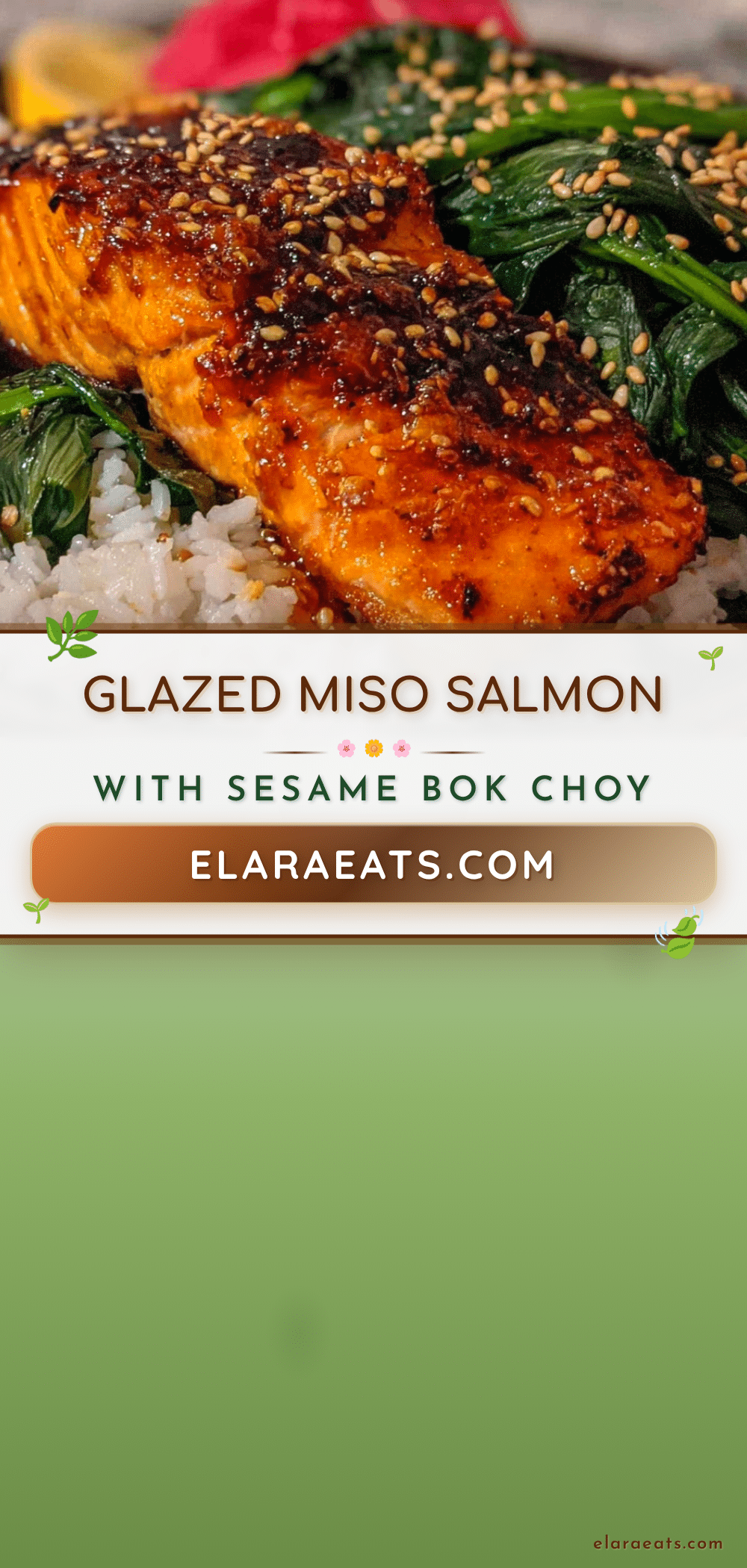
Flavorful Miso Glazed Salmon with Sesame Bok Choy & Coconut Rice
A quick and easy recipe featuring miso glazed salmon paired with nutty sesame bok choy and creamy coconut rice, delivering a perfect balance of sweet, salty, and umami flavors.
- Prep Time: 15 minutes
- Cook Time: 20 minutes
- Total Time: 35 minutes
- Yield: 4 servings 1x
- Category: Main Course
- Cuisine: Japanese
Ingredients
- 4 salmon fillets (6 oz / 170 g each), skin on
- 2 tablespoons white miso paste
- 1 tablespoon mirin
- 1 tablespoon soy sauce (low sodium preferred)
- 1 tablespoon honey or maple syrup
- 1 teaspoon grated fresh ginger
- 1 teaspoon sesame oil
- 1 lb baby bok choy, halved lengthwise
- 1 tablespoon toasted sesame oil
- 2 cloves garlic, minced
- 1 tablespoon toasted sesame seeds
- Salt and pepper, to taste
- 1 cup jasmine rice (about 200 g), rinsed
- 1 cup canned coconut milk (full fat)
- 1 cup water
- 1/2 teaspoon salt
- Optional: 1 teaspoon sugar
Instructions
- Rinse 1 cup jasmine rice under cold water until the water runs clear. In a medium saucepan, combine rinsed rice, 1 cup coconut milk, 1 cup water, 1/2 teaspoon salt, and optional sugar. Bring to a boil over medium-high heat, then reduce to low, cover, and simmer for 15 minutes. Turn off heat and let rice rest, covered, for 10 minutes. Fluff with a fork before serving.
- In a small bowl, whisk together 2 tablespoons white miso paste, 1 tablespoon mirin, 1 tablespoon soy sauce, 1 tablespoon honey, 1 teaspoon grated ginger, and 1 teaspoon sesame oil. Set aside.
- Pat salmon fillets dry with paper towels. Brush miso glaze generously over the top of each fillet. Let marinate at room temperature for 10 minutes.
- Heat 1 tablespoon toasted sesame oil in a wok or large skillet over medium-high heat. Add minced garlic and stir-fry for 30 seconds until fragrant. Add halved baby bok choy, sprinkle with salt and pepper, and cook for 3-4 minutes, turning occasionally, until tender but still crisp. Sprinkle with toasted sesame seeds and remove from heat.
- Heat a non-stick or cast iron skillet over medium-high heat. Place salmon fillets skin-side down carefully. Cook without moving for 4-5 minutes until skin is crispy and salmon is about two-thirds cooked through. Flip gently and cook for another 2-3 minutes until glaze is caramelized and salmon is cooked to liking. Avoid overcooking.
- Plate by spooning a bed of coconut rice onto each plate, add a portion of sesame bok choy, and top with miso glazed salmon. Drizzle any extra glaze from the pan over the top if desired.
Notes
Pat salmon dry before glazing to ensure crispy skin. Marinate salmon for 10 minutes only to avoid overpowering flavor. Toast sesame seeds for best aroma. Cook salmon on medium heat to prevent glaze burning. Rest salmon a few minutes after cooking for juiciness. Substitute tamari for soy sauce for gluten-free option. Use baby spinach as a bok choy substitute in summer. For more coconut flavor, add toasted coconut flakes to rice before serving.
Nutrition
- Serving Size: 1 salmon fillet with
- Calories: 450
- Sugar: 6
- Sodium: 550
- Fat: 22
- Saturated Fat: 7
- Carbohydrates: 30
- Fiber: 2
- Protein: 35
Keywords: miso glazed salmon, sesame bok choy, coconut rice, Japanese recipe, quick dinner, healthy salmon, easy weeknight meal