Love this? Save it for later!
Share the inspiration with your friends
I wasn’t expecting cooking advice from my plumber, but there I was, standing in my kitchen with a dripping pipe and a man who insisted on fixing my pasta salad problem before he touched the leak under the sink. His name was Tony, and he’d been fixing pipes in our neighborhood for thirty years. While he knelt down to look at the cabinet, he casually mentioned that his wife’s pasta salad was the talk of every church potluck in three counties. I handed him a towel and asked what her secret was. He sat back on his heels, wiped his hands, and said, “Fresh vinaigrette. None of that bottled stuff. And she lets it sit overnight.” That was it. No fancy technique, no secret ingredient you’d have to hunt down at a specialty store. Just a homemade dressing and a little patience. Honestly, I’d been making pasta salad the lazy way for years—opening a bottle of Italian dressing, tossing it with some noodles and vegetables, and calling it a day. It was fine. But fine isn’t what you want when you’re bringing a dish to share with people. You want them to go back for seconds. You want someone to ask for the recipe.
So I asked Tony if his wife would share her recipe, and he laughed. “She’s been making it so long she doesn’t use a recipe,” he said. “But I can tell you what I’ve watched her do a hundred times.” So I grabbed a notepad, and while Tony tightened a coupling under my sink, he dictated the method. A little olive oil, some red wine vinegar, fresh garlic, herbs from the garden. He described the way she whisked it together in a mason jar, the way she always added the dressing while the pasta was still warm so it soaked in better. I wrote it all down, thanked him, and made it that weekend. The first batch was pretty good. The second batch, after I tweaked the herb ratios, was the one I’ve been making ever since. Maybe you’ve been there—you get a recipe from someone unexpected, and it turns out to be the one you keep coming back to. That’s this pasta salad for me. It’s become my go-to for summer barbecues, weekday lunches, and anytime I need a dish that travels well and tastes even better the next day.
The best part? It’s genuinely simple. No complicated steps, no hard-to-find ingredients. Just a bright, tangy homemade vinaigrette that brings everything to life. And honestly, once you taste it, you’ll never go back to the bottled stuff either.
Why You’ll Love This Recipe
I’ve tested this recipe more times than I can count, tweaking the vinegar-to-oil ratio, swapping in different herbs, and even trying it with various pasta shapes. After all those trials, I can confidently say this version is the one. It’s the kind of recipe that makes you look like you spent hours in the kitchen when really, it comes together in about twenty minutes of active work.
- Quick & Easy : Active prep time is around 20 minutes. The hardest part is boiling water for the pasta. After that, it’s just chopping and whisking. Perfect for busy weeknights or last-minute invitations to cookouts.
- Simple Ingredients : You probably already have most of these in your pantry and fridge. Olive oil, red wine vinegar, garlic, dried herbs, pasta, and fresh vegetables. No hunting down specialty items at three different stores.
- Perfect for Summer Gatherings : This salad is a crowd-pleaser at potlucks, barbecues, picnics, and pool parties. It travels well, doesn’t need to be kept hot, and actually gets better as it sits.
- Crowd-Pleaser : I’ve brought this to family reunions, neighborhood block parties, and work lunches. It’s always one of the first dishes to disappear. Kids love the colorful vegetables, and adults appreciate the bright, fresh flavor.
- Unbelievably Delicious : The homemade vinaigrette is the star here. It’s tangy, garlicky, and herbaceous in a way that bottled dressing simply can’t match. The vegetables stay crisp, the pasta absorbs the dressing, and every bite is satisfying.
What makes this recipe different from all the others? It’s the vinaigrette. Most pasta salad recipes use bottled dressing or a mayo-based sauce that can feel heavy. This one uses a light, bright vinaigrette that lets the vegetables shine. I also add a pinch of red pepper flakes for a subtle kick—enough to wake up your taste buds without overwhelming the dish. It’s that little unexpected touch that makes people ask, “What’s in this?”
This recipe isn’t just good—it’s the kind that makes you close your eyes after the first bite. It’s comfort food reimagined: lighter, fresher, but with the same satisfying, soul-soothing quality. Perfect for impressing guests without stress, or turning a simple lunch into something you actually look forward to.
What Ingredients You Will Need
This recipe uses simple, wholesome ingredients to deliver bold flavor and satisfying texture without the fuss. Most of these are pantry staples, and the fresh vegetables are easy to find at any grocery store or farmers market.
For the Pasta Salad
- 1 pound (450g) rotini or fusilli pasta – I prefer rotini because the spirals catch the dressing and vegetables nicely. Fusilli, farfalle, or penne also work well. (Look for a bronze-die cut pasta for better texture.)
- 1 pint (300g) cherry tomatoes, halved – Use ripe, sweet cherry tomatoes. Grape tomatoes work too, but cherry tomatoes have a better texture in cold salads.
- 1 large cucumber, diced – English cucumbers are best because they have fewer seeds and a thinner skin. If using regular cucumbers, peel them and scoop out the seeds.
- 1 medium red bell pepper, diced – Adds sweetness and crunch. Yellow or orange peppers work too, but red has the most flavor.
- 1/2 medium red onion, thinly sliced – Slice it as thin as you can. Soaking the slices in cold water for 10 minutes will mellow the sharpness if you prefer a milder onion flavor.
- 1/2 cup (75g) black olives, sliced – Kalamata olives add a briny punch, but canned black olives are milder and more kid-friendly. Use whichever you prefer.
- 1/2 cup (60g) pepperoncini, chopped – These add a gentle heat and tanginess. Leave out the seeds if you want less spice.
- 1/2 cup (60g) grated Parmesan cheese – Use freshly grated Parmesan for the best flavor. The pre-shredded stuff has anti-caking agents that don’t melt as well.
- 1/4 cup (15g) fresh basil, chopped – Adds a fresh, aromatic finish. Flat-leaf parsley is a good substitute if basil isn’t available.
For the Fresh Vinaigrette
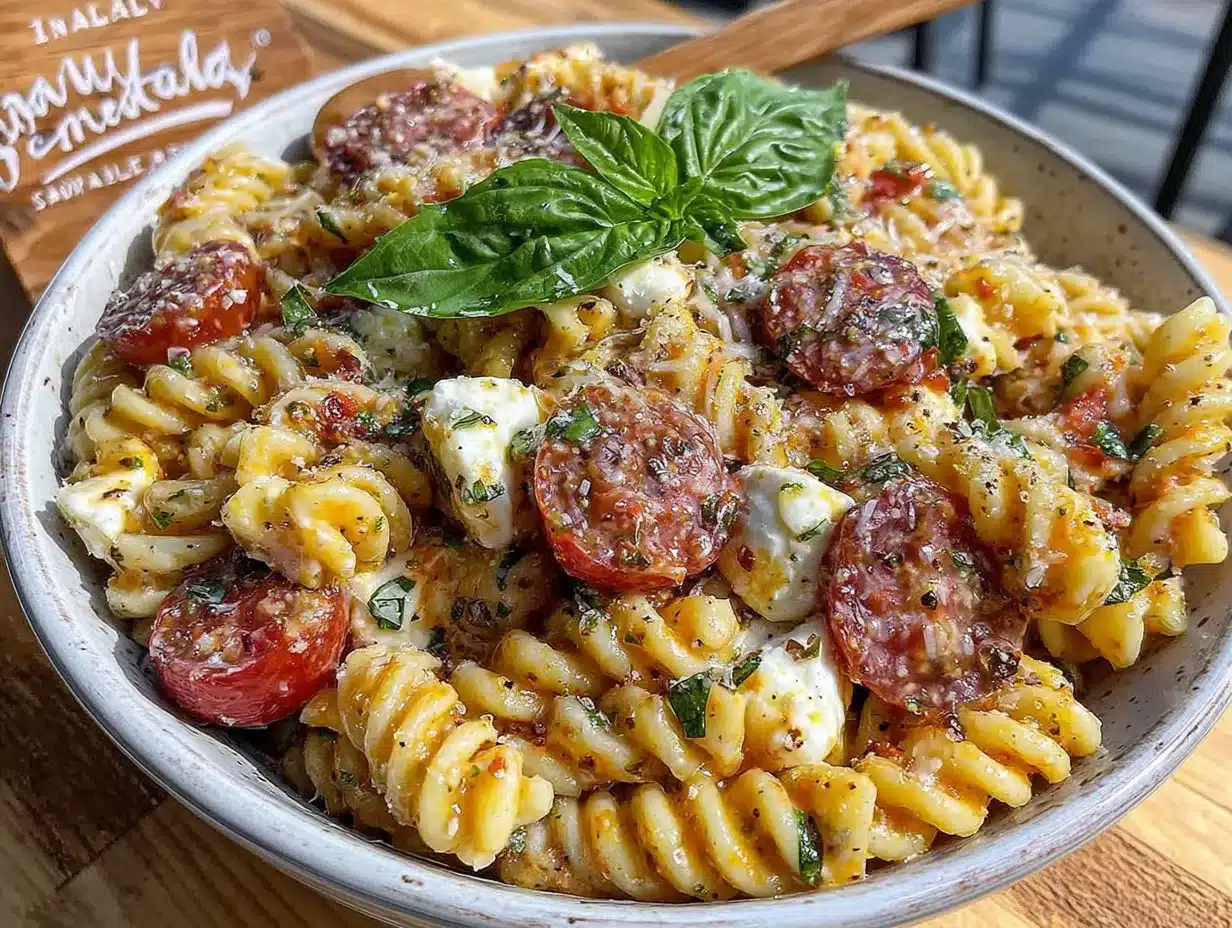
- 1/2 cup (120ml) extra-virgin olive oil – Use a good quality olive oil here. It’s the base of the dressing, so you want one that tastes fresh and fruity. I like California Olive Ranch for everyday use.
- 1/4 cup (60ml) red wine vinegar – Red wine vinegar has the right acidity and flavor for Italian-style dressings. White wine vinegar or apple cider vinegar can be substituted in a pinch.
- 2 cloves garlic, minced – Fresh garlic is non-negotiable here. Don’t use the jarred stuff—it has a harsh, metallic taste. Use a microplane for the finest mince.
- 1 teaspoon dried oregano – Mediterranean oregano is best. Rub it between your palms before adding to release the oils.
- 1/2 teaspoon dried basil – Or use 1 tablespoon fresh, finely chopped. I use dried in the vinaigrette and save fresh basil for garnish.
- 1/2 teaspoon red pepper flakes – Optional, but highly recommended. It adds a subtle warmth without making the salad spicy.
- 1 teaspoon Dijon mustard – Helps emulsify the dressing and adds a tangy depth. (Use a gluten-free Dijon if needed.)
- 1/2 teaspoon salt – Fine sea salt dissolves best. Add more to taste at the end.
- 1/4 teaspoon black pepper – Freshly ground is always better.
Equipment Needed
You don’t need a lot of fancy equipment for this recipe, which is part of what makes it so approachable. Here’s what you’ll need:
- Large pot – For boiling the pasta. A 6-quart pot is ideal. Make sure it’s big enough so the pasta has room to move around.
- Colander – For draining the pasta. A fine-mesh colander is nice but not necessary.
- Large mixing bowl – You’ll need a big bowl to toss everything together. I use my grandmother’s old ceramic mixing bowl, but any large bowl works.
- Chef’s knife and cutting board – A sharp knife makes chopping vegetables much easier and safer.
- Measuring cups and spoons – For accurate measurements. I use a set of stainless steel ones that have lasted for years.
- Mason jar or small bowl with a whisk – For making the vinaigrette. A mason jar is my favorite method—just add all the ingredients, screw on the lid, and shake vigorously. If you don’t have a jar, a bowl and whisk work perfectly.
- Microplane or garlic press – For mincing the garlic. A microplane is also great for zesting lemons if you want to add a little citrus to the dressing.
- Serving platter or bowl – For presenting the finished salad. A wide, shallow bowl shows off all the colorful vegetables.
If you don’t have a mason jar, any container with a tight-fitting lid will work for shaking the dressing. I’ve even used a clean water bottle in a pinch. The key is just to get the ingredients emulsified.
Preparation Method
- Cook the pasta: Bring a large pot of generously salted water to a rolling boil. Add the rotini and cook according to package directions until al dente—usually about 8-10 minutes. Stir occasionally to prevent sticking. Taste a piece a minute before the suggested cooking time to make sure you don’t overcook it. Mushy pasta ruins the texture of the salad. Drain the pasta in a colander and rinse briefly with cool water to stop the cooking process. Shake the colander well to remove excess water. (I’ve learned the hard way that watery pasta makes a watery salad.)
- Make the vinaigrette while the pasta cooks: In a mason jar or small bowl, combine the olive oil, red wine vinegar, minced garlic, dried oregano, dried basil, red pepper flakes, Dijon mustard, salt, and black pepper. If using a jar, screw the lid on tightly and shake vigorously for about 30 seconds until the dressing is emulsified and looks slightly creamy. If using a bowl, whisk continuously while slowly drizzling in the olive oil. Taste the dressing and adjust the salt, pepper, or vinegar to your preference. Set aside.
- Prepare the vegetables: While the pasta is cooking and cooling, chop all your vegetables. Halve the cherry tomatoes, dice the cucumber, dice the red bell pepper, thinly slice the red onion, slice the olives, and chop the pepperoncini. Try to keep the pieces roughly the same size so you get a bit of everything in each bite. Place all the chopped vegetables in the large mixing bowl.
- Combine the pasta and vegetables: Add the cooled, drained pasta to the bowl with the vegetables. Pour about three-quarters of the vinaigrette over the top. Use a large spatula or wooden spoon to gently toss everything together until the pasta and vegetables are evenly coated. Don’t overmix—you want the vegetables to stay intact, not get mushy.
- Add the Parmesan and fresh basil: Sprinkle the grated Parmesan and chopped fresh basil over the salad. Toss gently once more to distribute. The cheese will soften slightly and meld with the dressing.
- Let it rest: This is the step Tony’s wife insisted on. Cover the bowl with plastic wrap or a lid and refrigerate for at least 2 hours, but overnight is even better. The pasta absorbs the vinaigrette as it sits, and the flavors meld together beautifully. I know it’s tempting to dig in right away, but trust me—waiting makes a huge difference.
- Final adjustments: Before serving, take the salad out of the fridge and let it sit at room temperature for about 15 minutes. Give it a good stir. Taste and adjust seasoning—you might want a little more salt or another splash of vinegar. If the salad seems dry (the pasta absorbs a lot of dressing overnight), add the remaining vinaigrette. Sprinkle a little extra fresh basil and Parmesan on top for a pretty presentation.
Pro tip: Reserve a few halved cherry tomatoes and a sprinkle of fresh basil to garnish the top right before serving. It makes the salad look fresh and appetizing, even if it’s been sitting in the fridge for a day.
Cooking Tips & Techniques
Over the years, I’ve made this pasta salad dozens of times, and I’ve picked up a few tricks along the way. Here are the ones that make the biggest difference:
Salt your pasta water generously. This is the only chance you have to season the pasta itself. I use about a tablespoon of salt for a large pot of water. It should taste like the sea. Under-salted pasta leads to a bland salad, no matter how good your dressing is.
Don’t overcook the pasta. Al dente is the goal. The pasta will continue to absorb liquid from the dressing as it sits, so if you start with mushy pasta, you’ll end up with a sad, soggy salad. Set a timer and taste test a minute before the package says it’s done.
Rinse the pasta with cool water. This stops the cooking process and removes excess starch that can make the salad gummy. It also cools the pasta down so it doesn’t wilt the vegetables when you mix everything together.
Let the salad rest overnight. I know I’ve said this already, but it bears repeating. The first time I made this, I served it immediately and was underwhelmed. The flavors were separate and sharp. The next day, after it had sat in the fridge overnight, it was a completely different dish—harmonious, mellow, and deeply flavorful. The pasta soaks up the vinaigrette, the garlic mellows out, and everything comes together.
Make extra dressing. The pasta will absorb a lot of the vinaigrette, especially after a day or two in the fridge. I always make a little extra to add right before serving. It revives the salad and brings back that bright, tangy flavor.
One mistake I made early on: I used dried herbs in the salad itself, not just the dressing. They never hydrated properly and left little crunchy bits that were unpleasant. Now I only use dried herbs in the vinaigrette, where they have time to soften, and save fresh herbs for the final garnish.
Timing strategy: Cook the pasta and make the dressing while you chop the vegetables. It’s the most efficient way to work. By the time the pasta is cool, everything else is ready to go.
Variations & Adaptations
One of the things I love about this recipe is how flexible it is. Here are some variations I’ve tried and loved:
Protein-Packed Version: Add 2 cups of cooked, shredded chicken or 1 cup of salami or pepperoni cut into bite-sized pieces. I’ve also added canned chickpeas (rinsed and drained) for a vegetarian protein boost. The chickpeas absorb the dressing beautifully and add a nice creamy texture.
Gluten-Free Option: Use your favorite gluten-free pasta. I’ve had good luck with brown rice pasta or chickpea pasta. Just be careful not to overcook it—gluten-free pasta can get mushy quickly. Cook it a minute less than the package suggests and rinse it well.
Dairy-Free Version: Simply omit the Parmesan cheese or use a dairy-free alternative. The salad is still delicious without it. You can also add a tablespoon of nutritional yeast to the vinaigrette for a cheesy, savory flavor without the dairy.
Seasonal Vegetable Swap: In the summer, add grilled zucchini or corn kernels. In the fall, try roasted butternut squash cubes or chopped kale. The vinaigrette works with almost any vegetable combination. I once made this with roasted broccoli and sun-dried tomatoes, and it was fantastic.
Spicier Version: Double the red pepper flakes or add a finely chopped fresh jalapeño to the vinaigrette. For even more heat, include some chopped pickled jalapeños with the other vegetables.
Herb Garden Variation: Use whatever fresh herbs you have on hand. I’ve made this with fresh oregano, thyme, chives, and even mint. Each herb gives the salad a slightly different personality. Mint, surprisingly, works wonderfully with the red wine vinegar and olive oil.
Serving & Storage Suggestions
This pasta salad is incredibly versatile when it comes to serving. Here’s how I like to do it:
Serving temperature: I prefer it cold or at room temperature. If it’s been in the fridge, let it sit out for 15-20 minutes before serving. The flavors are more pronounced when it’s not straight-out-of-the-fridge cold.
Presentation: Transfer the salad to a wide, shallow serving bowl. Garnish with a few extra halved cherry tomatoes, a sprinkle of fresh basil, and a light dusting of Parmesan. The colors are beautiful—red tomatoes, green basil, orange pepper, purple onion, and golden pasta.
Complementary dishes: This pasta salad is fantastic alongside grilled chicken, steak, or fish. It also pairs well with other cold salads like a classic Italian antipasto platter or a simple green salad with lemon vinaigrette. For drinks, a crisp Pinot Grigio or a light Italian beer like Peroni works beautifully.
Storage: Store the pasta salad in an airtight container in the refrigerator for up to 5 days. The flavors actually continue to develop and improve over the first 2-3 days. After that, the vegetables start to lose their crunch, but it’s still perfectly edible.
Reheating: Honestly, I never reheat this salad. It’s meant to be served cold or at room temperature. If you want a warm pasta salad, you’d need to make a different recipe. That said, if you’ve stored it for a few days and it seems dry, add a splash of olive oil or a little extra vinaigrette to revive it.
Freezing: I don’t recommend freezing this salad. The texture of the vegetables and pasta will be compromised when thawed. It’s best made fresh and eaten within a few days.
Nutritional Information & Benefits
This pasta salad is a balanced dish with carbohydrates from the pasta, healthy fats from the olive oil, and vitamins from the fresh vegetables. Here’s an approximate breakdown per serving (based on 8 servings):
| Nutrient | Amount per Serving |
|---|---|
| Calories | 320 |
| Total Fat | 16g |
| Saturated Fat | 3g |
| Cholesterol | 5mg |
| Sodium | 480mg |
| Total Carbohydrates | 38g |
| Dietary Fiber | 4g |
| Sugars | 5g |
| Protein | 8g |
Health benefits: The olive oil provides heart-healthy monounsaturated fats and antioxidants. The tomatoes are rich in lycopene, a powerful antioxidant linked to reduced risk of chronic disease. Red bell peppers are packed with vitamin C—more than an orange, gram for gram. The garlic has anti-inflammatory properties and may support immune health.
Dietary considerations: This recipe is vegetarian and can easily be made gluten-free and dairy-free with the substitutions mentioned above. It’s also nut-free and egg-free, making it safe for many common allergies. The main allergens to note are wheat (from the pasta) and dairy (from the Parmesan).
From a wellness perspective, I love that this salad feels indulgent and satisfying but is made with whole, recognizable ingredients. It’s the kind of dish you can feel good about eating for lunch three days in a row.
Conclusion
This Zesty Italian Pasta Salad with Fresh Vinaigrette has become a staple in my kitchen for good reason. It’s simple enough to throw together on a busy weeknight but impressive enough to bring to a summer party. The homemade vinaigrette is the secret weapon here—it’s bright, garlicky, and herbaceous in a way that bottled dressing can never match. And letting it rest overnight? That’s the magic step that transforms good pasta salad into great pasta salad.
I love that this recipe is a blank canvas. You can add protein, swap vegetables, adjust the spice level, or make it gluten-free. It adapts to whatever you have on hand and whatever your family loves. That’s the kind of recipe that earns a permanent spot in your rotation.
I’d love to hear how this turns out for you. Did you add your own twist? Did your family go back for seconds? Drop a comment below and let me know. And if you share a photo on social media, tag me—I love seeing your creations. Happy cooking, and remember: the best recipes often come from the most unexpected places.
Frequently Asked Questions
Can I make this pasta salad a day ahead?
Absolutely! In fact, I recommend it. Making it a day ahead allows the pasta to absorb the vinaigrette and the flavors to meld together. Just add a little extra dressing before serving if it seems dry.
What’s the best pasta shape for this recipe?
Rotini or fusilli are my top choices because the spirals catch the dressing and small vegetable pieces. Farfalle (bowties), penne, or even orecchiette also work well. Avoid long, thin pastas like spaghetti or angel hair—they don’t hold up well in a cold salad.
How long does this pasta salad last in the fridge?
Stored in an airtight container, it will keep for up to 5 days. The flavors are best on days 2 and 3. After that, the vegetables start to lose their crunch, but it’s still safe to eat and tastes good.
Can I use bottled Italian dressing instead of making the vinaigrette?
You can, but honestly, it won’t be the same. The homemade vinaigrette is what makes this salad special. It’s fresher, brighter, and you can control the garlic and herb levels. It takes less than 5 minutes to make, and the difference is night and day.
Is this recipe gluten-free?
Not as written, but it’s easy to make gluten-free. Just use your favorite gluten-free pasta and make sure your Dijon mustard is certified gluten-free (most are, but it’s worth checking). The rest of the ingredients are naturally gluten-free.
Pin This Recipe!
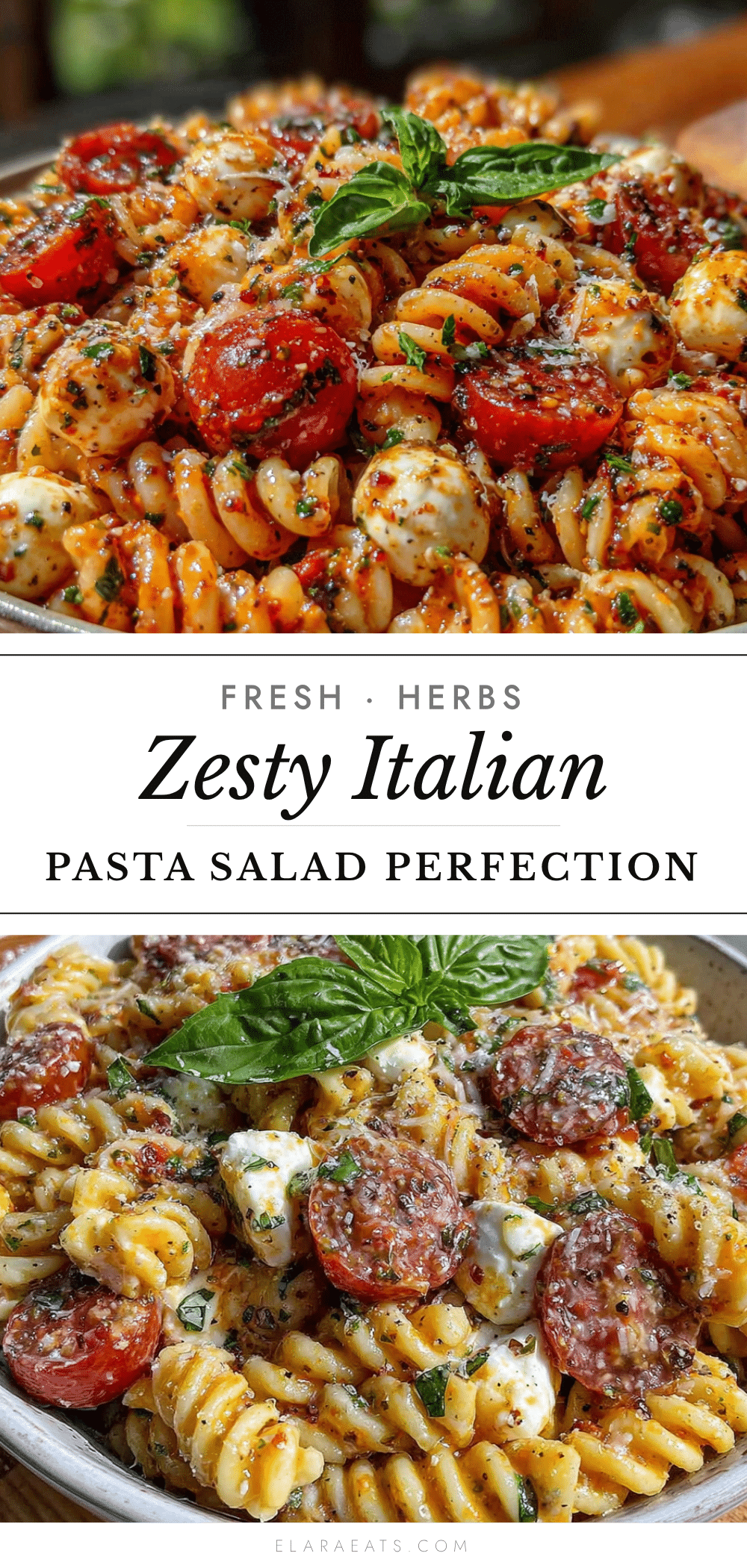
Best Zesty Italian Pasta Salad Recipe (Easy Homemade Vinaigrette)
A bright, tangy pasta salad with a homemade vinaigrette that’s perfect for summer gatherings. Simple ingredients and a little patience yield a crowd-pleasing dish that tastes even better the next day.
- Prep Time: 20 minutes
- Cook Time: 10 minutes
- Total Time: 2 hours 30 minutes (includes resting time)
- Yield: 8 servings 1x
- Category: Side Dish
- Cuisine: Italian
Ingredients
- 1 pound (450g) rotini or fusilli pasta
- 1 pint (300g) cherry tomatoes, halved
- 1 large cucumber, diced
- 1 medium red bell pepper, diced
- 1/2 medium red onion, thinly sliced
- 1/2 cup (75g) black olives, sliced
- 1/2 cup (60g) pepperoncini, chopped
- 1/2 cup (60g) grated Parmesan cheese
- 1/4 cup (15g) fresh basil, chopped
- 1/2 cup (120ml) extra-virgin olive oil
- 1/4 cup (60ml) red wine vinegar
- 2 cloves garlic, minced
- 1 teaspoon dried oregano
- 1/2 teaspoon dried basil
- 1/2 teaspoon red pepper flakes
- 1 teaspoon Dijon mustard
- 1/2 teaspoon salt
- 1/4 teaspoon black pepper
Instructions
- Cook the pasta: Bring a large pot of generously salted water to a rolling boil. Add the rotini and cook according to package directions until al dente—usually about 8-10 minutes. Drain in a colander and rinse briefly with cool water to stop the cooking process. Shake well to remove excess water.
- Make the vinaigrette while the pasta cooks: In a mason jar or small bowl, combine the olive oil, red wine vinegar, minced garlic, dried oregano, dried basil, red pepper flakes, Dijon mustard, salt, and black pepper. If using a jar, screw the lid on tightly and shake vigorously for about 30 seconds until emulsified. If using a bowl, whisk continuously while slowly drizzling in the olive oil. Taste and adjust seasoning. Set aside.
- Prepare the vegetables: Halve the cherry tomatoes, dice the cucumber, dice the red bell pepper, thinly slice the red onion, slice the olives, and chop the pepperoncini. Place all chopped vegetables in a large mixing bowl.
- Combine the pasta and vegetables: Add the cooled, drained pasta to the bowl with the vegetables. Pour about three-quarters of the vinaigrette over the top. Gently toss until evenly coated.
- Add the Parmesan and fresh basil: Sprinkle the grated Parmesan and chopped fresh basil over the salad. Toss gently once more.
- Let it rest: Cover the bowl and refrigerate for at least 2 hours, but overnight is even better.
- Final adjustments: Before serving, let the salad sit at room temperature for about 15 minutes. Stir well. Taste and adjust seasoning. If dry, add the remaining vinaigrette. Garnish with extra fresh basil and Parmesan.
Notes
For best results, let the salad rest overnight in the refrigerator. The pasta absorbs the vinaigrette and flavors meld beautifully. Make extra dressing to add before serving if the salad seems dry. Reserve a few halved cherry tomatoes and fresh basil for garnish.
Nutrition
- Serving Size: 1 serving (about 1 c
- Calories: 320
- Sugar: 5
- Sodium: 480
- Fat: 16
- Saturated Fat: 3
- Carbohydrates: 38
- Fiber: 4
- Protein: 8
Keywords: pasta salad, Italian pasta salad, homemade vinaigrette, summer salad, potluck recipe, easy pasta salad