Love this? Save it for later!
Share the inspiration with your friends
The cashier at the hardware store is the last person I expected to give me a dinner recipe. But there I was, clutching a bag of soil amendments, when she started describing how she fills acorn squash with sausage and apples. “It’s the only way my husband will eat squash,” she said, scanning my purchases. She was maybe sixty, with reading glasses on a chain and the no-nonsense energy of someone who has fed a family for decades. I almost asked her to write it down, but she just smiled and said, “You’ll figure it out—just stuff it with what tastes good.”
Honestly, I was skeptical. I’d always treated acorn squash as a side dish—something to roast with butter and brown sugar. The idea of making it the main event felt almost wrong. But that night, I found myself staring at a bin of acorn squash at the grocery store, remembering her words. I grabbed two, along with some Italian sausage and a few apples, and went home to experiment. Let me tell you, the first batch was a little messy—I overstuffed them and the filling spilled everywhere—but the flavor was spot on. That sweet, nutty squash against the savory, herby sausage? It was one of those combinations that makes you wonder why you hadn’t tried it sooner.
Over the next few weeks, I tweaked things. I added garlic, swapped in different sausages, and figured out the perfect roasting time so the squash gets tender without turning to mush. Now, these Cozy Sausage Stuffed Acorn Squash Halves have become my go-to fall dinner. They look fancy enough for company, but they’re simple enough for a Tuesday night when you just want something warm and satisfying. Maybe you’ve been looking for a way to make squash feel like a full meal. Trust me, this is it.
Why You’ll Love This Recipe
I’ve tested this recipe more times than I can count, tweaking the filling ratios and roasting times until everything clicked. Here’s why I keep coming back to it—and why I think you will too.
- Quick & Easy: From start to table, this dish comes together in about 45 minutes. The active prep time is only 15 minutes, making it perfect for those nights when you want something homemade without spending hours in the kitchen.
- Simple Ingredients: You only need a handful of pantry staples and fresh produce. No weird ingredients or specialty items. I bet you already have most of the seasonings in your spice rack.
- Perfect for Fall Gatherings: These stuffed squash halves look stunning on a dinner plate. They’re great for Thanksgiving, Friendsgiving, or a cozy dinner party where you want to impress without stressing.
- Crowd-Pleaser: Even my picky eaters ask for seconds. The combination of sweet squash and savory sausage is universally appealing. Kids love the built-in “bowl” shape, and adults appreciate the sophisticated flavor.
- Unbelievably Delicious: The texture is what gets me every time. The squash gets tender and buttery, while the sausage filling has a slight crunch from the apples and a savory depth from the herbs. It’s comfort food that feels special.
What makes this recipe different from other stuffed squash recipes? It’s the balance. I use a mix of sweet and savory elements that complement each other perfectly. The apples add just enough sweetness to contrast the rich sausage, and the fresh herbs brighten everything up. I’ve tried versions that were too sweet or too heavy, but this one hits that perfect middle ground. Plus, the cooking method ensures the squash is perfectly tender without being waterlogged—a common problem I’ve seen in other recipes.
This isn’t just another dinner. It’s the kind of meal that makes you slow down and actually enjoy eating. The warmth of the roasted squash, the savory filling, the way the flavors meld together—it’s genuinely comforting. Whether you’re cooking for your family or just for yourself, these stuffed squash halves deliver that soul-soothing satisfaction we all crave on a chilly evening.
What Ingredients You Will Need
This recipe uses simple, wholesome ingredients that come together to create something truly special. Most of these are probably already in your kitchen, which makes this an easy last-minute dinner option.
For the Squash
- 2 medium acorn squash – Look for squash that feels heavy for its size with a deep green color and some orange patches. Avoid any with soft spots or cracks.
- 2 tablespoons olive oil – Use a good quality extra virgin olive oil for roasting. It helps the squash caramelize beautifully.
- Salt and black pepper – Kosher salt is my preference for its clean flavor. Freshly ground black pepper makes a difference here.
For the Sausage Filling
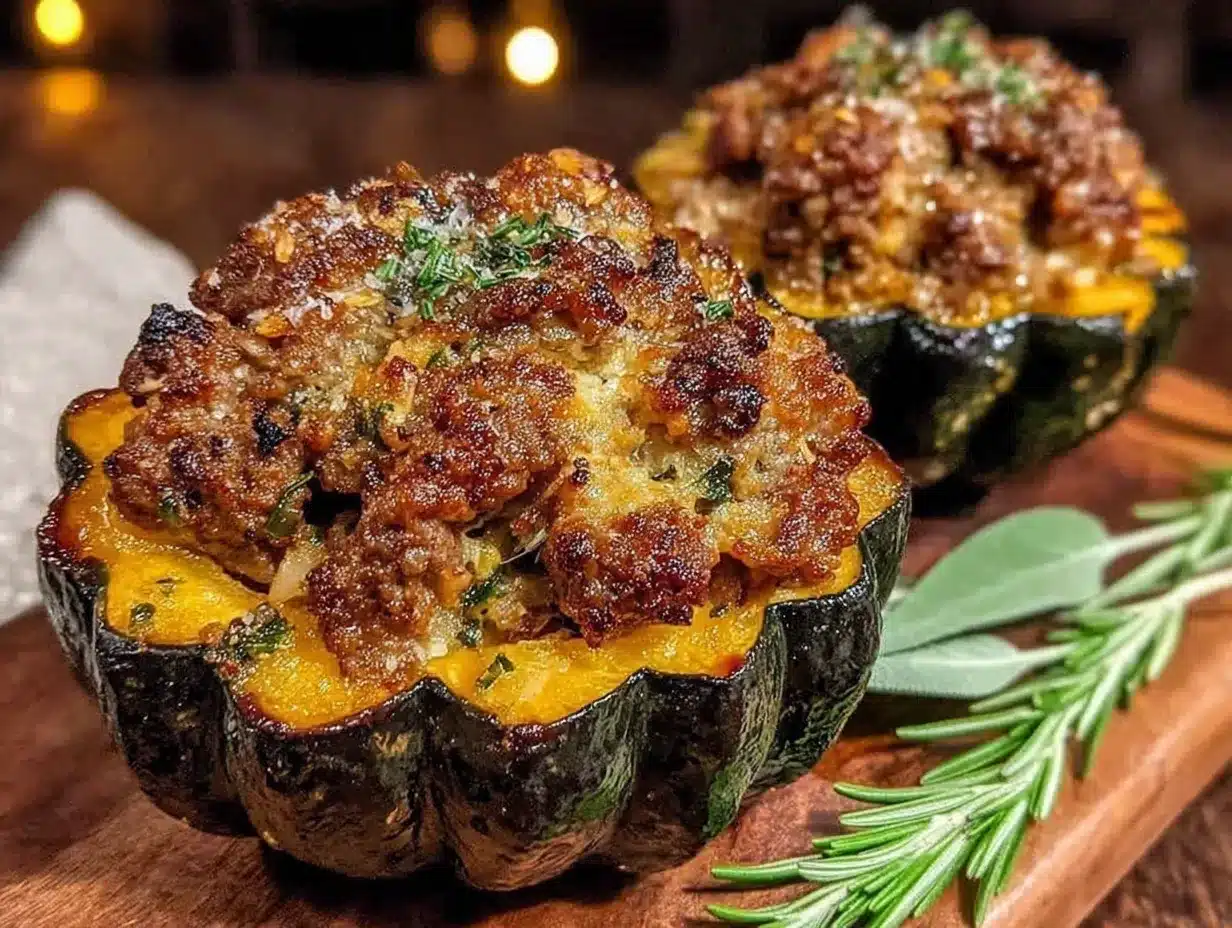
- 1 pound mild or sweet Italian sausage – I prefer Johnsonville or a local butcher’s house-made sausage. Remove the casings before cooking. You can also use spicy Italian sausage if you want some heat.
- 1 small yellow onion, diced – About 1 cup. Yellow onions have the right balance of sweetness and pungency for this dish.
- 2 cloves garlic, minced – Fresh garlic is non-negotiable here. The jarred stuff just doesn’t compare.
- 1 medium apple, diced – I use Honeycrisp or Fuji for their sweetness and firm texture. Granny Smith works too if you prefer a tarter note.
- 1/2 cup cooked wild rice or brown rice – This adds texture and helps stretch the filling. Leftover rice works perfectly here.
- 1/4 cup dried cranberries – They add little bursts of sweetness and a chewy texture. You can substitute chopped dried apricots or raisins if needed.
- 1 teaspoon dried sage – Sage pairs beautifully with both squash and sausage. It’s the herb that ties everything together.
- 1/2 teaspoon dried thyme – Adds an earthy, slightly floral note that complements the other flavors.
- 1/4 teaspoon red pepper flakes (optional) – For a subtle kick of heat. I add this when I want a little extra warmth.
- 1/4 cup chicken broth – Keeps the filling moist and adds flavor. Use vegetable broth for a vegetarian version.
- 1/4 cup grated Parmesan cheese – Adds a salty, umami finish. Pecorino Romano works well too.
- 2 tablespoons fresh parsley, chopped – For garnish and a fresh finish.
Ingredient Tips and Substitutions
If you don’t have wild rice, any cooked grain works—quinoa, farro, or even leftover couscous. For a gluten-free option, make sure your sausage is gluten-free (many brands are, but check the label). You can also swap the pork sausage for turkey or chicken sausage for a lighter version. I’ve used Beyond Meat Italian sausages with good results for a plant-based option. Just crumble and cook them the same way.
For the apple, any firm, sweet variety works. Avoid soft apples like McIntosh that will break down during cooking. And if dried cranberries aren’t your thing, try chopped dried figs or dates for a different sweetness profile.
Equipment Needed
- Large baking sheet – A rimmed baking sheet is ideal to catch any juices that might spill during roasting.
- Sharp chef’s knife – You’ll need this to cut the acorn squash in half. A dull knife makes this dangerous and difficult.
- Large skillet – For cooking the sausage filling. A 12-inch skillet gives you plenty of room.
- Mixing bowl – To combine the filling ingredients before stuffing the squash.
- Measuring cups and spoons – For accuracy, especially with the seasonings.
- Cutting board – A sturdy one that won’t slip while you’re cutting the squash.
- Aluminum foil – For tenting the squash if the tops brown too quickly.
If you don’t have a rimmed baking sheet, a large oven-safe skillet or a 9×13 baking dish works too. I’ve used both with great results. For the squash cutting, a sturdy vegetable peeler or a mallet can help if the squash is particularly hard. Just be careful and take your time.
Preparation Method
- Preheat your oven to 400°F (200°C). This high heat helps the squash caramelize and become tender without drying out. While the oven heats, line your baking sheet with parchment paper for easy cleanup.
- Prepare the acorn squash. Using a sharp chef’s knife, carefully cut each acorn squash in half from stem to tip. Scoop out the seeds and stringy pulp with a spoon. I use a grapefruit spoon with serrated edges—it makes the job much easier. Brush the cut sides and cavities with 1 tablespoon of the olive oil and season generously with salt and pepper. Place the halves cut-side down on the prepared baking sheet.
- Roast the squash. Place the baking sheet in the preheated oven and roast for 20-25 minutes, until the flesh is just starting to become tender when pierced with a fork. You want it mostly cooked but still holding its shape. The squash will continue cooking later when it’s stuffed.
- Cook the sausage filling. While the squash roasts, heat the remaining 1 tablespoon of olive oil in a large skillet over medium-high heat. Add the sausage, breaking it up with a wooden spoon as it cooks. Cook for 5-7 minutes until browned and cooked through. Use a slotted spoon to transfer the sausage to a bowl, leaving about 1 tablespoon of drippings in the pan.
- Sauté the aromatics. Reduce the heat to medium and add the diced onion to the skillet. Cook for 4-5 minutes until softened and translucent, scraping up any browned bits from the bottom of the pan. Add the minced garlic and cook for 30 seconds until fragrant. The smell at this point is incredible—savory and sweet all at once.
- Add the apple and seasonings. Stir in the diced apple, dried sage, dried thyme, and red pepper flakes if using. Cook for 2-3 minutes until the apple starts to soften slightly. You don’t want it mushy—just tender enough to blend with the other ingredients.
- Combine the filling. Return the cooked sausage to the skillet. Add the cooked rice, dried cranberries, and chicken broth. Stir everything together and cook for 2 minutes until the broth is mostly absorbed and the filling is heated through. Taste and adjust seasoning with salt and pepper. The filling should be savory with a hint of sweetness from the apple and cranberries.
- Stuff the squash halves. Remove the partially roasted squash from the oven. Carefully flip them over using tongs or a spatula. Divide the sausage filling evenly among the four squash halves, mounding it slightly in the center. Don’t be shy—pack it in there. The filling should be domed above the edge of the squash.
- Finish roasting. Return the stuffed squash to the oven and roast for another 15-20 minutes, until the squash is completely tender when pierced with a fork and the filling is hot and slightly browned on top. If the tops are browning too quickly, tent loosely with aluminum foil for the last 10 minutes.
- Add the finishing touches. Remove from the oven and sprinkle the grated Parmesan cheese over the tops. Let rest for 5 minutes—this allows the flavors to meld and the filling to set slightly. Garnish with fresh parsley before serving.
A quick note: if you’re making this for a crowd, you can prep the filling a day ahead and stuff the squash just before roasting. The filling actually gets more flavorful overnight as the herbs meld with the other ingredients.
Cooking Tips & Techniques
I’ve made this recipe enough times to learn a few things the hard way. Here are my best tips for getting it right every time.
Don’t overcook the squash initially. I learned this one the hard way. When you par-roast the squash, you want it just tender enough to pierce with a fork but still firm. If you cook it all the way through in the first round, it will turn to mush during the second roasting with the filling. Aim for that al dente texture—it should offer some resistance when you poke it.
Use a sharp knife for cutting the squash. Acorn squash has a tough skin that can be dangerous to cut through with a dull blade. I’ve had a few close calls before I learned this lesson. If your knife isn’t sharp enough, try microwaving the whole squash for 2-3 minutes to soften the skin slightly. Let it cool before cutting. And always cut away from your body—I speak from experience here.
Toast the rice before cooking. If you’re cooking rice specifically for this recipe, try toasting it in a dry pan for 2-3 minutes before adding water. It adds a nutty flavor that complements the squash beautifully. This is a trick I picked up from a chef friend, and it makes a noticeable difference.
Watch the moisture level. The chicken broth should be mostly absorbed before you stuff the squash. If the filling is too wet, it will make the squash soggy. If it’s too dry, add a splash more broth. You want the filling to be moist but not swimming in liquid. Trust your instincts here—you’ll know when it looks right.
Let the squash rest before serving. This is crucial. The 5-minute rest allows the filling to set and the flavors to meld. If you serve them immediately, the filling might fall apart. Plus, the squash continues to steam slightly, making it even more tender. I know it’s hard to wait when your kitchen smells amazing, but it’s worth it.
Multitask like a pro. While the squash is par-roasting, cook the filling. While the stuffed squash finishes roasting, make a simple side salad or set the table. This recipe is designed for efficiency—use the oven time wisely and you’ll have dinner on the table in under an hour with minimal stress.
Variations & Adaptations
One of the best things about this recipe is how adaptable it is. Here are some variations I’ve tried and loved.
Vegetarian Version
Swap the Italian sausage for a plant-based sausage or a mixture of cooked lentils and mushrooms. I use 1 cup of cooked green lentils and 8 ounces of finely chopped cremini mushrooms. Sauté the mushrooms first to release their moisture, then proceed with the recipe. The texture is remarkably similar to the original, and the umami from the mushrooms is fantastic.
Apple and Sage Variation
For a sweeter, more autumnal version, add an extra apple and increase the dried sage to 1 1/2 teaspoons. I sometimes swap the Italian sausage for breakfast sausage or even ground pork seasoned with fennel and sage. This version is especially good for Thanksgiving—it pairs beautifully with turkey and all the traditional sides.
Spicy Chorizo Version
Use Mexican chorizo instead of Italian sausage for a completely different flavor profile. The spicy, smoky chorizo pairs incredibly well with the sweet squash. Omit the dried cranberries and add a diced roasted red pepper instead. Finish with crumbled cotija cheese instead of Parmesan. This is my husband’s favorite version—he says it’s like a party in his mouth.
Low-Carb Adaptation
Skip the rice entirely and add more vegetables instead. Finely diced celery, bell peppers, and extra mushrooms work well. You can also add a handful of spinach or kale at the end of cooking the filling. This version is surprisingly satisfying and works well for those watching their carb intake.
Make-Ahead Instructions
Prepare the filling up to two days in advance and store it in the refrigerator. When you’re ready to eat, par-roast the squash, stuff them, and bake as directed. You might need to add 5-10 minutes to the final baking time since the filling will be cold. I’ve also frozen the filling for up to three months—just thaw overnight in the refrigerator before using.
Serving & Storage Suggestions
These stuffed squash halves are a complete meal on their own, but they pair beautifully with a few simple sides. I love serving them with a crisp green salad dressed with a tangy vinaigrette to cut through the richness. A side of roasted Brussels sprouts or steamed green beans also works wonderfully. For a heartier meal, add some crusty bread to soak up any extra juices.
The presentation is naturally beautiful—the golden squash halves with their mounded filling look stunning on a plate. I like to serve them on a bed of arugula or mixed greens for color contrast. A sprinkle of fresh parsley and a little extra Parmesan on top makes them look restaurant-worthy.
Storage: Leftover stuffed squash halves keep well in the refrigerator for up to 4 days. Store them in an airtight container. The flavors actually deepen overnight as the herbs meld with the other ingredients. I often make a double batch just for the leftovers.
Reheating: The best way to reheat these is in the oven at 350°F (175°C) for 10-15 minutes, covered loosely with foil. This keeps the squash from drying out. You can also microwave them for 2-3 minutes, but the squash won’t be as firm. For a quick lunch, I sometimes just scoop out the filling and eat it with a fork—it’s still delicious.
Freezing: You can freeze the fully cooked stuffed squash for up to 3 months. Wrap each half individually in plastic wrap, then place in a freezer bag. Thaw overnight in the refrigerator before reheating. The texture of the squash will be slightly softer after freezing, but the flavor remains excellent.
One thing I’ve noticed: these are even better the next day. The squash absorbs some of the savory flavors from the filling, and everything becomes more cohesive. If you can resist eating them all the first night, you’re in for a treat.
Nutritional Information & Benefits
These stuffed squash halves are surprisingly nutritious for such a satisfying meal. Here’s an approximate breakdown per serving (one stuffed half):
| Nutrient | Amount |
|---|---|
| Calories | 420 |
| Protein | 22g |
| Fat | 18g |
| Carbohydrates | 48g |
| Fiber | 8g |
| Sugar | 14g |
| Sodium | 680mg |
Acorn squash is packed with vitamin A, vitamin C, and potassium. It’s also a good source of fiber, which helps keep you full and supports digestive health. The apples add additional fiber and antioxidants, while the sausage provides protein and iron. This is a well-rounded meal that satisfies both your hunger and your nutritional needs.
For those with dietary concerns, this recipe is naturally gluten-free (just check your sausage label). It’s also dairy-free if you omit the Parmesan cheese or use a dairy-free alternative. The protein and fiber content makes it a great option for those managing blood sugar levels, as the combination helps prevent spikes.
I personally love that this meal feels indulgent but is actually quite balanced. It’s the kind of dinner that leaves you feeling satisfied without being weighed down. Perfect for those evenings when you want comfort food that doesn’t compromise on nutrition.
Conclusion
These Cozy Sausage Stuffed Acorn Squash Halves have become a staple in my fall dinner rotation for good reason. They’re simple enough for a weeknight but impressive enough for company. The combination of tender, sweet squash with savory, herby sausage filling is genuinely one of the most satisfying meals I know how to make.
I love that this recipe is flexible. You can customize it to your taste, use what you have on hand, and make it your own. Maybe you’ll add more spice, swap in different grains, or try a vegetarian version. That’s the beauty of a good recipe—it’s a starting point, not a rigid set of rules.
I’d love to hear how yours turn out. Did you try a variation? Did your family love them? Drop a comment below and let me know. And if you share a photo on Pinterest, tag me—I love seeing your creations. Until next time, happy cooking, and may your kitchen always smell like autumn.
Frequently Asked Questions
Can I use butternut squash instead of acorn squash?
Absolutely. Butternut squash works beautifully in this recipe. Cut it in half lengthwise, scoop out the seeds, and proceed with the same roasting instructions. The cooking time might be slightly shorter since butternut squash tends to be a bit more tender. Just check for doneness with a fork a few minutes earlier.
Do I have to remove the sausage casings?
Yes, I recommend removing the casings before cooking. This allows the sausage to crumble and mix evenly with the other ingredients. If you leave the casings on, you’ll end up with chunks of sausage that don’t blend as well with the rice and apples. It’s a small extra step that makes a big difference in the final texture.
Can I make this recipe dairy-free?
Easily. Simply omit the Parmesan cheese or use a dairy-free alternative like nutritional yeast or a plant-based Parmesan. The rest of the recipe is naturally dairy-free. I’ve made it this way for friends with dairy sensitivities, and nobody missed the cheese.
What can I use instead of dried cranberries?
Dried cherries, chopped dried apricots, raisins, or even chopped dried figs all work well. Each brings a slightly different sweetness profile. I’ve used dried cherries when I wanted a tarter note, and chopped apricots when I wanted something more mellow. Feel free to experiment based on what you have on hand.
How do I know when the squash is fully cooked?
The squash is done when you can easily pierce the flesh with a fork or the tip of a knife with little resistance. The skin should be slightly wrinkled and the flesh should be tender but not mushy. If the squash is still firm, give it another 5-10 minutes in the oven and check again. Every squash is slightly different, so trust your senses over the timer.
Pin This Recipe!
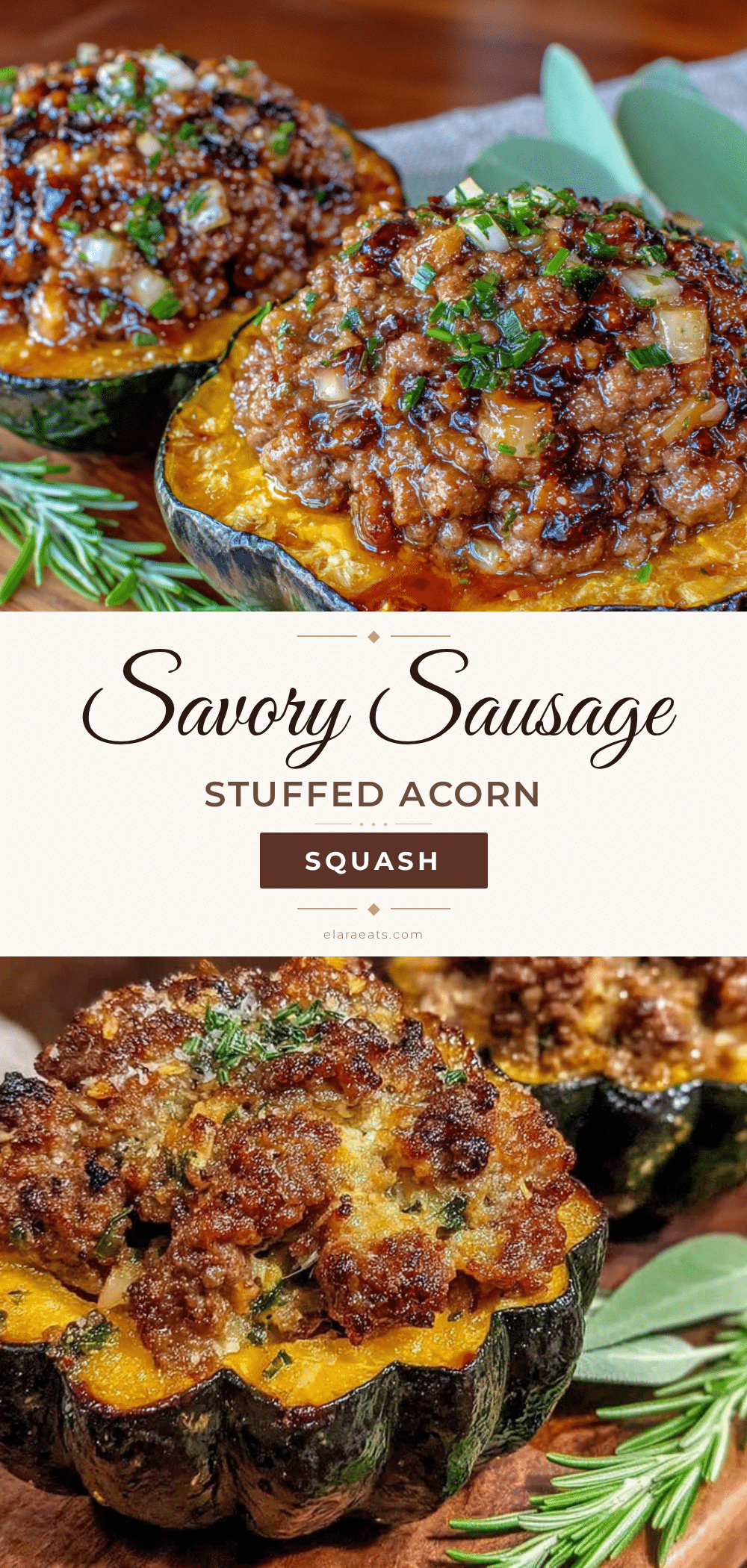
Cozy Sausage Stuffed Acorn Squash Halves: Best Easy Dinner
Tender roasted acorn squash halves filled with a savory sausage, apple, and wild rice stuffing. This easy fall dinner is perfect for weeknights or holiday gatherings.
- Prep Time: 15 minutes
- Cook Time: 30 minutes
- Total Time: 45 minutes
- Yield: 4 servings 1x
- Category: Main Course
- Cuisine: American
Ingredients
- 2 medium acorn squash
- 2 tablespoons olive oil
- Salt and black pepper to taste
- 1 pound mild or sweet Italian sausage, casings removed
- 1 small yellow onion, diced (about 1 cup)
- 2 cloves garlic, minced
- 1 medium apple (Honeycrisp or Fuji), diced
- 1/2 cup cooked wild rice or brown rice
- 1/4 cup dried cranberries
- 1 teaspoon dried sage
- 1/2 teaspoon dried thyme
- 1/4 teaspoon red pepper flakes (optional)
- 1/4 cup chicken broth
- 1/4 cup grated Parmesan cheese
- 2 tablespoons fresh parsley, chopped
Instructions
- Preheat oven to 400°F (200°C). Line a baking sheet with parchment paper.
- Cut each acorn squash in half from stem to tip. Scoop out seeds and stringy pulp. Brush cut sides and cavities with 1 tablespoon olive oil; season with salt and pepper. Place cut-side down on prepared baking sheet.
- Roast squash for 20-25 minutes until just tender when pierced with a fork.
- While squash roasts, heat remaining 1 tablespoon olive oil in a large skillet over medium-high heat. Add sausage, breaking it up, and cook 5-7 minutes until browned. Transfer sausage to a bowl, leaving about 1 tablespoon drippings in pan.
- Reduce heat to medium. Add onion to skillet and cook 4-5 minutes until softened. Add garlic and cook 30 seconds until fragrant.
- Stir in apple, sage, thyme, and red pepper flakes (if using). Cook 2-3 minutes until apple softens slightly.
- Return sausage to skillet. Add cooked rice, dried cranberries, and chicken broth. Cook 2 minutes until broth is mostly absorbed. Season with salt and pepper to taste.
- Remove squash from oven. Flip halves over. Divide filling evenly among the four halves, mounding slightly.
- Return stuffed squash to oven and roast 15-20 minutes until squash is tender and filling is hot and slightly browned. Tent with foil if tops brown too quickly.
- Remove from oven, sprinkle with Parmesan cheese, and let rest 5 minutes. Garnish with fresh parsley before serving.
Notes
For a vegetarian version, swap sausage for 1 cup cooked lentils and 8 oz finely chopped cremini mushrooms. For a dairy-free version, omit Parmesan or use a dairy-free alternative. The filling can be made up to 2 days ahead and stored in the refrigerator. Leftovers keep for up to 4 days in the refrigerator.
Nutrition
- Serving Size: 1 stuffed squash hal
- Calories: 420
- Sugar: 14
- Sodium: 680
- Fat: 18
- Saturated Fat: 6
- Carbohydrates: 48
- Fiber: 8
- Protein: 22
Keywords: stuffed acorn squash, sausage stuffed squash, fall dinner, easy dinner, acorn squash recipe, healthy dinner, gluten-free dinner