Love this? Save it for later!
Share the inspiration with your friends
I used to think sauerkraut belonged in a hot dog bun and nowhere else. For years, I avoided it in any other form—too tangy, too weird, too something I couldn’t quite name. Then a coworker named Deb brought a cast iron skillet to our potluck last November, and I watched people practically elbow each other for seconds. I hung back, skeptical. But Deb caught my eye and said, “Just try one bite. If you hate it, I’ll bring you a brownie tomorrow.” So I took a forkful of that hearty German bratwurst and sauerkraut skillet, and honestly? I had to stop myself from going back for thirds right there in the breakroom. Something about the way the bratwurst browned, the way the sauerkraut softened and soaked up all that savory juice—it just worked. I asked Deb for the recipe on the spot, and she laughed and told me it was basically a weeknight throw-together she’d learned from her grandmother. That was three years ago, and I’ve made it at least once a month ever since. Maybe you’ve been there—thinking you don’t like something, only to have the right version prove you completely wrong. This skillet is that version. It’s the kind of meal that makes you close your eyes after the first bite, and it stays with you because it’s simple, honest, and deeply satisfying.
Why You’ll Love This Recipe
This isn’t just another sausage skillet. It’s the one that makes you forget you’re eating something that’s actually pretty good for you. I’ve tested this recipe about a dozen times to get the balance just right—enough tang from the sauerkraut, enough richness from the bratwurst, and a little sweetness from the apples that ties it all together. Here’s why it keeps showing up on my dinner rotation:
- Quick & Easy: Comes together in under 30 minutes, which is perfect for those nights when you walk in the door hungry and need something real fast.
- Simple Ingredients: No fancy grocery trips. You probably have the oil, salt, and pepper already. Just grab bratwurst, sauerkraut, an apple, and some mustard.
- Perfect for Cold Weather: This is the kind of meal you want when the wind is howling and you just need something warm and comforting.
- Crowd-Pleaser: Even my friend who “doesn’t like German food” asked for the recipe after trying it at a dinner party.
- Unbelievably Delicious: The way the caramelized onions and apples melt into the sauerkraut is next-level comfort food. It’s savory, tangy, a little sweet, and totally satisfying.
What makes this different from other bratwurst recipes is the technique—I brown the bratwurst first to get that deep, crusty exterior, then cook the onions and apples in the rendered fat. It’s a small step that makes a huge difference. And honestly, the whole thing feels like a hug in a skillet. It’s the kind of meal that makes you slow down and actually taste your food.
What Ingredients You Will Need
This recipe uses simple, hearty ingredients that come together to create something bigger than the sum of their parts. Most of these are pantry staples for me now, but even if you’re starting from scratch, you won’t need to hunt down anything obscure.
- 4 bratwurst sausages (about 1 lb / 450 g) — I prefer Johnsonville or a local butcher brand. Look for uncooked bratwurst for the best texture. If you can only find pre-cooked, they’ll work, but the browning won’t be as deep.
- 1 tablespoon olive oil (15 ml) — Just enough to get the browning started. You can use avocado oil or even bacon fat if you’re feeling extra indulgent.
- 1 medium yellow onion, thinly sliced — About 1 cup (150 g). Yellow onion gives the best balance of sweetness and bite when caramelized.
- 1 medium apple, cored and thinly sliced — I use Granny Smith for the tartness, but Honeycrisp or Fuji work great too. Don’t peel it—the skin adds texture and holds up during cooking.
- 1 ½ cups sauerkraut, drained (about 400 g) — I like Bubbies or Wildbrine for their live cultures and crisp texture. Rinse it lightly if you prefer less tang, but I usually leave it as is.
- ½ cup chicken broth (120 ml) — Low-sodium is best so you can control the salt. Vegetable broth works fine too.
- 1 tablespoon whole-grain mustard (15 ml) — This adds a lovely pop of heat and texture. Dijon is a good substitute in a pinch.
- 1 teaspoon caraway seeds (optional, but highly recommended) — They add that classic German flavor. If you don’t have them, the dish is still delicious.
- Salt and black pepper to taste — Go easy on the salt because the bratwurst and sauerkraut are already salty.
- Fresh parsley, chopped, for garnish (optional) — Adds a fresh, bright finish.
Substitution Tips: For a gluten-free version, make sure your bratwurst is gluten-free (many are, but check the label). You can swap the apple for a pear in the fall, or leave it out entirely for a more traditional flavor. If you’re avoiding mustard, just skip it—the dish will still be tasty.
Equipment Needed
You don’t need a lot of fancy gear for this one, which is part of why I love it. Here’s what you’ll need:
- Large cast iron skillet or heavy-bottomed skillet (12-inch / 30 cm) — Cast iron gives the best browning and heat retention, but a stainless steel or non-stick skillet works fine. Just avoid thin pans that might burn the onions.
- Sharp chef’s knife — For slicing the onion and apple. A dull knife makes this job frustrating.
- Cutting board — Preferably one with a non-slip bottom.
- Tongs — For flipping the bratwurst and stirring the vegetables. They’re way easier than a spatula here.
- Measuring cups and spoons — For the broth and mustard. Eyeballing works, but measuring keeps it consistent.
- Lid for your skillet — Or a piece of foil to cover it during the simmering step. This traps steam and finishes cooking the bratwurst through.
If you don’t have a cast iron skillet, don’t worry. I’ve made this in a regular non-stick pan and it turned out great. Just keep an eye on the heat so nothing burns. And if you’re in the market for a new skillet, a good cast iron one is worth the investment—it’ll last forever and makes everything taste better.
Preparation Method
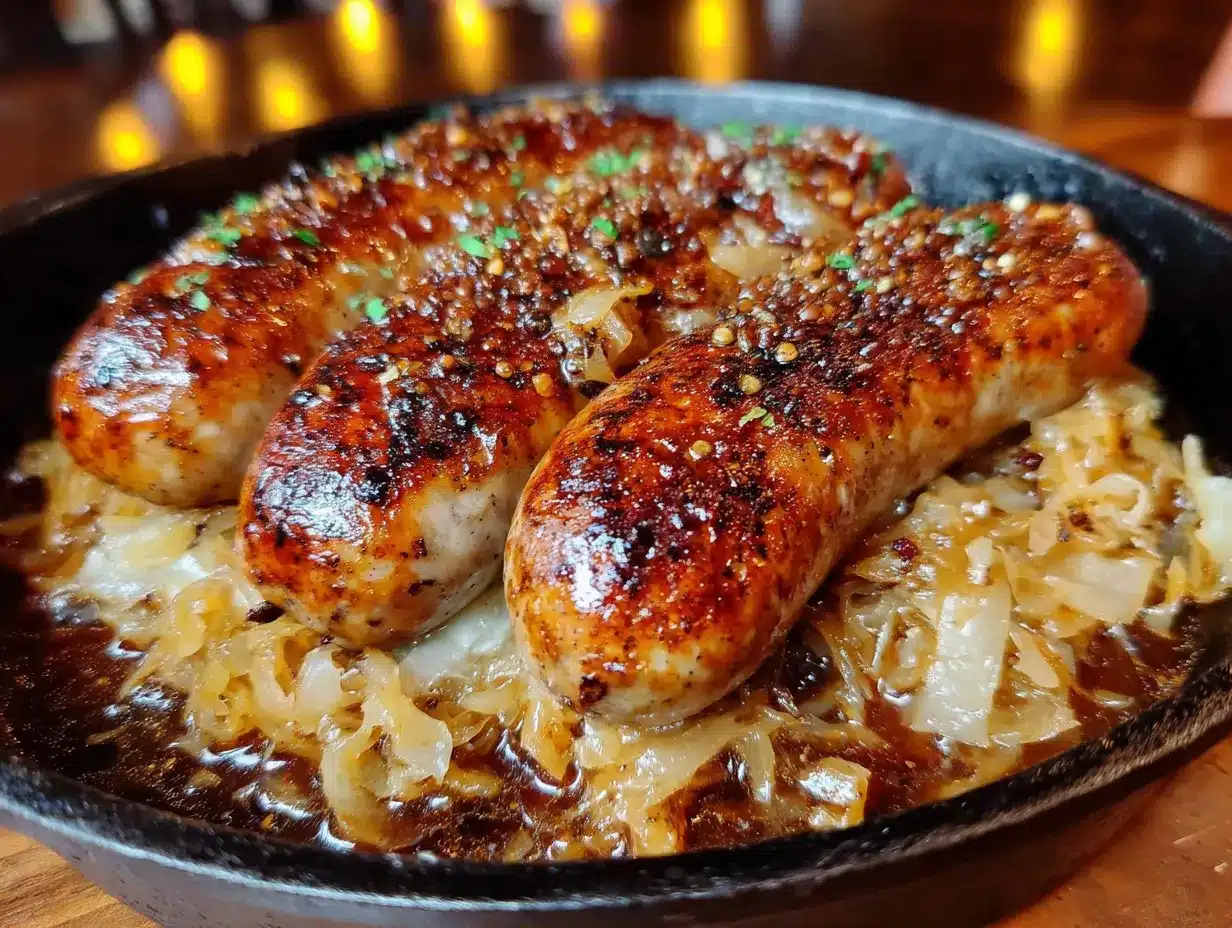
This comes together in about 25 minutes, and most of that is hands-off simmering. Here’s how to do it:
- Brown the bratwurst (5 minutes). Heat the olive oil in your skillet over medium-high heat. Add the bratwurst and cook for 2-3 minutes per side, until deeply browned. Don’t crowd them—give them space to develop a crust. Transfer to a plate and set aside. They won’t be cooked through yet, and that’s fine.
- Cook the onions and apples (5 minutes). Reduce the heat to medium. Add the sliced onion and apple to the skillet with the rendered fat. Cook, stirring occasionally, until the onion is soft and starting to brown, about 4-5 minutes. The apples should be just tender but not mushy. If the pan looks dry, add a splash of broth.
- Add the sauerkraut and seasonings (2 minutes). Stir in the drained sauerkraut, caraway seeds (if using), and whole-grain mustard. Cook for 1-2 minutes, letting the flavors meld. The kitchen will start smelling incredible right about now.
- Return the bratwurst and add broth. Nestle the browned bratwurst back into the skillet on top of the sauerkraut mixture. Pour in the chicken broth. It should come about halfway up the sides of the sausages.
- Simmer covered (10 minutes). Bring the broth to a gentle simmer, then cover the skillet with a lid or foil. Reduce the heat to low and let it cook for 10 minutes. This finishes cooking the bratwurst and lets the sauerkraut soak up all that savory goodness. The broth will reduce slightly and thicken into a light sauce.
- Uncover and finish (2-3 minutes). Remove the lid and let it simmer uncovered for another 2-3 minutes to thicken the liquid slightly. The bratwurst should be cooked through (internal temperature of 160°F / 71°C) and the sauerkraut should be tender and fragrant.
- Rest and serve. Remove from heat. Let the skillet rest for 2-3 minutes before serving. This lets the juices settle. Slice the bratwurst on a bias if you like, or serve them whole on a bed of the sauerkraut mixture. Garnish with fresh parsley if you’re feeling fancy.
Visual cues: When the bratwurst is browned, it should be a deep mahogany color with some darker spots. The onions should look translucent and slightly golden. The sauerkraut will go from pale to a warm, golden-tan color as it cooks. And the broth should reduce to a syrupy consistency that coats the back of a spoon.
Cooking Tips & Techniques
I’ve made this skillet more times than I can count, and I’ve definitely learned a few things the hard way. Here’s what I wish someone had told me:
- Don’t skip the browning step. I know it’s tempting to just throw everything in the pan and call it a day, but browning the bratwurst first creates that deep, savory flavor that makes the whole dish sing. It’s the difference between “good” and “I can’t stop eating this.”
- Watch the heat on the onions. Medium heat is your friend here. If you crank it too high, the onions will burn before they soften. If you go too low, they’ll steam instead of caramelize. I once walked away to answer a text and came back to burnt onions—don’t be me.
- Rinse your sauerkraut if you want less tang. Some people love that punchy sourness, but if you’re new to sauerkraut or serving it to kids, a quick rinse under cold water will mellow it out. Just squeeze out the excess moisture before adding it to the pan.
- Use a meat thermometer if you’re unsure. Bratwurst should reach 160°F (71°C) internally. I’ve had undercooked bratwurst before, and it’s not fun. If you don’t have a thermometer, make sure the juices run clear when you pierce one.
- Let it rest. I know you’re hungry, but letting the skillet sit for a couple of minutes off the heat lets the flavors settle and the bratwurst relax. It makes a real difference.
Variations & Adaptations
This recipe is flexible, and I’ve tried a few twists over the years. Here are some of my favorites:
- Beer-Braised Version: Replace the chicken broth with ½ cup (120 ml) of a dark beer like a bock or stout. The beer adds a rich, malty depth that’s incredible. Just simmer it a little longer to cook off the alcohol.
- Low-Carb / Keto: Skip the apple and use an extra ½ cup of sauerkraut instead. The dish is naturally low-carb without the fruit, and the caraway seeds add enough flavor to keep things interesting.
- Spicy Kick: Add ½ teaspoon of red pepper flakes or a sliced jalapeño when you cook the onions. The heat cuts through the richness beautifully. I did this once on a whim, and it’s now my go-to when I want something with a little fire.
- Vegetarian Option: Use plant-based bratwurst (I like Field Roast or Beyond Meat) and vegetable broth. The cooking time stays the same, but keep an eye on the browning—plant-based sausages can stick more easily.
- Apple Variation: Swap the Granny Smith for a Bosc pear in the fall, or use a firm peach in the summer. The sweetness changes, but it’s always delicious.
Serving & Storage Suggestions
This skillet is a complete meal on its own, but it plays well with others. Here’s how I like to serve it:
- Serving Temperature: Serve it hot, straight from the skillet. The sauerkraut should be steaming, and the bratwurst should be hot all the way through.
- Presentation: I like to slice the bratwurst on a bias and fan them out over the sauerkraut mixture. A sprinkle of fresh parsley and a dollop of extra whole-grain mustard on the side makes it look like you tried way harder than you did.
- What to Serve With It: Crusty bread or soft pretzels are perfect for soaking up the juices. A simple green salad with a tangy vinaigrette cuts through the richness. And if you’re feeling extra German, serve it with potato salad or spaetzle.
- Storage: Store leftovers in an airtight container in the fridge for up to 4 days. The flavors actually get better overnight as they meld together.
- Reheating: Reheat in a skillet over medium-low heat with a splash of broth or water to loosen the sauce. Microwave works in a pinch, but the stovetop keeps the texture better. The sauerkraut will soften more on reheating, which I actually prefer.
- Freezing: This freezes well for up to 3 months. Let it cool completely, then transfer to a freezer-safe container. Thaw overnight in the fridge and reheat as above.
Nutritional Information & Benefits
This recipe is surprisingly balanced for something that feels so indulgent. Here’s a rough estimate per serving (one bratwurst with about ½ cup of the sauerkraut mixture):
- Calories: 380
- Protein: 20 g
- Fat: 24 g
- Carbohydrates: 18 g
- Fiber: 5 g
- Sugar: 8 g
- Sodium: 890 mg
The sauerkraut is the real star here from a health perspective—it’s packed with probiotics from fermentation, which support gut health. The apples add fiber and vitamin C, and the onions provide prebiotics that feed those good gut bacteria. If you’re watching your sodium, look for low-sodium bratwurst and rinse the sauerkraut. This dish is naturally gluten-free if you choose the right sausages, and it’s low-carb if you skip the apple. Honestly, I love that I can eat something this satisfying and still feel pretty good about it.
Conclusion
This hearty German bratwurst and sauerkraut skillet is proof that simple ingredients, treated right, can create something truly special. It’s the meal I turn to when I need comfort without a lot of fuss, and it never lets me down. The way the savory bratwurst plays off the tangy sauerkraut, the sweetness of the apples, and the warmth of the caraway—it’s a combination that just works. I hope you give it a try, and I hope it finds a place in your regular rotation like it has in mine. If you make it, I’d love to hear how it turned out. Did you add your own twist? Use a different type of sausage? Share your experience in the comments below—I read every single one. And if you know someone who thinks they don’t like sauerkraut, make this for them. You might just change their mind.
Frequently Asked Questions
Can I use pre-cooked bratwurst for this recipe?
Yes, you can, but the texture won’t be as good. Pre-cooked bratwurst won’t brown as deeply, and they can turn a bit rubbery. If that’s all you have, just brown them quickly and reduce the simmering time to 5 minutes.
How do I make this dish less tangy?
Rinse the sauerkraut under cold water in a colander before using it. This washes away some of the brine and mellows the sourness. You can also add a pinch of sugar to balance the acidity.
Can I make this in a slow cooker?
You can, but I don’t recommend it for the best texture. The bratwurst won’t brown, and the sauerkraut can get mushy. If you must, brown the bratwurst in a skillet first, then transfer everything to the slow cooker and cook on low for 4 hours.
What’s the best way to reheat leftovers?
Stovetop is best. Put the leftovers in a skillet with a splash of broth or water, cover, and heat over medium-low for 5-7 minutes, stirring occasionally. The microwave works, but the sauerkraut can get too soft.
Can I freeze this dish?
Yes, it freezes well for up to 3 months. Let it cool completely, then store in an airtight container. Thaw overnight in the fridge and reheat on the stovetop. The sauerkraut will be softer, but the flavor is still great.
Pin This Recipe!

Hearty German Bratwurst and Sauerkraut Skillet – Easy One-Pan Dinner
This hearty German bratwurst and sauerkraut skillet is proof that simple ingredients, treated right, can create something truly special. It’s the meal I turn to when I need comfort without a lot of fuss, and it never lets me down.
- Prep Time: 10 minutes
- Cook Time: 20 minutes
- Total Time: 30 minutes
- Yield: 4 servings 1x
- Category: Main Course
- Cuisine: German
Ingredients
- 4 bratwurst sausages (about 1 lb / 450 g)
- 1 tablespoon olive oil (15 ml)
- 1 medium yellow onion, thinly sliced (about 1 cup / 150 g)
- 1 medium apple, cored and thinly sliced (Granny Smith recommended)
- 1 ½ cups sauerkraut, drained (about 400 g)
- ½ cup chicken broth (120 ml), low-sodium
- 1 tablespoon whole-grain mustard (15 ml)
- 1 teaspoon caraway seeds (optional)
- Salt and black pepper to taste
- Fresh parsley, chopped, for garnish (optional)
Instructions
- Brown the bratwurst: Heat the olive oil in your skillet over medium-high heat. Add the bratwurst and cook for 2-3 minutes per side, until deeply browned. Transfer to a plate and set aside.
- Cook the onions and apples: Reduce the heat to medium. Add the sliced onion and apple to the skillet with the rendered fat. Cook, stirring occasionally, until the onion is soft and starting to brown, about 4-5 minutes. If the pan looks dry, add a splash of broth.
- Add the sauerkraut and seasonings: Stir in the drained sauerkraut, caraway seeds (if using), and whole-grain mustard. Cook for 1-2 minutes, letting the flavors meld.
- Return the bratwurst and add broth: Nestle the browned bratwurst back into the skillet on top of the sauerkraut mixture. Pour in the chicken broth.
- Simmer covered: Bring the broth to a gentle simmer, then cover the skillet with a lid or foil. Reduce the heat to low and let it cook for 10 minutes.
- Uncover and finish: Remove the lid and let it simmer uncovered for another 2-3 minutes to thicken the liquid slightly. The bratwurst should be cooked through (internal temperature of 160°F / 71°C).
- Rest and serve: Remove from heat. Let the skillet rest for 2-3 minutes before serving. Slice the bratwurst on a bias if you like, or serve them whole on a bed of the sauerkraut mixture. Garnish with fresh parsley if desired.
Notes
Don’t skip the browning step for the best flavor. Watch the heat on the onions to avoid burning. Rinse sauerkraut if you prefer less tang. Use a meat thermometer to ensure bratwurst reaches 160°F (71°C). Let the skillet rest before serving.
Nutrition
- Serving Size: 1 bratwurst with abo
- Calories: 380
- Sugar: 8
- Sodium: 890
- Fat: 24
- Saturated Fat: 8
- Carbohydrates: 18
- Fiber: 5
- Protein: 20
Keywords: bratwurst, sauerkraut, skillet, one-pan, German, easy dinner, weeknight meal