Love this? Save it for later!
Share the inspiration with your friends
I had a long-standing rule about slow cookers. They were for pulled pork, maybe chili, and that was about it. For years, I thought they turned vegetables into sad, gray mush and made soups taste like they’d been boiled into submission. I was pretty smug about it, honestly. Then last October, I came home from the farmer’s market with more beef stew meat than I knew what to do with and a bag of pearled barley I’d grabbed on a whim. It was a Tuesday. Raining. The kind of day where the light never really gets bright. I tossed everything into that slow cooker out of pure desperation, not hope. I figured I’d prove myself right and have a sandwich instead.
Four hours later, the smell hit me when I walked through the door. It wasn’t the usual “something’s cooking” smell. It was deep, savory, almost nutty. I lifted the lid and saw the barley had puffed up and turned creamy, the beef was falling apart, and the broth had gone from watery to something you could almost chew. I grabbed a spoon, told myself I was just testing the temperature, and stood over the counter eating directly from the slow cooker insert. I didn’t even bother with a bowl. Somewhere between the third and fourth spoonful, I realized I had been wrong about slow cookers this whole time. Maybe you’ve been there, too—judging a cooking method based on one bad experience years ago. This soup changed my mind so completely that I now make it every single week during fall. It’s the one recipe that made me admit defeat, and I’m honestly grateful for it.
Why You’ll Love This Recipe
This isn’t just another beef soup that leaves you hungry an hour later. This is a meal that sticks to your ribs and makes your whole house smell like a farmhouse kitchen in the best way possible. I’ve tested this recipe about seven times to get the barley-to-broth ratio exactly right, and I can tell you with confidence that this is the version worth making.
- Minimal Hands-On Time: You spend about fifteen minutes browning the beef and chopping vegetables. After that, the slow cooker does everything. It’s perfect for busy weekdays when you want something homemade but don’t have time to babysit a pot on the stove.
- Simple Ingredients: No fancy grocery store trips required. Beef stew meat, carrots, celery, onion, barley, broth, and a few pantry spices. You probably have most of this already.
- Perfect for Fall and Winter: This soup was made for cold, gray days. It’s the kind of meal you want after coming inside with cold hands, the kind that warms you from the inside out.
- Crowd-Pleaser: I brought this to a neighborhood potluck last month, and three people asked for the recipe before I even sat down. Kids eat it. Adults eat it. Even my friend who claims she “doesn’t really like soup” had two bowls.
- Unbelievably Satisfying: The barley releases its starch as it cooks, creating a broth that’s rich and almost creamy without adding any dairy. The beef gets so tender it falls apart with just a gentle stir.
What makes this recipe different from every other beef and barley soup out there is the browning step. I know, I know, it’s an extra step. But taking the time to really brown the beef in batches—not just until it’s gray, but until it’s deeply caramelized—creates a flavor base that no amount of seasoning can fake. The barley also gets a quick toast in the same pot before it goes into the slow cooker. It sounds fussy, but it takes maybe two extra minutes and makes the soup taste like it simmered all day in a French farmhouse. This is comfort food at its best: honest, hearty, and made with a little bit of patience.
What Ingredients You Will Need
This recipe uses simple, wholesome ingredients that come together to create something far greater than the sum of their parts. Most of these are pantry staples or easy to find at any grocery store. I’ve included a few notes from my own testing so you can pick the best options.
For the Soup Base
- 2 pounds beef stew meat (chuck roast, cut into 1-inch cubes) — Look for well-marbled pieces. The fat renders during cooking and keeps the meat moist. I’ve used pre-cut stew meat from the store, but cutting your own from a chuck roast gives you more control over size and quality.
- 2 tablespoons olive oil (for browning) — Avocado oil works too. Just avoid butter here since it can burn during the browning process.
- 1 large yellow onion, diced (about 1.5 cups) — Yellow onion gives the best savory flavor. Red onion would be too sharp, and sweet onion would make the broth too sweet.
- 3 large carrots, peeled and diced (about 1 cup) — I like to cut them into half-moons so they hold their shape during the long cook time.
- 3 celery stalks, diced (about 1 cup) — Don’t skip this. Celery adds a subtle bitterness that balances the richness of the beef.
- 4 cloves garlic, minced — Fresh garlic is non-negotiable here. The jarred stuff won’t give you the same depth.
For the Barley and Broth
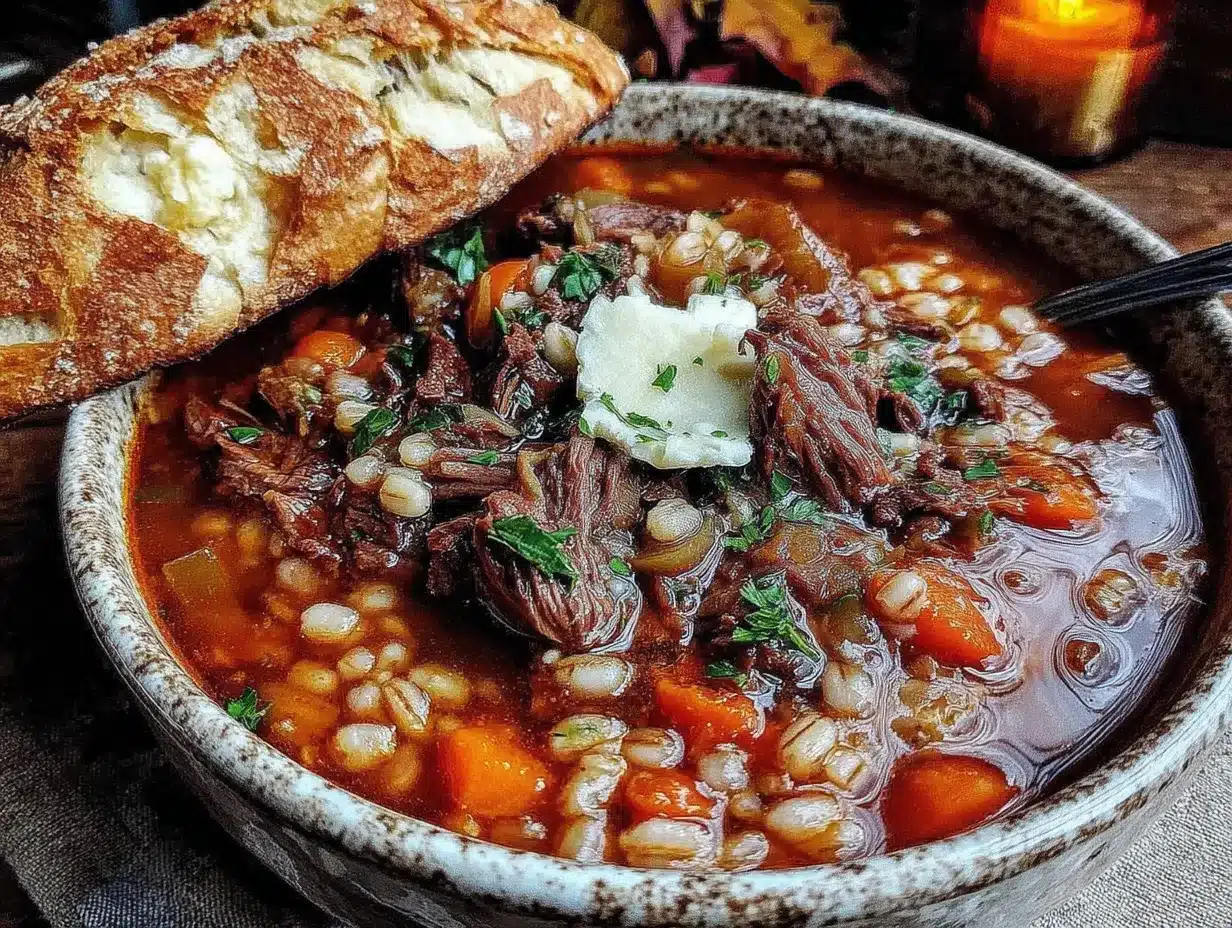
- 1 cup pearled barley, rinsed — Pearled barley cooks faster than hulled barley and gives that creamy texture. I recommend Bob’s Red Mill brand for consistent results. If you can only find hulled barley, soak it overnight and add an extra hour to the cooking time.
- 6 cups beef broth (low sodium) — I use Swanson or Kitchen Basics. Homemade beef broth is amazing here, but store-bought works perfectly. Just watch the salt content.
- 2 cups water — This helps stretch the broth without making it too salty as it reduces.
- 1 tablespoon tomato paste — This adds a subtle umami depth that you won’t even taste directly. It just makes the broth richer.
- 2 bay leaves — Fresh or dried, doesn’t matter. Just remember to fish them out before serving.
- 1 teaspoon dried thyme — Thyme and beef are a classic combination. If you have fresh thyme, use 3 sprigs instead.
- 1 teaspoon salt (plus more to taste) — Start with less since the broth is already salted.
- 1/2 teaspoon black pepper — Freshly ground is best.
For Garnish (Optional but Recommended)
- Fresh parsley, chopped — Adds a bright, fresh note right before serving.
- Grated Parmesan cheese — I know it sounds weird on a beef soup, but a little sprinkle adds a salty, nutty finish that works surprisingly well.
Equipment Needed
You don’t need a fully stocked kitchen to make this soup, but a few specific tools will make the process smoother. Here’s what I use:
- Slow cooker (6-quart or larger) — I use a Cuisinart 6-quart model. If your slow cooker is smaller, reduce the recipe by a third. A 4-quart cooker will be too tight for the full batch.
- Large skillet or Dutch oven — You need this for browning the beef and toasting the barley. A cast iron skillet works beautifully here.
- Sharp chef’s knife — Dicing vegetables and cutting beef is much easier with a good knife. I use a Wusthof 8-inch chef’s knife.
- Cutting board — Wood or plastic, whatever you prefer. Just make sure it’s stable.
- Wooden spoon or spatula — For scraping up the browned bits from the skillet. Those bits are pure flavor.
- Measuring cups and spoons — Barley expands quite a bit, so accurate measuring matters.
- Mixing bowls — For holding prepped ingredients.
- Ladle — For serving.
If you don’t have a slow cooker, you can make this in a Dutch oven on the stove. Just simmer it on low heat for about 2 hours, or until the beef is tender and the barley is cooked through. The slow cooker version is more forgiving, though, since you can leave it and walk away.
Preparation Method
I’ve broken this down into clear steps so you don’t miss anything. Trust me, the browning step is worth the extra few minutes.
- Brown the beef. Pat the beef stew meat dry with paper towels. This is important—wet meat won’t brown properly. Season the cubes with salt and pepper. Heat 1 tablespoon of olive oil in a large skillet over medium-high heat until it shimmers. Add the beef in a single layer, working in batches if needed. Don’t crowd the pan, or the beef will steam instead of brown. Cook for 3-4 minutes per side until deeply browned. Transfer the browned beef to the slow cooker. I know it’s tempting to skip this step, but please don’t. The browning creates the foundation of the entire soup’s flavor.
- Sauté the aromatics. Reduce the heat to medium and add the remaining 1 tablespoon of olive oil to the same skillet. Add the diced onion, carrots, and celery. Cook for 5-6 minutes, stirring occasionally, until the vegetables start to soften and the onion turns translucent. Scrape up any browned bits from the bottom of the pan as you stir—that’s liquid gold right there. Add the minced garlic and cook for one more minute until fragrant. Transfer the vegetables to the slow cooker with the beef.
- Toast the barley. Here’s the step most recipes skip. Add the rinsed barley to the same skillet (no need to clean it first). Toast over medium heat for 2-3 minutes, stirring constantly, until the barley smells nutty and starts to turn golden. This brings out the barley’s natural flavor and helps it hold its shape better during the long cook. Transfer the toasted barley to the slow cooker.
- Deglaze the pan. Pour about 1 cup of the beef broth into the hot skillet. Use your wooden spoon to scrape up every last browned bit from the bottom. This step captures all the flavor that’s stuck to the pan. Pour this liquid into the slow cooker.
- Add the remaining liquids and seasonings. Pour the remaining 5 cups of beef broth and 2 cups of water into the slow cooker. Add the tomato paste, bay leaves, dried thyme, and the remaining salt and pepper. Stir everything together gently to combine. The tomato paste will dissolve as the soup cooks.
- Cook low and slow. Cover the slow cooker and cook on LOW for 7-8 hours or on HIGH for 4-5 hours. I prefer LOW for this recipe because it gives the barley time to slowly release its starch, creating that creamy texture without turning mushy. The beef should be fork-tender when it’s done.
- Finish and serve. About 30 minutes before serving, remove the bay leaves. Taste the soup and adjust the salt and pepper if needed. The barley will have absorbed a lot of liquid, so the soup will be thick and stew-like. If you prefer a thinner consistency, stir in an extra cup of hot water or broth. Ladle into bowls and garnish with fresh parsley and a sprinkle of Parmesan cheese if desired.
Cooking Tips & Techniques
I’ve made this soup enough times to know where things can go wrong. Here are the lessons I learned the hard way so you don’t have to.
Don’t skip the browning. I know it’s tempting to just dump everything in the slow cooker and walk away. I’ve done it. The result is a soup that tastes flat and one-dimensional. Browning the beef and toasting the barley adds layers of flavor that you simply cannot replicate with seasoning alone. It takes maybe ten extra minutes, and it makes the difference between a good soup and a memorable one.
Watch your salt levels. Store-bought beef broth varies wildly in sodium content. Some brands are so salty that you barely need additional salt. I always use low-sodium broth and add salt gradually at the end. You can always add more salt, but you can’t take it out. I learned this the hard way when I made a batch that was practically brine. I ended up adding extra water and a peeled potato to absorb some of the salt, which helped, but it wasn’t ideal.
Barley expands a lot. One cup of dry barley might not look like much, but it swells to about three times its volume during cooking. If you’re using a smaller slow cooker, reduce the barley to 3/4 cup to avoid ending up with more barley than broth. I once made this in a 4-quart slow cooker with the full cup of barley, and it came out more like a barley casserole than a soup. Still tasted good, but not what I was going for.
Plan for leftovers to thicken. This soup thickens significantly as it sits in the fridge because the barley continues to absorb liquid. When you reheat leftovers, plan to add a splash of water or broth to thin it back to your desired consistency. I actually prefer the soup on day two because the flavors meld together even more, but I always keep extra broth on hand.
Low and slow is your friend. If you’re in a rush, the HIGH setting will work, but the texture won’t be quite as good. The barley releases its starch more gently on LOW, resulting in a creamier, more cohesive soup. The beef also stays more tender when cooked slowly. I’ve made this on HIGH a few times when I forgot to start it in the morning, and it was still good—just not as good.
Variations & Adaptations
This recipe is flexible, and I’ve tried several variations depending on what I have in the pantry or who I’m feeding. Here are some of my favorites:
Vegetarian Version
Swap the beef for 2 cups of cremini mushrooms, quartered, and use vegetable broth instead of beef broth. Brown the mushrooms the same way you would the beef, and follow the rest of the recipe as written. The mushrooms add an umami depth that mimics the beefiness of the original. I’ve made this for my vegetarian sister, and she said it was the best soup she’d had all year. Add a can of drained chickpeas for extra protein if you want.
Gluten-Free Adaptation
Replace the barley with 1 cup of brown rice or 1.5 cups of cooked quinoa. Brown rice needs about the same cooking time as barley, so no adjustments needed. Quinoa cooks faster, so add it during the last 2 hours of cooking to prevent it from turning to mush. I’ve also used certified gluten-free oats in a pinch, and it worked surprisingly well, though the texture was a bit softer.
Herb and Root Vegetable Variation
In the fall, I sometimes swap half the carrots for parsnips or turnips. Parsnips add a subtle sweetness that pairs beautifully with the beef. Add a sprig of fresh rosemary along with the thyme for an even more aromatic broth. This version feels especially cozy on a cold November evening. I also like to add a handful of chopped kale during the last 30 minutes of cooking for extra color and nutrients.
Spicy Twist
Add 1/2 teaspoon of smoked paprika and a pinch of cayenne pepper along with the other seasonings. The smokiness complements the beef, and the heat cuts through the richness of the barley. This is my husband’s favorite version. He adds hot sauce at the table too, but I think that’s overkill.
Serving & Storage Suggestions
This soup is best served piping hot in deep bowls. I like to top each bowl with a generous sprinkle of fresh parsley and a light dusting of grated Parmesan cheese. The cheese adds a salty, nutty finish that contrasts beautifully with the savory broth. Serve with crusty bread or a simple green salad to round out the meal. A slice of sourdough toast rubbed with garlic is my personal favorite accompaniment.
The soup pairs well with a full-bodied red wine like a Cabernet Sauvignon or a Malbec. If you’re not drinking wine, a cold apple cider or a dark beer like a stout complements the earthy flavors. For a non-alcoholic option, try a warm mug of spiced apple cider on the side.
Refrigerator Storage: Store leftovers in an airtight container in the refrigerator for up to 5 days. The soup will thicken as it sits, so add a splash of water or broth when reheating. I actually prefer the flavor on day two or three—the barley absorbs more of the broth, and the beef becomes even more tender.
Freezer Storage: This soup freezes beautifully for up to 3 months. Let it cool completely, then transfer to freezer-safe containers or zip-top bags. Leave about an inch of headspace for expansion. To reheat, thaw overnight in the refrigerator and warm gently on the stovetop or in the microwave. Add a little extra broth when reheating since the barley will continue to absorb liquid.
Reheating Tips: The best way to reheat this soup is on the stovetop over medium-low heat, stirring occasionally. Add a splash of broth or water to restore the desired consistency. The microwave works in a pinch, but the texture won’t be quite as good. If you’re reheating from frozen, let it thaw in the fridge first for even heating.
Nutritional Information & Benefits
Here’s the approximate nutritional breakdown for one serving (about 1.5 cups, based on 8 servings):
- Calories: 385
- Protein: 32g
- Fat: 12g
- Carbohydrates: 38g
- Fiber: 8g
- Sugar: 6g
- Sodium: 680mg (varies based on broth)
This soup is packed with nutritional benefits. The beef provides high-quality protein and iron, which is especially important during colder months when our energy needs increase. Barley is a great source of soluble fiber, which helps with digestion and can help lower cholesterol. The carrots and celery add vitamins A and K, along with antioxidants. This is one of those rare meals that feels indulgent but is actually quite balanced. I love that I can serve it to my family knowing they’re getting a solid dose of vegetables and fiber without any complaints.
Dietary Considerations: This recipe is dairy-free (if you skip the Parmesan garnish), nut-free, and egg-free. It contains gluten from the barley, so it’s not suitable for a gluten-free diet without the adaptations mentioned above. The sodium content can be reduced by using low-sodium broth and omitting the added salt.
Conclusion
This cozy slow cooker beef and barley fall soup has become my go-to for cold days, busy weeks, and any time I need a meal that feels like a hug in a bowl. It’s the recipe that made me eat my words about slow cookers, and I keep making it because it’s genuinely that good. The beef gets tender, the barley turns creamy, and the broth becomes so rich you’ll want to drink it straight from the ladle. It’s simple enough for a Tuesday night but impressive enough to serve to guests.
I’d love to hear how this soup turns out for you. Did you try any of the variations? Did you add your own twist? Drop a comment below and let me know. And if you share a photo on Pinterest or Instagram, tag me so I can see your beautiful bowls of soup. This recipe is meant to be shared, customized, and enjoyed over and over again. So go ahead, give it a try, and let it warm you up from the inside out. You deserve a cozy meal that tastes like home.
Frequently Asked Questions
Can I make this soup on the stovetop instead of a slow cooker?
Absolutely. Follow the same browning and sautéing steps, then transfer everything to a large Dutch oven or heavy-bottomed pot. Add the broth and seasonings, bring to a boil, then reduce the heat to low. Cover and simmer for about 1.5 to 2 hours, or until the beef is tender and the barley is cooked through. Stir occasionally to prevent sticking.
Can I use quick-cooking barley instead of pearled barley?
You can, but the texture will be different. Quick-cooking barley is pre-steamed and cooks in about 10-15 minutes. If you use it, add it during the last 30 minutes of cooking on LOW or the last 15 minutes on HIGH. Otherwise, it will turn mushy and lose its pleasant chew.
How do I prevent the barley from becoming too mushy?
The key is to not overcook it. Pearled barley typically needs about 45 minutes to 1 hour to cook on the stovetop, but in a slow cooker, it can handle 4-8 hours without turning to mush if you use the LOW setting. Toasting the barley before adding it also helps it hold its shape better. If you’re worried, add the barley during the last 3-4 hours of cooking instead of at the beginning.
Can I add other vegetables to this soup?
Definitely. This soup is very forgiving. Try adding diced potatoes, parsnips, turnips, or sweet potatoes along with the carrots and celery. Leafy greens like kale or spinach can be stirred in during the last 30 minutes of cooking. Just keep in mind that more vegetables will dilute the broth a bit, so you may need to adjust the seasoning.
How do I thicken the soup if it’s too thin?
If the soup is thinner than you’d like, remove the lid during the last 30-60 minutes of cooking to let some of the liquid evaporate. Alternatively, mash a few pieces of the cooked barley against the side of the slow cooker with a spoon to release more starch, which will naturally thicken the broth. You can also stir in a slurry of 1 tablespoon of cornstarch mixed with 2 tablespoons of cold water, then cook for another 15 minutes.
Pin This Recipe!
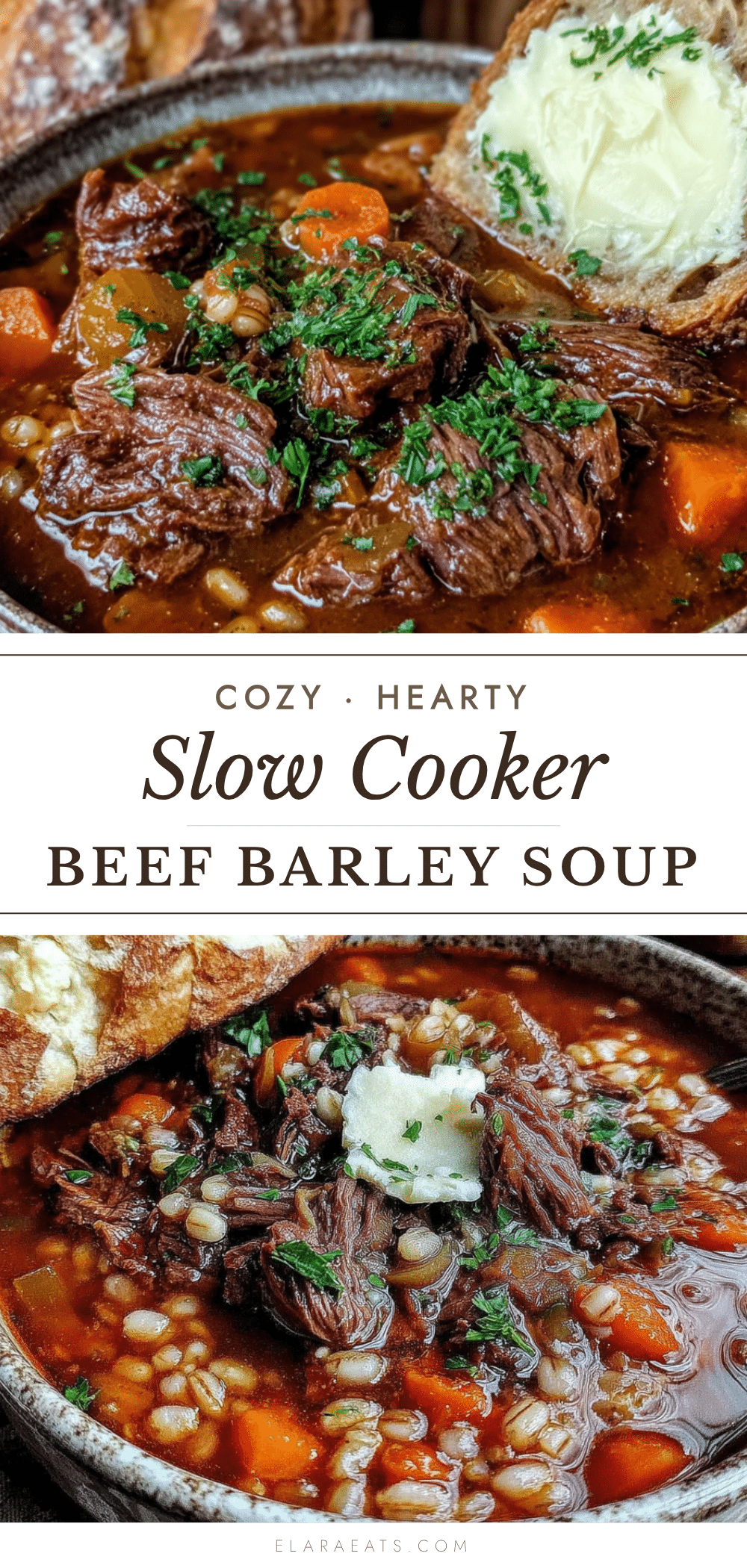
Cozy Slow Cooker Beef and Barley Fall Soup
This hearty beef and barley soup is made in the slow cooker with tender beef, creamy barley, and a rich, savory broth. It’s the perfect comfort food for cold fall and winter days, requiring minimal hands-on time.
- Prep Time: 15 minutes
- Cook Time: 7-8 hours (LOW) or 4-5 hours (HIGH)
- Total Time: 7 hours 15 minutes to 8 hours 15 minutes
- Yield: 8 servings 1x
- Category: Soup
- Cuisine: American
Ingredients
- 2 pounds beef stew meat (chuck roast, cut into 1-inch cubes)
- 2 tablespoons olive oil
- 1 large yellow onion, diced (about 1.5 cups)
- 3 large carrots, peeled and diced (about 1 cup)
- 3 celery stalks, diced (about 1 cup)
- 4 cloves garlic, minced
- 1 cup pearled barley, rinsed
- 6 cups low-sodium beef broth
- 2 cups water
- 1 tablespoon tomato paste
- 2 bay leaves
- 1 teaspoon dried thyme
- 1 teaspoon salt (plus more to taste)
- 1/2 teaspoon black pepper
- Fresh parsley, chopped (for garnish, optional)
- Grated Parmesan cheese (for garnish, optional)
Instructions
- Pat the beef stew meat dry with paper towels. Season with salt and pepper. Heat 1 tablespoon olive oil in a large skillet over medium-high heat. Add beef in a single layer (work in batches if needed) and cook 3-4 minutes per side until deeply browned. Transfer to the slow cooker.
- Reduce heat to medium and add remaining 1 tablespoon olive oil to the same skillet. Add onion, carrots, and celery. Cook 5-6 minutes, stirring occasionally, until softened and onion is translucent. Scrape up browned bits from the pan. Add garlic and cook 1 minute more. Transfer vegetables to the slow cooker.
- Add the rinsed barley to the same skillet. Toast over medium heat for 2-3 minutes, stirring constantly, until nutty and golden. Transfer to the slow cooker.
- Pour about 1 cup of the beef broth into the hot skillet and scrape up any remaining browned bits. Pour this liquid into the slow cooker.
- Add the remaining 5 cups beef broth, 2 cups water, tomato paste, bay leaves, dried thyme, and remaining salt and pepper to the slow cooker. Stir gently to combine.
- Cover and cook on LOW for 7-8 hours or on HIGH for 4-5 hours, until beef is fork-tender and barley is cooked.
- About 30 minutes before serving, remove bay leaves. Taste and adjust salt and pepper if needed. If soup is too thick, stir in extra hot water or broth. Ladle into bowls and garnish with fresh parsley and Parmesan cheese if desired.
Notes
Don’t skip browning the beef and toasting the barley—they add essential flavor. Use low-sodium broth and adjust salt at the end. Barley expands significantly; reduce to 3/4 cup if using a smaller slow cooker. Leftovers thicken; add broth when reheating. For a stovetop version, simmer on low for 1.5-2 hours.
Nutrition
- Serving Size: 1.5 cups
- Calories: 385
- Sugar: 6
- Sodium: 680
- Fat: 12
- Carbohydrates: 38
- Fiber: 8
- Protein: 32
Keywords: slow cooker beef and barley soup, fall soup, beef barley soup, cozy soup, hearty soup