Love this? Save it for later!
Share the inspiration with your friends
“I never imagined that a simple mistake during a rushed breakfast could lead me to master the art of making the tender Japanese Tamagoyaki egg roll with dashi and mirin,” I recall with a chuckle. It was last spring, on a hectic Monday morning, when I realized I had forgotten to buy bread. Panicked, I grabbed eggs, dashi powder, and mirin from my pantry, hoping to whip up something quick yet satisfying.
As I poured the egg mixture into my little rectangular tamagoyaki pan, I fumbled and spilled some onto the counter—classic me, right? But as I rolled and cooked the layers, the sweet aroma of mirin mingled with the subtle umami of dashi filled my kitchen, making me pause. The first bite was a revelation: soft, slightly sweet, and delicately savory. It was nothing like the rushed breakfast I expected.
Maybe you’ve been there—looking for a quick fix that ends up surprising you. Since that day, this tender Japanese tamagoyaki egg roll recipe has become my go-to for breakfast, brunch, or even a light dinner. It’s simple enough for busy mornings but special enough to impress family or friends. Honestly, it’s the kind of dish that wraps comfort and tradition into every bite, and I keep making it because it feels like a little celebration of delicate flavors and simple joys.
Why You’ll Love This Recipe
This tender Japanese tamagoyaki egg roll with dashi and mirin isn’t just another egg dish—it’s a little piece of Japan you can make in your own kitchen. Here’s why it stands out:
- Quick & Easy: Ready in about 15 minutes, making it perfect for those rushed mornings or last-minute brunch plans.
- Simple Ingredients: Uses pantry staples like eggs, dashi powder, and mirin—you probably already have them on hand.
- Perfect for Any Occasion: Whether it’s a cozy breakfast, a bento box addition, or a light appetizer, this tamagoyaki fits the bill.
- Crowd-Pleaser: The subtly sweet and savory balance wins over kids and adults alike, even those who usually shy away from Japanese dishes.
- Unbelievably Delicious: The texture is tender and layered, with mirin’s sweetness and dashi’s umami creating a flavor combo that feels both comforting and elegant.
What makes this recipe different? It’s the way the dashi and mirin gently infuse the eggs, creating layers that are soft but hold together beautifully. I’ve tried other versions, but this balance keeps me coming back. It’s comforting without being heavy, and honestly, it’s the kind of dish that makes you pause and savor the moment. If you want an authentic taste that’s straightforward to make, this is your best bet.
What Ingredients You Will Need
This recipe uses simple, wholesome ingredients to deliver bold flavor and satisfying texture without the fuss. Most are pantry staples, and substitutions are easy if needed.
- Eggs – 4 large eggs (room temperature for best mixing)
- Dashi powder – 1 teaspoon (preferably Japanese brand like Ajinomoto for authentic umami)
- Mirin – 2 tablespoons (adds sweetness and a slight tang; substitute with a mix of sugar and rice vinegar if unavailable)
- Sugar – 1 teaspoon (balances savory flavors)
- Soy sauce – 1 teaspoon (for depth and saltiness)
- Vegetable oil – for greasing the pan (neutral oil like canola or sunflower works best)
Optional add-ins or variations:
- Scallions – finely chopped, for a fresh twist
- Shredded nori – for a touch of sea flavor layered inside
- Low-sodium soy sauce – if you prefer less salt
If you’re gluten-intolerant, make sure to use gluten-free soy sauce or tamari. For a vegan alternative, this recipe would need significant changes, but you could experiment with chickpea flour batter and dashi-flavored broth substitutes.
Equipment Needed
Making tender Japanese tamagoyaki egg roll requires just a few specific tools, though you can adapt if you don’t have the exact items.
- Tamagoyaki pan: A small rectangular or square non-stick pan about 7×10 inches is traditional and helps create the perfect layered roll. If you don’t have one, a small non-stick skillet will work, though the shape won’t be exact.
- Chopsticks or a silicone spatula: For gently rolling the egg layers without tearing.
- Mixing bowl: For whisking the egg mixture thoroughly.
- Whisk or fork: To beat eggs until smooth and frothy.
- Paper towel or brush: To lightly oil the pan between layers, preventing sticking.
I once tried using a regular frying pan, and while the shape was off, the taste was just as great. Non-stick surfaces are key here, or you’ll risk eggs sticking and tearing. Keep a steady hand and a little patience—it’s worth it!
Preparation Method
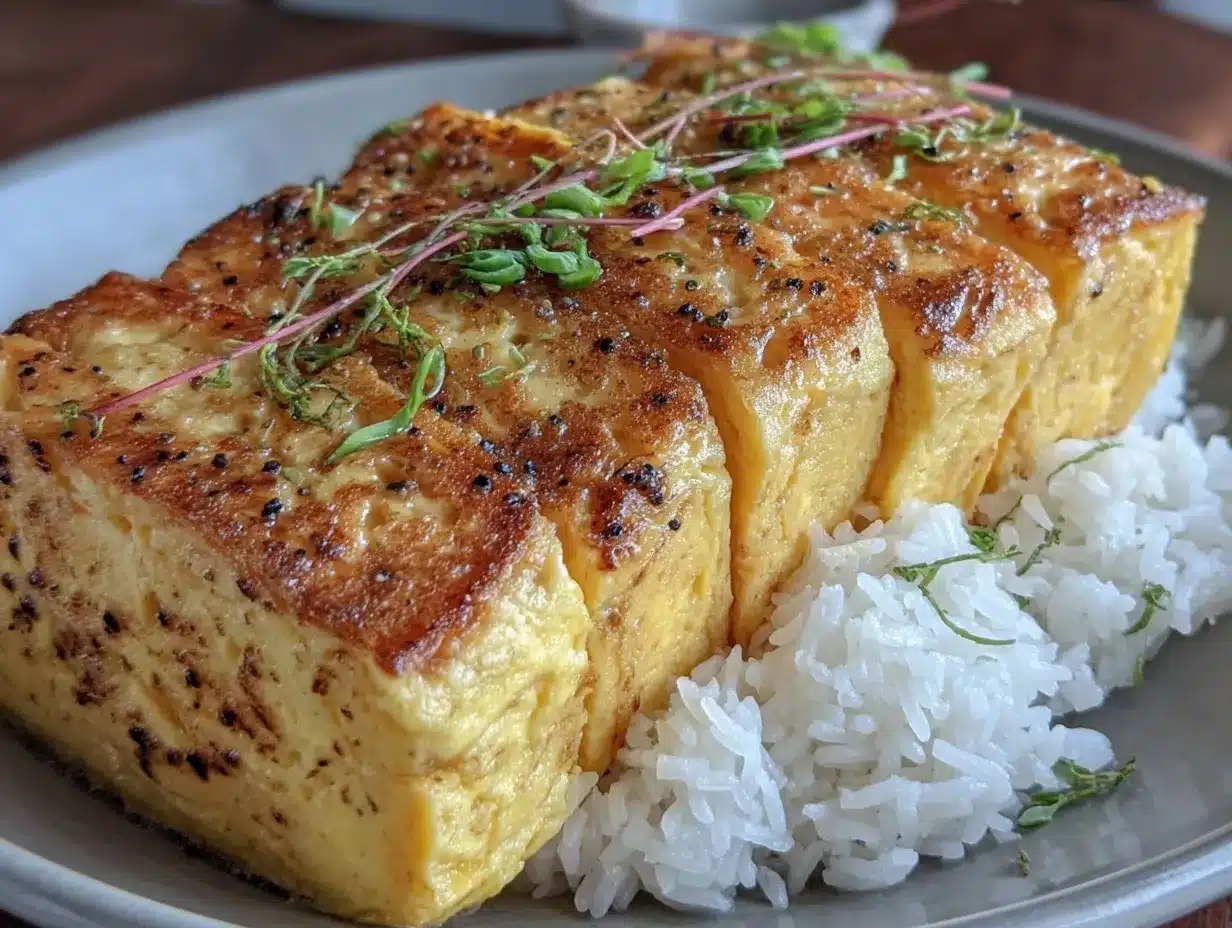
- Prepare the egg mixture: In a bowl, crack 4 large eggs (about 200g) and whisk gently until combined but not too frothy. Add 1 teaspoon dashi powder, 2 tablespoons mirin, 1 teaspoon sugar, and 1 teaspoon soy sauce. Whisk together until the sugar dissolves and the mixture is smooth.
- Heat the tamagoyaki pan: Place your pan over medium-low heat. Use a paper towel lightly dipped in vegetable oil to grease the surface evenly. The pan should be hot but not smoking.
- Cook the first layer: Pour a thin layer of the egg mixture (about 1/4 cup or 60 ml) into the pan, tilting to cover the bottom evenly. Let it cook until almost set but still slightly wet on top—about 1-2 minutes. You’ll know it’s ready when the edges look firm but the center jiggles slightly.
- Roll the egg: Using chopsticks or a spatula, start rolling the cooked egg layer from one end to the other gently but firmly. Push the roll to one side of the pan.
- Oil and add another layer: Lightly oil the exposed pan surface again. Pour another thin layer of the egg mixture into the pan, making sure it flows under the rolled egg to bind layers together. Cook until nearly set (about 1 minute).
- Roll again: Roll the first egg roll back over the new layer, creating a thicker roll. Repeat this process 3-4 times until all the egg mixture is used.
- Finish and shape: Once the final layer is cooked and rolled, gently press the roll with a spatula to shape it neatly. Transfer to a bamboo sushi mat or clean kitchen towel and gently shape into a rectangle. Let it rest for 5 minutes to set.
- Slice and serve: Cut the tamagoyaki into 1/2-inch (1.5 cm) thick slices using a sharp knife dipped in water to prevent sticking. Serve warm or at room temperature.
Pro tip: Don’t rush the cooking; medium-low heat is key to avoid browning or drying out the egg. If the egg cooks too fast, it won’t roll smoothly or stay tender. Also, keep your oil light—too much makes the roll greasy.
Cooking Tips & Techniques
Making tamagoyaki is part technique, part patience. Here’s what I’ve learned the hard way:
- Temperature control is everything: Too hot, and the egg browns and becomes rubbery; too low, and it takes forever to cook. Medium-low heat is your sweet spot.
- Use fresh eggs: Freshness affects texture and flavor. I usually buy from local farmers or trusted brands like Vital Farms for the best results.
- Whisk well but gently: You want the eggs mixed uniformly but not overly aerated, or the layers won’t be smooth.
- Oil lightly and evenly: Use a paper towel to apply a thin, even oil coat between layers to prevent sticking without making the roll greasy.
- Roll carefully: Don’t rush the rolling process; a gentle but firm touch keeps the layers tight and prevents tearing.
- Practice makes perfect: My first roll was a mess—uneven layers and cracking. Keep trying! Each attempt teaches you more about the timing and texture.
Timing your steps helps too—for example, while one layer cooks, prepare your next pour so you’re efficient and don’t overcook the egg waiting.
Variations & Adaptations
Once you get the hang of the basic tamagoyaki with dashi and mirin, you can try these fun twists:
- Vegetable Tamagoyaki: Add finely chopped spinach, carrots, or scallions for a colorful, nutritious upgrade.
- Sweet Tamagoyaki: Increase sugar to 2 teaspoons and omit soy sauce for a sweeter version, great for kids or dessert-like treats.
- Seaweed and Sesame: Sprinkle shredded nori and toasted sesame seeds between layers for an extra umami punch and texture.
- Gluten-Free: Use tamari or coconut aminos instead of soy sauce to keep it gluten-free.
- Low-Sodium: Skip the soy sauce and increase mirin slightly to keep flavor while reducing salt.
Personally, I once tried folding in tiny bits of cooked shrimp for a special occasion, and it was a hit at the dinner table!
Serving & Storage Suggestions
Tamagoyaki is best served warm or at room temperature. It makes a beautiful addition to breakfast or bento boxes, and pairs well with steamed rice or pickled vegetables.
For a light meal, serve alongside miso soup and green tea. If you’re feeling adventurous, try it with a dab of Japanese mayo or a sprinkle of shichimi togarashi for a spicy kick.
Store leftovers wrapped tightly in plastic wrap in the refrigerator for up to 2 days. To reheat, gently warm slices in a non-stick pan over low heat or briefly in the microwave (covered to keep moisture).
Flavors tend to mellow after refrigeration, so the tamagoyaki becomes even more tender—kind of like a little time capsule of comfort.
Nutritional Information & Benefits
This tamagoyaki egg roll is a light, protein-rich dish with a delicate balance of flavors. Each serving (about 2 slices) contains approximately:
| Calories | 120 |
|---|---|
| Protein | 8g |
| Fat | 7g |
| Carbohydrates | 3g |
| Sodium | 200mg |
The dashi powder adds umami without extra fat or calories, and mirin contributes a touch of natural sweetness. Eggs provide high-quality protein essential for muscle repair and energy.
This dish is naturally gluten-free if using gluten-free soy sauce, low in carbs, and suitable for many diets. Just watch the soy sauce if you’re limiting sodium intake.
Conclusion
So there you have it—a simple, tender Japanese tamagoyaki egg roll with dashi and mirin that’s approachable for home cooks but impressive enough to share. It’s a recipe that’s stuck with me from a chaotic morning to becoming a kitchen favorite, and I hope it brings you that same little moment of joy.
Feel free to tweak the sweetness, add your favorite herbs, or experiment with fillings. The beauty is in how adaptable and forgiving this recipe is, letting you make it your own.
If you try it, I’d love to hear how it went or what variations you enjoyed. Share your tamagoyaki stories in the comments below—it’s always fun to swap kitchen wins and goofs!
Happy rolling and tasting, friends!
Frequently Asked Questions about Tender Japanese Tamagoyaki Egg Roll
1. What is the best pan to use for tamagoyaki?
A rectangular or square non-stick tamagoyaki pan works best for even layers and easy rolling, but a small non-stick skillet can substitute if needed.
2. Can I make tamagoyaki without dashi powder?
Yes, but dashi adds authentic umami flavor. You can use vegetable broth or skip it for a simpler egg roll, though flavor will be less complex.
3. How do I prevent the egg from sticking to the pan?
Lightly oil the pan between layers using a paper towel or brush. Cooking on medium-low heat also helps prevent sticking.
4. Can I make tamagoyaki ahead of time?
Definitely! It tastes great at room temperature and can be refrigerated for up to 2 days. Reheat gently before serving.
5. Is tamagoyaki gluten-free?
It can be, if you use gluten-free soy sauce or tamari instead of regular soy sauce. The rest of the ingredients are naturally gluten-free.
For more egg-based delights, you might enjoy my crispy garlic chicken recipe that pairs wonderfully with light Japanese sides or the fluffy fluffy Japanese pancakes perfect for brunch.
Pin This Recipe!

Tender Japanese Tamagoyaki Egg Roll Recipe Easy Step-by-Step Guide

A tender Japanese tamagoyaki egg roll infused with dashi and mirin, perfect for breakfast, brunch, or a light dinner. This recipe is quick, easy, and delivers a soft, slightly sweet, and delicately savory flavor.
- Prep Time: 5 minutes
- Cook Time: 10 minutes
- Total Time: 15 minutes
- Yield: 4 servings 1x
- Category: Breakfast
- Cuisine: Japanese
Ingredients
- 4 large eggs (room temperature)
- 1 teaspoon dashi powder (preferably Japanese brand like Ajinomoto)
- 2 tablespoons mirin (or substitute with a mix of sugar and rice vinegar)
- 1 teaspoon sugar
- 1 teaspoon soy sauce
- Vegetable oil (for greasing the pan, neutral oil like canola or sunflower)
- Optional: finely chopped scallions
- Optional: shredded nori
- Optional: low-sodium soy sauce
Instructions
- In a bowl, crack 4 large eggs (about 200g) and whisk gently until combined but not too frothy.
- Add 1 teaspoon dashi powder, 2 tablespoons mirin, 1 teaspoon sugar, and 1 teaspoon soy sauce. Whisk together until the sugar dissolves and the mixture is smooth.
- Place your tamagoyaki pan over medium-low heat. Use a paper towel lightly dipped in vegetable oil to grease the surface evenly. The pan should be hot but not smoking.
- Pour a thin layer of the egg mixture (about 1/4 cup or 60 ml) into the pan, tilting to cover the bottom evenly. Let it cook until almost set but still slightly wet on top—about 1-2 minutes.
- Using chopsticks or a spatula, start rolling the cooked egg layer from one end to the other gently but firmly. Push the roll to one side of the pan.
- Lightly oil the exposed pan surface again. Pour another thin layer of the egg mixture into the pan, making sure it flows under the rolled egg to bind layers together. Cook until nearly set (about 1 minute).
- Roll the first egg roll back over the new layer, creating a thicker roll. Repeat this process 3-4 times until all the egg mixture is used.
- Once the final layer is cooked and rolled, gently press the roll with a spatula to shape it neatly. Transfer to a bamboo sushi mat or clean kitchen towel and gently shape into a rectangle. Let it rest for 5 minutes to set.
- Cut the tamagoyaki into 1/2-inch (1.5 cm) thick slices using a sharp knife dipped in water to prevent sticking. Serve warm or at room temperature.
Notes
Use medium-low heat to avoid browning or drying out the egg. Lightly oil the pan between layers to prevent sticking without making the roll greasy. Fresh eggs improve texture and flavor. Practice rolling gently but firmly to keep layers tight and prevent tearing. The roll can be shaped using a bamboo sushi mat or kitchen towel and should rest for 5 minutes before slicing.
Nutrition
- Serving Size: About 2 slices (1/2
- Calories: 120
- Sodium: 200
- Fat: 7
- Carbohydrates: 3
- Protein: 8
Keywords: tamagoyaki, Japanese egg roll, dashi, mirin, breakfast, brunch, easy recipe, layered egg roll, savory egg dish