Love this? Save it for later!
Share the inspiration with your friends
Introduction
“You know that moment when the smell of warm bread and herbs suddenly pulls you right into the kitchen?” That’s exactly what happened one Sunday afternoon when I stumbled upon this recipe for pillowy Lebanese manakeesh with za’atar and olive oil. I was visiting a tiny Middle Eastern grocery store tucked between the usual chain markets, and the owner—an energetic woman named Lina—offered me a fresh piece of manakeesh straight from her oven. Honestly, I wasn’t expecting much. But that first bite was like a soft, herby cloud melting in my mouth, and I found myself asking for the recipe before I even finished chewing.
It was a bit chaotic when I got home—my cat jumped on the counter, knocking over the flour, and I had to pause to clean up the mess. But that only made the experience more real (and a little funny). This recipe stayed with me because it’s deceptively simple yet packed with flavor, like a small, comforting hug from Lebanese street food tradition. Maybe you’ve been there, craving something fresh, warm, and utterly satisfying that doesn’t take hours or fancy ingredients. That’s the magic behind this manakeesh recipe—it’s an easy homemade delight that feels special every single time.
Let me tell you, making these at home has become my go-to whenever I want to impress guests or just treat myself to a cozy brunch. The golden crust, the fresh za’atar aroma, and the drizzle of olive oil combine into something unforgettable. So, if you’re ready to bring a bit of Lebanese charm to your kitchen, let’s get started.
Why You’ll Love This Recipe
After testing countless versions and tweaking the dough texture, I can say this recipe nails the perfect balance of softness and flavor every time. Here’s why you’ll want to make this pillowy Lebanese manakeesh with za’atar and olive oil your new favorite:
- Quick & Easy: It comes together in about 45 minutes, making it perfect for busy mornings or unexpected guests.
- Simple Ingredients: You don’t need anything exotic—just basic pantry staples and quality za’atar blend.
- Perfect for Sharing: Great for brunch, casual get-togethers, or even as a snack with tea or coffee.
- Crowd-Pleaser: Kids and adults both love the gentle herbaceous flavor and soft texture.
- Unbelievably Delicious: The warm olive oil soaking into the za’atar topping elevates the whole experience.
What makes this manakeesh different? It’s all about the dough—soft and pillow-like, not thin and crispy like some versions. I also blend the za’atar with just the right amount of olive oil to create a spread that’s bursting with flavor but never soggy. Honestly, after trying this recipe, you might find yourself making it on lazy weekend mornings or surprising friends at potlucks. It’s one of those comforting dishes that makes you close your eyes after the first bite and appreciate the simple things.
What Ingredients You Will Need
This recipe uses simple, wholesome ingredients to deliver bold flavor and satisfying texture without the fuss. Most are pantry staples, and the za’atar blend can be found at any Middle Eastern market or ordered online.
- For the Dough:
- All-purpose flour – 3 cups (375g), sifted for lighter texture
- Instant dry yeast – 2 ¼ teaspoons (one packet)
- Granulated sugar – 1 tablespoon (helps activate yeast)
- Salt – 1 teaspoon
- Warm water – 1 cup (240ml), around 110°F (43°C), to activate yeast
- Olive oil – 2 tablespoons (adds softness and flavor; I prefer extra virgin olive oil from California for its fruity notes)
- For the Za’atar Topping:
- Za’atar spice blend – ½ cup (about 30g), fresh and aromatic (I recommend purchasing from Al Wadi or a trusted local spice shop)
- Olive oil – ¼ cup (60ml), good quality as this is key for flavor
- Optional:
- Sumac – a pinch, to sprinkle on top for a tangy lift
- Sesame seeds – 1 tablespoon, for extra crunch and nuttiness
If you want a gluten-free option, almond flour or a gluten-free blend can work for the dough but expect a different texture. For a dairy-free version, this recipe is naturally suitable since it uses olive oil instead of butter.
Equipment Needed
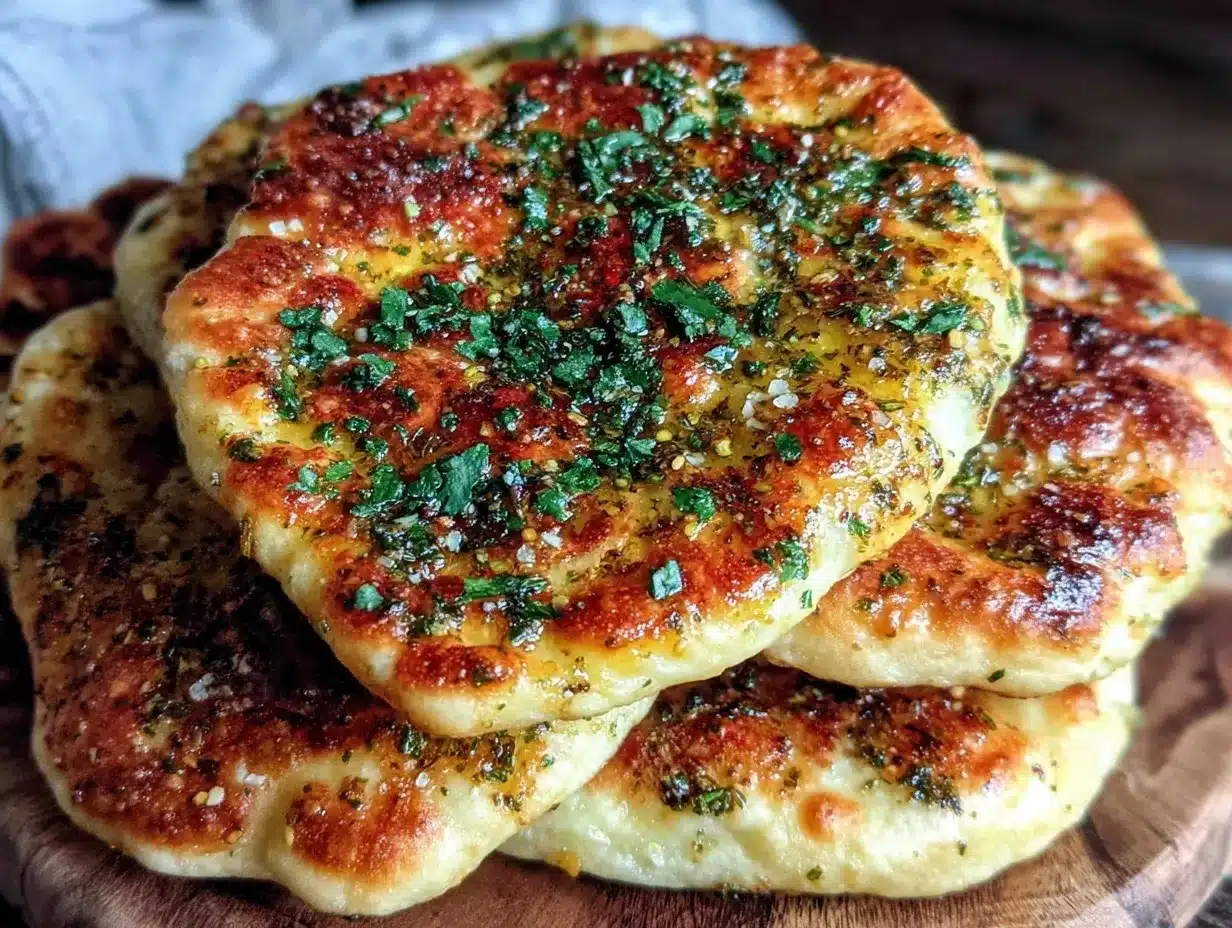
Making Lebanese manakeesh at home doesn’t require fancy tools, but a few kitchen basics will make the process smoother:
- Mixing bowl: A large bowl for combining and proofing the dough. I like glass or stainless steel for easy cleaning.
- Measuring cups and spoons: For accuracy—especially with yeast and salt.
- Kitchen scale (optional): If you prefer precise measurements, especially for flour.
- Rolling pin: To shape the dough evenly. If you don’t have one, clean hands work just fine for gentle pressing.
- Baking sheet or pizza stone: A pizza stone helps achieve a crisper bottom but a baking sheet lined with parchment paper works perfectly too.
- Pastry brush: To spread the za’atar and olive oil mixture evenly. If you don’t have one, the back of a spoon can do the trick.
For budget-friendly options, a sturdy cutting board can double as a rolling surface, and silicone baking mats prevent sticking. Keeping your tools clean and dry helps keep the dough from sticking and ensures even baking.
Preparation Method
- Activate the yeast: In a small bowl, combine warm water (110°F/43°C), sugar, and yeast. Stir gently and let it sit for 5-7 minutes until foamy. If it doesn’t foam, the yeast might be old—start fresh.
- Mix the dough: In a large bowl, whisk the flour and salt. Make a well in the center and pour in the yeast mixture and olive oil. Stir with a wooden spoon or your hand until it begins to come together.
- Knead the dough: Turn the dough onto a lightly floured surface. Knead for about 8-10 minutes until smooth and slightly elastic. If it feels too sticky, dust with a little more flour, but don’t overdo it or the bread will be dense.
- First rise: Lightly oil the bowl, place the dough inside, and cover with a clean towel or plastic wrap. Let it rise in a warm spot for 1 to 1.5 hours, or until doubled in size. I usually put mine near the kitchen window where the morning sun peeks in.
- Prepare za’atar topping: While the dough rises, mix the za’atar and olive oil in a small bowl. Adjust the oil to get a spreadable paste—not too thick, not too runny.
- Shape the dough: After the dough has risen, punch it down gently to release air. Divide into 6 equal balls (about 120g each). On a floured surface, roll each ball into a 7-8 inch (18-20 cm) circle, about ¼ inch (6 mm) thick. Don’t worry if they’re not perfectly round—it adds charm!
- Top and bake: Place the dough rounds on a parchment-lined baking sheet. Spread 2-3 tablespoons of the za’atar mixture evenly over each, leaving a small border around the edges. Optionally, sprinkle with sesame seeds or sumac.
- Bake: Preheat your oven to 475°F (245°C). Bake the manakeesh for 8-10 minutes until the edges are golden and the topping is fragrant. Keep an eye on them—they can brown quickly.
- Serve warm: Remove from the oven, let cool for a minute or two, then enjoy! They’re best eaten fresh but still delicious the next day.
If you find your manakeesh a bit dry, try adding a touch more olive oil to the topping next time. Also, if your oven tends to run hot, reducing the temperature by 10-15 degrees can prevent over-browning.
Cooking Tips & Techniques
Getting the perfect pillowy texture is all about the dough and heat. Here’s what I’ve learned through trial and error:
- Don’t rush the rise: I once tried to cut corners and shortened the rise time, but the dough was too dense. Patience pays off for a light crumb.
- Warm water matters: Too hot, and you kill the yeast; too cold, and it won’t activate. Use a thermometer or test with your wrist—it should feel like a warm bath.
- Even spreading: Use a pastry brush to gently coat the dough with the za’atar oil mixture. Too much oil can make the bread soggy, too little and the flavor falls flat.
- Baking surface: A pizza stone distributes heat evenly, giving a crisp bottom. If you don’t have one, preheat your baking sheet or use parchment paper to prevent sticking.
- Multitasking: While the dough rises, prep your toppings and clean up the kitchen. It saves time and keeps your space tidy for rolling out later.
Variations & Adaptations
If you’re feeling adventurous or have dietary needs, here are a few ways to switch things up:
- Cheese Manakeesh: Add crumbled akkawi or feta cheese on top along with or instead of za’atar for a savory twist.
- Spinach and Sumac: Mix sautéed spinach with garlic, lemon juice, and sumac for a vibrant green topping inspired by Lebanese spinach pies.
- Gluten-Free Option: Use a gluten-free flour blend and xanthan gum for structure. The texture won’t be quite as pillowy but still tasty.
- Vegan Adaptation: This recipe is naturally vegan, but if you want to add a creamy touch, try topping with a thin spread of almond ricotta or cashew cheese.
Once, I tried adding za’atar mixed with a bit of honey for a sweet-savory version that surprised everyone at brunch. It’s a fun way to mix tradition with a little creativity.
Serving & Storage Suggestions
Manakeesh is best served warm, fresh from the oven, when the dough is soft and the za’atar oil is fragrant. Serve it with:
- Fresh labneh or plain yogurt on the side
- Sliced cucumbers, tomatoes, and olives for a light, refreshing contrast
- A cup of strong mint tea or Arabic coffee to complement the herbs
Store leftovers in an airtight container at room temperature for up to 24 hours or in the refrigerator for 2-3 days. To reheat, warm them in a preheated oven at 350°F (175°C) for 5-7 minutes or on a skillet over medium heat until soft and heated through. The flavors mellow beautifully after a day, making them great for next-day snacking.
Nutritional Information & Benefits
Each serving of this pillowy Lebanese manakeesh with za’atar and olive oil offers a comforting balance of carbs, healthy fats, and aromatic herbs. Estimated nutrition per piece (1/6 of recipe):
| Calories | 220 kcal |
|---|---|
| Carbohydrates | 30 g |
| Fat | 8 g |
| Protein | 5 g |
| Fiber | 3 g |
Za’atar is rich in antioxidants and has anti-inflammatory properties, while olive oil provides heart-healthy monounsaturated fats. This recipe is naturally free from dairy and eggs, making it suitable for vegans and those with lactose intolerance. Just watch the flour if you’re gluten-sensitive.
Conclusion
If you’re looking for a simple yet special homemade bread that brings a touch of Lebanese tradition to your table, this pillowy Lebanese manakeesh with za’atar and olive oil is a winner. It’s approachable, flavorful, and totally worth the little mess you might make (I still laugh at my flour-covered kitchen). Feel free to tweak the toppings or try some of the variations to fit your taste. I personally love sharing it with friends who are new to Middle Eastern flavors—it’s always a crowd pleaser.
Go ahead, give it a try, and let me know how your batch turns out. I’d love to hear your favorite twists or any questions you have. Happy baking, and enjoy every soft, herb-scented bite!
Frequently Asked Questions
What is the best type of flour for manakeesh dough?
All-purpose flour works great for soft, pillowy manakeesh. If you want a chewier texture, bread flour is an option, but it might make the dough less tender.
Can I prepare the dough the night before?
Yes! After kneading, cover the dough tightly and refrigerate overnight. Bring it to room temperature before shaping and baking.
How do I store leftover manakeesh?
Store in an airtight container at room temperature for up to 24 hours or refrigerate for up to 3 days. Reheat in a warm oven or skillet for best texture.
Is za’atar the same everywhere?
Za’atar blends vary by region and brand, but most contain thyme, sumac, sesame seeds, and salt. Choose a fresh, fragrant blend for the best flavor.
Can I freeze manakeesh dough or baked manakeesh?
Yes, you can freeze dough balls before baking—wrap tightly and thaw overnight in the fridge. Baked manakeesh also freeze well; reheat in the oven to refresh their softness.
For more Middle Eastern bread recipes, you might enjoy my crispy garlic chicken which pairs beautifully with fresh flatbreads or my homemade pita bread tutorial for another take on traditional breads.
Pin This Recipe!
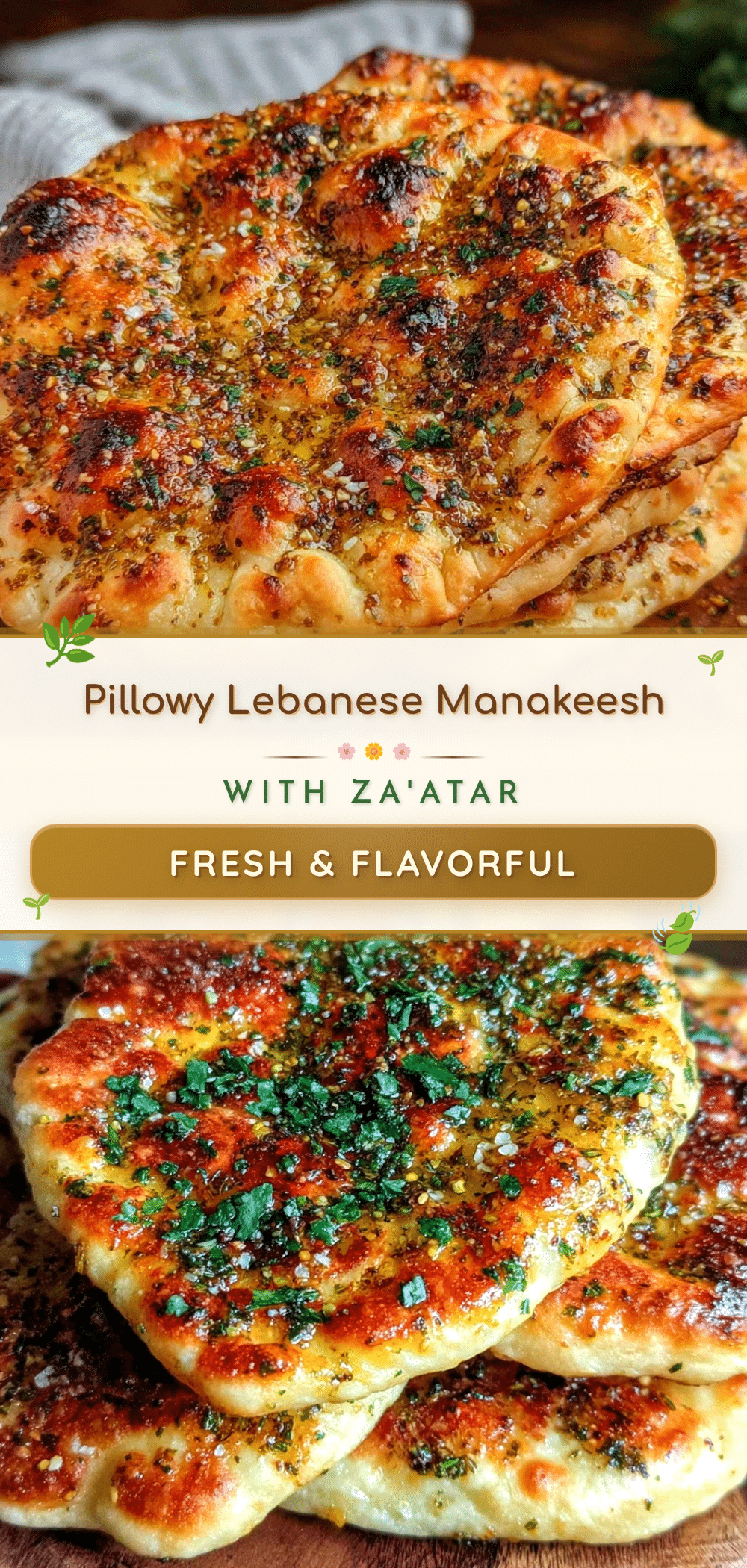
Pillowy Lebanese Manakeesh with Zaatar and Olive Oil
A soft, herby Lebanese flatbread topped with za’atar and olive oil, perfect for a quick and flavorful homemade treat.
- Prep Time: 15 minutes
- Cook Time: 10 minutes
- Total Time: 45 minutes
- Yield: 6 servings 1x
- Category: Main Course
- Cuisine: Lebanese
Ingredients
- 3 cups (375g) all-purpose flour, sifted
- 2 ¼ teaspoons instant dry yeast (one packet)
- 1 tablespoon granulated sugar
- 1 teaspoon salt
- 1 cup (240ml) warm water (around 110°F / 43°C)
- 2 tablespoons olive oil (extra virgin preferred)
- ½ cup (about 30g) za’atar spice blend
- ¼ cup (60ml) olive oil (good quality)
- Optional: pinch of sumac
- Optional: 1 tablespoon sesame seeds
Instructions
- Activate the yeast: In a small bowl, combine warm water (110°F/43°C), sugar, and yeast. Stir gently and let it sit for 5-7 minutes until foamy.
- Mix the dough: In a large bowl, whisk the flour and salt. Make a well in the center and pour in the yeast mixture and olive oil. Stir until it begins to come together.
- Knead the dough: Turn the dough onto a lightly floured surface. Knead for about 8-10 minutes until smooth and slightly elastic. Dust with flour if too sticky.
- First rise: Lightly oil the bowl, place the dough inside, cover with a towel or plastic wrap, and let rise in a warm spot for 1 to 1.5 hours until doubled in size.
- Prepare za’atar topping: Mix za’atar and olive oil in a small bowl to form a spreadable paste.
- Shape the dough: Punch down the dough, divide into 6 equal balls (~120g each). Roll each into a 7-8 inch (18-20 cm) circle about ¼ inch (6 mm) thick.
- Top and bake: Place dough rounds on parchment-lined baking sheet. Spread 2-3 tablespoons of za’atar mixture evenly on each, leaving a border. Optionally sprinkle sesame seeds or sumac.
- Bake: Preheat oven to 475°F (245°C). Bake for 8-10 minutes until edges are golden and topping fragrant.
- Serve warm: Let cool for a minute or two and enjoy fresh.
Notes
Use warm water around 110°F to activate yeast properly. Do not rush the dough rise for best texture. Use a pastry brush to spread za’atar oil evenly to avoid sogginess. A pizza stone can help achieve a crisper bottom. Dough can be refrigerated overnight after kneading for convenience.
Nutrition
- Serving Size: 1 manakeesh (1/6 of
- Calories: 220
- Fat: 8
- Carbohydrates: 30
- Fiber: 3
- Protein: 5
Keywords: Lebanese manakeesh, zaatar bread, Middle Eastern flatbread, homemade manakeesh, zaatar and olive oil, vegan bread, easy bread recipe