Love this? Save it for later!
Share the inspiration with your friends
The woman at the farmers market stand watched me fumbling with a bag of lemons, trying to juggle my purse and my toddler at the same time. She didn’t say anything at first. Then she reached over, took two lemons from my bag, and held them up to the light. “These ones,” she said, handing them back. “They’re the ones you want for baking. Thin skin, lots of juice.” Her name was Rosa, and she’d been selling citrus from her family’s grove for thirty years. I told her I was looking for a cookie recipe that wasn’t the same old sugar cookie everyone brings to holiday parties. She laughed and said, “You need my sister-in-law’s ricotta cookies, then. Lemon, not too sweet, and they stay soft for days.” She scribbled the recipe on a napkin right there between the crates of Meyer lemons and blood oranges.
I’ll be honest with you—I lost that napkin somewhere between the car and my kitchen. But the gist of it stuck with me. Ricotta, lemon zest, a simple glaze. I tweaked and tested until I got it just right, and honestly, these easy lemon ricotta Christmas cookies have become my go-to holiday cookie every single year since. They’re not fussy or fancy, and that’s exactly why I love them. Maybe you’ve been there—standing in your kitchen on a Tuesday night in December, wondering how you’re going to get cookies made for the school bake sale and your office party and your neighbor’s gift plate all before Saturday. These cookies are the answer.
The first time I made them, I forgot to drain the ricotta. The dough was a sticky mess, and I almost threw the whole bowl in the sink. But I pressed on, added a little extra flour, and they turned out fine. Better than fine, actually. That little mistake taught me something important about this dough—it’s forgiving. And isn’t that what we all need during the holidays? Something that works even when we mess it up a little. That’s why this recipe has stayed with me all these years.
Why You’ll Love This Recipe
Let me tell you why these cookies have earned a permanent spot in my holiday rotation. They solve so many of the problems that come with Christmas baking.
- Quick & Easy : From start to finish, these come together in about 30 minutes. No chilling the dough, no rolling it out, no cutting shapes. Just mix, scoop, bake, and glaze. Perfect for those nights when you need cookies but you’re also exhausted.
- Simple Ingredients : You probably have most of these in your kitchen right now. Butter, sugar, eggs, flour, baking powder. The ricotta and lemon are the only special items, and they’re easy to find at any grocery store.
- Perfect for Christmas Cookie Exchanges : These stand out on a cookie tray. Everyone brings chocolate chip and gingerbread, but these bright, lemony cookies with their glossy vanilla glaze get noticed. People always ask for the recipe.
- Crowd-Pleaser : Kids love them because they’re sweet and soft. Adults love them because they’re not cloying. The lemon cuts through all that heavy holiday food in a way that feels refreshing.
- Unbelievably Delicious : The ricotta makes these cookies incredibly tender. I’m talking melt-in-your-mouth soft, the kind that stays fresh for days. The lemon and vanilla work together in a way that’s just, well, perfect.
What makes these different from every other Christmas cookie out there? It’s the texture. Most holiday cookies are either crisp or cakey. These are something else entirely—soft and almost creamy, with a slight density that feels substantial without being heavy. The ricotta is the secret. It adds moisture and richness without making the cookies greasy. And the lemon? It brightens everything up. These aren’t just another version of a Christmas cookie. They’re the version you’ll want to make every year.
This recipe is the kind that makes you close your eyes after the first bite. It’s comfort food reimagined for the holidays—faster, simpler, but with the same soul-soothing satisfaction. Perfect for impressing guests without stress, or turning a simple Tuesday night into something memorable.
What Ingredients You Will Need
This recipe uses simple, wholesome ingredients to deliver that bright lemon flavor and tender, soft texture. Most of these are pantry staples, which makes these cookies even easier to whip up on a busy weeknight.
- All-purpose flour, 2 cups (250g) — This gives the cookies structure. I use Gold Medal or King Arthur, but any brand works fine. Just spoon it into your measuring cup and level it off for accuracy.
- Baking powder, 2 teaspoons — This is your leavening agent. Make sure it’s fresh, or your cookies won’t puff up properly. A quick test: drop a little in hot water, and if it bubbles, you’re good.
- Salt, 1/2 teaspoon — Don’t skip this. Salt balances the sweetness and enhances the lemon flavor.
- Unsalted butter, 1/2 cup (1 stick, 113g), softened — Let it sit on the counter for about 30 minutes. You want it soft enough to leave a dent when you press it, but not melted. If you’re in a hurry, cut it into small cubes and let it sit for 10 minutes.
- Granulated sugar, 1 cup (200g) — Regular white sugar works perfectly here. It gives the cookies a nice, tender crumb.
- Large egg, 1 — Bring it to room temperature with the butter. Cold eggs can make the batter seize up.
- Whole milk ricotta cheese, 1 cup (240g) — This is the star ingredient. Use whole milk ricotta for the best texture, not part-skim. I recommend Galbani or Polly-O. Drain any excess liquid from the container before measuring.
- Fresh lemon juice, 2 tablespoons (30ml) — Fresh is non-negotiable here. Bottled lemon juice has a flat, almost metallic taste that just doesn’t work. Roll the lemon on the counter before cutting to get more juice out.
- Fresh lemon zest, 1 tablespoon — From about 1 large lemon. Zest it before you juice it. Use a microplane for the finest zest, and be careful not to get the white pith, which is bitter.
- Vanilla extract, 1 teaspoon — Use pure vanilla extract, not imitation. It makes a real difference in the flavor of the glaze.
For the Vanilla Glaze:
- Powdered sugar, 1 1/2 cups (180g) — Sift it if it’s lumpy. Nobody wants lumpy glaze.
- Unsalted butter, 2 tablespoons (28g), melted — This gives the glaze a little richness and helps it set up nicely.
- Vanilla extract, 1 teaspoon — Again, use the good stuff.
- Milk, 2-3 tablespoons (30-45ml) — Start with 2 tablespoons and add more if needed. You want the glaze thick enough to coat the back of a spoon but thin enough to drizzle.
Substitution Guidance: If you need a gluten-free option, use a 1:1 gluten-free baking flour blend. Cup4Cup works really well here. For a dairy-free version, use a plant-based butter and a dairy-free ricotta. Kite Hill makes a good almond-based ricotta. The texture will be slightly different, but the flavor will still be lovely.
Equipment Needed
You don’t need a lot of fancy equipment for these cookies, which is another reason I love them. Here’s what you’ll need:
- Mixing bowls: One large bowl for the dry ingredients and one medium bowl for the wet ingredients. I use glass or stainless steel.
- Electric hand mixer or stand mixer: You can do this by hand with a wooden spoon, but the mixer makes creaming the butter and sugar much easier and faster. I’ve done it both ways, and honestly, the mixer gives a lighter texture.
- Microplane or fine grater: For zesting the lemon. A box grater works in a pinch, but a microplane gives you that fine, fluffy zest that distributes evenly through the dough.
- Measuring cups and spoons: For accuracy. I can’t stress this enough—baking is a science, and measuring correctly matters.
- Baking sheets: Two large baking sheets. Line them with parchment paper or silicone baking mats for easy cleanup.
- Cookie scoop: A 1.5-tablespoon scoop makes uniform cookies. If you don’t have one, use two spoons to drop the dough.
- Cooling rack: For cooling the cookies before glazing. If you don’t have one, let them cool on the baking sheet for a few extra minutes, then transfer to a plate.
- Small whisk or fork: For mixing the glaze.
Budget-friendly tip: You can skip the electric mixer and use a sturdy whisk and some elbow grease. It’ll take a few extra minutes, but the cookies will still turn out great. And if you don’t have a cookie scoop, a regular tablespoon works fine—just make sure you portion them evenly.
Preparation Method
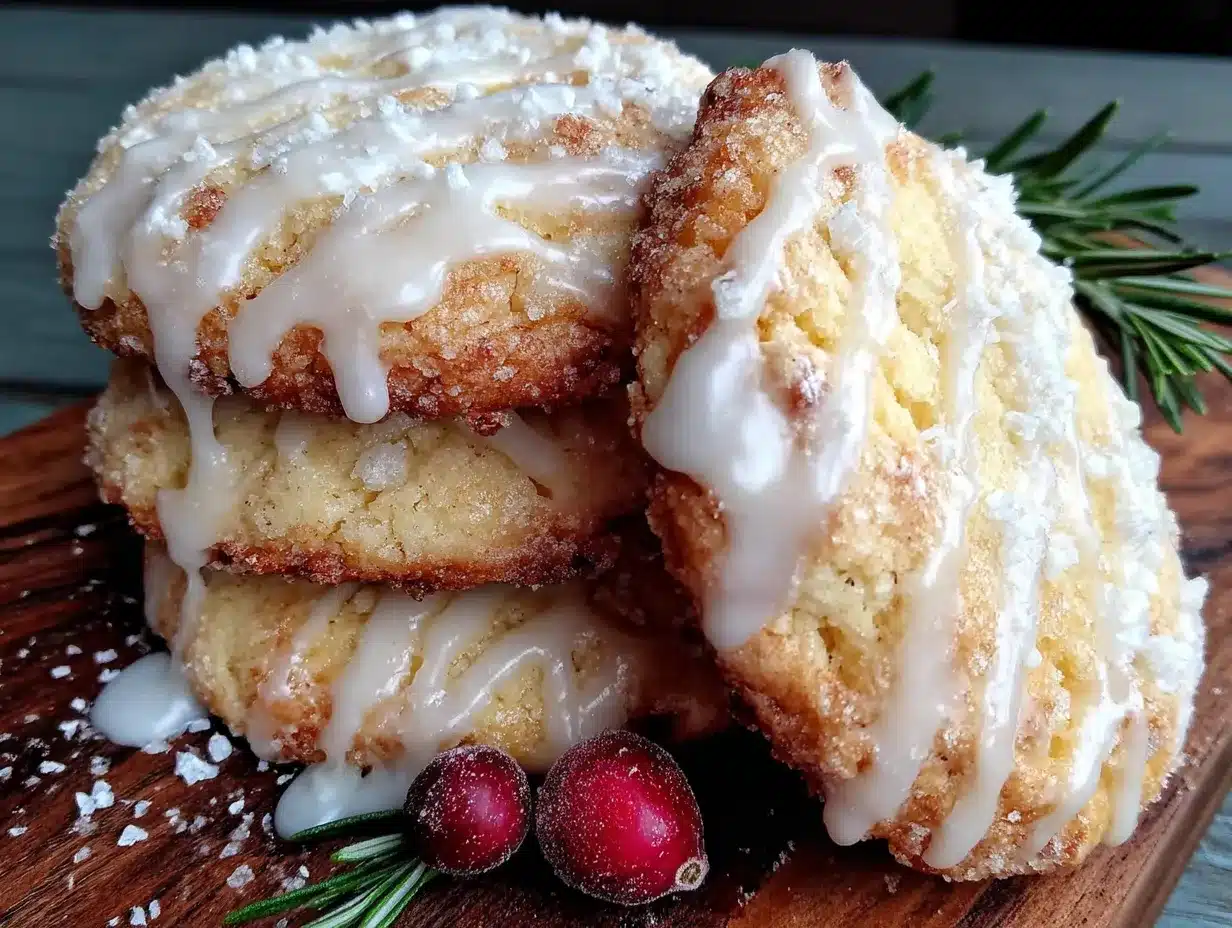
Let’s get baking. I’ve broken this down into clear steps so you can follow along without any confusion. Take your time, and remember—these cookies are forgiving.
- Preheat your oven to 350°F (175°C). Line two baking sheets with parchment paper or silicone baking mats. This step matters—it prevents the cookies from sticking and makes cleanup a breeze.
- In a medium bowl, whisk together the flour, baking powder, and salt. Set this aside. Whisking aerates the flour and ensures the baking powder and salt are evenly distributed. You don’t want one cookie to be saltier than another.
- In a large bowl, cream together the softened butter and granulated sugar. Use your electric mixer on medium speed for about 2-3 minutes, until the mixture is light and fluffy. Scrape down the sides of the bowl with a spatula halfway through. The mixture should look pale and slightly increased in volume. This step is important—it incorporates air into the dough, which helps the cookies rise.
- Add the egg, ricotta, lemon juice, lemon zest, and vanilla extract. Mix on low speed until just combined. Don’t overmix here. You’ll see the mixture look a little curdled at first—that’s normal. The ricotta and lemon juice don’t emulsify perfectly, and that’s fine. Scrape the bowl again to make sure everything is incorporated.
- Gradually add the dry ingredients to the wet ingredients. Mix on low speed until just combined. Stop when you can’t see any more streaks of flour. Overmixing at this stage will develop the gluten and make the cookies tough. We want tender cookies, not hockey pucks.
- The dough will be soft and slightly sticky. That’s exactly what you want. Don’t be tempted to add more flour. If it feels too sticky to handle, pop it in the fridge for 10 minutes. But honestly, I usually skip that step and just work quickly.
- Scoop rounded tablespoons of dough onto the prepared baking sheets. Space them about 2 inches apart. These cookies spread a little, but not too much. I fit 12 cookies per sheet. If you’re using a cookie scoop, level it off for even portions. Uneven portions mean uneven baking, and we want all our cookies to be perfect.
- Bake for 10-12 minutes, or until the edges are just barely golden. The centers will look slightly underdone and puffy. That’s the goal. Overbaking is the number one mistake people make with these cookies. They’ll continue to set as they cool. The cookies should be pale on top with just a hint of gold around the edges.
- Let the cookies cool on the baking sheet for 5 minutes. This is crucial. They’re very delicate when they come out of the oven, and moving them too soon will cause them to break. After 5 minutes, transfer them to a wire cooling rack to cool completely before glazing.
- While the cookies cool, make the vanilla glaze. In a small bowl, whisk together the powdered sugar, melted butter, vanilla extract, and 2 tablespoons of milk. Whisk until smooth. If the glaze is too thick, add the remaining tablespoon of milk, one teaspoon at a time. If it’s too thin, add a little more powdered sugar. You want it thick enough to coat the back of a spoon but thin enough to drizzle.
- Once the cookies are completely cool, drizzle the glaze over them. I like to use a small spoon or a piping bag with a tiny tip cut off. You can also just dip the tops of the cookies into the glaze for a more even coating. Let the glaze set for about 15-20 minutes before serving or storing.
Sensory cues to watch for: When you cream the butter and sugar, listen for the change in sound—it goes from a sloshy sound to a softer, airier sound. When you add the dry ingredients, the dough should smell fragrant with lemon and vanilla. When the cookies are baking, your kitchen will smell incredible, but don’t open the oven door to check too often—that lets the heat out and can affect the texture.
Cooking Tips & Techniques
I’ve made these cookies more times than I can count, and I’ve learned a few things along the way. Let me share what I wish someone had told me the first time.
Don’t overmix the dough. This is the biggest mistake I see people make. Once you add the flour, mix just until it disappears. Overmixing develops gluten, and that makes the cookies tough instead of tender. I’ve done it, and the cookies came out dense and chewy instead of light and soft. Learn from my mistake.
Use room temperature ingredients. This matters more than you think. Cold butter won’t cream properly with the sugar, and cold eggs can make the batter seize up. Take everything out of the fridge about 30 minutes before you start. If you forgot, cut the butter into small cubes and let it sit for 10 minutes. For the egg, place it in a bowl of warm water for 5 minutes.
Measure your flour correctly. Scooping directly into the bag packs the flour down and gives you too much. Instead, spoon the flour into your measuring cup and level it off with a knife. This simple change can make the difference between perfect cookies and dry ones.
Bake one sheet at a time. If you put both sheets in the oven at once, they won’t bake evenly. The top sheet will brown faster, and the bottom sheet will take longer. Bake them one after the other, and let the oven come back to temperature for a minute between batches.
Check for doneness by touch. The edges should be set and just barely golden, but the center should still look soft and puffy. Gently press the top of a cookie with your finger—if it springs back, it’s done. If it leaves a dent, give it another minute.
Let them cool completely before glazing. I know it’s tempting to rush, but warm cookies will melt the glaze right off. You’ll end up with a sticky, gloppy mess. Trust me, I’ve been there. Patience pays off here.
Variations & Adaptations
One of the best things about this recipe is how easy it is to adapt. Here are some variations I’ve tried and loved:
Lemon Blueberry Christmas Cookies: Fold 1/2 cup of dried blueberries into the dough before scooping. The tartness of the berries plays beautifully with the lemon. I made these for a cookie swap last year, and they disappeared first.
Orange Cranberry Version: Swap the lemon zest and juice for orange. Fold in 1/2 cup of dried cranberries. This gives you a lovely holiday color palette and a different citrus flavor that’s equally bright and festive.
Gluten-Free Adaptation: Use a 1:1 gluten-free baking flour blend. I’ve tested this with Cup4Cup and King Arthur Measure for Measure, and both work well. The texture is slightly more delicate, so handle the cookies gently when moving them to the cooling rack.
Dairy-Free Version: Use plant-based butter and dairy-free ricotta. The texture will be a bit different—slightly less tender—but the flavor is still wonderful. Miyoko’s makes a great plant-based butter that works well in baking.
Add a Little Spice: Add 1/2 teaspoon of ground cardamom or ginger to the dry ingredients. It gives the cookies a warm, holiday-spiced note that pairs beautifully with the lemon. I did this on a whim one year, and now it’s my secret holiday weapon.
White Chocolate Drizzle: Instead of the vanilla glaze, melt 1/2 cup of white chocolate chips with 1 teaspoon of coconut oil and drizzle that over the cookies. It’s richer and sweeter, perfect for when you want something more indulgent.
Serving & Storage Suggestions
These cookies are best served at room temperature. The glaze should be fully set, and the cookies should be soft and tender. Arrange them on a festive platter or in a cookie tin lined with parchment paper. They look beautiful with a light dusting of powdered sugar or a few fresh cranberries scattered around the plate.
For a cookie platter: Pair these with chocolate crinkles, gingerbread cookies, and shortbread for a beautiful variety of colors and textures. The bright lemon color stands out beautifully against darker cookies.
With a hot beverage: These are perfect with a cup of black tea, chamomile, or a simple cup of coffee. The lemon and vanilla flavors complement warm drinks wonderfully.
Storage: Store the cookies in an airtight container at room temperature for up to 5 days. Place a piece of bread in the container to keep them soft—the bread absorbs excess air and releases moisture. Replace the bread every other day. These cookies actually get better on day two, as the flavors meld and the texture softens even more.
Freezing: You can freeze the baked, unglazed cookies for up to 3 months. Place them in a single layer on a baking sheet and freeze until solid, then transfer to a freezer-safe bag. When you’re ready to serve, thaw them at room temperature, then glaze them fresh. I do this every December—bake a big batch, freeze them, and glaze them as needed for parties and gifts.
Make-ahead tip: You can also freeze the dough. Scoop it into balls, place them on a baking sheet, and freeze until solid. Transfer the frozen dough balls to a freezer bag. When you’re ready to bake, place them on a baking sheet and add 2-3 minutes to the baking time. Fresh cookies in minutes, any time you need them.
Nutritional Information & Benefits
Per cookie (based on 24 cookies): Approximately 140 calories, 6g fat, 20g carbohydrates, 3g protein, 12g sugar, 1g fiber. These are estimates and will vary based on specific ingredients and portion sizes.
These cookies offer a few surprising nutritional benefits. The ricotta cheese provides a good amount of calcium and protein, which helps keep you full and supports bone health. Lemon zest contains vitamin C and antioxidants that support your immune system—always a bonus during cold and flu season. The butter and eggs provide vitamin A and healthy fats.
While these are definitely a treat, they’re a more balanced option than many Christmas cookies. The protein from the ricotta and egg helps slow down the sugar absorption, so you don’t get that immediate crash after eating them. That said, they’re still cookies, so enjoy them in moderation.
Dietary considerations: This recipe contains gluten, dairy, and eggs. For gluten-free and dairy-free options, see the variations section above. These cookies are nut-free as written, making them safe for school and office parties.
Conclusion
These easy lemon ricotta Christmas cookies have become a staple in my holiday baking for good reason. They’re quick, they’re simple, and they’re absolutely delicious. The bright lemon flavor cuts through all that heavy holiday food, and the tender, melt-in-your-mouth texture is something you just don’t get from most Christmas cookies. Plus, they come together in about 30 minutes, which means you can make them on a busy weeknight without any stress.
I love that this recipe is so adaptable. You can keep it classic with the vanilla glaze, or you can experiment with different flavors and add-ins. Make it your own—that’s what cooking is all about. Rosa’s sister-in-law probably never imagined her simple ricotta cookie recipe would end up on my holiday table, but that’s the beauty of sharing food. It travels and changes and becomes part of someone else’s story.
I’d love to hear how these turn out for you. Leave a comment below and let me know if you tried any variations, or tag me in your photos on social media. Happy baking, friend. I hope these cookies bring a little brightness to your holiday season.
Frequently Asked Questions
Can I use part-skim ricotta instead of whole milk?
You can, but the cookies won’t be as tender. Whole milk ricotta has more fat, which gives the cookies that soft, melt-in-your-mouth texture. If you only have part-skim, drain it well before using to remove excess liquid.
Why did my cookies come out flat?
This usually happens for one of two reasons: either your butter was too soft or melted, or your baking powder is old. Make sure your butter is softened but not melted, and check that your baking powder is fresh. You can test it by dropping a little into hot water—if it bubbles, it’s good.
Can I make the dough ahead of time?
Absolutely. You can refrigerate the dough for up to 2 days, or freeze it for up to 3 months. If refrigerating, let it sit at room temperature for 10 minutes before scooping, as it will be quite firm. If freezing, scoop the dough into balls first, then freeze them on a baking sheet before transferring to a bag.
How do I get the glaze to set properly?
Make sure the cookies are completely cool before glazing. The glaze should be thick enough to coat the back of a spoon but thin enough to drizzle. If it’s too thin, it will run off the cookies. Let the glazed cookies sit at room temperature for about 15-20 minutes for the glaze to set.
Can I double this recipe?
Yes, this recipe doubles beautifully. Just make sure your mixing bowl is large enough to hold all the ingredients. You may need to bake in batches, but the dough holds up well. I often double it for holiday cookie exchanges and gift-giving.
Pin This Recipe!
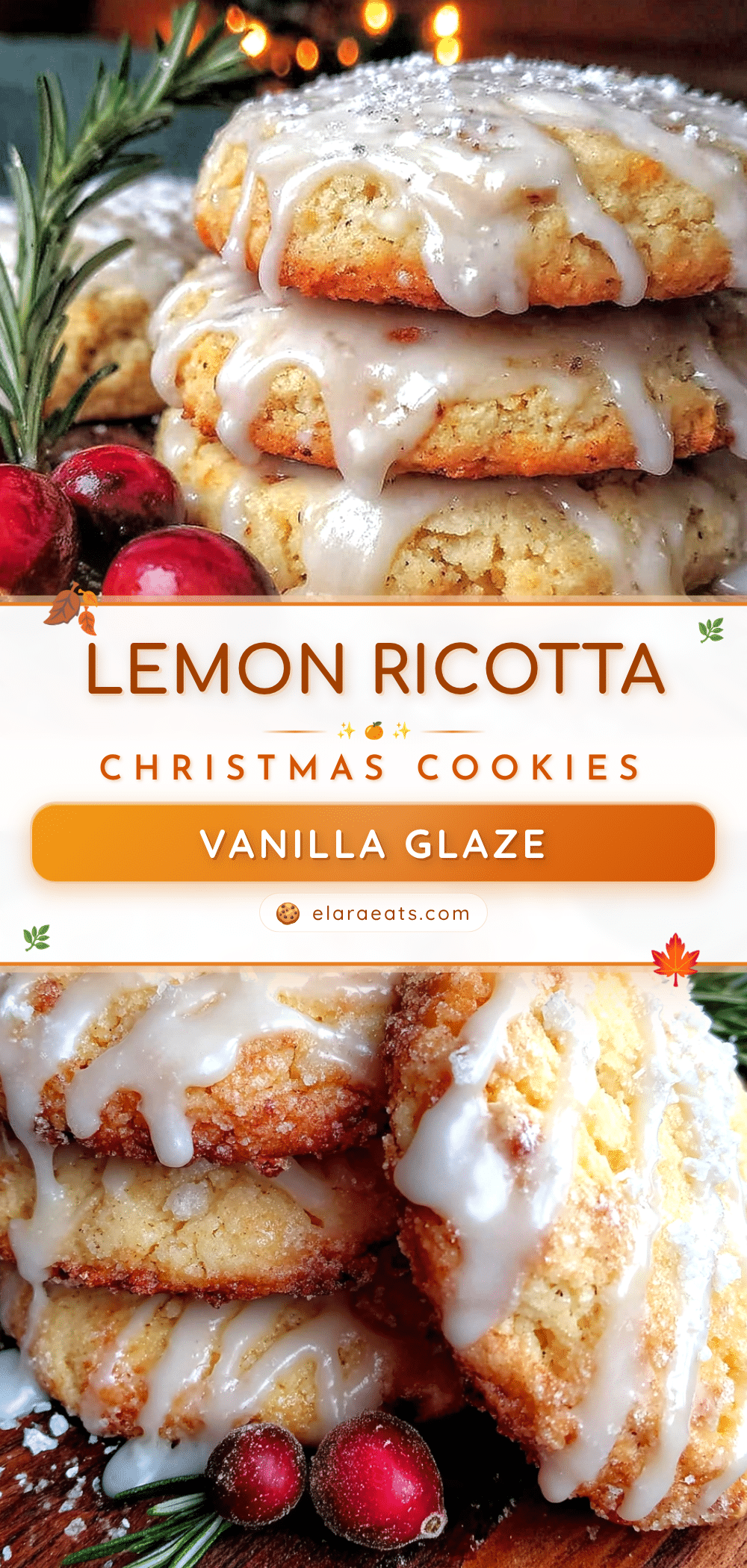
Easy Lemon Ricotta Christmas Cookies with Vanilla Glaze

These easy lemon ricotta Christmas cookies are soft, tender, and bright with lemon flavor, topped with a simple vanilla glaze. They come together in about 30 minutes and are perfect for holiday cookie exchanges, bake sales, or gift-giving.
- Prep Time: 15 minutes
- Cook Time: 12 minutes
- Total Time: 27 minutes
- Yield: 24 servings 1x
- Category: Dessert
- Cuisine: American
Ingredients
- 2 cups (250g) all-purpose flour
- 2 teaspoons baking powder
- 1/2 teaspoon salt
- 1/2 cup (1 stick, 113g) unsalted butter, softened
- 1 cup (200g) granulated sugar
- 1 large egg, room temperature
- 1 cup (240g) whole milk ricotta cheese, drained
- 2 tablespoons (30ml) fresh lemon juice
- 1 tablespoon fresh lemon zest
- 1 teaspoon vanilla extract
- 1 1/2 cups (180g) powdered sugar
- 2 tablespoons (28g) unsalted butter, melted
- 1 teaspoon vanilla extract
- 2–3 tablespoons (30-45ml) milk
Instructions
- Preheat your oven to 350°F (175°C). Line two baking sheets with parchment paper or silicone baking mats.
- In a medium bowl, whisk together the flour, baking powder, and salt. Set aside.
- In a large bowl, cream together the softened butter and granulated sugar with an electric mixer on medium speed for 2-3 minutes until light and fluffy. Scrape down the sides of the bowl halfway through.
- Add the egg, ricotta, lemon juice, lemon zest, and vanilla extract. Mix on low speed until just combined. The mixture may look slightly curdled—that’s normal.
- Gradually add the dry ingredients to the wet ingredients, mixing on low speed until just combined. Do not overmix.
- Scoop rounded tablespoons of dough onto the prepared baking sheets, spacing them about 2 inches apart.
- Bake for 10-12 minutes, or until the edges are just barely golden. The centers will look slightly underdone and puffy.
- Let the cookies cool on the baking sheet for 5 minutes, then transfer to a wire cooling rack to cool completely.
- While the cookies cool, make the vanilla glaze: In a small bowl, whisk together the powdered sugar, melted butter, vanilla extract, and 2 tablespoons of milk. Whisk until smooth. Add more milk if needed to reach a drizzling consistency.
- Once the cookies are completely cool, drizzle the glaze over them. Let the glaze set for 15-20 minutes before serving or storing.
Notes
Don’t overmix the dough once flour is added to keep cookies tender. Use room temperature ingredients for best results. Measure flour by spooning into the cup and leveling off. Bake one sheet at a time for even baking. Let cookies cool completely before glazing. Store in an airtight container at room temperature for up to 5 days; place a piece of bread in the container to keep them soft. Freeze baked, unglazed cookies for up to 3 months.
Nutrition
- Serving Size: 1 cookie
- Calories: 140
- Sugar: 12
- Sodium: 95
- Fat: 6
- Saturated Fat: 3.5
- Carbohydrates: 20
- Fiber: 1
- Protein: 3
Keywords: lemon ricotta cookies, Christmas cookies, holiday cookies, soft cookies, lemon cookies, ricotta cookies, vanilla glaze