Love this? Save it for later!
Share the inspiration with your friends
My youngest swore they hated mashed potatoes. For years. The kind of hate where they’d push the bowl away before it even hit the table. Then came a Tuesday night in late October, and I was testing this loaded mashed potato casserole with crispy onions just for myself—honestly, I was tired and needed comfort food. I left it on the counter to cool and walked away to answer the phone. When I came back, there they were, standing over the baking dish with a fork, mid-bite, looking caught and a little defiant. “These are okay,” they mumbled, taking another scoop. That was the moment I knew this recipe was different. Maybe you’ve been there—that quiet victory when a dish you made for yourself turns out to be the one that finally cracks the code. This casserole isn’t just another side dish; it’s the one that made my mashed potato skeptic ask for seconds. And let me tell you, that’s a win I’ll take any day.
Why You’ll Love This Recipe
This loaded mashed potato casserole with crispy onions is the kind of dish that solves real dinner problems. I’ve tested it through a dozen family meals, and it never fails to deliver. Here is why it works so well for busy home cooks:
- Quick & Easy: Comes together in about 45 minutes from start to finish, with most of that time being hands-off baking. Perfect for those nights when you need a hearty side without the stress.
- Simple Ingredients: You likely have potatoes, butter, milk, and cheese in your kitchen right now. No fancy grocery trips required—just honest, affordable staples.
- Perfect for Family Meals: This casserole pleases picky eaters and adults alike. The crispy onion topping adds a crunch that makes everyone forget they’re eating vegetables.
- Crowd-Pleaser: I’ve brought this to potlucks and Sunday dinners, and it always gets empty-dish returns. Kids ask for it by name, and that’s not something I say lightly.
- Unbelievably Delicious: The creamy, cheesy interior paired with that golden, crunchy top creates a texture combo that feels indulgent without being heavy. It’s comfort food that actually satisfies.
What makes this recipe different from the rest is the technique. Most loaded mashed potato casseroles end up gluey or bland. But by folding in the cheese at just the right temperature and using a mix of sour cream and cream cheese, you get a texture that’s silky and light. The crispy onions aren’t just a garnish—they’re baked right into the topping so every bite has that crunch. I learned this trick after a few sad, soggy attempts, and honestly, it changed everything. This isn’t just another version; it’s the version I make for my own family, week after week.
What Ingredients You Will Need
This recipe uses simple, wholesome ingredients to deliver bold flavor and satisfying texture without the fuss. Most items are pantry staples, so you can whip this up any night of the week.
- Russet potatoes, 3 pounds (about 6 medium) – peeled and quartered. I prefer russets for their fluffy texture when mashed. Yukon Golds work too, but the texture will be slightly denser.
- Unsalted butter, 4 tablespoons (½ stick) – softened. I use Land O’Lakes for consistent results. Salted butter works if you reduce the added salt by ¼ teaspoon.
- Full-fat sour cream, ½ cup – adds tangy richness. Light sour cream works but the casserole won’t be as creamy. Greek yogurt is a fine substitute in a pinch.
- Cream cheese, 4 ounces (half a block) – softened to room temperature. This is the secret to that ultra-creamy texture. Neufchâtel cheese (reduced-fat cream cheese) works well too.
- Whole milk, ½ cup – warmed slightly. Cold milk can make the mashed potatoes seize up. You can use 2% or even oat milk, but the richness will be slightly less.
- Sharp cheddar cheese, 2 cups shredded (about 8 ounces) – divided. I recommend Tillamook or Cabot for bold flavor. Pre-shredded cheese works but has anti-caking agents that affect melting.
- French-fried onions, 1½ cups – the kind in the can. I use French’s brand. For a homemade version, you can fry thinly sliced onions in oil until golden, but the canned ones save time and add that specific crunch.
- Garlic powder, 1 teaspoon – not granulated garlic. Garlic powder disperses more evenly.
- Onion powder, ½ teaspoon – for depth without overpowering.
- Salt, 1½ teaspoons – plus more for the potato cooking water.
- Black pepper, ½ teaspoon – freshly ground if possible.
- Paprika, ½ teaspoon – for color and a subtle smoky note. Sweet paprika is best; smoked paprika works if you want a bolder flavor.
- Fresh chives, 2 tablespoons chopped – for garnish. Green onions work too, but chives have a milder, sweeter bite.
Equipment Needed
You don’t need a fancy kitchen to make this casserole shine. Here is what I use and some honest notes about each piece:
- Large pot (6-quart or larger) – for boiling the potatoes. I use my old enameled cast iron Dutch oven because it holds heat well, but any large stockpot works. A thinner pot might need more stirring to prevent sticking.
- Colander – for draining the potatoes. A fine-mesh strainer works too, but a standard colander is easier to handle.
- Potato masher or ricer – I prefer a ricer for the smoothest texture, but honestly, a good old-fashioned masher does the job. My grandmother’s masher is chipped and still works perfectly. Avoid using a hand mixer or food processor—they can make the potatoes gluey.
- Large mixing bowl – for combining ingredients. Glass or stainless steel is fine. I use a ceramic bowl that I’ve had for years.
- 9×13-inch baking dish – glass or ceramic works best. Metal pans can react with the acidity in the sour cream. I’ve used my Pyrex dish for this recipe more times than I can count.
- Rubber spatula – for folding everything together gently. A wooden spoon works too, but a spatula gets every bit of that creamy mixture.
- Measuring cups and spoons – standard set. I keep a separate set just for baking to avoid cross-contamination with garlic or onion smells.
- Cheese grater – if you’re shredding your own cheese (which I strongly recommend). A box grater is fine; I use a Microplane for the final sprinkle on top.
Preparation Method
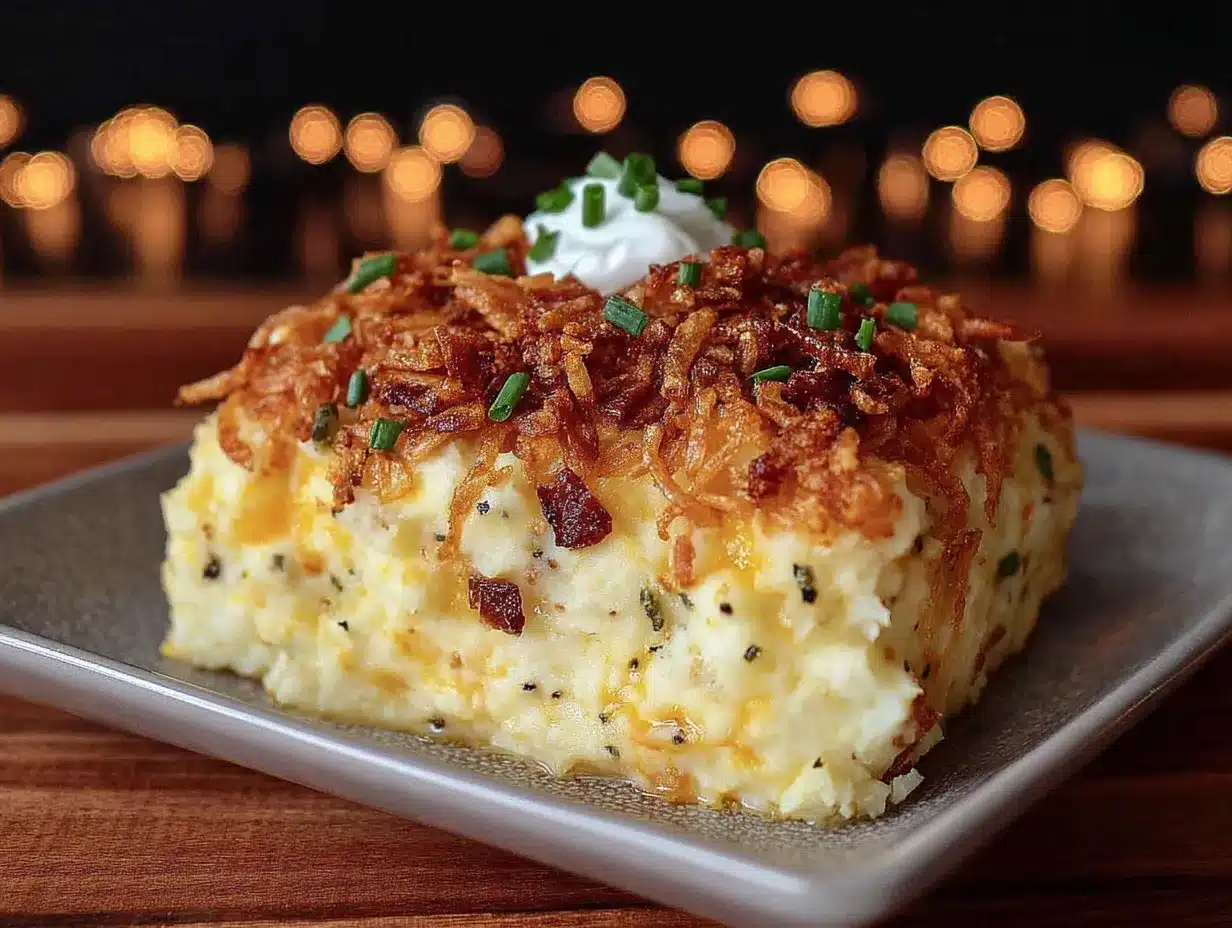
Let’s walk through this step by step. I’ve included every little trick I learned the hard way so you don’t have to.
- Preheat your oven to 375°F (190°C). Position the rack in the center. While it heats, grease your 9×13-inch baking dish with a thin layer of butter or non-stick spray. I forgot to do this once, and the cleanup was miserable.
- Cook the potatoes. Place the peeled and quartered potatoes in your large pot and cover them with cold water by about 2 inches. Add 1 tablespoon of salt to the water—this seasons the potatoes from the inside out. Bring to a boil over high heat, then reduce to medium-high and cook for 15-20 minutes, until a knife slides into the largest piece with no resistance. I test by poking one with a fork; if it falls apart, they’re done. Don’t overcook them or they’ll become waterlogged.
- Drain and dry the potatoes. Pour the potatoes into a colander and let them sit for a full 2 minutes. This step matters more than you think—excess water makes the casserole watery. I usually shake the colander a few times to encourage steam to escape. Return the potatoes to the pot (off the heat) and let them sit for another minute to dry out further.
- Mash the potatoes. Add the softened butter to the hot potatoes and let it melt for 30 seconds. Then mash until the butter is incorporated and no large lumps remain. If using a ricer, rice the potatoes into the pot first, then stir in the butter. The potatoes should look fluffy, not pasty. If they seem dry, don’t worry—we’re adding moisture next.
- Add the creamy ingredients. In a small bowl, mix the sour cream and softened cream cheese until smooth. Add this mixture to the potatoes along with the warmed milk. Stir gently with a rubber spatula until just combined. Overmixing at this stage can make the potatoes gluey. Fold in 1½ cups of the shredded cheddar cheese, the garlic powder, onion powder, salt, and pepper. Taste and adjust seasoning—I always add a pinch more salt here because potatoes need it.
- Assemble the casserole. Spread the potato mixture evenly into your prepared baking dish. Use the spatula to create small peaks and valleys on the surface—these catch the crispy onions and cheese, making every bite interesting. Sprinkle the remaining ½ cup of cheddar cheese over the top, then scatter the French-fried onions evenly over the cheese. Finish with a light dusting of paprika for color.
- Bake the casserole. Place the dish on the middle rack and bake for 20-25 minutes, until the edges are bubbly and the top is golden brown. The onions should look toasted, not burnt. If the top is browning too quickly, tent loosely with foil for the last 10 minutes. I’ve learned that every oven runs differently, so check at 18 minutes if yours runs hot.
- Rest and serve. Let the casserole sit on the counter for 5 minutes before serving. This allows the filling to set slightly so it doesn’t slide off the spoon. Sprinkle with fresh chives right before serving for a pop of color and freshness.
Cooking Tips & Techniques
I’ve made this loaded mashed potato casserole with crispy onions more times than I can count, and I’ve learned a few things the hard way. Here is what I wish someone had told me:
Don’t skip the potato drying step. The first time I made this, I drained the potatoes and immediately added the butter and milk. The casserole turned out soupy and sad. Letting the steam escape for a few minutes makes a world of difference. I now set a timer for 2 minutes and walk away.
Temperature matters for the dairy. Cold cream cheese and cold milk will make your mashed potatoes lumpy and cool too quickly. I take the cream cheese out of the fridge when I start boiling the potatoes, and I warm the milk in the microwave for 20 seconds. It’s a small step that pays off in texture.
Watch the cheese. Pre-shredded cheese is convenient, but it contains cellulose and starch to prevent clumping. These additives can make your casserole grainy. I buy block cheese and shred it myself—it takes 2 extra minutes and the melty result is worth it. If you’re in a rush, at least shred your own for the topping layer.
Multitask wisely. While the potatoes boil, I shred the cheese, chop the chives, and measure out the other ingredients. This way, when the potatoes are done, I can assemble everything in one smooth flow. I also preheat the oven early so it’s ready when I am. The worst feeling is having a finished casserole waiting on a cold oven.
One mistake I still make. I sometimes overmix the potatoes when I’m in a hurry. The result is a dense, gluey texture that no amount of cheese can fix. Now I stop stirring as soon as the ingredients are incorporated. A few small lumps are fine—they add character.
Variations & Adaptations
This recipe is flexible, and I’ve tried several variations depending on what I have on hand or who I’m feeding.
Dietary adaptations. For a gluten-free version, check that your French-fried onions are gluten-free (most brands are, but always read the label). You can also use gluten-free breadcrumbs mixed with melted butter as a topping alternative. For a lighter version, substitute the sour cream with plain Greek yogurt and use reduced-fat cream cheese. The texture will be slightly less rich, but still delicious.
Flavor variations. I sometimes add 4 strips of cooked, crumbled bacon to the potato mixture for a smoky twist. My husband loves when I stir in ½ cup of caramelized onions—it adds sweetness that balances the tangy sour cream. For a spicier version, add ¼ teaspoon of cayenne pepper to the potato mixture and use pepper jack cheese instead of cheddar.
Seasonal swaps. In the summer, I top the casserole with fresh chopped tomatoes and basil before serving. In the fall, I mix in ½ cup of roasted garlic cloves for a mellow, nutty flavor. During the holidays, I add a pinch of nutmeg to the potatoes—it sounds weird, but it complements the cheese beautifully.
Make it a meal. I’ve stirred in 2 cups of shredded cooked chicken and a cup of steamed broccoli to turn this into a one-dish dinner. It’s not traditional, but it’s filling and my kids eat it without complaint. Leftover ham works great too.
Serving & Storage Suggestions
This loaded mashed potato casserole with crispy onions is best served hot, straight from the oven. The contrast between the crunchy topping and the creamy interior is at its peak within the first 15 minutes. I serve it in a large bowl with a big spoon so everyone can scoop from the center.
What to serve with it. This casserole pairs beautifully with roasted chicken, grilled steak, or a simple pork chop. For a vegetarian meal, I serve it alongside a crisp green salad with a lemon vinaigrette—the acidity cuts through the richness. It also works as a side for holiday dinners, especially Thanksgiving or Easter, where it can stand in for both mashed potatoes and stuffing.
Storage instructions. Leftovers keep well in the refrigerator for up to 4 days. Store them in an airtight container. The crispy onions will soften over time, but the flavor remains excellent. I actually like the leftovers even more the next day, when the flavors have melded together.
Reheating methods. For best results, reheat in a 350°F oven for 10-15 minutes, covered with foil to prevent drying. If you’re in a hurry, the microwave works—just heat in 30-second bursts, stirring between each. The topping won’t be as crispy, but it’s still good. I sometimes sprinkle a few fresh crispy onions on top after reheating to restore some crunch.
Freezer tips. You can freeze the unbaked casserole for up to 3 months. Assemble it in the baking dish, wrap tightly in plastic wrap and then foil, and freeze. To bake, thaw overnight in the refrigerator, then bake as directed, adding 10-15 minutes to the cooking time. I’ve done this for busy weeks and it works beautifully.
Nutritional Information & Benefits
Here is an approximate nutritional breakdown per serving (based on 8 servings):
| Nutrient | Amount per Serving |
|---|---|
| Calories | 385 |
| Total Fat | 22g |
| Saturated Fat | 13g |
| Cholesterol | 65mg |
| Sodium | 520mg |
| Total Carbohydrates | 38g |
| Dietary Fiber | 3g |
| Sugars | 4g |
| Protein | 12g |
Potatoes often get a bad rap, but they’re actually a good source of vitamin C, potassium, and vitamin B6. The skin contains most of the fiber, so if you’re feeling ambitious, leave the skins on for a more rustic version. The dairy in this recipe adds calcium and protein, making it a more balanced side dish than plain mashed potatoes. For those watching sodium, you can reduce the added salt and use low-sodium cheese. This recipe is not gluten-free by default due to the French-fried onions, but it’s easy to adapt as mentioned above. It contains dairy and is suitable for vegetarians.
Conclusion
This loaded mashed potato casserole with crispy onions has become a staple in my kitchen, and I think it deserves a spot in yours too. It’s the kind of recipe that feels special enough for company but simple enough for a Tuesday night. The creamy, cheesy base paired with that crunchy topping is a combination that just works—and honestly, it’s hard to stop eating.
I hope you give this a try and make it your own. Maybe you’ll add bacon, or swap the cheese, or serve it alongside your family’s favorite protein. That’s the beauty of a good base recipe—it welcomes your personal touch. If you do make it, I’d love to hear how it turned out. Drop a comment below and let me know what your family thought. Did the kids ask for seconds? Did your picky eater surprise you? Share your story—I read every single comment, and your wins make my day.
Until next time, happy cooking. And remember, the best recipes are the ones that bring people together around the table, one creamy, crunchy bite at a time.
Frequently Asked Questions
Can I make this loaded mashed potato casserole ahead of time?
Absolutely. You can assemble the casserole completely (minus the crispy onion topping) up to 24 hours in advance. Cover and refrigerate. When ready to bake, add the onions and cheese topping, then bake as directed, adding 10-15 minutes since the casserole will be cold from the fridge.
Can I use instant mashed potatoes for this recipe?
I wouldn’t recommend it. Instant mashed potatoes have a different texture and lack the structure needed for a casserole that holds together. The result would be gummy and less satisfying. Fresh potatoes are worth the extra few minutes.
How do I keep the crispy onions from getting soggy?
Add them only during the last 10-15 minutes of baking if you want maximum crunch. You can also sprinkle a fresh layer of crispy onions right before serving. I’ve found that spreading them evenly and not overcrowding helps them stay crisp.
Can I freeze leftovers?
Yes, but the texture will change slightly. Freeze in an airtight container for up to 3 months. Thaw in the refrigerator overnight and reheat in the oven. The creamy filling freezes well, but the crispy topping will soften. I recommend adding fresh crispy onions after reheating.
What’s the best way to reheat this casserole?
For the best texture, reheat in a 350°F oven for 10-15 minutes, covered with foil. If you’re in a hurry, the microwave works—just heat in 30-second bursts. The microwave will soften the topping, so I sometimes add a handful of fresh crispy onions after reheating.
Pin This Recipe!
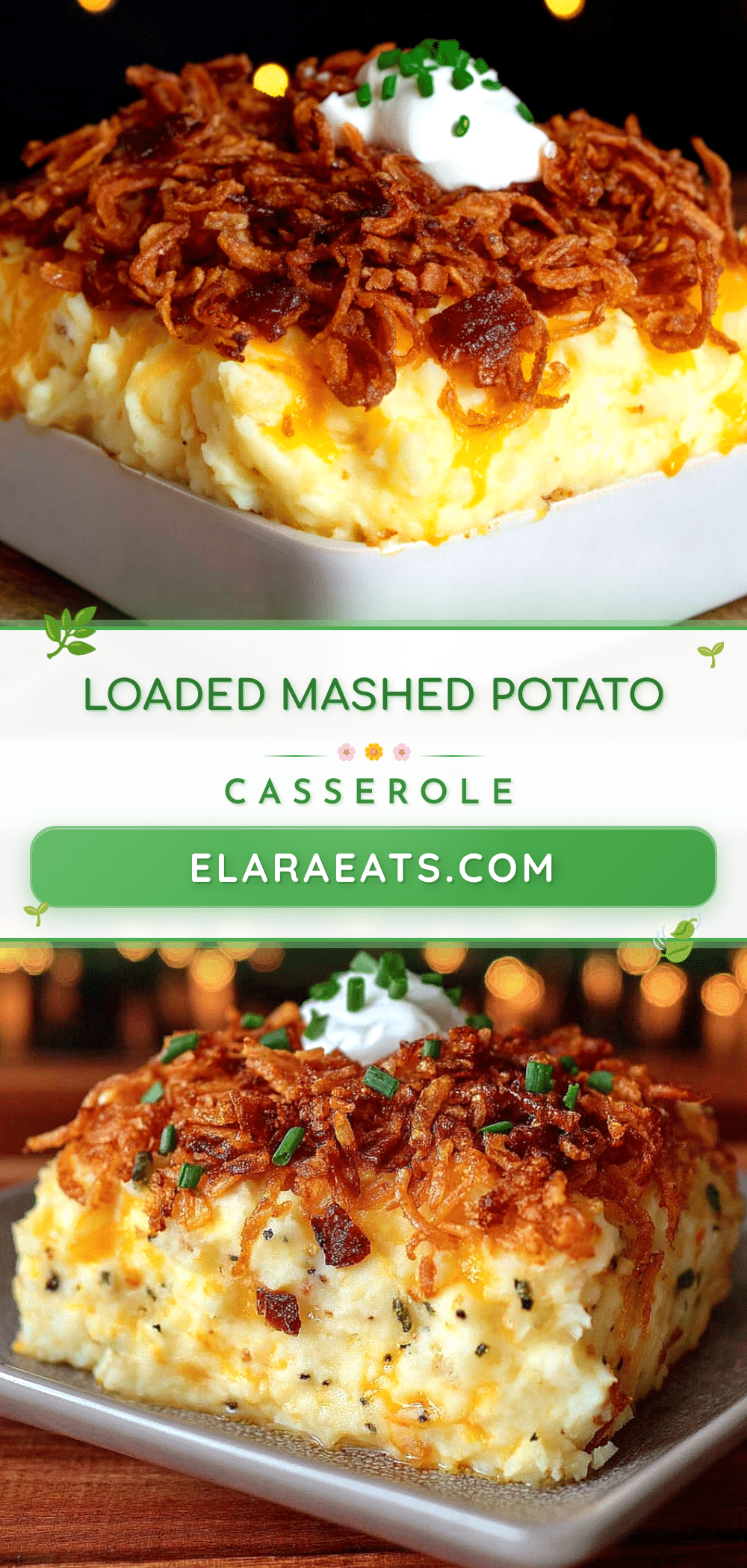
Best Loaded Mashed Potato Casserole with Crispy Onions
This loaded mashed potato casserole with crispy onions is the ultimate comfort food—creamy, cheesy, and topped with a golden, crunchy layer of French-fried onions. It’s a crowd-pleaser that turns picky eaters into fans and comes together in about 45 minutes.
- Prep Time: 15 minutes
- Cook Time: 30 minutes
- Total Time: 45 minutes
- Yield: 8 servings 1x
- Category: Side Dish
- Cuisine: American
Ingredients
- 3 pounds Russet potatoes (about 6 medium), peeled and quartered
- 4 tablespoons unsalted butter, softened
- ½ cup full-fat sour cream
- 4 ounces cream cheese, softened
- ½ cup whole milk, warmed
- 2 cups sharp cheddar cheese, shredded (about 8 ounces), divided
- 1½ cups French-fried onions
- 1 teaspoon garlic powder
- ½ teaspoon onion powder
- 1½ teaspoons salt, plus more for potato water
- ½ teaspoon black pepper, freshly ground
- ½ teaspoon paprika
- 2 tablespoons fresh chives, chopped
Instructions
- Preheat your oven to 375°F (190°C). Grease a 9×13-inch baking dish with butter or non-stick spray.
- Place the peeled and quartered potatoes in a large pot and cover with cold water by about 2 inches. Add 1 tablespoon of salt to the water. Bring to a boil over high heat, then reduce to medium-high and cook for 15-20 minutes, until a knife slides into the largest piece with no resistance.
- Drain the potatoes in a colander and let them sit for 2 minutes. Shake the colander a few times to release steam. Return the potatoes to the pot (off the heat) and let them sit for another minute to dry out.
- Add the softened butter to the hot potatoes and let it melt for 30 seconds. Mash until the butter is incorporated and no large lumps remain.
- In a small bowl, mix the sour cream and softened cream cheese until smooth. Add this mixture to the potatoes along with the warmed milk. Stir gently with a rubber spatula until just combined. Fold in 1½ cups of the shredded cheddar cheese, garlic powder, onion powder, salt, and pepper. Taste and adjust seasoning.
- Spread the potato mixture evenly into the prepared baking dish. Use the spatula to create small peaks and valleys on the surface. Sprinkle the remaining ½ cup of cheddar cheese over the top, then scatter the French-fried onions evenly over the cheese. Finish with a light dusting of paprika.
- Bake on the middle rack for 20-25 minutes, until the edges are bubbly and the top is golden brown. If the top is browning too quickly, tent loosely with foil for the last 10 minutes.
- Let the casserole rest for 5 minutes before serving. Sprinkle with fresh chives right before serving.
Notes
Don’t skip the potato drying step—excess water makes the casserole watery. Cold cream cheese and cold milk can make the potatoes lumpy; bring them to room temperature or warm the milk. Pre-shredded cheese contains anti-caking agents that can make the casserole grainy; shred your own for best results. Overmixing the potatoes can make them gluey; stop stirring as soon as ingredients are incorporated.
Nutrition
- Serving Size: 1 serving
- Calories: 385
- Sugar: 4
- Sodium: 520
- Fat: 22
- Saturated Fat: 13
- Carbohydrates: 38
- Fiber: 3
- Protein: 12
Keywords: loaded mashed potato casserole, crispy onions, cheesy mashed potatoes, potato casserole, comfort food, side dish, holiday side