Love this? Save it for later!
Share the inspiration with your friends
I wasn’t expecting cooking advice from the man installing my new washing machine, but there I was, Tuesday morning, standing in a puddle of water while he explained the perfect way to roast an acorn squash. His name was Dave, he had sawdust on his jeans, and apparently, his nonna had taught him everything he knew about fall cooking while she chased him around her tiny Italian kitchen. I was just trying to get my laundry situation sorted, but Dave kept circling back to this risotto. “You gotta get the sage crispy,” he said, wiping his hands on a rag. “That’s the whole point.” Honestly, I almost laughed it off. But something about the way he described it—the creamy rice, the sweet squash, that little pop of fried sage—made me grab a pen from the junk drawer. I scribbled his nonna’s method on the back of a receipt. Three hours later, my washing machine was humming and my kitchen smelled like heaven. And I’ve been making this risotto every single fall since. Let me tell you, it’s the kind of dish that makes you slow down and actually taste the season.
Why You’ll Love This Recipe
This cozy acorn squash risotto is the kind of meal that feels like a warm blanket on a chilly evening. It’s creamy, savory, and just a little bit sweet—exactly what you need when the leaves start turning and the air gets crisp. I’ve tested this recipe at least a dozen times to get the texture just right, and I’m so excited to share it with you.
- Quick & Easy: Ready in about 45 minutes, perfect for a weeknight dinner that feels special.
- Simple Ingredients: No fancy grocery trips needed. You likely already have the rice, broth, and sage in your kitchen.
- Perfect for Fall Gatherings: Great for Thanksgiving, Friendsgiving, or a cozy dinner party.
- Crowd-Pleaser: Even picky eaters go back for seconds. The squash makes it naturally sweet and approachable.
- Unbelievably Delicious: The combination of creamy risotto and crispy sage leaves is next-level comfort food. You’ll close your eyes after the first bite.
What makes this recipe different? It’s all about the technique. Instead of just stirring squash into the rice, I roast it first to concentrate the flavor, then fold it in at the end. The result is a risotto that’s rich, velvety, and tastes like autumn in a bowl. Plus, the crispy sage leaves add this incredible texture and earthy pop that takes it over the top.
What Ingredients You Will Need
This recipe uses simple, wholesome ingredients to deliver bold, comforting flavor without the fuss. Most of these are pantry staples, especially if you cook seasonally.
- 1 medium acorn squash (about 1.5 lbs / 680g) — Look for one that feels heavy for its size. The skin should be deep green with a patch of orange, which means it’s ripe and sweet.
- 2 tablespoons olive oil, divided — I use a good extra virgin for roasting the squash and a lighter one for the risotto.
- 1/2 teaspoon salt, plus more for seasoning
- 1/4 teaspoon black pepper
- 4 cups (960 ml) vegetable or chicken broth — I prefer low-sodium so I can control the salt. Homemade is amazing, but boxed works great too.
- 1 cup (200 g) Arborio rice — This is the classic risotto rice. It’s short-grain and releases lots of starch for that creamy texture. Don’t substitute with long-grain rice—it won’t work the same way.
- 1/2 cup (120 ml) dry white wine — Something you’d drink, like a Sauvignon Blanc or Pinot Grigio. It adds brightness and acidity.
- 1 small yellow onion, finely diced (about 1 cup / 150g)
- 2 cloves garlic, minced
- 3 tablespoons unsalted butter, divided — Use the good stuff. It adds richness that makes the risotto silky.
- 1/2 cup (50 g) grated Parmesan cheese — Freshly grated is key. The pre-shredded stuff has anti-caking agents that won’t melt as smoothly.
- 1 large bunch fresh sage leaves (about 20-25 leaves) — You’ll use most for frying and a few for garnish.
- 2 tablespoons butter or oil for frying sage — Butter gives the best flavor, but oil works if you need dairy-free.
Ingredient Tips: For the best texture, make sure your broth is warm when you add it to the rice. Cold broth will slow down the cooking process. I also recommend grating your Parmesan right before using it—the flavor is so much fresher. If you can’t find acorn squash, butternut squash or pumpkin work beautifully as substitutes.
Equipment Needed
You don’t need anything fancy to make this risotto, but a few key tools make the process much smoother.
- Large skillet or Dutch oven — A heavy-bottomed pot is ideal for even heat distribution. I use my trusty 5-quart Dutch oven.
- Baking sheet — For roasting the squash. Line it with parchment paper for easy cleanup.
- Medium saucepan — To warm the broth. Keeping it hot is a game-changer for risotto.
- Wooden spoon or silicone spatula — For stirring. A wooden spoon won’t scratch your pot and gives you good control.
- Chef’s knife and cutting board — For dicing the onion and squash.
- Small skillet — For frying the sage leaves. A non-stick pan works great here.
- Ladle — For adding broth to the risotto one scoop at a time.
If you don’t have a Dutch oven, a large, deep skillet will work just fine. Just keep an eye on the heat so the rice doesn’t stick. And honestly, a good wooden spoon is worth its weight in gold—I’ve had mine for years and it’s perfectly seasoned.
Preparation Method

Let’s get cooking. This recipe comes together in about 45 minutes, and most of that is hands-on stirring. Put on some music or a podcast—it’s a relaxing process once you get into the rhythm.
- Preheat your oven to 400°F (200°C). While it’s heating, cut the acorn squash in half from stem to stern. Scoop out the seeds and stringy bits with a spoon. Don’t throw the seeds away—you can roast them later for a snack!
- Roast the squash. Brush the cut sides of the squash with 1 tablespoon of olive oil and season with a pinch of salt and pepper. Place them cut-side down on a parchment-lined baking sheet. Roast for 30-35 minutes, until the flesh is tender and easily pierced with a fork. Let it cool for a few minutes, then scoop the flesh into a bowl and mash it roughly with a fork. You want some chunks for texture.
- Warm the broth. While the squash roasts, pour the broth into a medium saucepan and bring it to a gentle simmer over low heat. Keep it warm on the stove—you’ll be adding it to the risotto gradually.
- Start the risotto base. In a large skillet or Dutch oven, melt 2 tablespoons of butter over medium heat. Add the diced onion and cook for 4-5 minutes, until it’s soft and translucent. Add the minced garlic and cook for another 30 seconds, until fragrant. Be careful not to brown the garlic—it can turn bitter.
- Toast the rice. Add the Arborio rice to the pot and stir it around for about 1 minute. You’ll notice the grains become slightly translucent at the edges. This step helps the rice absorb liquid slowly and evenly.
- Deglaze with wine. Pour in the white wine and stir constantly until it’s mostly absorbed, about 1-2 minutes. The kitchen will smell amazing at this point.
- Add the broth, one ladle at a time. This is the classic risotto method. Add about 1/2 cup (120 ml) of warm broth to the rice and stir gently but continuously. Wait until the liquid is almost fully absorbed before adding the next ladle. This process takes about 18-20 minutes total. The rice should be tender but still have a slight bite in the center (al dente).
- Fold in the squash. Once you’ve used all the broth and the rice is creamy, turn off the heat. Gently fold in the mashed roasted squash until it’s evenly distributed. The color will turn a beautiful golden orange.
- Finish with butter and cheese. Stir in the remaining 1 tablespoon of butter and the grated Parmesan. Season with salt and pepper to taste. The risotto should be loose and velvety—if it seems too thick, add a splash of warm water or broth.
- Fry the sage leaves. While the risotto rests, heat 2 tablespoons of butter in a small skillet over medium heat. Once it’s bubbling, add the sage leaves in a single layer. Fry for 15-20 seconds per side, until they’re crisp and the butter is fragrant. Transfer them to a paper towel-lined plate to drain.
- Serve immediately. Spoon the risotto into bowls, top with a few crispy sage leaves, and add an extra sprinkle of Parmesan if you like. Eat it while it’s hot—risotto waits for no one!
Cooking Tips & Techniques
I’ve made this risotto more times than I can count, and I’ve learned a few things the hard way. Here are my best tips for success.
Keep the broth warm. This is the number one rule of risotto. If you add cold broth to the rice, it shocks the grains and slows down the cooking process. Your risotto will take forever and might end up gummy. Just keep that saucepan on low heat and you’re golden.
Don’t stop stirring. I know it’s tempting to walk away, but risotto needs your attention. The constant stirring releases the starch from the rice, which creates that creamy texture. Set a timer and make it part of your cooking rhythm. I like to stir in a figure-eight pattern—it feels efficient.
Trust your senses. Recipes give you times, but every stove and pot is different. After about 15 minutes of adding broth, taste a grain of rice. It should be tender but still have a tiny firm center. That’s al dente. If it’s still crunchy, keep going with more broth.
Don’t skip the squash roasting. I tried microwaving the squash once to save time, and the texture was watery and bland. Roasting concentrates the natural sugars and gives you that deep, caramelized flavor. It’s worth the extra 30 minutes.
Make extra sage leaves. They’re so good that everyone will pick them off the top and eat them first. I usually fry a few extra just for snacking while I plate the risotto.
Variations & Adaptations
This risotto is pretty perfect as-is, but it’s also easy to adapt to different diets and tastes.
- Vegan Version: Swap the butter for a high-quality vegan butter or olive oil, and use nutritional yeast instead of Parmesan. The flavor will be slightly different, but still delicious. I’ve tried it with a cashew-based Parmesan and it was surprisingly good.
- Add Protein: Top the risotto with roasted chicken, sautéed shrimp, or crispy tofu for a heartier meal. I love adding leftover rotisserie chicken—it makes the dish feel like a full dinner.
- Seasonal Twist: In the spring, swap the acorn squash for asparagus and peas. In the winter, try it with roasted mushrooms and thyme. The basic risotto method stays the same—just change the vegetable.
- Gluten-Free: Risotto is naturally gluten-free since it’s made with rice. Just double-check your broth and Parmesan labels to make sure they’re certified gluten-free if that’s a concern.
- Spicy Kick: Add a pinch of red pepper flakes when you sauté the onion. It gives the risotto a subtle warmth that pairs beautifully with the sweet squash.
Serving & Storage Suggestions
Risotto is best served immediately, but I’ve got tips for leftovers too.
Serving: Spoon the risotto into shallow bowls and top with crispy sage leaves. A sprinkle of flaky sea salt on top adds a nice finishing touch. Pair it with a simple green salad dressed with lemon vinaigrette to cut through the richness. A glass of the same white wine you used in the recipe is a natural match.
Storage: Leftover risotto keeps in an airtight container in the fridge for up to 3 days. The texture will firm up as it cools, but don’t worry—it’s fixable.
Reheating: The best way to reheat risotto is on the stovetop. Add a splash of broth or water and warm it over medium-low heat, stirring gently. You can also microwave it in 30-second bursts, stirring in between. Add a little extra butter or Parmesan to bring back the creamy texture.
Freezing: I don’t recommend freezing risotto. The texture changes when it thaws and becomes grainy. If you have a lot left over, consider making arancini (fried risotto balls) instead—they freeze beautifully.
Flavor Development: Honestly, the risotto tastes even better the next day. The flavors have time to meld, and the squash gets even sweeter. It’s a great make-ahead option for a busy weeknight.
Nutritional Information & Benefits
This cozy acorn squash risotto is comfort food that also packs some nutritional perks. Here’s a rough estimate per serving (based on 4 servings):
| Nutrient | Amount |
|---|---|
| Calories | 420 |
| Protein | 10g |
| Carbohydrates | 58g |
| Fiber | 5g |
| Fat | 16g |
| Saturated Fat | 8g |
| Sodium | 680mg |
Health Highlights: Acorn squash is rich in vitamin A, vitamin C, and potassium. It’s also a good source of fiber, which helps keep you full and supports digestion. Sage leaves aren’t just for garnish—they have anti-inflammatory properties and add a punch of flavor without extra calories. The Parmesan adds calcium, and the olive oil provides healthy monounsaturated fats.
Dietary Notes: This recipe is vegetarian and can easily be made vegan or gluten-free. It contains dairy from the butter and Parmesan. If you’re watching your sodium, use low-sodium broth and go easy on the added salt.
Conclusion
This cozy acorn squash risotto is everything I want in a fall dinner—warm, creamy, and full of flavor. It’s the kind of dish that makes you slow down and actually taste the season. The sweet roasted squash, the velvety rice, and those crispy sage leaves on top? It’s pure magic.
I hope you give this recipe a try and make it your own. Maybe you’ll add a little more garlic, or swap the sage for thyme. That’s the beauty of cooking—it’s yours to play with. And if you do make it, I’d love to hear how it turned out. Drop a comment below or tag me in your photos. Happy cooking, friends!
Frequently Asked Questions
Can I use a different type of squash?
Absolutely. Butternut squash, kabocha, or even pumpkin work great. Just roast them the same way—cut-side down at 400°F until tender. The cooking time might vary slightly depending on the size and density of the squash.
Do I have to use wine?
Not at all. You can skip the wine and use an extra 1/2 cup of broth instead. The risotto will still be delicious, just slightly less complex. If you want a non-alcoholic option, try using a splash of white wine vinegar mixed with broth.
Why is my risotto gummy?
This usually happens when the heat is too high or you add too much broth at once. Keep the heat at medium-low and add broth one ladle at a time. Stirring constantly helps, too. If it’s already gummy, try stirring in a splash of warm water to loosen it up.
Can I make this ahead of time?
You can roast the squash and fry the sage leaves up to 2 days ahead. Store them separately in the fridge. When you’re ready to eat, make the risotto fresh and fold in the pre-roasted squash. The crispy sage leaves can be reheated in a dry skillet for a few seconds.
How do I know when the risotto is done?
Taste it! The rice should be tender but still have a slight bite in the center (al dente). It should also look creamy and loose—not thick and gloppy. If it’s too thick, stir in a splash of warm broth or water until it reaches the right consistency.
Pin This Recipe!
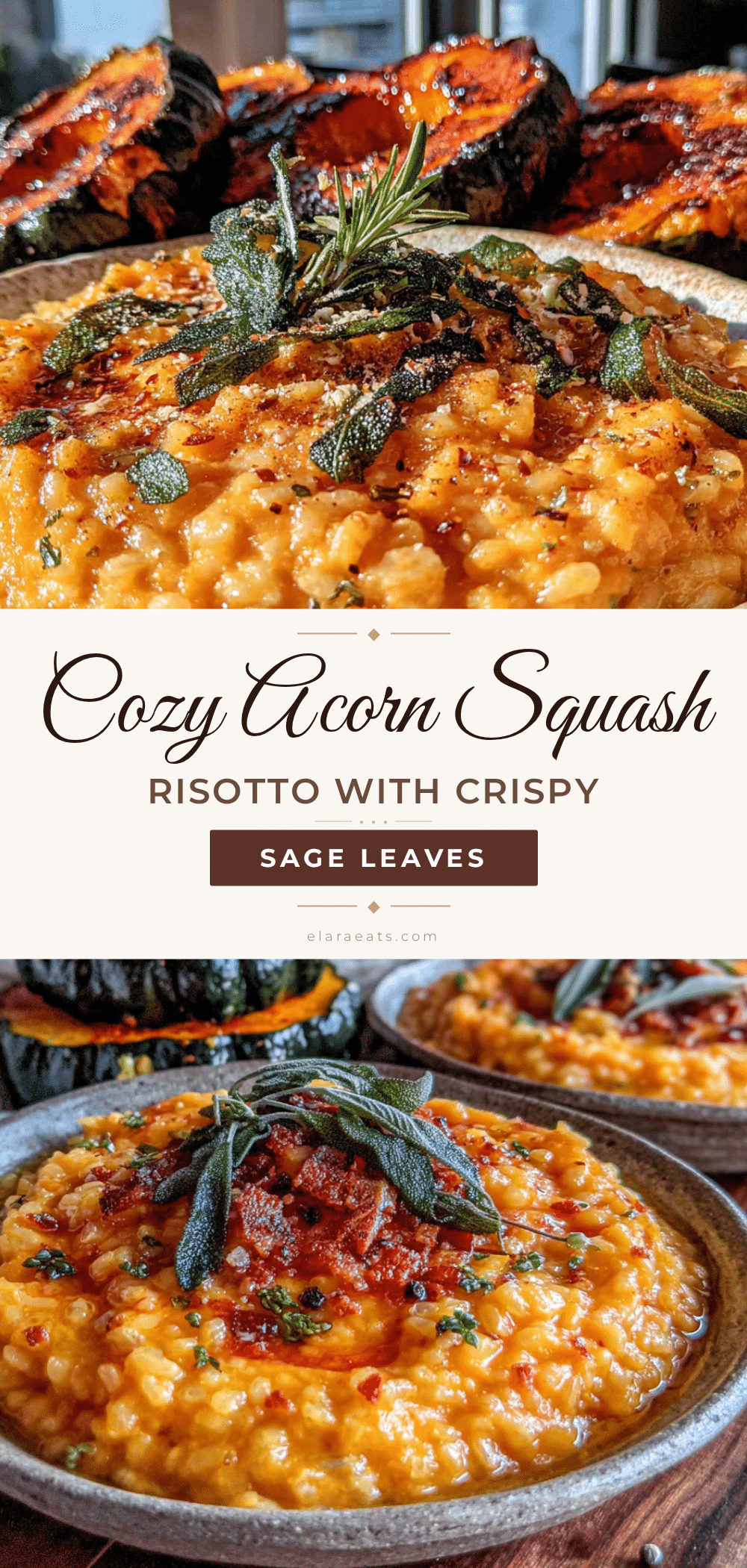
Cozy Acorn Squash Risotto with Crispy Sage: Easy Fall Dinner

This creamy, savory risotto features sweet roasted acorn squash and crispy sage leaves for a comforting fall dinner that’s ready in about 45 minutes.
- Prep Time: 15 minutes
- Cook Time: 30 minutes
- Total Time: 45 minutes
- Yield: 4 servings 1x
- Category: Main Course
- Cuisine: Italian
Ingredients
- 1 medium acorn squash (about 1.5 lbs / 680g)
- 2 tablespoons olive oil, divided
- 1/2 teaspoon salt, plus more for seasoning
- 1/4 teaspoon black pepper
- 4 cups (960 ml) vegetable or chicken broth
- 1 cup (200 g) Arborio rice
- 1/2 cup (120 ml) dry white wine
- 1 small yellow onion, finely diced (about 1 cup / 150g)
- 2 cloves garlic, minced
- 3 tablespoons unsalted butter, divided
- 1/2 cup (50 g) grated Parmesan cheese
- 1 large bunch fresh sage leaves (about 20–25 leaves)
- 2 tablespoons butter or oil for frying sage
Instructions
- Preheat your oven to 400°F (200°C). Cut the acorn squash in half from stem to stern. Scoop out the seeds and stringy bits.
- Brush the cut sides of the squash with 1 tablespoon of olive oil and season with a pinch of salt and pepper. Place cut-side down on a parchment-lined baking sheet. Roast for 30-35 minutes, until tender. Let cool, then scoop flesh into a bowl and mash roughly with a fork.
- While the squash roasts, pour the broth into a medium saucepan and bring to a gentle simmer over low heat. Keep warm.
- In a large skillet or Dutch oven, melt 2 tablespoons of butter over medium heat. Add the diced onion and cook for 4-5 minutes until soft and translucent. Add the minced garlic and cook for 30 seconds until fragrant.
- Add the Arborio rice and stir for about 1 minute until the grains become slightly translucent at the edges.
- Pour in the white wine and stir constantly until mostly absorbed, about 1-2 minutes.
- Add the warm broth one ladle at a time (about 1/2 cup / 120 ml), stirring gently but continuously. Wait until the liquid is almost fully absorbed before adding the next ladle. This takes about 18-20 minutes total. The rice should be tender but still have a slight bite.
- Once all broth is used and the rice is creamy, turn off the heat. Gently fold in the mashed roasted squash until evenly distributed.
- Stir in the remaining 1 tablespoon of butter and the grated Parmesan. Season with salt and pepper to taste. If too thick, add a splash of warm water or broth.
- While the risotto rests, heat 2 tablespoons of butter in a small skillet over medium heat. Add the sage leaves in a single layer and fry for 15-20 seconds per side until crisp. Transfer to a paper towel-lined plate.
- Serve immediately: spoon risotto into bowls, top with crispy sage leaves, and add extra Parmesan if desired.
Notes
Keep the broth warm to avoid shocking the rice. Stir constantly in a figure-eight pattern for best texture. Roast the squash instead of microwaving for deeper flavor. Make extra sage leaves for snacking. Risotto is best served immediately but leftovers can be reheated with a splash of broth.
Nutrition
- Serving Size: 1 serving
- Calories: 420
- Sodium: 680
- Fat: 16
- Saturated Fat: 8
- Carbohydrates: 58
- Fiber: 5
- Protein: 10
Keywords: acorn squash risotto, fall risotto, crispy sage, vegetarian risotto, easy fall dinner, creamy risotto